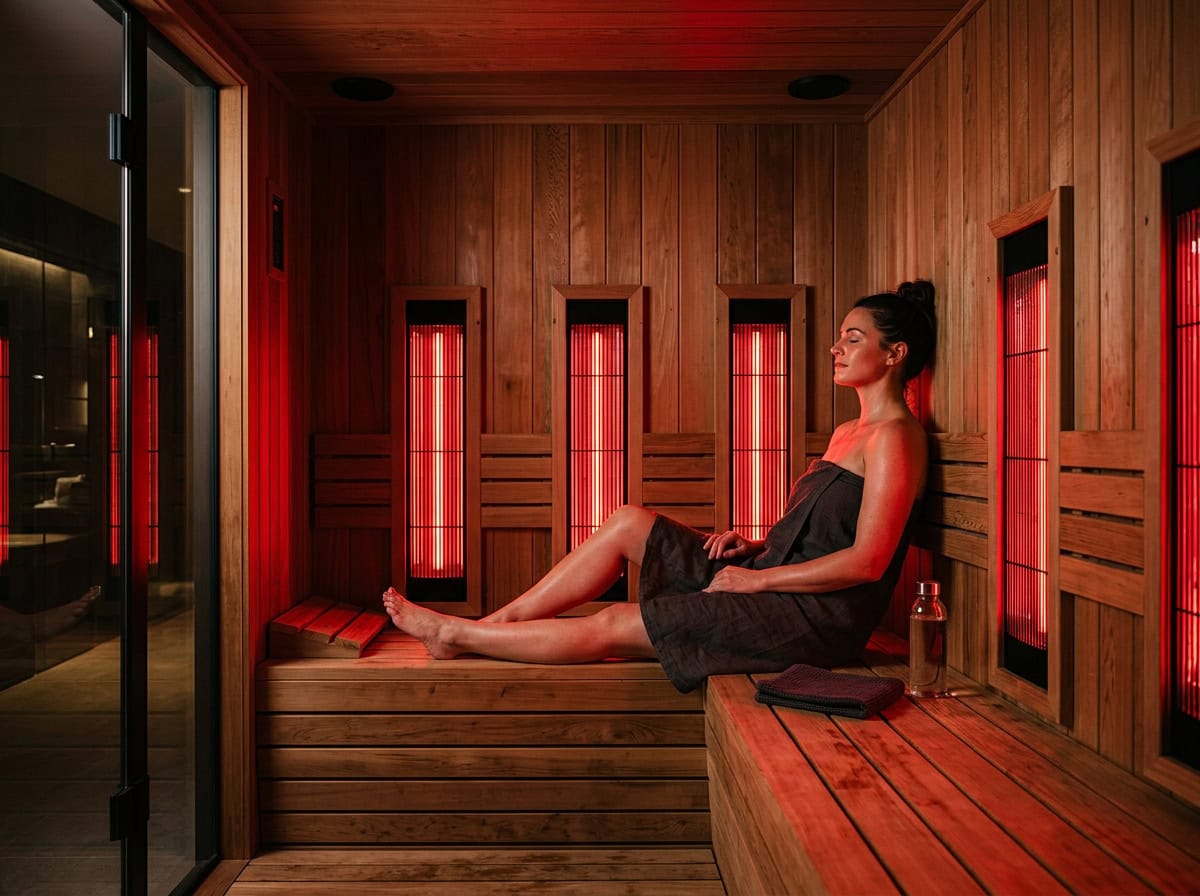
Over the past year, I got heavily into infrared saunas to optimize my cardiovascular health, speed up my exercise recovery, and aggressively lower my long-term risk for things like cardiovascular disease. Influencers like Bryan Johnson and Dr. Rhonda Patrick sold me on the science. I still hit a traditional hot rock sauna weekly, but most days I use my home infrared unit with integrated red light therapy from SaunaCloud. This isn’t about spa day pampering. It’s a clinically proven way to force biological adaptation without beating up your joints.
Table of Contents
Understanding infrared sauna benefits
Infrared saunas deliver profound cardiovascular and longevity benefits—including boosting resilience against routine stressors like the common cold and mitigating factors associated with cognitive decline and dementia—by using targeted electromagnetic radiation to physically condition your body from the inside out. They function as a localized, biological stressor rather than just a passive relaxation tool. When you step into one of these units, you are actively choosing to subject your vascular system to therapeutic strain.
Read the output from the Cleveland Clinic and it becomes obvious this is a serious medical tool. The goal here is to aggressively adapt your baseline metabolic rate. It forces your heart to pump harder and your blood vessels to expand, identical to the demands of physical exertion.
Getting the most out of this therapy requires a mental shift. If you treat your sauna sessions purely as one of those easy ways to relax at home, you’ll miss the clinical advantages. To truly leverage the time spent sweating, you first have to understand why operating at a lower physical temperature actually produces a deeper physiological response.
What exactly is an infrared sauna?
What exactly is an infrared sauna and how does it heat the body? An infrared sauna uses specialized light panels to warm your internal tissues directly, bypassing the need to superheat the air around you. This allows you to achieve a massive sweat at a much lower, more comfortable ambient stall temperature.
Electromagnetic waves vs. ambient air
Traditional hot rock saunas—the kind you’d seek out if you were looking for historical things to do in Finland—work by heating the room to extreme temperatures, often pushing 195°F. That causes a heavy, sometimes burning sensation deep in your Lung tissue. Conversely, an infrared sauna relies on deep-penetrating electromagnetic waves; ambient heat inside the cabin thus stays lower and drastically more tolerable.
According to functional medicine specialist Melissa Young, MD, this specific delivery method makes the experience vastly more comfortable for the average user. You get the exact same physical stress response without feeling like you are breathing literal fire. It eliminates the claustrophobia entirely.
The deep-tissue temperature paradox
Because the cabin air isn’t suffocatingly hot, you can actually stay inside long enough to do some real cellular work. Look at the wall-mounted thermometers during a session. If you are achieving a heavy sweat while the room is only 120°F, you are verifying that direct tissue penetration is doing the heavy lifting.
Lower temperatures are paradoxically more optimal for your internal biology. Because 120°F is tolerable for a full session, it allows your tissues to absorb more total energy. A traditional 190°F room usually forces you to bail out after just ten minutes.

The science of wavelengths and light integration
How is an infrared sauna different from a regular steam or traditional sauna? Unlike a regular steam room that just makes the air hot and wet, an infrared unit acts like targeted medical therapy by using specific bands of radiation—near, mid, and far—to penetrate your body at different cellular depths. It physically alters your cells rather than just sitting on your skin.
You should seek out full-spectrum units that incorporate near, mid, and far infrared bands alongside localized red light therapy to overlap these cellular health mechanisms. The most sophisticated home optimization setups don’t just rely on heat. They synergize the deep internal warmth of far-infrared radiation with the distinct surface cellular benefits of targeted red light.
This brings us to a foundational concept in the biohacker community: the physiological difference between deep thermal effects and actual photobiomodulation wavelength spectrum integration. While far-infrared handles deep core heating, the addition of red light panels specifically targets mitochondrial function in your surface skin cells. By shifting this precise energy directly into your tissues, your body is forced to rapidly adapt its circulation.
Passive cardiovascular conditioning benefits
Can infrared therapy actually help with weight loss and calorie burning? Yes. Sitting in an infrared sauna acts as a form of passive cardio that aids overall Weight Management because your heart has to pump aggressively to cool your core. It artificially induces the exact vascular strain of an aerobic workout while you remain completely tied to a bench.
“It artificially induces the exact vascular strain of an aerobic workout while you remain completely tied to a bench.”
Infrared heat massively triggers vasodilation-driven hemodynamic stress, rapidly widening your blood vessels and forcing the heart to adapt. Blood circulation drastically accelerates to push heat out through your skin. This sustained internal circulation increase elevates your heart rate to levels that effectively mimic walking at a moderate, sustained pace.
Utilize a 30-minute infrared sauna session to improve baseline heart health and address low blood pressure without exposing your joints to orthopedic impact. The massive increase in blood flow isn’t just a workout for your heart muscle. It is also a profound nutrient delivery system for damaged musculoskeletal tissue and a proven catalyst for weight loss when combined with actual exercise and structured Fitness routines.
Accelerating muscle recovery and joint pain relief
Does infrared sauna use relieve joint pain and muscle soreness? Yes, direct infrared heat massively increases local blood flow, flushing out inflammatory byproducts and delivering fresh oxygen directly to damaged tissue to kill pain. It serves as a metabolic superhighway for repair.
Enhancing microcirculation for muscle repair
The drastically enhanced microcirculation fast-tracks oxygen and nutrients to damaged muscles to accelerate exercise recovery. This physical flushing process takes the edge off severe sore muscles and stiff joints. That’s why clinical trials consistently demonstrate its efficacy in treating generalized chronic pain conditions, including painful flare-ups and swollen joint symptoms stemming from rheumatoid arthritis.
Schedule your targeted infrared sessions directly following intense physical activity to fully exploit this vascular delivery system. The heat forces blood deep into micro-capillary networks, sweeping away the lactic acid built up from heavy lifting and intensive resistance training. It physically rebuilds you faster.
Calming the neurological system
Beyond muscle tissue, heat fundamentally shifts your nervous system architecture. Setting aside thirty minutes in the cabinet forces your brain out of the fight-or-flight state. It actively lowers daytime Anxiety and sets the foundation for high-quality, uninterrupted sleep.

There is a direct, measurable link: by reducing cellular oxidative stress, parasympathetic tone actively increases. The deep thermal application chemically mitigates the cellular damage of modern life while forcefully pulling your nervous system into a state of structural rest, making it an effective adjunctive habit for combating Depression and chronic stress.
The reality of the detoxification debate
The mainstream Wellness industry insists that infrared sweating primarily works by detoxifying the body of heavy metals, but Dr. Melissa Young confirms that the real victory is cardiovascular strength, not toxicological purging. Claims that saunas drain your body of dangerous industrial metals remain highly controversial and sit in their scientific infancy.
The clinically undeniable benefits of sauna use are aggressively vascular and cellular. We need to clearly separate the exaggerated claims of toxicological excretion via the sweat response from the highly verified physiological results of cardiovascular hormesis. You are not magically purging pounds of cadmium or lead through your pores during a thirty-minute sweat.
However, you still need to wash off what little metabolic waste you do sweat out. Take an immediate cool or lukewarm shower the second you step out of the sauna. This manually rinses excreted byproducts off your epidermis before your pores close back up and reabsorb them into your bloodstream.

Starting safely: dosage, temperature, and hydration rules
How long should a beginner stay inside an infrared sauna? A beginner should start with the cabin set strictly at 110°F and exit after just 5 to 10 minutes to avoid biological shock. Sauna therapy functions identically to medication dosing. Do not fall for the “more is better” biohacker fallacy when starting out. Set the cabin strictly between 110°F and 120°F. Your body needs several weeks to build the necessary vascular networks to dump heat efficiently. Pushing it too hard early on just leaves you miserable. Taking a highly conservative, measured approach to your initial exposures gives your cardiovascular system the vital time it needs to safely adjust to the unique demands of passive heating. By strictly controlling both your exposure time and the cabin environment, you build a foundation of deep cellular resilience that prevents overwhelming biological stress, ultimately paving the way for the profound metabolic conditioning and rapid exercise recovery that define expert clinical sauna usage.
Titrating your initial temperature
Because thermal conditioning acts exactly like a drug, you have to carefully balance the beneficial hormetic stress-driven dose response. Aggressively cranking the heat to maximum on day one yields diminishing returns and invites complete systemic exhaustion.
The hard 30-minute limit
Even for experienced users, capping total session times at 30 minutes prevents tipping from beneficial adaptation into pure physical depletion. If you push past the 30-minute mark, your core temperature rises too far, and the cardiovascular benefits vanish. You are gambling with severe dehydration.

To counteract massive fluid and mineral losses, replace fluids heavily with an electrolyte-dense beverage directly before and after entering the booth. Plain water is not enough. You need the sodium and potassium found in quality sports drinks to avoid debilitating tension headaches.
High-risk groups: when to avoid infrared heat
Who belongs to the high-risk group and should avoid using an infrared sauna? Pregnant individuals, men actively trying to conceive, and people with severe heat-regulation issues must categorically avoid infrared saunas because the internal thermal strain is actively dangerous for them.
If you have a compromised neurological system, you lack the physical bandwidth to execute the required vascular heat-dumping process. Dr. Melissa Young specifically warns that, for example, patients with Multiple Sclerosis generally cannot handle the aggressive thermal shift. The baseline heat intolerance and demyelination makes passive heating medically contraindicated.
There are strict guidelines regarding reproductive safety as well. The American College of Obstetricians and Gynecologists strictly warns that sauna use during early pregnancy can harm fetal development. Furthermore, men actively trying to conceive should avoid the cabin entirely, as sustained testicular hyperthermia destroys sperm health.
Maximizing your infrared sauna benefits
How many times a week should you use an infrared sauna to see results? To reliably construct cardiovascular conditioning and accelerate recovery, you should commit to a regulated schedule of 3 to 4 sauna sessions per week. Consistency is far more powerful than single, punishingly hot sessions.
You need to establish a rhythm that builds resilience without breaking you down. Going in every single day rarely gives your nervous system sufficient downtime to recover from the strain. Adaptation tracking proves that moderate, recurring integration outperforms erratic, maximal-heat attempts.
Ultimately, this comes down to safely managing your internal environment. You are deliberately raising your core body temperature; thermoregulation networks are then biologically forced to upgrade. Treat your infrared sauna as a proven tool for structural health, apply the dose carefully, and let the heat do its job.
Frequently Asked Questions
What’s the difference between a traditional sauna and an infrared sauna?
Traditional saunas superheat the ambient air to pushing 195°F, which can feel like breathing fire and trigger claustrophobia. Infrared saunas use electromagnetic waves to penetrate directly into your tissues. This allows you to achieve the exact same deep sweat and cardiovascular strain at a much more tolerable room temperature, usually around 120°F.
Can I actually lose weight just by sitting in an infrared sauna?
Yes, but it functions more like passive cardio than magic. The deep thermal heat triggers massive vasodilation, forcing your heart to pump aggressively to cool your core. This internal strain mimics the cardiovascular energy expenditure of a moderate walk, making it a legitimate weight management tool when combined with actual fitness routines.
Why does a full-spectrum sauna work better than a standard heat cabin?
Standard cabins just make you hot, whereas full-spectrum units incorporate near, mid, and far infrared bands alongside targeted red light therapy to overlap biological mechanisms. Far-infrared handles the deep cardiovascular conditioning that lowers blood pressure. Meanwhile, the red light triggers photobiomodulation to actively repair mitochondrial function in your surface skin cells.
How much heavy metal detoxification actually happens in an infrared sauna?
Very little, despite what the mainstream wellness industry enthusiastically claims. Scientific consensus shows that while you might sweat out trace amounts of metabolic waste, you aren’t magically purging pounds of lead or cadmium. The clinically undeniable benefits of sauna therapy are cardiovascular strength and neurological repair, perfectly separated from exaggerated toxicological purging.
How does a beginner safely start an infrared sauna protocol?
You need to start with just 5 to 10 minutes at a highly conservative 110°F. Thermal conditioning acts exactly like a drug, and your vascular system needs several weeks to build the networks required to efficiently dump heat. Pushing past this threshold on day one yields negative returns and invites severe systemic exhaustion.
Can I use an infrared sauna if I’m pregnant or trying to conceive?
Absolutely not. The American College of Obstetricians and Gynecologists strictly warns against sauna use during early pregnancy due to the severe risks of internal thermal strain on fetal development. Additionally, men actively trying to conceive must avoid the cabin entirely because sustained testicular hyperthermia actively destroys sperm health.
Is an infrared sauna worth using every single day?
No, going in every single day rarely gives your nervous system sufficient downtime to recover from the strain. To safely build cardiovascular resilience, you should cap your usage at 3 to 4 sessions per week. Biohacking data proves that a moderate, recurring schedule vastly outperforms daily, punishingly hot attempts.