Thinking about how to start selling franchises? It feels like a massive leap. But you might feel stuck on where to actually begin. Franchising lets others buy into your proven business model. They grow under your brand recognition.
I am going to walk you through each step. We will cover everything from assessing if your business is ready for franchise agreements to creating a Franchise Disclosure Document (FDD). We will also look at setting the right franchise fee and planning strong marketing strategies.
Keep reading. You might just find the answers you need.
Key Takeaways
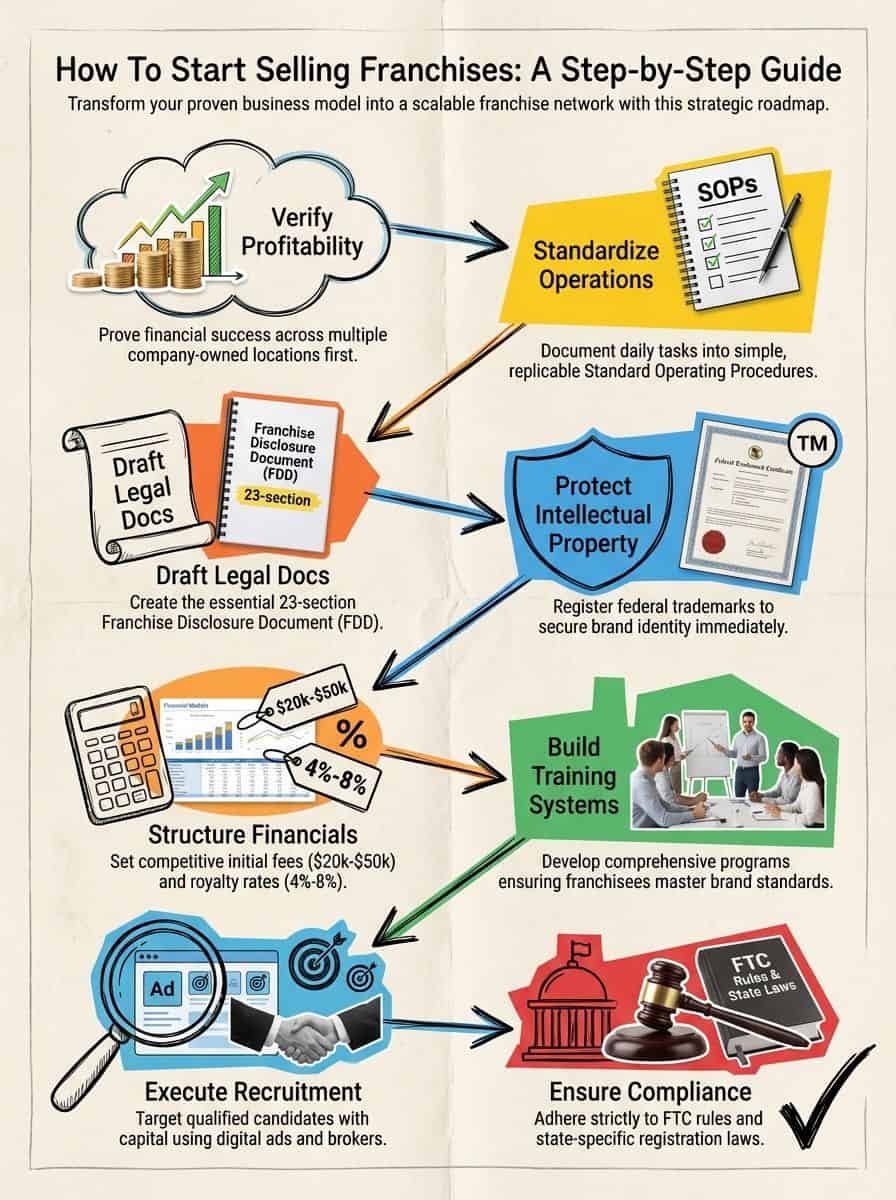
Verify your profitability first. Check if your business has steady profits and strong brand recognition before franchising. Use profit tests from several locations and track all costs. Make sure operating procedures are simple enough for new owners to follow.
Handle the legal heavy lifting. Prepare a Franchise Disclosure Document (FDD) with the 23 sections required by the Federal Trade Commission. This includes three years of audited financials. Legal help can cost $18,000 to $45,000. Also, remember that fourteen states require FDD registration before you sell.
Set your numbers correctly. Set franchise fees within industry standards. This is usually $20,000 to $50,000 upfront. Set royalty payments between 4% and 8% of gross sales. Outline total investment costs like remodeling or inventory in the FDD so buyers know what to expect.
Support is your product. Support new franchisees with clear operations manuals that often run 100+ pages. Provide regular training programs covering daily tasks and compliance rules. establishing feedback channels like monthly calls or group chats. Offer perks such as bulk purchasing discounts.
Vet candidates strictly. Screen candidates with full credit checks and background reviews for lawsuits or fraud cases. Brokers at expos may take up to a 50% commission on fees but can find qualified leads quickly. Use interviews based on proven success traits to find the right fit.
Table of Contents
Assessing Your Business for Franchising
Before you jump into the franchise business model, you need to be sure your store makes steady profits. It needs to attract customers in different places. You must nail down all the steps that make your daily operations smooth.
This is exactly what future shop owners will copy.
How do I evaluate if my business is profitable and scalable for franchising?
Test profit margins across a few company-owned locations first. Crunch the numbers hard. If net profits stay healthy in different spots, the franchise business model has legs. The Federal Trade Commission says folks look for clear proof of money made on past sales before they sign any franchise agreement.
In my experience running shops, tracking every cost is non-negotiable. You need to watch rent, payroll, and inventory to spot weak points. Fix them before you try to scale. A 2024 report from the International Franchise Association (IFA) suggests that a business should be operating profitably for at least two years with a minimum of two prototypes before attempting to franchise.
Strong brand recognition opens more doors than a slick logo ever could. Your business should appeal to many types of people across various target markets. Check if market demand stays solid in new areas by using ads or hosting pop-ups.
Build simple operating procedures and an operations manual that anyone can follow. You need trademarks locked down early. You also need your Franchise Disclosure Document (FDD). Want more tools? Visit https://www.franchisefastlane.com/carpool for resources like small business development centers or info about royalty payments and flat fees as you plan which core business processes to replicate next.
What core business processes should I identify to replicate in a franchise?
Start with clear standard operating procedures for every key area. Think about daily tasks like opening routines, customer service steps, inventory tracking, price setting, payroll methods, and quality control checks.
These written SOPs boost the odds of franchise success. They give new owners a step-by-step playbook. A solid Franchise Operations Manual should include:
- Cash management guidelines: Exact steps for opening and closing the register.
- Crisis response plans: How to handle power outages or difficult customers.
- Technology tools: Instructions for using the POS system or online checkout.
- Staff training scripts: Exact words to use during customer interactions.
Make sure your processes are simple enough that someone new to your field could follow along easily. Regular feedback from franchisees will help spot gaps or areas that need tweaking.
Track which marketing strategies work best in different places while keeping core branding steady. Flexibility matters. But do not break what works. Test all systems under pressure before you roll them out everywhere. One small leak can sink a big ship fast! Thorough documentation also covers how to protect proprietary information using non-disclosure agreements so everyone plays by the same rules.
Legal Requirements for Selling Franchises
No one wants a lawsuit over missed paperwork or sketchy contracts. You will need a franchise attorney who knows the Franchise Disclosure Document (FDD). They need to know trademarks. They must know those tricky Federal Trade Commission rules like the back of their hand.
How do I draft a Franchise Disclosure Document (FDD)?
Drafting a Franchise Disclosure Document (FDD) calls for accuracy and patience. The Federal Trade Commission says your FDD must lay out 23 clear sections. These range from company history to franchise fees, royalty payments, trademarks, key team members, and legal disputes. You must also include three years of audited financials.
Preparing Item 19 requires you to back up any sales claims with real numbers. If you mess up or skip items like audits or details on lawsuits, you could face major headaches.
Insider Warning: Many new franchisors try to hide past litigation in the FDD. Don’t do it. State examiners in strict states like California and New York check these filings against public records. Getting caught in a lie here can get your registration denied permanently.
Hiring a seasoned franchise attorney can save time and trouble. Legal experts charge between $18,000 and $45,000 for this work. Fourteen states want that FDD registered before you sell anything. Visit ftc.gov to spot those hot spots on the map.
Give buyers at least 14 days with your document before asking for signatures or payments. SMB Franchise Advisors note that custom documents set you apart. Strong industry bonds help during audits or if consumer affairs comes calling over pricing complaints or credit scores gone sideways.
What steps are needed to register trademarks and intellectual property?
First things first. Run a trademark search using the USPTO database. This step helps you see if your logo or business name stands alone in the franchise market. After that, pick the right class for your goods or services from the 45 classes set by USPTO.
File your application through their online system. Be ready to pay between $250 and $750 per class. In my own experience, budgeting at least $1,500 made life easier. Costs can add up quick.
The wait starts after filing. Expect eight to twelve months before approval comes through. Watch out for that 30-day opposition period once your mark is published. If there are no objections, you are good to go! Track progress with the TSDR tool on USPTO’s website so nothing slips by while you focus on building brand recognition.
Protect your franchise system further with NDAs and well-prepared process docs. Those paper trails can save headaches down the road if an ex-partner runs off with trade secrets or steals marketing strategies.
How can I ensure compliance with franchise laws and regulations?
No shortcuts here. Every franchise sale must stick to federal and state franchise laws at every turn. The Franchise Disclosure Document (FDD) deserves your full attention. Get it registered in all required states like California, Illinois, or New York. Hand it over to each buyer. Keep a 14-day gap before signing any deal or grabbing that check.
Missing this step could make you the unlucky star of an FTC investigation.
Stay sharp with annual FDD updates so you do not run afoul of rules. Keep every proof-of-disclosure page safe. Paperwork matters more than ever if questions pop up later. Fourteen states demand registration before sale. Places like Virginia and Washington do not mess around with these rules.
If Florida is on your radar for a new retail spot or service hub under your brand name, know that it asks for filings but skips formal registration hoops. A solid franchise attorney makes life smoother by managing compliance hurdles. They keep tabs on changes from groups like the Federal Trade Commission (FTC). I learned early never to cut corners. My first go-around meant digging out old emails at midnight because my signed receipt pages vanished into thin air! Use simple digital storage tools like DocuSign or Dropbox to track signatures and receipts.
Looking at locations beyond just legal boxes? Check out which might be the best state to start an LLC based on tax perks or filing fees as part of long-term planning.
Structuring Your Franchise Offering
Get your ducks in a row with clear franchise fees and royalty payments. You do not want anyone guessing. Make every part of your offer crystal clear. This ranges from initial costs to the support you will provide. A strong plan today saves headaches tomorrow.
How do I set appropriate franchise fees and royalties?
Start by checking what others in your industry charge for franchise fees and royalty payments. Most initial franchise fees sit between $20,000 and $50,000. This covers things like site selection help, training programs, and the first splash of marketing strategies. It also helps your guy get equipment or licenses.
Royalty fees usually hover from 4% to 8% of gross sales. Think about your overhead costs too. Support does not come cheap if you want a solid franchise system with good customer engagement.
| Fee Type | Typical Range | What It Covers |
|---|---|---|
| Franchise Fee | $20k – $50k | Onboarding, initial training, site selection, legal setup rights. |
| Royalty Fee | 4% – 8% (Sales) | Ongoing support, brand usage, business coaching, software access. |
| Ad Fund Fee | 1% – 3% (Sales) | National marketing campaigns, brand development, digital assets. |
If you have strong brand recognition or a proven business model, folks might pay more for that peace of mind. Food retailers with big names often charge higher upfront costs than service franchises just starting out.
Put all numbers in your Franchise Disclosure Document (FDD) as required by the Federal Trade Commission’s franchise rule. Clear as day is best practice here! Sometimes offering lower royalties at first can motivate high performers. It can also support new locations during their start-up months.
Always check trends with a trusted franchise attorney or expert before stamping anything into the contract terms. They know their onions on legal compliance and market demand shifts better than most guys at the Better Business Bureau.
What are typical initial investment costs for franchisees?
Most guys hear “franchise” and think it costs an arm and a leg. The truth is slightly different. You will see franchise fees start at around $25,000 for many brands. Some business format franchises come in under $100,000 if you go with a smaller model.
Larger operations or hot industries may set you back several hundred thousand dollars before opening day even rolls around.
Outside the initial franchise fee, you have to stack up other expenses. These include rent on your space and remodeling (talk about sticker shock). You also have inventory purchases, equipment investments, and licenses from city hall. You need full insurance coverage because life happens fast. And do not forget that grand opening bash to drum up buzz.
A smart financial plan needs working capital too. This keeps the lights on until sales catch up to those bills. The Franchise Disclosure Document (FDD) breaks down every major cost line by line. Read it like your favorite playbook before signing any franchise agreement or talking business loans with the bank.
How do I establish ongoing support systems for franchisees?
After figuring out initial franchise investment costs, it is time to roll up your sleeves. You need to support those new franchisees. Regular training keeps everyone sharp. Host workshops, toss in online videos, and get people sharing what works best on the job.
Back when I ran a coffee shop, quick access to guides on brewing methods made all the difference for rookie baristas. Nothing fancy. Just clear processes in a simple operations manual.
Keep lines open for feedback with easy channels like monthly calls or group chats through popular apps like Slack or Microsoft Teams. This gives you honest updates straight from the field. Set up ways for owners to connect at meetings or through forums. They can trade tips instead of reinventing the wheel every time there is an issue about inventory control or marketing tools.
Use knowledge management systems like Trainual or Guru that store business format franchise materials everyone can reach anytime. Toss in perks like bulk purchasing programs. Even small discounts help guys manage costs and feel part of one big team committed to quality.
Developing Franchise Systems and Operations
Build a solid franchise system by writing easy-to-follow rules. Teach hands-on methods. Set up checks that keep your brand strong. Curious how these steps can turn even a rookie into a pro? Keep reading.
How do I create an effective operations manual?
A strong operations manual can make or break your franchise system. I once spent weeks pouring coffee and counting inventory with my team. We scribbled down every step of our daily grind to get it right.
Use clear language. Each Standard Operating Procedure should be so simple even a rookie can follow along while half-awake. Lay out sections by role or department. Think front counter, kitchen crew, and managers. It is a playbook for each job.

- Training Tips: Include visuals for tricky tasks to avoid confusion.
- Compliance Standards: clearly outline reporting for royalty payments.
- Financials: Explain how to handle small business loans or daily cash drops.
- Tech Guides: Screenshots for POS systems so nobody struggles during the rush.
Update content as you tweak processes. Outdated info tanks quality faster than bad eggs in an omelette shop. Your Franchise Disclosure Document (FDD) might include the table of contents for transparency. But keep most details private until after buyers sign the franchise agreement. Manuals often run over 100 pages. Do not skimp on detail if you want consistent service quality across your whole network.
What should be included in training programs for franchisees?
Every franchisee needs a training program that covers the nuts and bolts. Start with self-directed courses and hands-on in-store practice. Then move to group classroom lessons. Dive into operational basics like opening procedures, daily checklists, inventory control, and customer experience tips.
You also need to cover marketing strategy using proven playbooks. Include financial management for tracking sales or royalty payments.
Legal subjects matter too. Review the Franchise Disclosure Document (FDD). Focus on brand standards set by the Federal Trade Commission (FTC). Go over any franchise system obligations or contracts. Peer mentorship and annual conventions help boost skills after onboarding wraps up.
Training costs often include travel to headquarters for live classes. It includes printed materials you keep handy back at your location. It includes certifications you hang on the wall to show off. And it includes support visits from field coaches to iron out kinks early on. Want to know if a company takes this seriously? Check Item 11 of its FDD or chat with current business owners already running stores.
How can I set up quality control measures?
Start with a clear quality control framework for your franchise system. Spell out operational procedures. Set customer experience standards. Lay down compliance requirements in your operations manual.
Audits should be both scheduled and surprise visits. Those unannounced checks tend to keep everyone on their toes. Regular compliance audits can lower product recall rates by up to 30 percent. Digital quality management tools like SafetyCulture or GoAudits make it easier to track results and spot issues fast.
Build feedback loops so franchisees feel heard. They can share what works or needs fixing. This approach often sparks ideas that keep processes sharp across the network. Use stats. Strong quality control can bring in 35 percent more revenue. It can also drop return and rework costs by about 15 percent.
Franchisees will notice better customer loyalty too. A solid system bumps retention up by as much as 20 percent. Quality measures are less about policing. They are more like keeping the whole team rowing straight so your brand reputation rises above the rest.
Building a Franchise Recruitment Strategy
Pulling in good franchisees takes more than a handshake and a smile. You need real strategies. Digital ads and social platforms help. Even seasoned brokers can help widen your net for the right partners.
How do I define the ideal franchisee profile?
Study your top franchisees. What makes them tick? Traits like enthusiasm, grit, and a strong work history matter most. Seek people who have enough capital in the bank. They should have a solid track record in business or jobs. They should not be shy about rolling up their sleeves.
Integrity counts. Some folks talk big but never deliver on promises. Weed those out early.
Nail down must-have skills for your franchise business model. Maybe you want risk-takers. Or maybe you want self-starters with an eye for following clear rules set in your operations manual. Segment candidates based on these traits to avoid wasting time on the wrong crowd.
Build candidate profiles using real data from successful partners. Use that blueprint to target new leads through marketing strategies. This could include digital ads or working with franchise brokers at expos. Speak clearly about what matters to your brand recognition goals. Every applicant must know if he has what it takes before diving into the FDD and signing any franchise agreement terms and conditions.
How can franchise brokers and expos help in recruitment?

Franchise brokers save you time by sorting through candidates, paperwork, and franchise agreements. Many take a 40% to 50% cut of the initial franchise fee as commission. So they hustle to fill your pipeline with qualified leads who can afford a proven business model.
Some only represent companies they know and trust. This means you get motivated partners but maybe not the widest pick of franchises for sale. Brokers help shape recruitment strategies. They often dish out marketing tips that actually work in real life.
Expos make finding strong franchisees easier too. Nothing beats shaking hands and sizing up candidates face-to-face at these events. You talk shop. You swap stories about entrepreneurship. You show off your brand recognition front-and-center. There is no need to explain why market demand matters or how royalty payments fit the mix.
I once made three solid contacts in one afternoon just chatting at an expo snack table. No joke. Both brokers and expos connect you fast with industry experts like BBBS members or master franchise owners. They give even more frank advice on building your network.
What digital marketing and social media strategies work best?
Local keywords boost search rankings. They drive traffic to your franchise business model. Paid ads target men seeking a proven business model. This puts your name in front of qualified candidates fast.
Social media profiles across all locations must look sharp and feel consistent. This raises brand recognition. It builds trust faster than you can say “franchise network.” Organic posts spark conversations about royalty payments or the initial franchise fee. It keeps potential owners engaged at no extra cost.
Email marketing works like clockwork for nurturing leads. Send resources on franchisee obligations. Invite contacts to webinars featuring industry experts such as a top franchise attorney explaining the Franchise Disclosure Document (FDD) and Federal Trade Commission (FTC) rules.
Artificial intelligence tools save time by automating follow-ups. They analyze market demand data from platforms like Facebook Ads Manager or Google Analytics. Then they tweak campaigns based on results. Digital tactics highlight your strengths compared with other brands. Think clear visuals showing support systems or testimonials touting smooth training programs to attract more qualified folks into your pipeline.
Vetting and Approving Franchisees
Choosing the right franchise partners takes sharp instincts. It takes a good mix of business strategies. You want folks who understand contractual obligations. They must handle money matters. And they must fit well with your proven business model.
What financial and background checks are necessary?
Credit checks come first. You want to see if your future franchisees handle money well and pay their bills on time. Banks or accountants review tax returns, bank statements, and debt loads. Services like Experian Connect allow candidates to share their credit reports with you securely.
If the candidate’s numbers raise red flags, that is a no-go for most franchise agreements. I have seen solid businesses get burned when they skip this step. Do not make that mistake.
A full background check digs even deeper than just finances. Think criminal records, past lawsuits, vendor disputes, or trademark trouble that could hurt your brand recognition down the line. Real-life story: one applicant almost slipped through with an old fraud case hiding in his files. Our screening process caught it in time.
The Federal Trade Commission recommends keeping all checks documented for compliance under franchise law and the Franchise Rule. Make sure you tick every box before going forward with interviews or next steps in selecting operational partners.
How do I conduct interviews and assess franchisee fit?
Dig into interviews with clear questions about management experience and operational excellence. Ask each candidate how they handled business challenges or followed set rules in past jobs. Sticking to brand standards is non-negotiable for a franchise business model.
Look at their willingness to follow the franchise agreement. They must embrace your proven systems. They must respect your intellectual property like trademarks or copyrights. Use structured interview forms so you judge everyone by the same standards. Do not rely on gut feeling.
Pro Tip: Ask about a time they disagreed with a boss’s policy but followed it anyway. You are looking for coachability. In franchising, a partner who constantly fights the system drains your resources and morale.
Focus on cultural fit. It matters as much as financial sense. You want someone who believes in your brand values. They should communicate well with staff and customers alike. Check references from old bosses or partners. Stories of missed royalty payments are red flags that should stop you cold.
A quick peek under the hood—income statements, background checks—protects both sides before ink hits paper on franchisee obligations or initial franchise fees. Setting up strong support systems for new owners keeps things running smoothly long after hiring day passes.
Launching Your Franchise
Getting your franchise off the ground takes grit. It takes sharp marketing tools. It also takes a few late nights with coffee. Set up clear steps for launch day so every buyer feels pumped and ready to roll.
How do I create marketing materials and sales tools?
Start with clear, sharp brochures. They should explain your franchise business model, highlight brand recognition, and lay out investment costs in plain numbers. Use real stories from successful franchisees or quick case studies to show what winning looks like.
Add charts to display market demand, fees, and expected royalty payments. I once helped a friend launch his gym chain. Nothing moved buyers faster than graphics mapping monthly returns.
Digital assets matter too. A clean presentation deck grabs attention at expos and meetings. Short videos showing the proven business model in action work wonders on social media channels like LinkedIn. Keep everything friendly to Federal Trade Commission rules. You do not want to get stuck reprinting costly materials later on.
Double-check disclosures about rebates, initial franchise fee details, patents held for intellectual property, and support systems offered. Make sure every document matches your main brand colors and voice for trust at first glance. Men catch mixed signals fast!
What should I include in informational sessions for buyers?
Lay out the franchise agreement clearly. Go over the initial franchise fee. Explain all royalty payments. Be honest about start-up costs, including equipment, leases, and working capital.
Show examples of territories available to each investor. Get specific about your trademarks. Share details so folks know what intellectual property covers their new business.
- Support Breakdown: Discuss training programs and marketing help.
- Financial Performance: Use Item 19 of your FDD to talk numbers legally.
- Approval Steps: Explain background checks and interview timelines.
- Real Timelines: Tell them if opening takes three months or six.
Give contact info for current or past franchisees. Nothing beats hearing it straight from someone wearing those shoes already. Bring clear steps on how applicants get approved. This sets you up well before creating marketing materials that seal the deal at launch.
How do I prepare for the initial franchise opening?
Get your business plan in order with solid market analysis and financial projections. Sit down with the Franchise Disclosure Document (FDD) at least 14 days before making any moves. It is not just paperwork. It is your playbook.
I once spent three nights sorting out permits. Start early, or you will be on a first-name basis with every city clerk in town.
Line up all licenses, permits, and insurance as required by both law and your franchise agreement. Hire staff using the franchisor’s checklist then train them as if you are preparing for opening day at Yankee Stadium. Stick to marketing strategies that follow brand guidelines. Digital ads bring buyers through the door while flyers reach local hands fast.
A grand opening event brings buzz. Think balloons, coffee, and giveaways. It gives people a reason to care about your new spot from day one. Operational systems must match the proven business model of the brand. Do not try to reinvent their wheel during crunch time.
Supporting and Growing Your Franchise Network
Helping your franchisees grow with training, new marketing strategies, and regular check-ins builds a healthy network. See how you can keep everyone winning at this next step.
How do I maintain ongoing training and support?
Keep franchisees sharp with regular operational and marketing support. Host annual conventions and set up peer mentorship programs. This way, owners swap ideas and learn from real-life challenges.
Update training materials each year. They must stay current with market demand and any changes in your business format franchise. Offer classes for main staff members, not just the boss. Everyone should know how to use the latest processes.
Give access to a strong network of fellow franchisees. No man is an island here. Use in-house recruiters for help at a lower cost than outside hiring firms. This saves everyone money. Provide ongoing assistance. Steady help leads to happier partners who stick around longer in your franchise system.
Every update or extra workshop keeps your brand recognition high. It gives all locations that proven business model edge you want them to have on day one. It helps them every day after that too.
What are effective ways to network with franchisees?
Ongoing support is only half the job. Strong connections seal the deal. Local franchise expos, chamber meetings, and development conferences offer real face time with fellow franchisees.
Shaking hands at these events can open doors faster than a cold call ever could. Online tools like LinkedIn groups or industry webinars let you reach out without leaving your desk chair. Set a clear goal before each networking event or online session. Know who you want to meet and what value you bring.
Prepare a quick intro about your proven business model. Explain how your brand recognition helps everyone’s growth. Listen more than you talk. People share gems when given space to speak. Follow-up messages that use first names and reference shared stories go far in building trust within the franchise network.
Sharing strategies for royalty payments or running joint marketing programs will help both sides win. It makes everyone feel part of something bigger than just their own storefronts.
How do I plan for franchise expansion and growth?
Zero in on regions with high growth. The Southeast is growing at 6.2 percent. The Southwest is at 8.5 percent. Use these stats to spot new markets for your franchise network.
Use a multi-unit or area development approach. These can speed up expansion while letting you build brand recognition faster than single locations ever could. According to recent data from FranData, over 50% of all franchise units are now owned by multi-unit operators. This is where the real scale happens.
Each added location matters. Units often pull in thirty to fifty grand per year just from royalty payments set at five to six percent. Franchisors usually hit break-even after launching five to ten units. They might start seeing profits within two or three years.
Smart use of tech can help keep operations smooth. It attracts solid franchisees investing their own capital. This lowers risk for the franchisor. Regular performance checks and updates to your business format franchise system mean smoother sailing as you grow larger. Never skip those audits if steady growth is your aim.
What Will Franchising Look Like in 2026?
Franchise business models will move fast by 2026. Growth is set to beat the broader economy, thanks to new tax laws and smarter franchise relationships. AI will give franchise systems a huge boost by making every decision sharper with real-time data at your fingertips.
Multi-Unit, Multi-Brand Owners (MUMBOs) will rise in numbers as younger owners enter and older ones scale up.
Expect better transparency since technology opens more doors for both sides of a franchise agreement. Franchise disclosure documents (FDD) and brand recognition will matter even more with higher standards and stricter Federal Trade Commission (FTC) rules.
Marketing strategies will shift. Smart spending on local ads powered by artificial intelligence will help franchises stand out in everything from home services to fitness clubs. From my years working both behind the counter and now helping launch brands, I see hungry buyers chasing proven business models. They are across retail, logistics, and food spots. They are even in businesses you can run from home. They are driven by demand for flexibility and trust in solid brands.
People Also Ask
What is a franchise disclosure document (FDD), and why do I need it to start selling franchises?
Think of the Franchise Disclosure Document (FDD) as the mandatory playbook you must hand over at least 14 days before a prospect signs any contract. It lays out every critical detail, from litigation history to financial performance, ensuring your potential partners know exactly what they are buying. This legal transparency establishes the immediate trust needed to close the deal.
How does brand recognition help when selling a business format franchise?
Brand recognition works as a shortcut to buyer trust because industry data shows that over 90% of franchise businesses are still operating after five years. When investors see a familiar logo, they know they are buying a survival rate that independent startups simply cannot match. This proven stability makes them willing to pay significant upfront fees for a piece of your success.
What should I include in my marketing strategies for attracting new members to my franchise network?
You should aggressively prioritize digital advertising channels to attract new members, as recent reports indicate that 65% of all qualified franchise leads now originate directly from online sources.
Why are royalty payments important in a typical franchise agreement?
Royalty payments, which typically average around 6% of gross sales, are the steady revenue stream that funds your headquarters and ongoing support teams. This capital allows you to run powerful national advertising campaigns that benefit every individual location in your system. Without these regular contributions, you would lack the resources to protect and grow the brand network.
References
- https://1851franchise.com/the-ultimate-guide-to-franchising-your-business-phase-1-laying-the-foundation-how-to-perform-a-self-assessment-2730587
- https://franchisecreator.com/converting-your-business-processes-into-franchise-ready-systems/
- https://smbfranchising.com/the-ultimate-game-plan-drafting-essential-documents-for-a-winning-franchise/ (2023-10-18)
- https://www.jaburgwilk.com/news-publications/the-trademark-registration-process-guide
- https://www.uspto.gov/trademarks/basics/trademark-process
- https://www.franchiselawsolutions.com/learn/franchise-compliance/franchise-sales-compliance-guide
- https://franzy.com/blog/how-to-decide-on-franchise-fees-and-royalties/ (2025-09-12)
- https://www.franchise.com/resources/estimating-initial-investment-costs-for-a-franchise
- https://www.theupsstorefranchise.com/blog/considering-buying-franchise-steps-costs-and-considerations (2025-10-10)
- https://paulcollege.unh.edu/sites/default/files/media/2022/07/iddy_dissertation_2021.pdf
- https://franzy.com/blog/how-to-develop-a-franchise-operations-manual/ (2025-06-26)
- https://frannet.com/resources/business-ownership/franchise-training-programs-everything-you-need-to-know/ (2023-05-22)
- https://franchisecreator.com/quality-control-checklist-maintaining-franchise-standards-across-locations/ (2025-08-13)
- https://www.researchgate.net/publication/235266574_An_analysis_of_quality_management_in_franchise_systems
- https://msaworldwide.com/franchisee-recruiting/creating-the-profile-of-your-ideal-franchisee/
- https://www.fmsfranchise.com/mastering-franchise-recruitment-and-marketing/ (2024-09-30)
- https://sprintlaw.com.au/articles/how-to-build-a-franchise-recruitment-strategy/ (2025-11-30)
- https://tour.franchisebusinessreview.com/posts/digital-marketing-for-franchisors/
- https://vcheckglobal.com/blog/the-importance-of-vetting-franchisees-a-guide-for-franchises/ (2024-07-17)
- https://franchiseexpert.com/faqs-on-popular-background-screening-franchises-2/
- https://www.elysiummg.com/franchise-marketing-guide/ (2025-03-21)
- https://www.franchiselawsolutions.com/learn/how-to-franchise
- https://www.time4youfranchise.com/knowledge-base/step-by-step-guide-how-to-start-a-franchise-business
- http://home.miracosta.edu/cwadeson/Mariotti%202nd%20Ed%20Chap%2002.pdf
- https://1851franchise.com/comprehensive-training-and-support-how-to-evaluate-key-franchise-resources-2727540 (2024-11-14)
- https://www.franexpousa.com/networking-strategies-for-franchise-professionals-building-valuable-connections (2025-03-27)
- https://franchisecreator.com/franchise-your-business/
- https://www.getjobber.com/academy/franchise/franchise-development-strategy/
- https://tour.franchisebusinessreview.com/posts/franchising-predictions-2026/ (2025-12-16)

