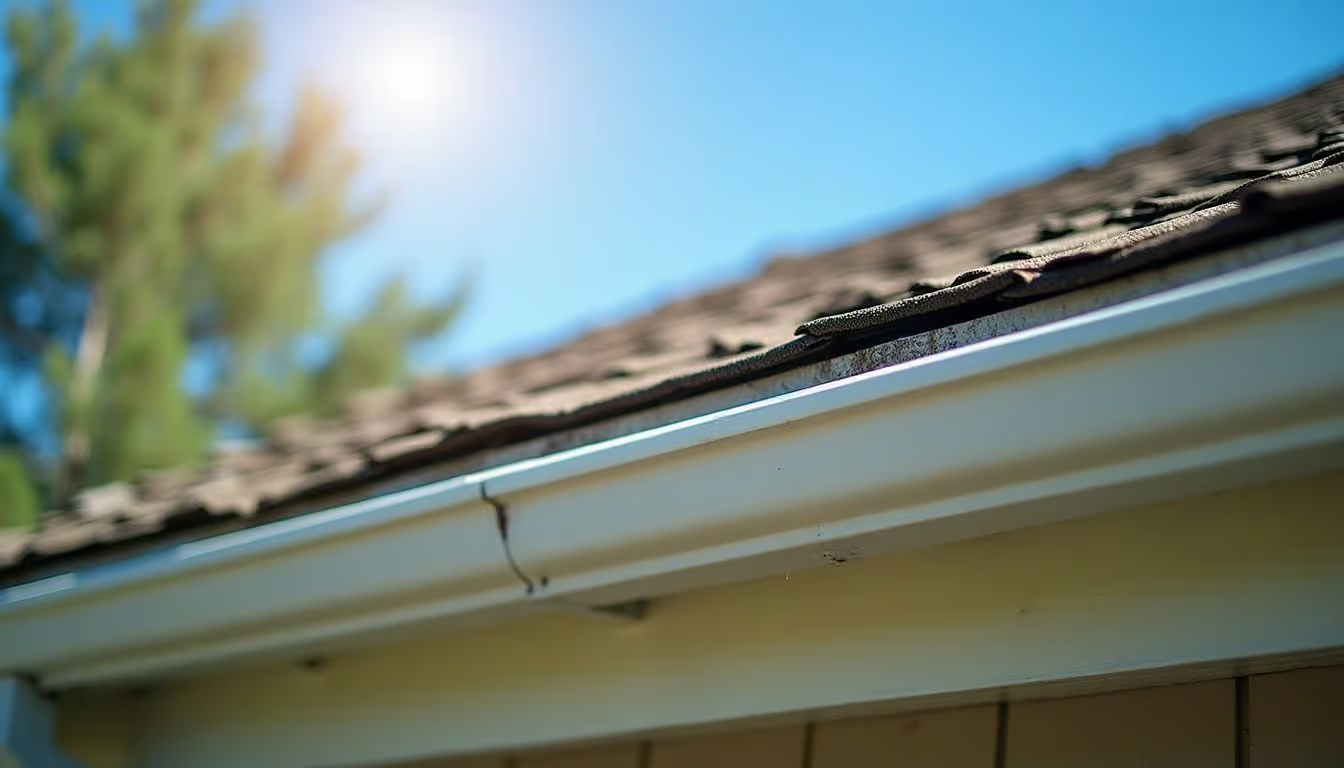
Worried about a leaky roof? It’s a common headache for homeowners, but definitely a fixable one. Think of your roof like the captain of your home’s defense team, shielding you from rain, wind, and snow. Keeping it in prime condition is one of the smartest things you can do for your house.
This guide will walk you through exactly how to maintain a roof, turning you from a worried homeowner into a confident roof-whisperer. Let’s get to it.
Key Takeaways
Inspect your roof twice a year, ideally in the spring and fall, to catch minor problems before they escalate. A professional inspection typically costs between $150 and $400.
Keep your roof and gutters free of debris. Clogged gutters are a leading cause of water damage to your home’s foundation and fascia boards.
Trim overhanging tree branches, keeping them at least six to ten feet away from your roof to prevent damage from storms and pests.
Ensure your attic has proper insulation and ventilation. This is your best defense against ice dams, which can cause significant water damage in the winter.
Address damage immediately. The cost of a minor repair, like replacing a few shingles, is minimal compared to the thousands of dollars a major leak can cost.
Table of Contents
Conducting Regular Roof Inspections and Cleaning

Regular check-ups are the foundation of good roof maintenance. They help you spot small issues before they snowball into major, expensive headaches.
Schedule Routine Inspections for Your Roof and Attic

Let’s talk about keeping your roof in fighting shape. You should have a professional inspect it twice a year, ideally in the spring and fall. Think of it as a tune-up for your home’s most important shield.
These inspections catch problems early. According to data from home service marketplaces in 2024, a professional inspection can cost anywhere from $150 to $400. That’s a small investment to prevent a multi-thousand dollar problem.
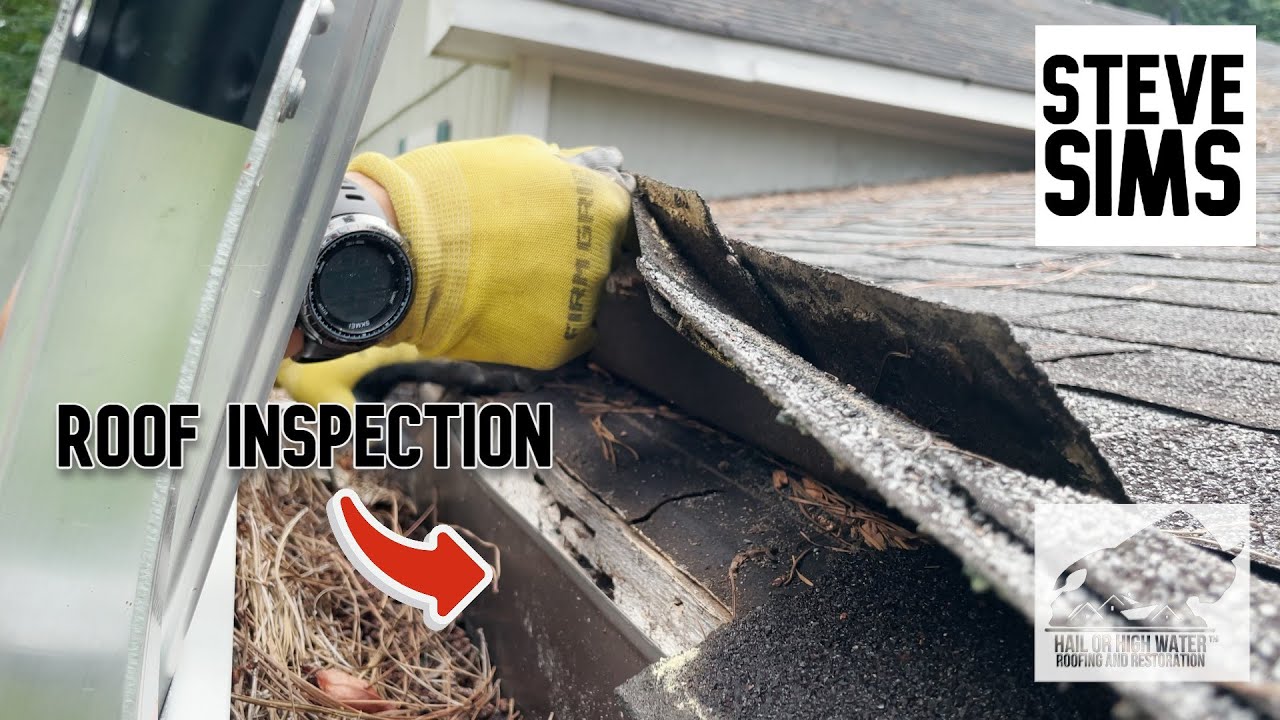
You can also do your own inspections from the ground and in your attic. Grab a flashlight and head up to the attic after a heavy rain. Look for these subtle signs of trouble:
- Damp or compressed insulation
- A musty or moldy smell
- Dark stains or streaks on the wood
- Any daylight showing through the roof boards
If you spot anything concerning, it’s time to call in a certified professional for roof repairs in Perth or your local area before it gets worse.
Maintain Cleanliness of Roof Surfaces and Gutters
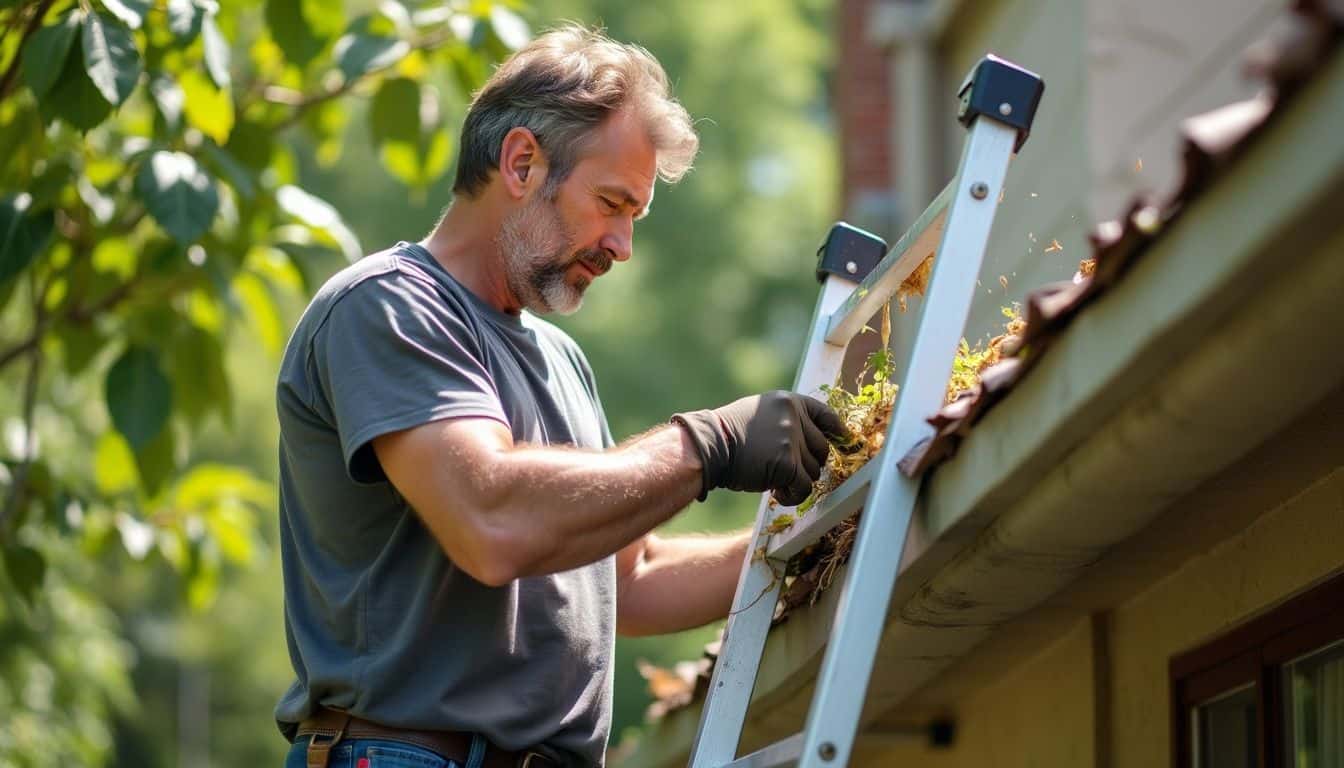
Keeping your roof clean is a big deal. Leaves, pine needles, and other debris can trap moisture, leading to rot and encouraging algae or moss growth. Plan to sweep or blow off your roof at least twice a year.
Your gutters are just as important. If you have trees nearby, you should clean them every three to four months. Clogged gutters can cause water to back up and seep into your roof, walls, and even your foundation.
A clean roof is a happy roof, and clean gutters protect your entire home.
To make life easier, consider installing gutter guards. Products like LeafFilter use a micromesh screen to block debris while letting water flow freely. This drastically reduces how often you need to climb a ladder, though you should still inspect them annually.
Implementing Preventative Roof Maintenance
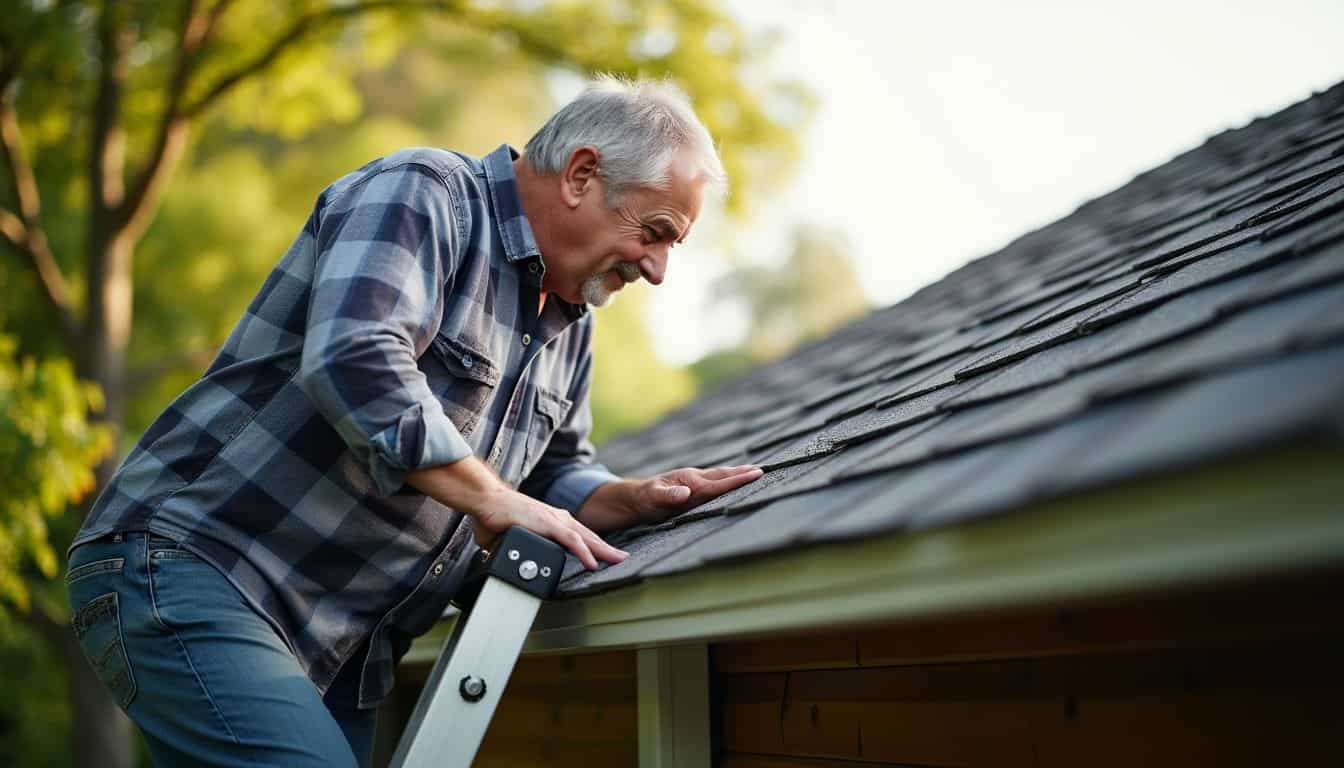
Great roof care is about being proactive, not reactive. Taking a few preventative steps can save you a fortune in repairs and extend the life of your roof by years.
Address Plant Growth on Your Roof
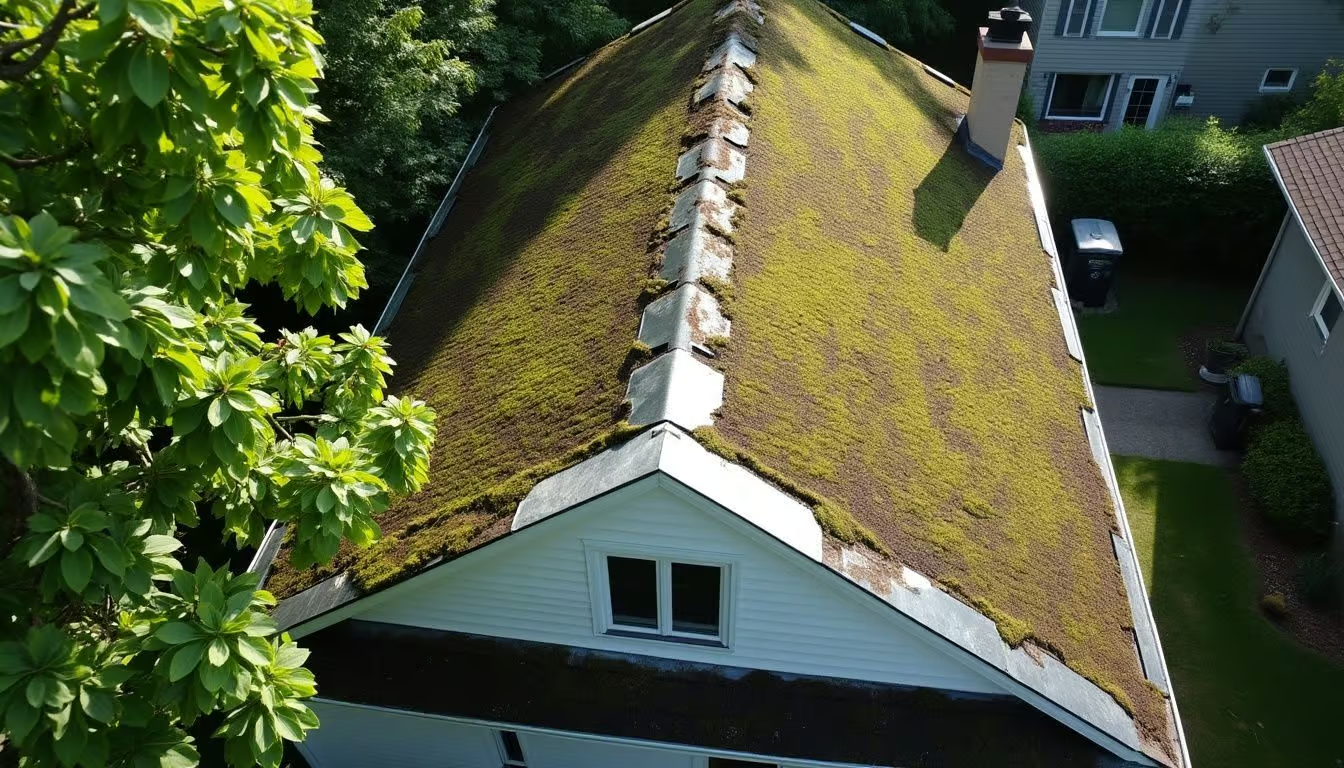
Moss, algae, and lichen might look quaint, but they are destructive. They hold moisture against your shingles and can lift them up, creating pathways for water to get in.
You can gently scrub away light growth with a soft brush. For more stubborn patches, a 50/50 mix of water and laundry-strength bleach can work, but be sure to protect your plants below from the runoff.
For a long-term solution, consider installing zinc or copper strips just below the roof’s peak. When it rains, metallic particles wash down the roof, creating an environment where moss and algae can’t grow. It’s a pro-tip that works wonders.
Alternatively, products like Wet & Forget can be sprayed on and work over time with the rain to clear growth without harsh scrubbing. Just remember to tackle any new growth quickly before it takes hold.
Trim Overhanging Trees to Reduce Roof Damage
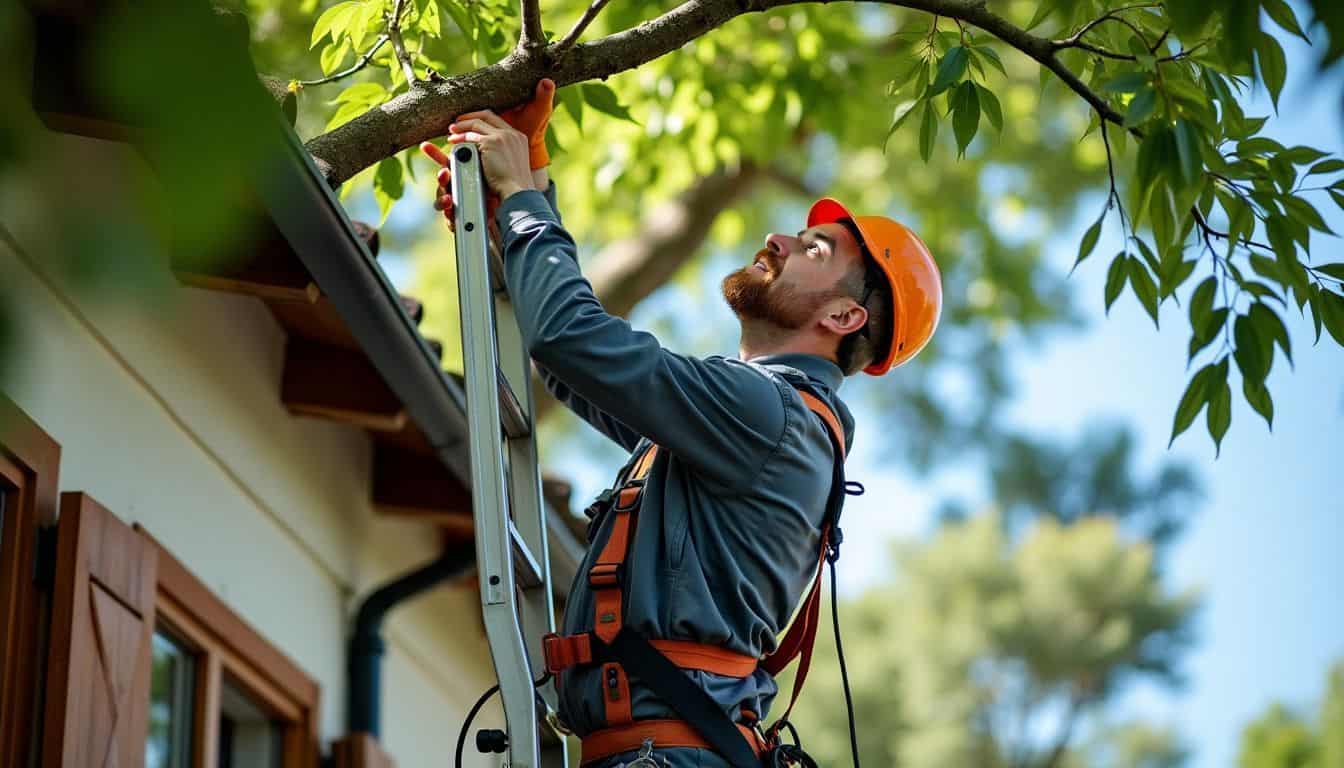
Those beautiful, mature trees can be a hidden threat to your roof. Overhanging branches can scrape away the protective granules on your shingles during high winds, shortening their lifespan. I learned this the hard way during a summer storm.
Branches also create a bridge for squirrels and other pests to access your roof and attic. Worse, a heavy, snow-laden branch or one that breaks in a storm can cause catastrophic damage.
A well-trimmed tree is a roof’s best friend. Aim to keep all branches at least six to ten feet away from your roofline.
For any large limbs, it’s best to hire an ISA Certified Arborist. They are trained to prune trees for health and safety without causing damage to the tree or your property.
Maintain Soffits, Fascia, Gutters, and Downspouts Effectively
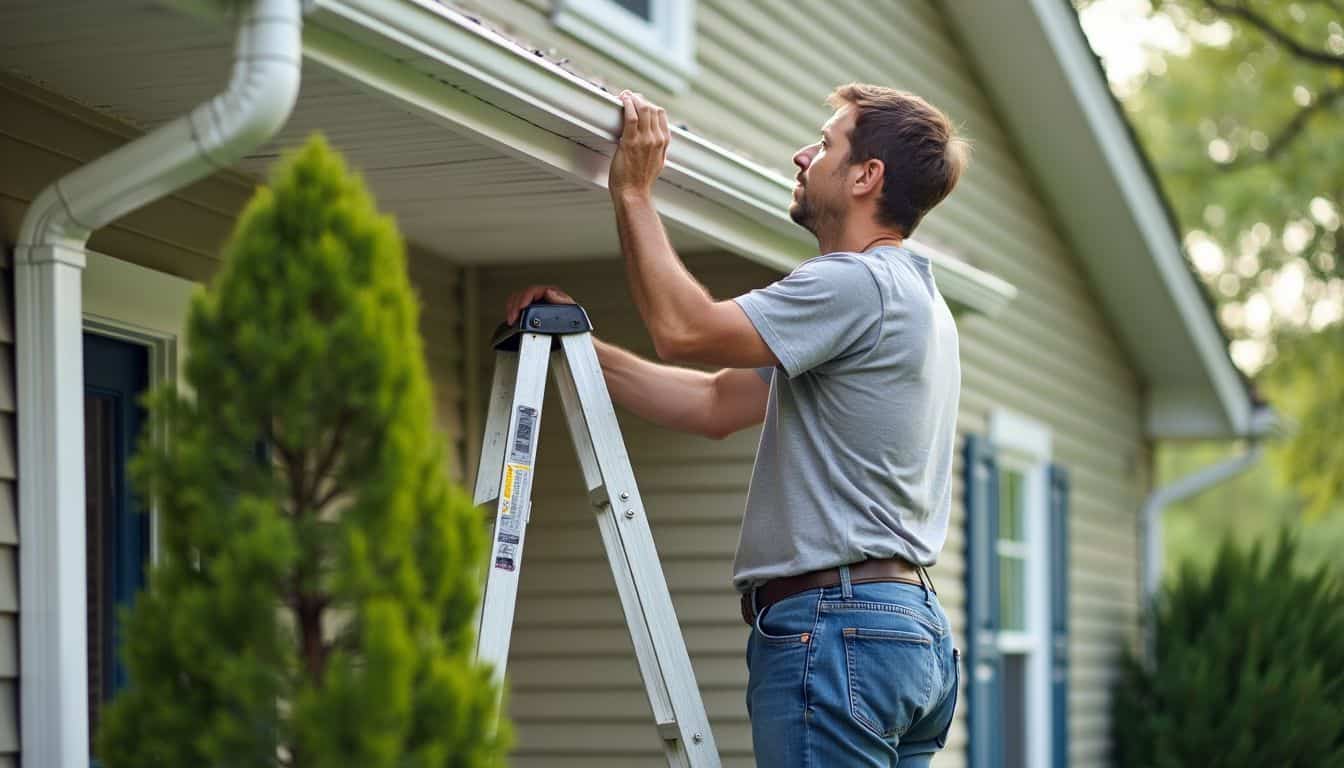
Let’s talk about the unsung heroes of your roofing system: the soffits, fascia, and gutters. These components work together to direct water safely away from your house.
Soffits provide ventilation to your attic, while the fascia is the board that your gutters are attached to. During your biannual inspection, check them for signs of rot, pest damage, or peeling paint. Materials like vinyl and aluminum are low-maintenance, but wood fascia needs regular painting to prevent rot.
Ensure your gutters are securely attached and that downspouts direct water at least five feet away from your foundation to prevent basement leaks. A simple pro-tip is to run a garden hose on the roof and check for leaks in the gutter seams and ensure a clear flow out of the downspout.
Seasonal Roof Maintenance Tips
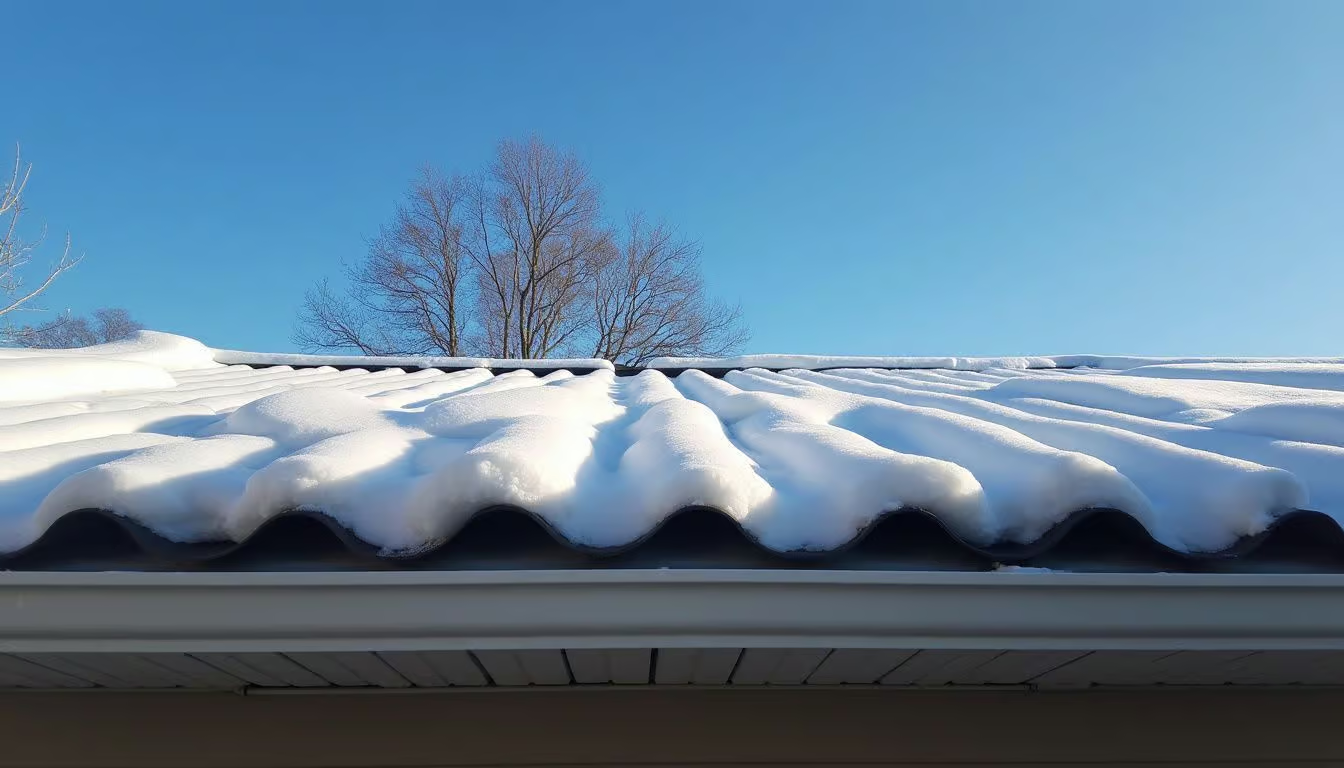
Your roof faces different challenges with each season. A little preparation can help it handle everything from winter ice to summer sun, keeping your home protected all year long.
Prepare Your Roof for Winter Conditions
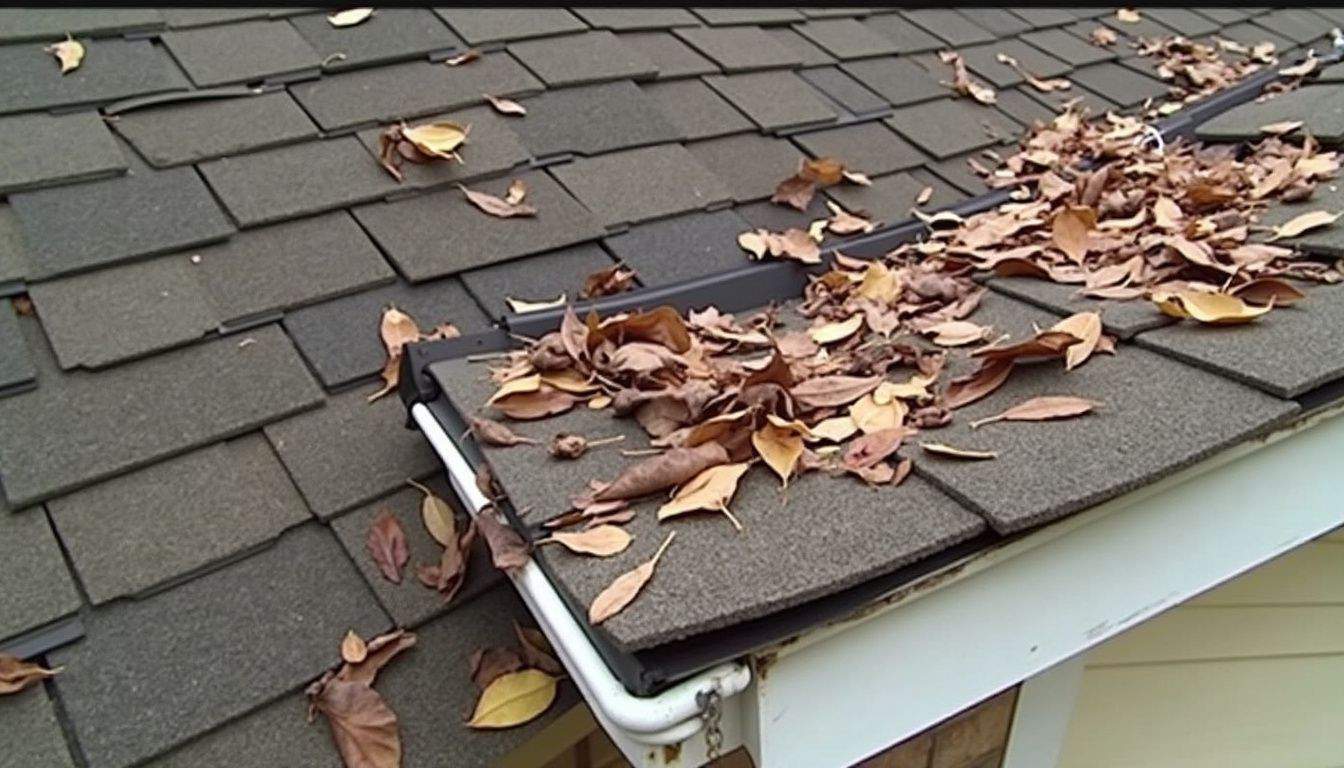
Winter is the toughest season for your roof. Before the first snowfall, it’s crucial to get it ready. Start by clearing all debris from the roof and gutters to prevent water from pooling and freezing, which can lead to ice dams.
Next, give your shingles a final check. Look for any that are cracked, curling, or missing, and replace them immediately. These are weak spots where water can easily penetrate once the snow starts melting.

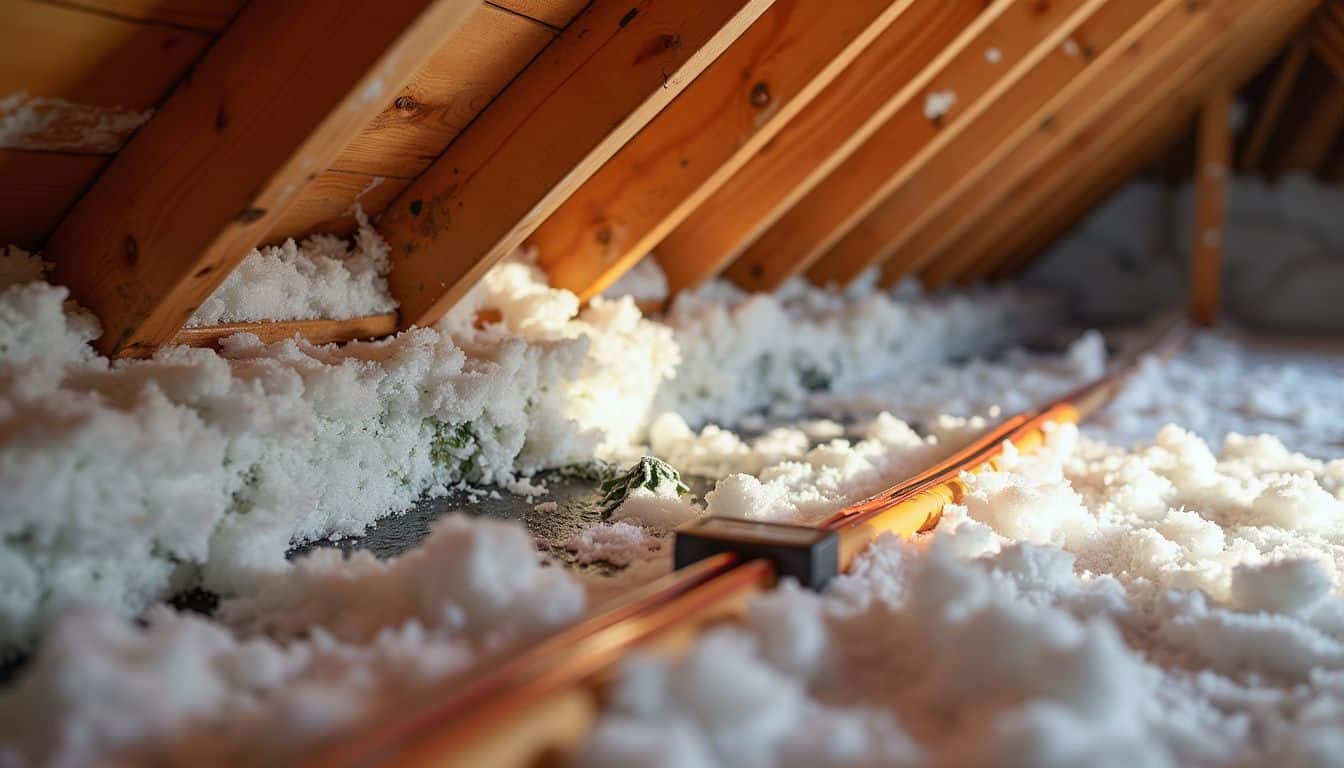
Proper attic insulation is your number one defense. The U.S. Department of Energy recommends an insulation R-value of R49 to R60 for attics in colder climates. This keeps warm air from your home from melting the snow on your roof, which is the primary cause of ice dams.
An ounce of prevention is worth a pound of cure. This is especially true when it comes to winter roof prep.
If you live in an area with heavy snowfall, consider getting a roof rake. These tools have a long handle that lets you safely pull snow off the edge of your roof from the ground to relieve weight and prevent ice buildup.
Techniques to Prevent Ice Dam Formation
Ice dams are ridges of ice that form at the edge of a roof, preventing melting snow from draining. The water that backs up behind the dam can leak into your home and cause serious damage.
The best long-term solution is a combination of good insulation and ventilation. Sealing air leaks from your living space into the attic is critical. Use spray foam or caulk to seal gaps around light fixtures, plumbing vents, and attic hatches.
For extra protection, especially on low-sloped roofs, roofing contractors install an ice and water barrier. This is a self-adhering waterproof membrane, like the industry-standard Grace Ice & Water Shield, that is installed under the shingles along the eaves. For a more active approach, heated cables can be installed in a zigzag pattern along the roof’s edge to melt channels for water to escape.
Timely Roof Repairs and Protective Measures

Don’t let a small roof problem become a major disaster. Addressing issues quickly and using protective measures can save you a ton of cash and keep your roof going strong for years.
Promptly Repair Roof Damages
Roof damage is no joke. A single missing shingle can let in enough water to cause hundreds or even thousands of dollars in damage to your insulation, drywall, and ceilings.
Visible leaks, curling or cracked shingles, or a sagging roofline are all urgent red flags. The cost of a minor repair is typically between $150 and $500. Compare that to the national average for a full roof replacement, which can easily exceed $10,000. It’s clear that acting fast is the smart financial move.
It’s always a good idea to keep your eyes peeled after severe weather. A quick check of your roof and attic can help you spot damage early. Remember, a stitch in time saves nine, and that’s especially true for the roof over your house of your dreams.
Utilize Protective Coatings and Sealants for Your Roof
Let’s talk about giving your roof some extra armor. Protective coatings and sealants act as a shield for your shingles, guarding them against harsh UV rays and moisture.
Think of it as sunscreen for your house. These products can extend the life of an older roof by several years, plugging small cracks and restoring some flexibility to aging shingles.
There are different types, but elastomeric and silicone coatings are popular choices. A product like Henry’s Tropi-Cool Silicone Roof Coating can create a seamless, waterproof membrane that also reflects sunlight to keep your home cooler.
Applying a coating is a proactive step that can help you delay a costly replacement. It’s a great option if your roof is structurally sound but is starting to show its age.
Safety Protocols for Roof Maintenance

Safety is non-negotiable when you’re doing roof work. One misstep can have serious consequences, so let’s cover how to stay safe while you’re taking care of your roof.
Adhere to Safety Guidelines for Roof Maintenance Work
Roof work can be risky, which is why following safety rules is essential. According to OSHA, falls are the leading cause of death in construction, so this is no time to cut corners.
If you’re going up on the roof, you need the right gear. This means, at a minimum, sturdy, non-slip boots. For any steep or high roof, a Personal Fall Arrest System (PFAS), which includes a harness, lanyard, and anchor point, is critical. Also, never work on a roof alone.
Weather is another huge factor. Never work on a wet, icy, or windy day. When using a ladder, make sure it’s on stable, level ground and that you always maintain three points of contact: two feet and a hand, or two hands and a foot. Following these guidelines, which are stressed by safety groups like OSHA, is the best way to ensure you finish your project safely.
People Also Ask
How often should I clean my roof?
You should clean debris off your roof at least twice a year, in the spring and fall. If you have a lot of overhanging trees, you might need to do it more often. This simple task prevents moisture buildup and stops moss and algae from taking root, which can save you from costly repairs.
What’s the deal with roof flashing?
Roof flashing is a thin metal material, typically galvanized steel or aluminum, that directs water away from critical areas of your roof. You’ll find it around chimneys, skylights, and vents. It’s essential to check your flashing for rust, cracks, or gaps, as failed flashing is one of the most common sources of leaks.
How do I know if my roof needs replacing?
Key warning signs include widespread curling or cracked shingles, significant loss of the sandpaper-like granules, and bald spots. If your asphalt shingle roof is over 20-25 years old, it’s likely nearing the end of its lifespan. An obvious sign is active leaks in multiple places in your attic.
Can I DIY my roof maintenance?
Some tasks are perfect for DIY, like cleaning gutters from the ground with a hose extension or trimming small branches you can reach safely. However, for tasks that involve getting on the roof, like replacing shingles or inspecting flashing up close, it’s much safer to hire a licensed and insured professional.
How important is roof ventilation?
Roof ventilation is crucial. It’s a system of intake and exhaust vents that allows air to circulate through your attic. Good ventilation helps regulate temperature and moisture, preventing ice dams in the winter and reducing your cooling costs in the summer. It’s a key factor in extending the life of your entire roofing system.

