
Ever look in the mirror and wonder if there’s a way to stop the clock? You’re definitely not the only one asking.
For centuries, men have tried everything to outlast their expiration date. We’ve gone from searching for mythical fountains to experimenting with wild science like freezing our bodies or merging our minds with machines.
The goal is always the same: we want our story to continue.
I’m going to walk you through seven real paths—from ancient wisdom to 2025 tech—that promise to extend your legacy. Whether you want to live forever biologically or ensure your name never fades, let’s see what’s actually possible.
Key Takeaways
Longevity Science is Booming: The market for longevity technology is projected to hit roughly $23.5 billion in 2025, driven by advances in senolytics and gene therapy.
Biohacking is Getting Extreme: Tech mogul Bryan Johnson’s 2025 “Blueprint” protocol now includes hyperbaric oxygen therapy and new supplements like Lithium to slow his rate of aging.
Nature Has the Answers: The “immortal jellyfish” (Turritopsis dohrnii) and naked mole rats show us that biological immortality is theoretically possible in the animal kingdom.
Cryonics Has a Price Tag: Freezing your body for a future revival is a reality today, with the Alcor Life Extension Foundation charging around $220,000 for whole-body preservation in 2025.
Digital Immortality is Here: AI tools like StoryFile and HereAfter AI can now create interactive video avatars of you, allowing future generations to “chat” with you long after you’re gone.
Legacy Matters: Beyond tech, symbolic immortality through art, family, and ethical wills remains the most reliable way to ensure your impact endures.
Table of Contents
Understanding Immortality
We chase eternal life in many ways. Some of us try to slow down the aging process with supplements and cold plunges. Others dream of uploading human consciousness to a server so we can outsmart death entirely.
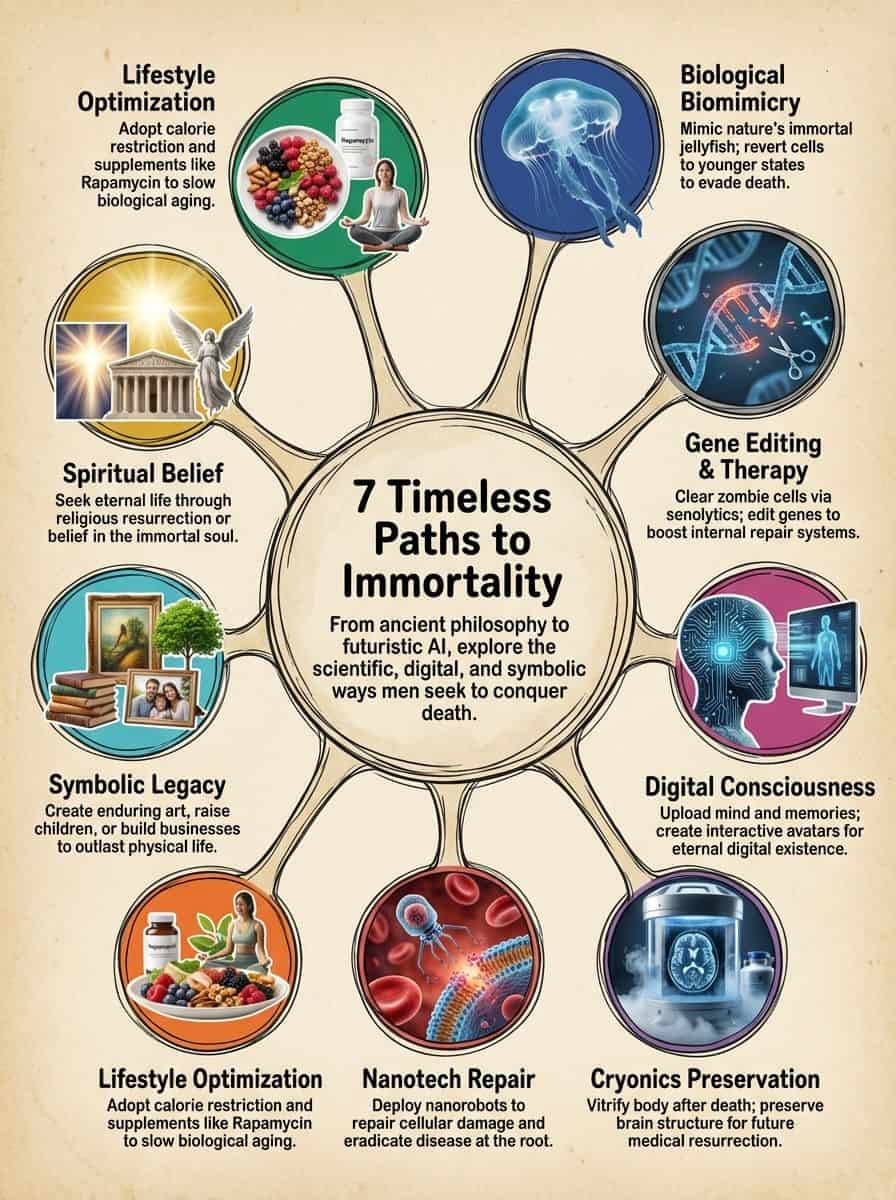
What does immortality really mean?
Immortality isn’t just one thing. It’s a spectrum. Philosophers have argued for centuries whether it belongs to the soul, the mind, or the body.
Dualists like Plato believed your soul is a separate passenger that hops out when the car breaks down. Materialists argue you are the car—your brain and body are the whole show. That’s why some modern scientists are betting big on digital immortality, hoping to back up our “software” before the hardware fails.
I remember late-night debates in college about this. We’d argue whether a digital copy of your brain is really you, or just a glorified chatbot. Today, that question isn’t just for philosophy majors; it’s a serious business model.
If you want to track the latest in this race to cheat death, I check sites like Conquer Mortality for updates.

To be immortal is to continue existing no matter what happens, physically, spiritually, or digitally.
The Three Types: Physical, Biological, and Digital
Let’s move from theory to the actual menu of options available to men today. Here is how the three main types break down:
- Physical Immortality: This is the “sci-fi” dream—keeping your current body alive indefinitely. You would need endless repairs and upgrades to stop the aging process. Tech entrepreneur Bryan Johnson is the poster child for this; in 2025, his updated protocol involves over 100 daily supplements and rigorous therapies to keep his “rate of aging” below 0.70.
- Biological Immortality: This actually exists in nature. The Turritopsis dohrnii, or “immortal jellyfish,” can revert its cells back to a youthful state when stressed. It doesn’t die of old age; it just cycles. Humans are trying to copy this using stem cells and gene editing (like CRISPR) to fix our own cellular damage.
- Digital Immortality: This involves preserving your mind rather than your meat. The idea is to capture your memories, personality, and decision-making patterns in code. Services like HereAfter AI are already doing a basic version of this, recording your life stories to create an interactive “avatar” that your great-grandkids can talk to.
- The Spiritual Element: Physical and digital paths often mix with ancient beliefs. Whether it’s the Christian hope for resurrection or the Hindu concept of punarjanma (rebirth), the drive is the same: we refuse to accept that the end is really the end.
- The Nanotech Future: Experts predict that medical nanorobotics—tiny machines smaller than blood cells—will one day patrol our bodies. They would act like a 24/7 repair crew, fixing damage from heart disease or Alzheimer’s before you even feel a symptom.
- The Hayflick Limit: This is the hard speed limit on human life. Normal cells can only divide about 50 times before they stop. Overcoming this barrier is the “holy grail” for biological life extension research labs.
I’ve tried simple calorie restriction myself to see if I could boost my energy. Honestly? It mostly just made me hungry. But seeing guys like Johnson push the limits gives me hope that science might eventually offer an easier way.
Scientific Approaches to Immortality

Nature is full of strange tricks. While we struggle with knee pain and gray hair, some animals seem to shrug off the aging process entirely. Scientists are racing to decode their secrets to fix human problems like Parkinson’s and Alzheimer’s.
Which organisms naturally live forever?
If you want to know how to live forever, look at the creatures that are already doing it. These biological outliers prove that aging isn’t inevitable for every species.
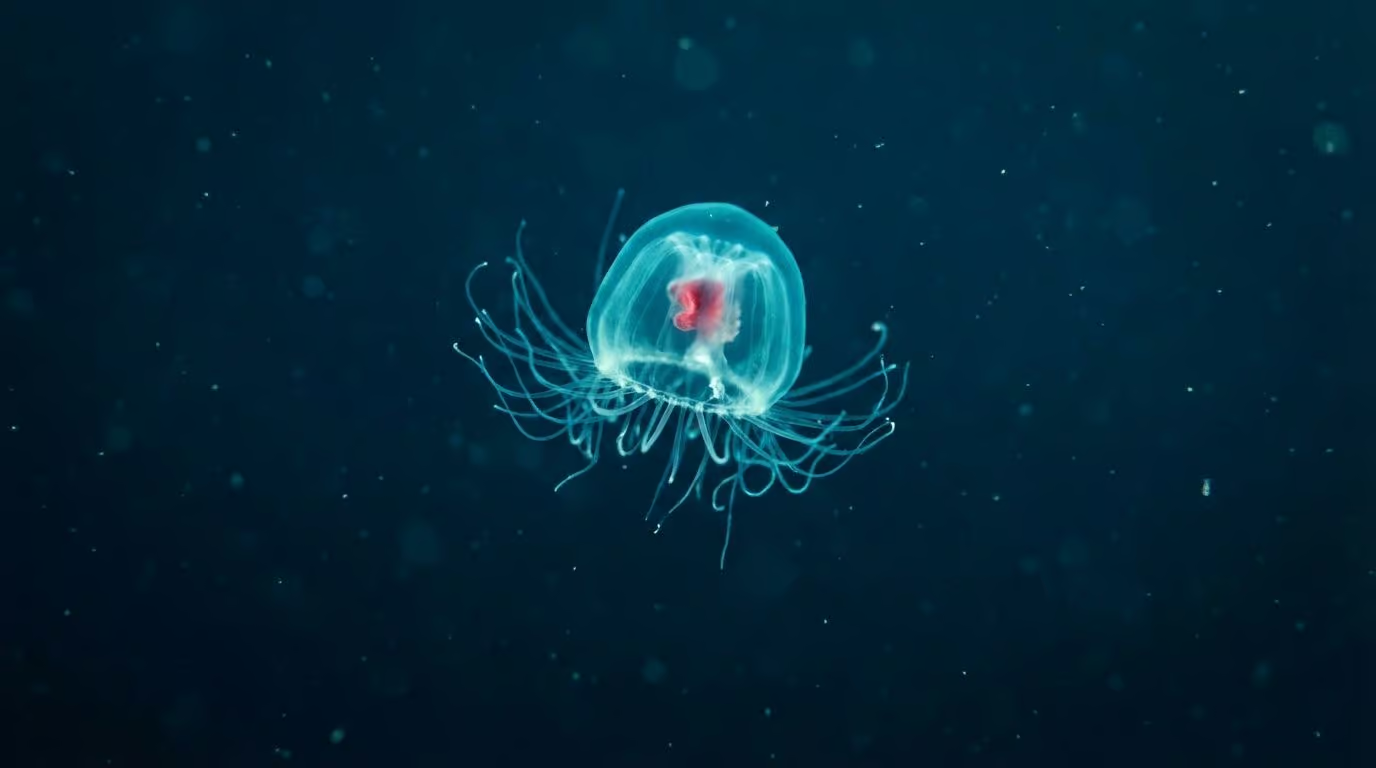
- The Immortal Jellyfish (Turritopsis dohrnii): This tiny creature is the MVP of longevity. When injured or starving, it hits a “reset button,” transforming its adult cells back into a baby polyp state. It can do this repeatedly, theoretically living forever.
- Hydra: These freshwater relatives of jellyfish are famous in labs. They don’t seem to undergo senescence (aging). Their stem cells are so active that they can renew their entire bodies indefinitely, as long as they aren’t eaten or destroyed.
- Naked Mole Rats: These ugly-cute rodents are medical marvels. They live incredibly long lives for their size (over 30 years) and are remarkably resistant to cancer. Their risk of dying doesn’t shoot up as they get older, defying the standard rules of mammalian aging.
- Planarian Worms: These are the masters of regeneration. You can cut one into tiny pieces, and each piece will regrow into a completely new worm. They maintain biological immortality by keeping a reserve of powerful stem cells ready to rebuild any missing part.
- HeLa Cells: Taken from Henrietta Lacks in 1951, this is the most famous immortal human cell line. While Henrietta passed away, her cells kept dividing in petri dishes worldwide. They have been essential for developing the polio vaccine and cancer research.
- Human Germlines: Your body cells age, but your reproductive cells (sperm and eggs) have a special “clean up” mechanism during their formation. This ensures that babies are born young, not with the accumulated aging damage of their parents.
What are the latest anti-aging technologies?
We can’t turn into jellyfish, but we are building tools to mimic their tricks. In 2025, the longevity market is buzzing with new trials and therapies aimed at slowing human aging.
- Senolytics (“Zombie Cell” Killers): These drugs target senescent cells—old cells that stop dividing but refuse to die, causing inflammation. While a 2025 study from the Mayo Clinic showed mixed results for bone health, new candidates like UBX-1325 are showing promise in treating specific eye diseases.
- Metformin: This cheap diabetes drug is the focus of the TAME (Targeting Aging with Metformin) trial. While the full trial is still fighting for funding, telehealth platforms like ReadyRx have started prescribing Metformin “off-label” to healthy adults who want to potentially extend their healthspan.
- Rapamycin: Originally used for transplant patients, this drug is gaining traction in the biohacking community. It works by inhibiting a pathway called mTOR, which mimics the effects of fasting.
- Gene Therapy: Companies are moving beyond theory. The Hevolution Foundation has committed over $400 million in grants by 2025 to fund research into the biology of aging, including gene therapies that could boost our body’s natural repair systems.
- Biomarker Tracking: You can’t manage what you don’t measure. Biological age tests (like DNA methylation clocks) are now standard for serious longevity enthusiasts. They tell you if your lifestyle is actually slowing down your internal clock.
- AI in Drug Discovery: Artificial intelligence is speeding up the hunt. It scans billions of molecules to find new anti-aging compounds faster than any human lab could.
The longevity sector is exploding. Reports project the global market could reach $23.5 billion in 2025. It’s no longer just a niche for billionaires; it’s becoming a massive industry.
How is genetic engineering advancing immortality?
Molecular genetics has made wild leaps. Scientists are now tinkering with the very code of life to stretch our time on Earth.
The biggest game-changer is CRISPR genome editing. It allows researchers to snip out faulty genes and paste in healthy ones. In 2025, the focus is shifting from just curing rare diseases to potentially editing the genes that control aging itself.
Researchers are also making progress with lab-grown organs. Imagine needing a new heart and growing one from your own stem cells—no rejection risk, no waiting list. It sounds futuristic, but labs are already growing mini-livers and kidney tissues to test drugs.
The idea is simple: if we can repair our DNA faster than it breaks down, we might be able to outrun the aging process. It’s the ultimate “maintenance schedule” for the human body.
Technological Pathways to Immortality
If biology fails us, technology is the backup plan. From freezing bodies to uploading minds, these are the mechanical paths to living forever.
How can AI and consciousness uploading work?
Some futurists like Ray Kurzweil believe we will eventually merge with machines. Digital immortality is the idea of copying your brain’s data—memories, personality, quirks—onto a computer.
We aren’t there yet, but we have early versions:
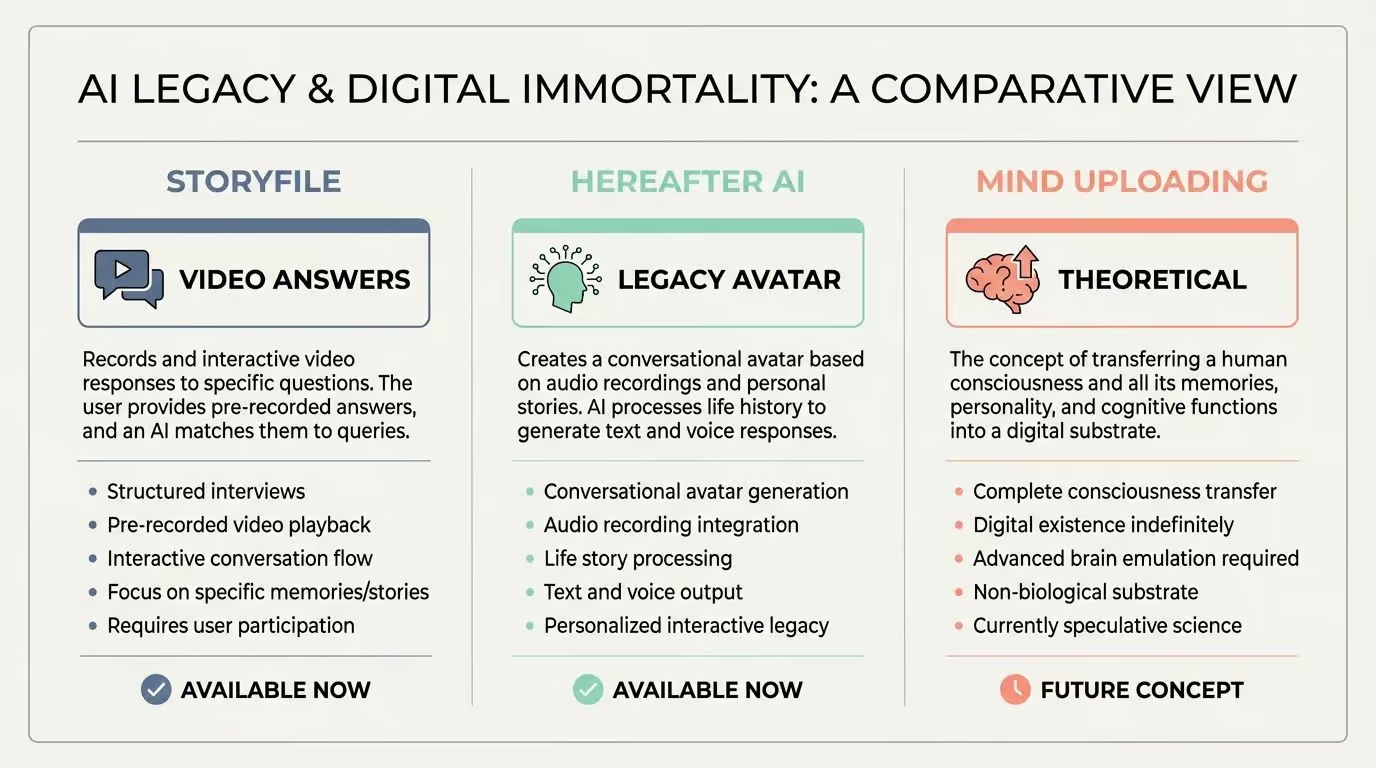
| Service | What It Does | The 2025 Reality |
|---|---|---|
| StoryFile | Records video answers to life questions. | Used at funerals to let guests “chat” with the deceased via interactive video. |
| HereAfter AI | Turns photos and audio into a legacy avatar. | Lets your family hear your stories in your voice when they ask specific questions. |
| Mind Uploading | Full transfer of consciousness. | Still theoretical. Current tech can’t capture the “spark” of self-awareness. |
The big debate is philosophical: Is a digital copy really you, or just a ghost in the machine? If you copy a file and delete the original, is it the same file? That’s the gamble of uploading.
“What would you give for another lifetime?”
What is cryonics and how much does it cost?
Cryonics is the practice of freezing your body immediately after legal death. The hope is that future technology will be able to cure whatever killed you and revive you.
It’s a long shot, but for some, it’s the only shot. The Alcor Life Extension Foundation in Arizona is the big player here. As of 2025, the price tag is steep:

- Whole Body Preservation: Approximately $220,000.
- Neuro Preservation (Head Only): Approximately $80,000.
- Annual Dues: Membership fees now scale with age, calculated as $15 multiplied by your age.
Teams use cryoprotectants to prevent ice crystals from shredding your cells. It’s a process called vitrification, turning your tissue into a glass-like state. It sounds intense, but if the alternative is disappearing forever, some men find the cost worth the potential reward.
How does nanotechnology repair cells?
Medical nanorobotics is the field of building machines at the scale of a virus. The dream, popularized by K. Eric Drexler, is to have millions of these nanobots flowing through your bloodstream.
In 2025, the market for healthcare nanorobots is growing, projected to exceed $10 billion. Right now, they are mostly used for targeted drug delivery—sending chemo directly to a tumor without poisoning the rest of the body. But the future goal is repair.
Imagine a fleet of tiny mechanics that can scrub plaque from your arteries or repair DNA damage in real-time. If this works, we wouldn’t just treat diseases like Alzheimer’s; we would prevent the damage that causes them in the first place.
Philosophical and Spiritual Perspectives on Immortality
Before we had microscopes, we had monks and philosophers. The desire to live forever isn’t new; it’s one of the oldest human obsessions.
How do ancient and modern philosophies view it?
Ancient thinkers like Plato argued that the soul is immortal and naturally outlasts the body. For him, death was just a liberation. In the East, the Upanishads taught that you could reach a state of deathlessness through spiritual purification.
Modern philosophy has shifted. Thinkers today are less concerned with souls and more worried about identity. If I replace every part of my body with a machine, am I still me? This is the “Ship of Theseus” paradox applied to the human condition.
“The body is merely an instrument for carrying out the orders given by thought.”
What do major religions say?
Religion offers the original roadmap to eternal life. It usually requires faith rather than FDA approval.
- Christianity: Believes in the resurrection of the physical body. The core promise is that death is temporary and believers will be raised again.
- Islam: Teaches that life is a test and the soul survives death to face judgment. The outcome is eternal reward or punishment in the afterlife.
- Hinduism: Sees life as a cycle. The soul (atman) goes through reincarnation (samsara) until it learns enough to achieve liberation (Moksha).
- Buddhism: Takes a different turn. It aims to escape the cycle of rebirth. The goal isn’t to live forever as “you,” but to reach Nirvana and end the suffering of existence.
- Judaism: Views vary, but traditional teachings often include the resurrection of the dead in the World to Come (Olam Ha-Ba).
Whether it’s joining the ancestors or merging with the universe, these traditions provide comfort that biological death isn’t the final curtain.
Practical Ways to Achieve Symbolic Immortality
Maybe you can’t live forever in a body, but you can live forever in a mind. Symbolic immortality is about leaving a mark that outlasts you.
How can you create a lasting legacy?
Legacy is what remains when you leave the room. It’s the most accessible form of immortality.
In the digital age, we have new tools for this. “Ethical Wills” are becoming popular—documents where you share your values, stories, and hopes for your family, rather than just who gets the car. Platforms like GoodTrust or Legacy.com help you manage your digital footprint, ensuring your photos and emails don’t just vanish (or get locked forever) when you pass.
I realized the power of this when I found an old letter from my grandfather. It wasn’t famous literature, but hearing his “voice” in those words brought him back to life for me instantly.
What contributions build immortality?
You don’t have to be Shakespeare to be remembered, but creating something helps.

- Create Art: Paint, write, or build. Art captures your perspective. Van Gogh is more alive today in culture than he ever was in person.
- Advance Science: Contributing to research—even as a participant in a study—adds a brick to the wall of human knowledge.
- Mentor Others: Teaching a skill transfers a piece of your mind into someone else’s. Every time they use that skill, a part of you is at work.
- Build a Business: Founders leave behind institutions that can shape communities for generations.
- Strengthen Relationships: This is the big one. The memories you create with friends and family are the stories they will tell at your wake. Make them good ones.
Why are relationships the key?
Author Irvin Yalom wrote that “rippling” is the way our influence spreads to others, often without us knowing. Your kindness to a friend might inspire them to be kind to their child, sending a ripple of your personality forward in time.
We see this in “geek biohacking” communities too—men sharing data and tips. Even if the hacks don’t work, the shared pursuit creates a bond and a shared history that outlives the individual experiments.
Ethical Considerations of Immortality
If we actually crack the code and live for 200 years, things are going to get weird. The social and moral questions are just as tough as the scientific ones.
What happens if we never die?
Imagine a world where nobody leaves. Overpopulation would become an immediate crisis. We would likely see strict rules on having children—you might have to choose between immortality and parenthood.
Then there’s the wealth gap. Longevity treatments like stem cell therapy and cryonics are expensive. We could end up with a caste system where the rich live forever and the poor age and die as usual. That’s a recipe for serious social unrest.
There is also the issue of stagnation. Death clears the way for new ideas. If the same CEOs and politicians hold power for centuries, how does society evolve?
Is eternal life even desirable?
Would you really want to live forever? The philosopher Todd May argues that death gives life meaning. The scarcity of time forces us to choose what matters.
If you have infinite time, there’s no urgency to do anything today. You could become bored, detached, or totally risk-averse. Plus, the grief of outliving every non-immortal person you love—again and again—could be a psychological burden too heavy to carry.
Challenges and Limitations to Becoming Immortal
Despite the hype, we have a long way to go. The road to eternity is full of potholes.
What are the main barriers?
Real talk: current tech isn’t ready to save us yet. Here is what is standing in the way:
- Complexity of Aging: Aging isn’t just one switch. It’s a mess of DNA damage, protein errors, and “junk” accumulation. Fixing one part often breaks another.
- Brain Preservation: We still don’t know if a frozen brain retains memories. Vitrification is great for structure, but does it keep the “software” intact?
- Mind Uploading Limits: We can’t even simulate a worm’s brain perfectly yet. Simulating the human mind’s 86 billion neurons is a computational challenge we haven’t solved.
- Legal Status: You have to be declared dead to be cryopreserved. If you freeze yourself while alive, it’s considered suicide or homicide. This delay damages the brain.
- Data Security: If you upload your mind, who owns it? Could you be hacked? deleted? copied against your will?
For now, the best strategy is to stay healthy enough to be around when the breakthroughs happen. Check out these vital health tips for men to keep your chassis running.
What about the psychological toll?
Our brains evolved to handle a lifespan of maybe 70 or 80 years. We don’t know what 500 years of memory does to a human mind.
You might run out of storage space, forgetting your childhood to make room for your 300s. Or you might suffer from profound identity crises as the world changes so much that you no longer recognize it. The psychological weight of eternity is the hidden cost of the physical prize.
How Will the Quest for Immortality Evolve in 2025?
We are living through a pivotal moment. In 2025, the conversation has shifted from “if” to “how fast.”
The Hevolution Foundation is pouring massive resources into the field, hosting global summits to coordinate research across continents. Meanwhile, labs like Altos Labs are publishing papers on cellular rejuvenation, suggesting that we might soon be able to reverse the biological age of specific tissues.
We are also seeing a split. On one side, you have ultra-wealthy biohackers testing extreme protocols. On the other, you have regular men starting to take Metformin and track their sleep data, hoping to catch the wave.
Whether it’s through a pill, a frozen chamber, or a digital avatar, the race is on. And even if we don’t hit the finish line of “forever,” the medical breakthroughs we find along the way will likely give us all a few more healthy years to write our story.
People Also Ask
What role do stem cells play in the quest for eternal life?
Stem cells serve as the body’s raw materials, and researchers are currently testing how mesenchymal stem cells can regenerate damaged tissues found in Parkinson’s and Alzheimer’s disease. Companies like Longeveron are leading US-based clinical trials to see if these cells can effectively reverse frailty in aging men.
Who is Bryan Johnson, and why does he matter in talks about immortality?
Bryan Johnson is a tech entrepreneur who invests roughly $2 million annually into Project Blueprint, a rigorous experiment where he acts as the primary test subject for age-reversal protocols. His goal is to lower his biological age by optimizing every marker from heart rate variability to skin elasticity through data-driven science.
How does turritopsis dohrnii connect to human immortality dreams?
The Turritopsis dohrnii jellyfish fascinates geneticists because it uses a process called transdifferentiation to revert its adult cells back into a juvenile polyp state. By mapping this creature’s genome, scientists hope to find gene-editing targets that could trigger similar regenerative abilities in humans.
Can ancient ideas like anamnesis or reincarnated souls teach us about becoming immortal?
Ancient concepts like Plato’s anamnesis suggest that your soul is already eternal and simply needs to recall its past knowledge rather than seeking a new physical extension.
Why did someone say “there’s plenty of room at the bottom” when talking about living forever?
Physicist Richard Feynman coined this phrase in 1959 to describe the vast potential of manipulating matter at the atomic level. For longevity seekers, it means the most effective anti-aging solutions will likely come from nanotechnologies that repair our bodies cell by cell.
References
https://pmc.ncbi.nlm.nih.gov/articles/PMC7371803/
https://en.wikipedia.org/wiki/Digital_immortality
https://www.science.org.au/curious/earth-environment/animals-can-live-forever
https://pmc.ncbi.nlm.nih.gov/articles/PMC2700247/
https://www.mewburn.com/news-insights/unlocking-immortality-the-innovations-driving-human-longevity (2025-02-10)
https://www.alcor.org/introduction-to-cryonics/
https://www.britannica.com/science/cryonics
https://pmc.ncbi.nlm.nih.gov/articles/PMC9314299/
https://foundations.vision.org/immortality-soul-149
https://www.psychologytoday.com/us/blog/4000-mondays/202308/the-pursuit-of-immortality-achieving-an-enduring-legacy (2023-08-31)
https://pmc.ncbi.nlm.nih.gov/articles/PMC10581374/
https://medium.com/counterarts/seeking-immortality-through-art-a5507ab74014
https://pmc.ncbi.nlm.nih.gov/articles/PMC8616748/
https://www.planksip.org/the-ethics-of-the-ethical-consequences-of-immortality-1763644280255/
https://www.planksip.org/the-ethics-of-the-ethical-consequences-of-immortality-1763638325796/
https://medium.com/@cybertec/the-technology-that-could-make-us-immortal-2b85c71a5329
https://pmc.ncbi.nlm.nih.gov/articles/PMC9040914/
https://www.psychologytoday.com/us/blog/the-superhuman-mind/202409/the-quest-for-immortality-what-do-scientists-say (2024-11-15)