
Ever wondered why finding clear info on the history of adult online games is like searching for a needle in a haystack? Sexual content has been packed into video games since Pac-Man’s heyday. It shows up in everything from simple text adventures to wild VR tech.
This blog cuts through the myths and confusion. You’ll see how erotic games changed with new tools, rating boards, and bold ideas.
Stick around, because some of these stories may surprise you.
Key Takeaways
Adult online games began in the 1980s with text-based forums and BBS. They featured titles like Custer’s Revenge on Atari and early Japanese eroge such as Yakyken (1981) and Night Life (1982).
Flash games exploded in the early 2000s on sites like Newgrounds. Multiplayer adult titles like Red Light Center and Second Life brought real-time social play while platforms like Steam opened to adult games after 2018.
VR tech grew fast from Oculus (launched 2012), HTC Vive, and Samsung Gear VR. Making gameplay more lifelike is key. By 2023, visual effects for these games hit $10.8 billion globally and are forecasted to reach $25 billion by 2030.
Crowdfunding through Patreon fueled indie hits like Summertime Saga in the 2010s. Over 83% of graphic designers now use generative AI tools to create characters or backgrounds for adult titles.
Today’s players are diverse. Women favor genres like simulation and puzzle. Over 29% of gamers are now over age 50. Cloud streaming removes device limits and lets anyone join worldwide lobbies. Regulation debates continue as cultural views shift.
Table of Contents
The Early Beginnings of Adult Online Games
The early days were wild, messy, and full of text-based banter. Yes, there was a little naughtiness too. Before big graphics or high-speed internet, curious minds gathered in early forums and made history long before sites like Gamcore hit the scene as the first online website dedicated only to adult games. But let’s not get ahead of ourselves. We’ll dive into that juicy story later.

Text-based games with adult themes
Early online spaces buzzed with text-based adult games in the 1980s. These digital adventures relied entirely on written stories to stir the imagination. Titles often included strip poker or bachelor party themes that used simple commands instead of flashy graphics.
Adult Interactive Fiction (AIF) found a home here too. Players typed choices to explore romantic plot twists or spicy scenarios.

Many of these games came from American multiple industries hungry for new video game genres after the video game crash of 1983. Forums swapped files featuring nudity in video games way before broadband downloads were common. Just ask anyone who waited for a read-only memory file over dial-up!
Did You Know? The earliest precursors to these games were text adventures like Softporn Adventure (1981). It was so popular that Sierra On-Line hired its creator to make the famous graphic version, Leisure Suit Larry, just six years later.
Later hits like Custer’s Revenge showed up on Atari VCS cartridges while others landed on PC-8801 and Commodore 64 computers. With no fancy visuals yet, this early era set the stage for visual novels and adventure games that followed once tech caught up to bigger dreams.
The influence of early internet forums
Guys used old internet forums and Bulletin Board Systems (BBS) in the 1980s and 1990s like secret clubhouses. If you had a dial-up modem and patience, you could join wild discussions about adult content on Atari 2600 games like Custer’s Revenge or Philly Flasher.
Members swapped game cartridges, read-only memory files, and cheat codes for erotic computer games. They even traded pixel art that made space invaders blush. Forums also buzzed with talk about softcore box art for Vixen or secrets hidden in arcade conversions.
Growing communities there helped normalize digital erotica before browser games took off. I remember downloading message threads full of tips for finding rare pornographic games or talking shop about Mystique titles. It was gritty stuff for the time! These chats set a tone where sharing adult video game tricks felt almost normal among strangers from across the country.

| Community Type | Primary Activity | Famous Example |
|---|---|---|
| BBS (Bulletin Board System) | File swapping & text games | Rusty n Edie’s BBS (Famous for huge file libraries) |
| Usenet Groups | Global discussion boards | alt.sex.stories (Collaborative fiction writing) |
| Early Web Forums | Modding & Cheats | GameFAQs (Hidden “Hot Coffee” discussions) |
New tech kept pushing limits as people gathered online to swap stories about favorite eroge subgenres or indie finds from folks like Edmund McMillen. That intersection of technology and sexuality was clear every time users logged in to chase after forbidden fun together.
The 1980s: Pioneering Digital Erotica
Back in the ’80s, digital adult fun began on early BBS with pixelated scenes and wild ideas. Games like Custer’s Revenge or Beat ‘Em and Eat ‘Em brought shock value, pixel art, and a lot of heated debates to home computers.
Adult content on bulletin board systems (BBS)
Time Magazine once called it “Orgies Online.” In the 1980s, over half of the 46,000 small BBS sites dabbled in some form of digital titillation. Guys logged in using slow dial-up modems to swap adult video games or chat about forbidden topics.
A simple menu click could open up a stash of racy text files or boot up old java games with grown-up themes. You might say BBS mixed tech and desire like peanut butter and jelly.
BBS communities were often tight-knit. Regulars swapped secrets as quickly as they did bizarre screenshots from early full-motion video experiments. This new freedom made adults-only gaming less taboo. Sharing content became an easy routine for many men at home since there was no store clerk to judge you for grabbing an “adults only” game cartridge.
Technology sped up how people found and consumed adult entertainment online. This laid down tracks for flash games, browser gaming, and wild multiplayer experiments coming next.
Rise of pixel art and basic graphic games
Early adult titles on the Atari, like X-Man and Custer’s Revenge, put crude pixel art to use for shock value. By 1982, home video games were booming. They were almost set to beat Hollywood at the box office by 1984.
The number of Atari games exploded from 100 to 400 in just six months. Mystique, Playaround, and Universal Gamex led this first generation with simple graphics that left little to the imagination yet made big waves among men seeking naughty thrills.
- Mystique: Known for the infamous Custer’s Revenge, which sold 80,000 copies despite protests.
- Playaround: Created “gender-flipped” double-ended cartridges like Bachelor Party / Bachelorette Party.
- Universal Gamex: Produced X-Man, a maze game with explicit goals.
These blocky pixel characters acted out explicit themes that pushed boundaries of taste and decency. Titles such as Cathouse Blues and Gigolo explored topics like prostitution with nothing but basic shapes on screen. Graphics may have been rougher than sandpaper, but they opened new doors for adults-only rating debates well before modern ESRB codes took center stage.
The 1990s: The Internet Revolution
Gamers started clicking away on browser titles and swapping mods through dial-up connections. The rise of Japanese eroge games, fueled by new communities on message boards and sites like AOL, sparked wild discussions about interactive stories.
Browser-based adult games
Flash let almost anyone make browser-based adult games. Newgrounds and Kongregate exploded with wild ideas, pixel art, and cheeky jokes by the early 2000s. Students played these titles in computer labs or between study breaks at universities.
No fancy consoles or PCs were needed. You just opened a webpage on any basic machine and started playing.
These games often had simple controls but bold themes. They mixed strategy puzzles with tongue-in-cheek humor that skirted censors where possible. Classic platforms gave birth to whole genres too. We saw tower defense marathons, hot coffee-inspired risqué quizzes, and even story routes inspired by Japanese eroge games.
Insider Fact: One of the most famous examples from this era was the Lula series. Lula: The Sexy Empire (1997) wasn’t just a gimmick; it was a full resource management simulation that proved adult games could have actual gameplay depth.
As phones got smarter and app stores took over, many of these Flash classics faded away due to technical limits. Yet their influence lingers in casual mobile hits today.
Emergence of Japanese eroge games
Games like Yakyken from Hudson Soft in 1981 kicked off Japanese eroge. Koei changed the game in 1982 with Night Life by dropping adult themes onto the NEC PC-8801. Soon after, titles like Danchi Tsuma no Yuwaku popped up.
Early eroge hit hard with sexual content but had stories thinner than a slice of sashimi.
Off consoles, eroge got wild as Sega of Japan clamped down on nudity for Sega Saturn games by 1996. By then, adult games thrived on personal computers instead. In 1999, Key’s visual novel Kanon mixed brief erotic scenes into its touching plot and sold more than 300,000 copies. That was a record-breaker back then.
Fans chatted about their favorite hentai games and mods on bulletin boards before Discord was even an idea. Eroge stories matured. They pulled in fans far beyond Japan’s borders while shaping modern adult gaming across the globe.
Growth of niche gaming communities
Online gaming started as a small hobby in the 1990s, but it soon turned into something bigger. Groups popped up around browser-based adult games and Japanese eroge. They traded tips and laughs on sites like GameFAQs.
People used early chat rooms, forums, and MUDs (Multi-User Dungeons) to meet others with similar tastes. Players swapped secrets about titles like Night Trap or House Party while arguing over ESRB ratings after the Hot Coffee Mod ruffled feathers.

- The “Hot Coffee” Incident: This hidden minigame in GTA: San Andreas cost Take-Two Interactive over $20 million in settlements, proving how sensitive the industry was to adult content.
- Twitch’s Influence: Later, streaming brought fans together for niche games most people never heard of, like fan-made parodies.
- Modding Communities: Sites like Nexus Mods began hosting “nude mods” for mainstream games like The Elder Scrolls, creating a massive gray market for adult content.
These circles supported indie game makers learning from player feedback. Adult-themed platforms became test labs for new ideas that were too wild for mainstream PlayStation brand consoles or Xbox stores.
The 2000s: Mainstream Expansion
Flash games hit adult sites fast with titles popping up everywhere. We saw everything from PC Engine throwbacks to wild PlayStation 2 mods. Multiplayer action added fuel to the fire while old watchdogs like the Entertainment Software Rating Board scrambled to keep up.
Flash games and adult-themed platforms
By the early 2000s, browser-based Flash games burst into action. Sites like Newgrounds turned into playgrounds for amateur creators. They threw up wild takes on adult content that felt both risky and fun.
Many of these digital gems thrived because Flash made quick and lively visuals possible. It worked even if you only had a slow connection or an old PC Engine lying around. School and college guys often loaded up these naughty pixel adventures between classes.
Because of technical limits, many adult Flash games leaned toward puzzle-solving or simple strategy. You wouldn’t find the graphic-heavy scenes seen in big-name titles like God of War III on PlayStation 2.
Open-source sharing kept things fresh. One coder’s late-night idea could snowball into a hit thanks to community tweaks. User-generated smut found a home here before adults-only ratings from watchdog groups like ESRB got strict with regulation.
Introduction of multiplayer adult games
The late 1990s and early 2000s saw a new spark in adult online gaming. Multiplayer games like Red Light Center and Singles: Flirt Up Your Life let players interact in real time. Second Life took things further by offering user-made adult content and social spaces full of bold choices.
These multiplayer settings included chat tools, avatar styles, and whole digital economies that ran on virtual cash.
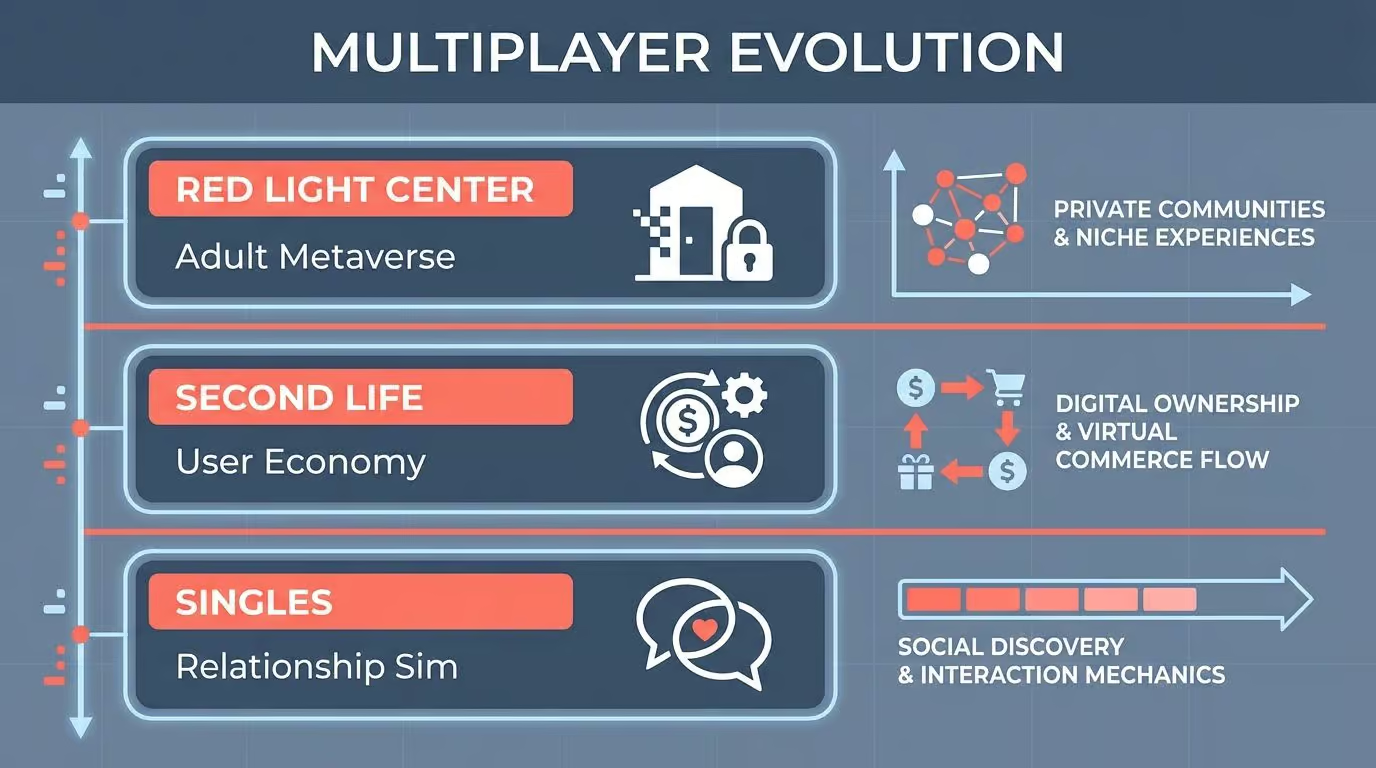
| Game / Platform | Key Innovation | Impact |
|---|---|---|
| Red Light Center (2005) | Dedicated adult metaverse | Allowed real-time interaction in a persistent adult city. |
| Second Life (2003) | User-generated Economy | Creators made millions selling virtual adult clothing and animations. |
| Singles: Flirt Up Your Life | Relationship Simulation | Focused on the mechanics of dating and intimacy rather than just action. |
Now gamers could build relationships or join communities without leaving their chairs. Real-time chats replaced old single-player storylines with live flirting or roleplay sessions. This shift made adults-only ratings more talked about by the ESRB and others.
Controversies and regulation challenges
Following the rise of multiplayer adult games, big storms brewed. In 2004, The Guy Game faced a lawsuit because underage footage slipped in. It got tagged as child pornography and sent shockwaves through the industry.
Game rating agencies like the Entertainment Software Association and ESRB scrambled to tighten rules. They focused on porn videos, GTAs, shotacon titles, and thrill kills with adults-only ratings.
Worries about Internet gaming addiction spread fast too. South Korea and Japan set up special treatment centers after seeing huge spikes in addicted players hooked by achievements or escape from life’s messes.
By 2013, experts noticed this kind of addiction worked on people’s brains just like drugs did. Laws grew strict in places where addiction ran rampant but culture often clashed with new rules. This made regulation tough for groups like the Videogames Rating Council trying to keep both parents and gamers happy.
The 2010s: Innovation and Popularity
Games on Steam, wild new uses for VR headsets like Kinect, and money raised by regular people helped adult gaming level up fast in the 2010s. Stick around to see what wild tech came next.
Adult games on Steam and other platforms
Steam started letting adult games into the store after 2018. This followed outrage and game removals, but before that, it was a minefield for developers. The ESRB slaps an AO (Adults Only) label on titles with graphic sex or gambling, blocking them from many shelves. But Steam kept the door open if you were over eighteen.
Most people buy these as downloads because they want privacy and ease.
I watched indie studios drop risky stories right next to big-budget shooters. Some of those spicy titles got glowing reviews and even “Overwhelmingly Positive” scores. COVID-19 hit and sales rocketed higher than my blood pressure during a V-Tech Rampage playthrough! Other apps like Nutaku tried to copy this model but couldn’t match the buzz.
Key Stat: One of the biggest success stories on Steam is Subverse. Developed by Studio FOW, it raised over $2 million on Kickstarter before launching on Steam, proving that gamers were willing to pay premium prices for high-quality adult sci-fi parodies.
Steam’s loose rules shaped how other distributors treat grown-up content now. Virtual reality integration popped up fast too. I’ve seen Kinect-style motion control make things feel way more personal than in any old Flash browser game.
VR integration in adult gaming
After adult games found success on platforms like Steam, things kicked into high gear with the rise of VR tech. The Oculus headset broke ground in 2012, grabbing lots of attention from both gamers and developers. Facebook bought Oculus just two years later and poured resources into making virtual reality headsets better, faster, and lighter.
Big names jumped in too. HTC Vive and Samsung Gear VR soon became favorites for fans craving deeper experiences. Virtual reality makes everything more lifelike; you move, look around, reach out, and the game reacts right back at you.
That’s a big leap from mouse clicks or tapping keys. Still, headsets cost quite a chunk of change and can get uncomfortable after long sessions. Some folks even needed breaks because their stomachs got queasy!
Even with these rough edges, plenty of men dove into VR adult games during the 2010s. This surge pushed studios to try new ideas fast. Sometimes they made the action almost as real as it gets at home or on your phone screen now. With technology getting smarter every year, many believe VR could one day become as common as gaming PCs or smartphones are today.
Rise of crowdfunding for indie adult games
Crowdfunding took off in the 2010s and changed how indie creators made adult games. Sites like Patreon opened fresh doors for small studios and solo devs. Fans started backing projects like Summertime Saga and Hardcoded with their wallets, not just likes or comments.
I’ve seen firsthand how gamers get hyped to support wild ideas no big publisher would touch.
This direct support let creative folks build titles for niche genres and unique interests. Small teams stood toe-to-toe with large companies thanks to player dollars flowing right into development.

- Summertime Saga: This point-and-click adventure generates between $60,000 and $74,000 per month on Patreon alone.
- Wild Life: Another Patreon giant that focuses on high-end 3D graphics and open-world survival elements.
- Fenoxo: Creator of text-based RPGs like Corruption of Champions, showing that writing still pays the bills.
Crowdfunding soon proved there’s plenty of demand out there. Successful campaigns brought in real profits and showed that people want new flavors in adult gaming, not just the same old stuff from giant studios.
The 2020s: Modern Advancements
Games now use artificial intelligence, lifelike characters, and instant translation to pull in more players from across the globe. With fast phones and new headsets, anyone can jump into these wild stories no matter where they live or what they speak.
Hyper-realistic graphics and AI integration
Adult games now look startlingly real. Facial details, skin textures, and lighting effects have reached new heights thanks to Unreal Engine 5 and Unity. The visual effects field is booming and is set to jump from $10.8 billion in 2023 to $25 billion by 2030.
Gamers cannot help but notice the shift each time they boot up a new title.
Artificial intelligence has taken over creative workflows too. Out of all graphic designers today, a whopping 83% use generative AI tools daily for creating characters or backgrounds. Tools like Stable Diffusion allow solo developers to generate thousands of high-quality assets in minutes, a task that used to take months.
AI bots shape how stories branch out. They make character reactions feel almost human. Players get more dynamic scenes and smarter interactions every session.
Increased global accessibility
VR headsets got lighter, easier to use, and far less expensive since 2020. Now, you can play a game from your small apartment in New York or a quiet cabin in Sweden. You do not need high-end gear like before.
My friend tried a new adult VR title last week on his mid-range laptop. It ran smooth as butter with no hitches. Companies focus on better interfaces so more people—including those with disabilities—can enjoy these games.
International servers remove borders. You see folks joining lobbies from Japan, Brazil, or Kenya at any hour of the day. The latest features let players pick languages faster than picking pizza toppings. French one click, Spanish the next minute. Nobody stares blankly at confusing menus anymore.
With big tech players funding accessibility programs, expect even rural towns to get strong connections soon enough for live multiplayer and social chat in virtual worlds built just for grown-ups.
Expanding demographics of players
I’ve even seen my uncle brag about his scores at family BBQs.
Girls and women love simulation, puzzle, and strategy genres most. It shapes what gets made next by studios like Nutaku or DLsite. Mobile phones break down walls so people from all walks of life can join in. This means there’s always a fresh mix in every lobby.
If you’re curious how this shift could change your experience or want advice on personal tastes, check out how to figure out what you like.
Games today reach new players across ages, cultures, and backgrounds almost overnight.
Cultural and Social Impact
People chat on Discord and Reddit about morals in online games while tossing ideas like a hot potato. Storylines push boundaries. This makes both players and studios sweat over what’s right or wrong.
Shifting perceptions of adult games
Games with adult themes used to be seen as cheap tricks for quick sales. Now, critics praise titles like The Witcher 3, which sold over 50 million copies and treats romance and sex as real parts of its story.
Overwatch’s fan-made porn, plus the deep relationship features in Baldur’s Gate 3, show how adult content has slipped into mainstream talk without much shame or fuss. The “bear scene” in Baldur’s Gate 3 didn’t just go viral; it drove a massive spike in player interest and proved that players want bold, unconventional choices.
Gamers care about connection now. Intimacy and relationships sell more than shock value alone. Sex is no longer a dirty joke in games. Instead, it stands for maturity and realism. It is a tool for deeper storytelling that lets players explore feelings and their own identities.
Game studios are leaning into these changes fast because they see that emotional well-being matters to today’s gamers.
Ethical debates and industry challenges
Privacy, consent, and risk weigh heavy on adult gaming studios. VR tech like Meta Quest and HTC Vive brings new worries about how players react in body and mind. Some experts warn that young people may get lost between what’s real and what’s fantasy. It is a slippery slope with little research to guide us.
Laws shift quickly, but designers must still think ahead. Is this safe? Does this hurt?
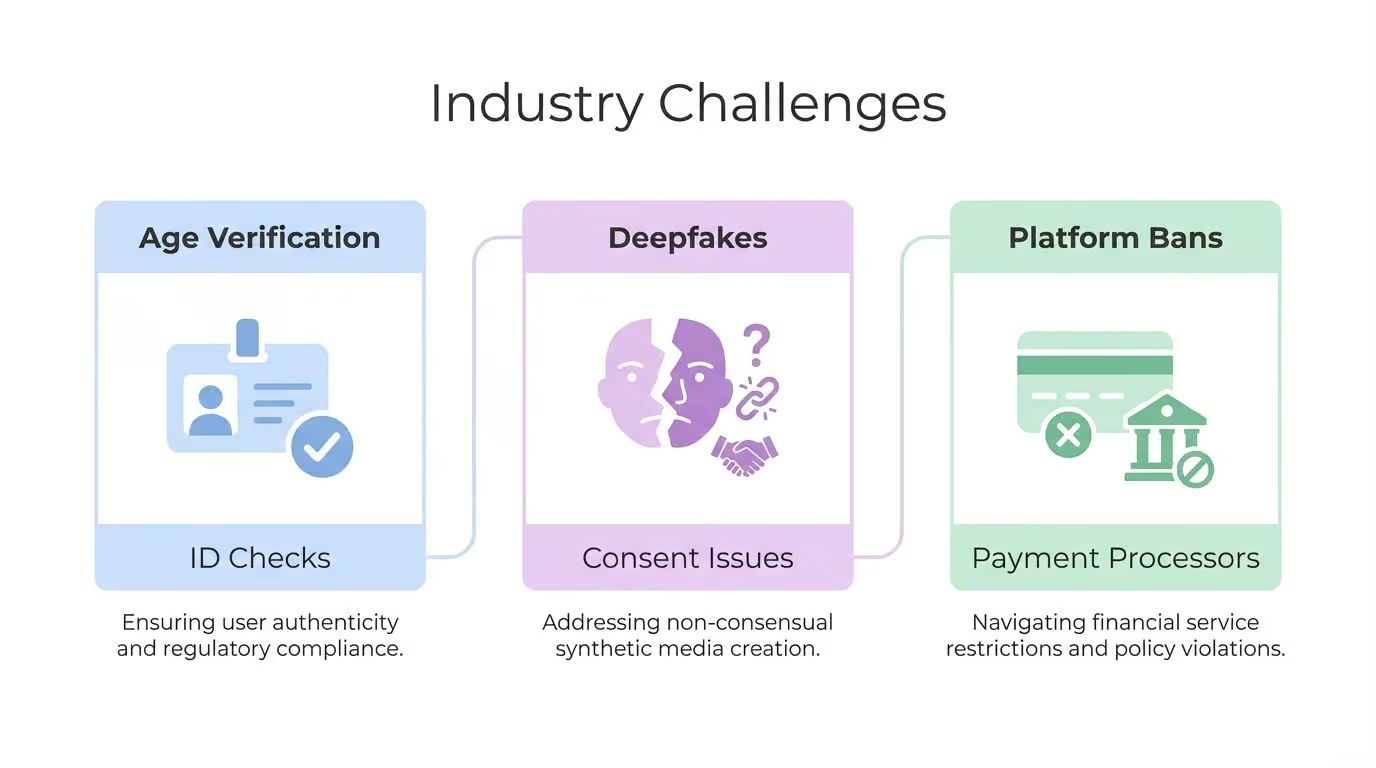
| Challenge | Why It Matters |
|---|---|
| Age Verification | New laws in states like Texas and Virginia require strict ID checks, impacting how sites operate. |
| Deepfakes | AI tools can use real people’s likenesses without consent, creating legal nightmares for platforms. |
| Platform Bans | Payment processors (Visa/Mastercard) often ban adult sites, forcing devs to use crypto or niche alternatives. |
Cultural views change fast too. Gamers now span all ages and backgrounds. Strong calls ring out for more safety tests before launch, yet studios race to roll out fresh updates and bold ideas.
Even basic things like data protection aren’t set in stone since regulators still argue over rules worldwide. With these challenges on their plate, creators keep pushing the envelope as demand spikes for realism and personal freedom.
How Will Adult Online Gaming Evolve in 2026?
Adult online gaming will see wild growth in 2026. The total gaming industry is set to rake in nearly $200 billion. Players can jump from their console to mobile or PC without missing a beat thanks to sharper platform convergence.
Generative AI will let game makers build experiences that feel personal and alive. It cranks up fun for adult gamers everywhere.
Player-made content will take center stage. You could craft your own game scenes or stories and share them within the community. Cloud streaming will break down old barriers, so there is no more worrying about big downloads or pricey gear.
Adult games become quick to play on almost any device you own. With open app stores popping up, developers gain freedom over how they offer games. This makes spicy new options easy to find.
Fresh ways of paying come into play too. Think pay-as-you-go levels, special extras for a small fee, or full unlocks if you want it all at once. By 2030 these shifts will shake up competition and push studios to listen harder than ever to your wallet and your clicks alike.
People Also Ask
How did adult online games start out in the early days?
In the early 1980s, you dialed into Bulletin Board Systems using slow 300-baud modems to play text adventures like Softporn Adventure or Legend of the Red Dragon. These “door games” relied entirely on ASCII text and your imagination to set the mood, serving as the first digital hangouts for guys seeking themes that arcade cabinets couldn’t offer.
What changed when internet browsers became popular?
The arrival of Macromedia Flash in 1996 completely transformed the landscape by allowing developers to create fully animated, interactive browser games that worked instantly without heavy downloads.
How have multiplayer features shaped adult gaming communities?
Platforms like Second Life (2003) proved that playing with real people in designated “Adult” regions created a rush that programmed bots could never match. This social element turned gaming into a shared experience where you could build genuine connections and explore fantasies with users from across the country.
Where does VR tech fit into today’s adult online game history?
Modern hardware like the Meta Quest 3 and advanced physics engines in titles like Virt-A-Mate now let you step directly into photorealistic environments. You can physically interact with lifelike avatars in 8K fidelity, making those old text commands feel like ancient history.
References
https://pmc.ncbi.nlm.nih.gov/articles/PMC8176340/
https://www.sandiegocounty.gov/content/dam/sdc/hhsa/programs/bhs/TRL/TRL%20Section%201/OPOH.pdf
https://www.researchgate.net/publication/336332126_Histories_of_Internet_Games_and_Play
https://dspace.mit.edu/bitstream/handle/1721.1/89974/890129716-MIT.pdf?sequence=2&isAllowed=y
https://pmc.ncbi.nlm.nih.gov/articles/PMC3832462/
https://www.researchgate.net/publication/369876308_Research_on_the_Progress_of_VR_in_Game
https://escholarship.org/content/qt9vc0q914/qt9vc0q914_noSplash_7162413f259ba2ee2e8f2e605c67df8b.pdf
https://www.economicsobservatory.com/wp-content/uploads/2025/12/AI_Creative_Industries.pdf
https://www.researchgate.net/publication/343095838_Virtual_Reality_An_Overview
https://www.researchgate.net/publication/357483650_New_Consumers_of_the_Digital_Age_Game_Players (2026-01-15)
http://worldwide-studies.com/exploring-the-surge-of-interactive-adult-games-and-16/
https://www.intechopen.com/chapters/1221971
http://technologyandsociety.org/virtual-reality-ethical-challenges-and-dangers/ (2019-01-14)
https://www.bcg.com/publications/2025/video-gaming-report-2026-next-era-of-growth