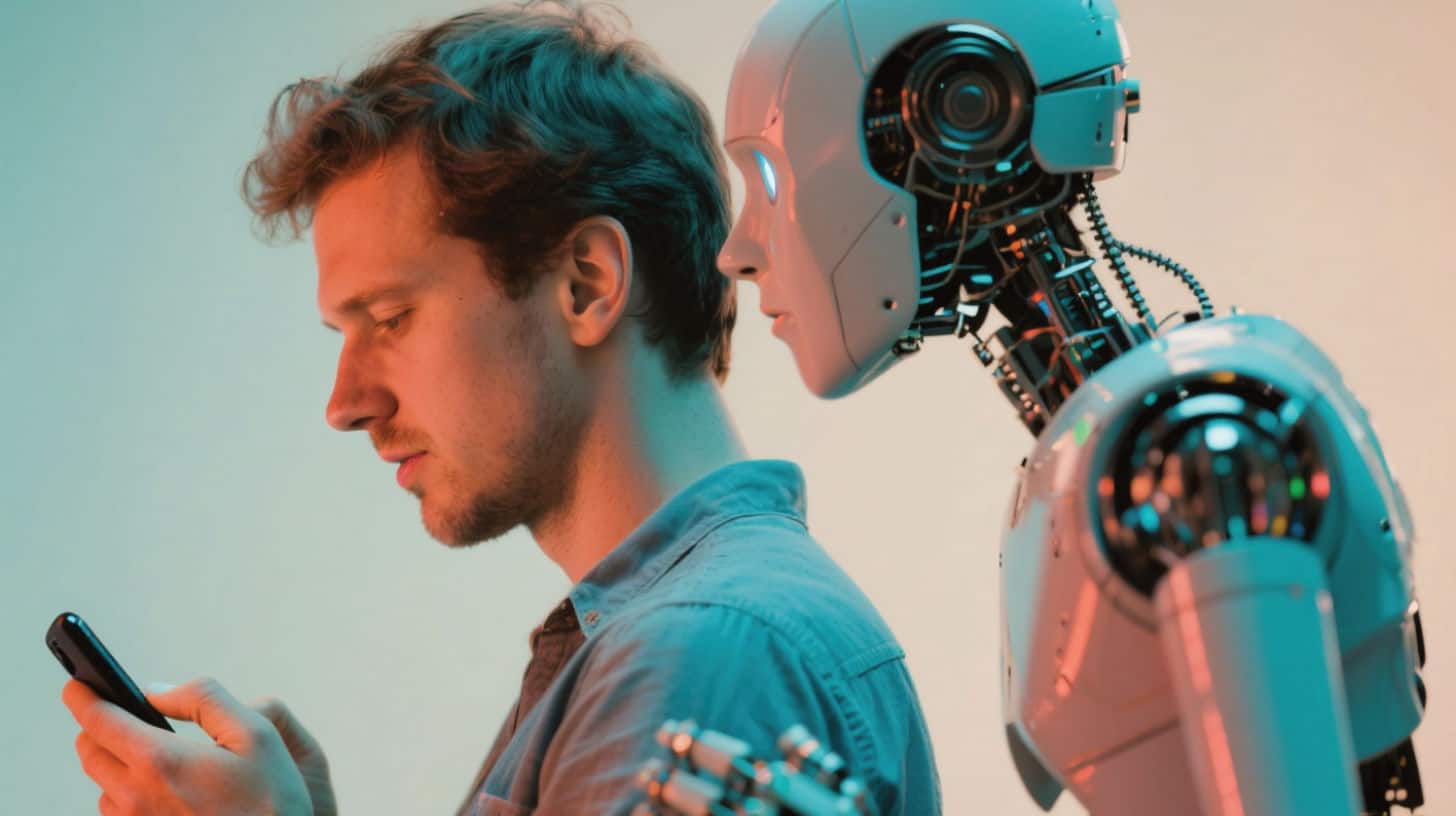
Flirting is hard for most of us. I don’t care how much game you think you have. For most men, fear of rejection is the main reason why they don’t even try flirting with women
But here’s where it gets complicated. Even when we do work up the courage to flirt, we often chicken out when it comes to actually making a move. I’ve watched this play out countless times. Guys who’ll chat up a woman all night at a party, slide into DMs with witty banter, keep conversations going for weeks on dating apps, but never quite pull the trigger on asking her out. All talk, no action, as they say. So you end up in these weird flirtationships where everyone’s having a great time exchanging clever messages and loaded looks, but nobody knows what any of it means. She’s wondering if you’re actually interested or just playing games. You’re wondering if she’s waiting for you to make a move or if you’ve misread the entire situation. It’s this exhausting dance where everyone’s performing interest but nobody’s willing to risk putting themselves out there for real.
That fear of rejection, a terrible beast, runs so deep that we’d rather stay in the safe zone of maybe-flirting than face the possibility of a definitive “no.” At least if you never ask her out, you never get turned down, right? The fantasy stays intact. But what you’re left with is this hollow performance of romance. All the energy of courtship with none of the vulnerability that makes it meaningful.
So when AI wingman apps started promising to solve this exact problem, I was all ears. Here was technology that could eliminate the guesswork, craft the perfect responses, and maybe even give me the confidence to finally shoot my shot. What could possibly go wrong with outsourcing the scariest part of dating to an algorithm that never feels fear? More than you think, actually.
Algorithm Works…
I downloaded RIZZ dating assistant on a Tuesday evening after yet another promising Hinge conversation had fizzled into the digital ether. The app’s marketing was seductive in its simplicity: #1 Dating Assistant”. Packet with features. Upload a screenshot of your conversation, and the AI would analyze her profile, decode her personality, and serve up three perfectly crafted response options. Playful, mysterious, or confident. It was like having a team of professional pickup artists living in my phone. The app has 27.8K ratings on App Store, and a rating of 4.8. The numbers tell a lot. The interface was sleek and modern. Clean white backgrounds, minimalist fonts, and that “Get Rizz Reply” button that promised to solve decades of masculine insecurity with a single tap. The AI claimed to have been trained on thousands of successful dating conversations, learning patterns and techniques that had actually worked in the wild. It could identify conversation starters based on profile photos, suggest follow-up questions that would keep her engaged, and even help navigate those dreaded moments when the chat started to lag.
And it worked. God help me, it actually worked.
My response rates shot up almost immediately. Conversations that would have died after three exchanges suddenly stretched into lengthy back-and-forths. Women were laughing at my jokes. Well, the AI’s jokes delivered through my thumbs. They were asking follow-up questions, suggesting we meet up, giving me their numbers without me even having to ask. For the first time in years, I felt like I had cracked the code of modern dating.
…But What Then?
Success, as it turned out, came with an unexpected side effect: a creeping sense of fraudulence that I couldn’t shake. The conversations felt too smooth, too polished, too perfectly calibrated to hit every psychological trigger. The AI had an uncanny ability to pick up on details in photos that I would never notice. Like the specific hiking trail in her weekend adventure shot, the obscure book spine visible on her shelf, the particular type of coffee shop she’d chosen for her selfie background. It would craft responses that demonstrated an almost supernatural level of attention and shared interests. The problem was, none of these interests were actually mine. I hate hiking with a passion that borders on the irrational. As Jim Gaffigan once said on his show: “If it’s that great outside then why all the bugs want to get in?” I couldn’t identify a single book on that shelf if my life depended on it. And my coffee knowledge extends to whatever’s available in Starbucks. The AI was creating a version of me that was infinitely more observant, more cultured, more interesting than the real me. And women were falling for him.
The magic was dead.
It was all too perfect. Algorithimcal. Mathematical. Precisely measured and cut. It was like cheating on exam. The AI never stumbled over words, never sent a message at the wrong time or made endearingly awkward observations that reveal personality.
Where a real conversation might meander through tangents and comfortable silences, these AI-crafted exchanges moved with surgical precision toward predetermined outcomes. The algorithm had identified what it deemed the most efficient path to a phone number, a date, a relationship, and it executed that path with mechanical determination. But efficiency, I was beginning to realize, might be the enemy of genuine connection. Now, I have to admit, I’ve been guilty of practicing my game on AI companions, even at times when I had a girlfriend. I don’t think it’s cheating, and my partners were always ok with it as well. But talking to AI companions was different. It was still me, making sure I don’t become rusty. Sure, they would laugh at my stupid jokes even though they were cringe. But deep down it made me feel good. I still had everything under control. My jokes, my game.
It Worked, That’s Why It Was Bad
I then did something I knew would backfire. I went on a date with a girl I’ve been using RIZZ with. Let’s call her Emma. Remember hiking story from before? That’s her. A marketing executive who loved weekend hiking adventures and apparently had exquisite taste in independent bookstores. We’d been messaging for two weeks, and our conversation had been flawless. Witty banter about her latest mountain conquest, deep discussions about the novels on her nightstand, passionate debates about the superiority of pour-over coffee versus espresso. The AI had painted me as her perfect intellectual and adventurous match. Which I wasn’t, at least not for the most part. When we finally met, I felt like an actor who’d forgotten his lines. I realized I wasn’t even trying to think of what to say next. Rather, my first instinct was to consult with RIZZ. Here was a funny, hot woman I genuinely liked, and my first instinct was to outsource my game to a machine. The absurdity of it hit me like a cold slap. Needless to say, that date didn’t go very well. She talked to a different version of me. “Un-RIZZED” version.
Walking home that evening, I realized what had been bothering me about my AI-assisted dating life. It wasn’t just that I was being dishonest about my interests. It was that I’d stopped being spontaneous entirely. When was the last time I’d sent a message just because something made me think of someone? When had I last shared a random observation, made a terrible joke, or admitted I didn’t know something? The AI had convinced me that vulnerability was inefficient, that authentic reactions were suboptimal. It had gamified human connection to the point where I was more concerned with my conversion rates than with actually connecting.
The most damning part was how effective it had been. My dating metrics were better than ever. More matches, longer conversations. But that very fact felt hollow. I don’t want women to be attracted to a fake version of me.
The Great Uninstall
I deleted Rizz AI the very same evening, but the damage was already done. I knew other guys will use it and that just killed the magic for me. The app will rewire their brains in subtle ways, and they won’t even realize. They’ll use it as a tool just to land a date, and then what? Show up to dinner having crafted an entire personality based on algorithmic suggestions, only to discover they have nothing authentic to offer once the conversation moves beyond the script? The tragedy isn’t just individual but collective. If enough men start outsourcing their personalities to algorithms, what happens to the unpredictable, beautiful messiness of human courtship? We’re not just optimizing ourselves. We’re optimizing the entire dating ecosystem into something sterile and performative. The fear of rejection that drove us to these apps in the first place will only get worse when everyone’s competing with AI-generated perfection.
Flirting dies not with a dramatic rejection or a broken heart, but with the quiet efficiency of an algorithm that promises to solve problems it doesn’t understand. The day I tried my first AI wingman app was the day I realized that in trying to eliminate the risk from love, we risk eliminating love itself. So when it comes to AI and dating, I’ll just stick to my AI companions.