Ever feel like planning a trip to Central Europe is like trying to solve a puzzle with too many pieces? You want to see the best cities and castles, but figuring out the logistics can be a real headache.
I get it. That’s why I put together this Central Europe travel guide.
The good news is that almost all the countries here are part of the Schengen Area, which makes hopping between destinations surprisingly smooth. We’re going to cover the heavy hitters like Prague, Vienna, and Budapest, and I’ll share some real-deal tips on finding amazing local food and getting around without breaking the bank.
So, stick around. I’ll walk you through everything you need to know to piece together your next big adventure.
Key Takeaways
Central Europe makes it easy to visit seven top cities like Prague, Vienna, Berlin, Budapest, Krakow, Nuremberg, and Dresden. Since they’re all in the Schengen Area, you can travel between them with few to no border checks.
Don’t miss iconic castles like Prague Castle (the world’s largest), Neuschwanstein Castle in Bavaria (the inspiration for Disney’s castle), Wawel Castle in Krakow (a UNESCO site), and the grand Hofburg and Schönbrunn Palaces in Vienna.
For nature lovers, the best national parks include Plitvice Lakes in Croatia, Saxon Switzerland in Germany, Triglav in Slovenia, and Hohe Tauern in Austria. For something truly ancient, Bia?owie?a Forest, a UNESCO World Heritage site since 1979, is home to wild European bison.
You have to try the local food: goulash seasoned with rich paprika in Hungary, pierogi dumplings and kielbasa sausage in Poland, classic knedlíky (dumplings) and famously cheap beer in the Czech Republic, and apple strudel or Sachertorte cake in Austria.
The best times to visit are April-June or September-October for great weather with fewer crowds. Major festivals include Oktoberfest in Munich (Sept 20-Oct 5, 2025), Sziget Festival in Budapest (Aug 6-11, 2025), and the Carnival of Venice (Feb 22-Mar 4, 2025). For travel between cities, trains like the NightJet sleepers are a great option, and budget bus tickets from companies like Flixbus can be found for as low as €5.
Table of Contents
Top Destinations in Central Europe
Central Europe is a goldmine of ancient castles, killer street food, and old towns where every corner has a story. Just make sure you have your passport or EU ID card handy. Thanks to the Schengen Agreement, moving between these spots is usually a piece of cake.
What makes Prague, Czech Republic a must-visit city?
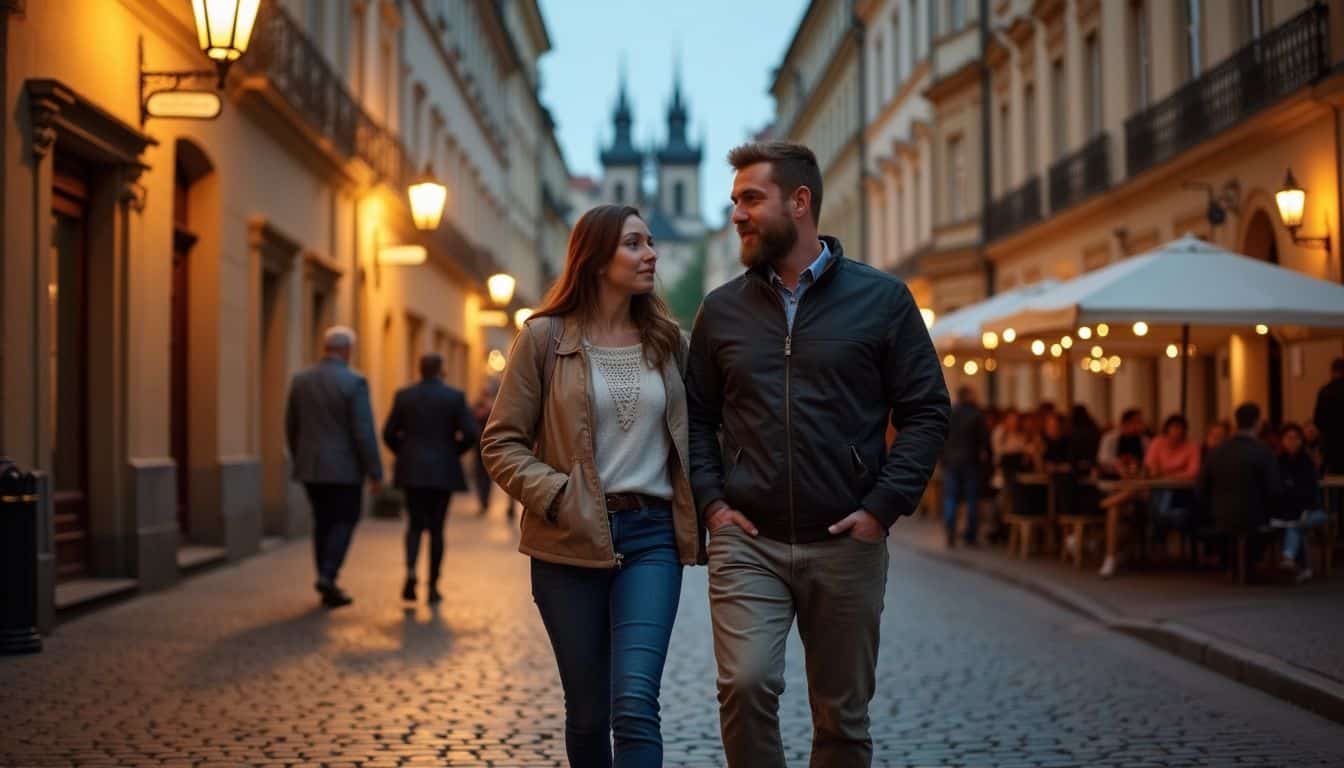
Walking through Prague feels like you’ve stepped into a real-life fairytale, with stunning Gothic and medieval styles everywhere you look. The heart of the city beats around its famous Old Town landmarks like the Charles Bridge, the Powder Tower, and the Main Market Square.
St. Vitus Cathedral is an absolute beast of a building, dominating the skyline with its grand presence and incredible stained glass. After a morning of exploring, I refueled with some knedlíky, or dumplings. They’re hearty and perfect after wandering the cobbled streets.
And let’s talk about the beer in the Czech Republic. It’s famously cheap, and the locals drink more of it than anyone else in the world. A half-liter of classic lager in a local pub will only set you back about 55 to 80 CZK (€2.20 – €3.20). I had a great time grabbing a cold Pilsner Urquell at U Flek?, but for a truly authentic vibe, check out a spot like U Zlatého Tygra (The Golden Tiger), a classic pub where president Václav Havel once took Bill Clinton for a beer.
Prague Castle holds the title of the largest castle complex on the planet, and its stone walls will make you feel small in the best way. A pro tip: the castle grounds get swamped with tourists, so try to visit before 9 a.m. or after 6 p.m. to experience it without the crowds.
“Prague: where every corner pours another pint and history never clocks out.”
When you’re ready to head to your next stop, you can hop on one of the frequent Prague to Vienna trains for a scenic and easy ride south. Just keep your passport handy if you’re from outside the EEA or need specific visas.
Why visit Budapest, Hungary on your Central Europe trip?

After Prague’s old-world charm, Budapest offers a unique mix of grit and grandeur. It’s known as “The Spa Capital of the World,” and for good reason. You can’t leave without visiting one of its famous thermal baths, like the massive Széchenyi or the elegant Gellért Baths. Soaking in the hot, mineral-rich water while old-timers play chess is an unforgettable experience. A full-day ticket for Széchenyi with a cabin will cost around €45 on a weekend in 2025.
A boat ride down the Danube River gives you an epic view of Buda Castle Hill and the massive Parliament Building. Buda Castle itself sits on a UNESCO World Heritage Site packed with medieval history.
When you get hungry, head to the Central Market Hall for some authentic Hungarian goulash and a chimney cake for dessert. At night, the Jewish Quarter comes alive with its famous “ruin bars.” These are quirky, eclectic bars built in the ruins of abandoned buildings. Szimpla Kert is the original and most famous one, filled with mismatched furniture, art, and a great vibe.
Before you leave, make sure to see St. Stephen’s Basilica, a stunning neoclassical cathedral. Art lovers should also check out the Museum of Fine Arts or catch a show at the Hungarian State Opera House. Keep some coins on you for spa lockers, as card machines can be unreliable during busy hours.
What are the highlights of Vienna, Austria?

Vienna is pure imperial elegance. It feels like a living museum where grand buildings and classical music are around every corner. The Vienna State Opera is a must-see, and you can snag standing-room-only tickets for as little as €13 if you’re on a budget. I once stood for hours, completely lost in the music.
St. Stephen’s Cathedral is another icon that towers over the city. You can climb its South Tower (€6.50) or North Tower (€7.00). If you have to choose, the 343-step climb up the South Tower offers a more rewarding, open-air view.
Of course, you can’t miss the palaces. Schönbrunn Palace, the former summer residence of the Habsburgs, is like something out of a fairytale with its massive gardens. Afterward, take a break at one of Vienna’s famous coffee houses. This is a huge part of the city’s culture, so much so that it’s recognized as a UNESCO-listed café culture. While Café Central and Demel are famous, a spot like Café Jelinek offers a more local, bohemian vibe.
If you’re visiting in December, the Christmas markets are magical, filled with the smells of strudel, bratwurst, and mulled wine. Every visit to Vienna offers a new flavor, whether it’s a potato dumpling or a hearty schnitzel, giving you a taste of Austria’s rich culinary traditions.
What attractions does Krakow, Poland offer travelers?
Krakow’s Main Market Square is one of the most beautiful in Europe. You can grab a cold beer, sit at a sidewalk café, and just watch the world go by. Every hour, you’ll hear the famous trumpet call from the tower of St. Mary’s Basilica, a tradition that gives you chills.
Wawel Castle sits proudly on a hill overlooking the Vistula River. It was the home of Polish kings and is a stunning example of Renaissance architecture. A walk through Kazimierz, the historic Jewish quarter, is also essential. You’ll find old synagogues, unique shops, and some of the best street food, including the famous *zapiekanka* (a sort of open-faced baguette pizza).
A trip to Krakow isn’t complete without acknowledging its difficult past. A visit to the Auschwitz-Birkenau Memorial and Museum is a sobering but important experience. It’s best to book a guided tour well in advance, as tickets sell out quickly, especially in the summer.
For something completely different, take a short drive to the Wieliczka Salt Mine. The underground chapels and sculptures carved entirely out of salt are truly mind-blowing. After a day of exploring, dig into some pierogi, kielbasa, or hearty lamb stew. As my Polish friend once told me, “A Krakow trip tastes better with good sausage.”
Must-See Attractions
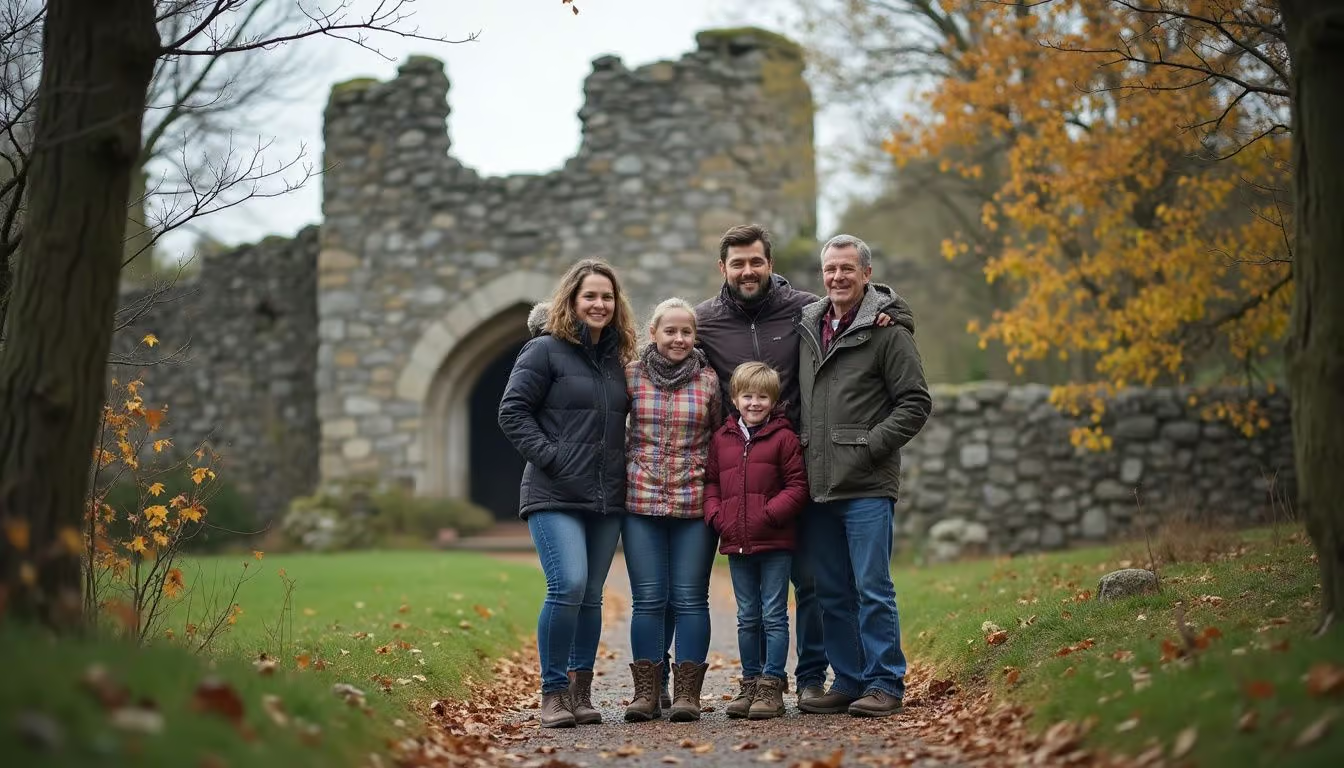
From towering castles on every hill to old towns that whisper stories of the past, Central Europe is packed with legendary spots. Let’s dive into the attractions that will turn your trip into an epic adventure.
What are the most famous castles and palaces to visit?

Central Europe’s castles are the real deal, with massive stone walls, grand towers, and centuries of history. Each one on this list will make you feel like you’ve walked onto a movie set.
- Neuschwanstein Castle in Bavaria is the ultimate fairytale castle. It was the inspiration for Disney’s Sleeping Beauty Castle. The hilltop views are incredible, but be warned: you absolutely must book tickets online weeks, or even months, in advance for a specific time slot. A standard ticket for 2025 costs around €21.
- Prague Castle isn’t just one building; it’s the world’s largest castle complex, covering over 750,000 square feet. You can spend a whole day exploring its palaces, churches, and gardens. Pro-tip: buy the “Circuit B” ticket, which covers the main highlights like St. Vitus Cathedral and the Old Royal Palace.
- Wawel Castle in Krakow, Poland, is a UNESCO World Heritage site and a symbol of Polish national identity. It’s home to the tombs of Polish kings and priceless royal treasures.
- Hofburg Palace in Vienna was the seat of the powerful Habsburg emperors for centuries. It’s a sprawling complex in the heart of the city that now houses museums, the Spanish Riding School, and the offices of the Austrian president.
- Schönbrunn Palace, also in Vienna, was the Habsburgs’ magnificent summer residence. With its golden rooms, mirrored halls, and vast gardens, it’s a stunning display of imperial wealth.
- Château de Chillon on Lake Geneva in Switzerland is a beautiful lakeside fortress. Its reflection in the deep blue water makes for an unforgettable photo.
- Burg Hohenzollern in Germany perches dramatically on a mountaintop. On a cloudy day, its Gothic towers look especially fierce, offering incredible views of the surrounding Swabian Alps.
- Nuremberg Castle rises above the city’s medieval streets. It’s especially magical in December when the world-famous Christmas Market fills the squares below with light and festive cheer.
Which historic old towns are worth exploring?
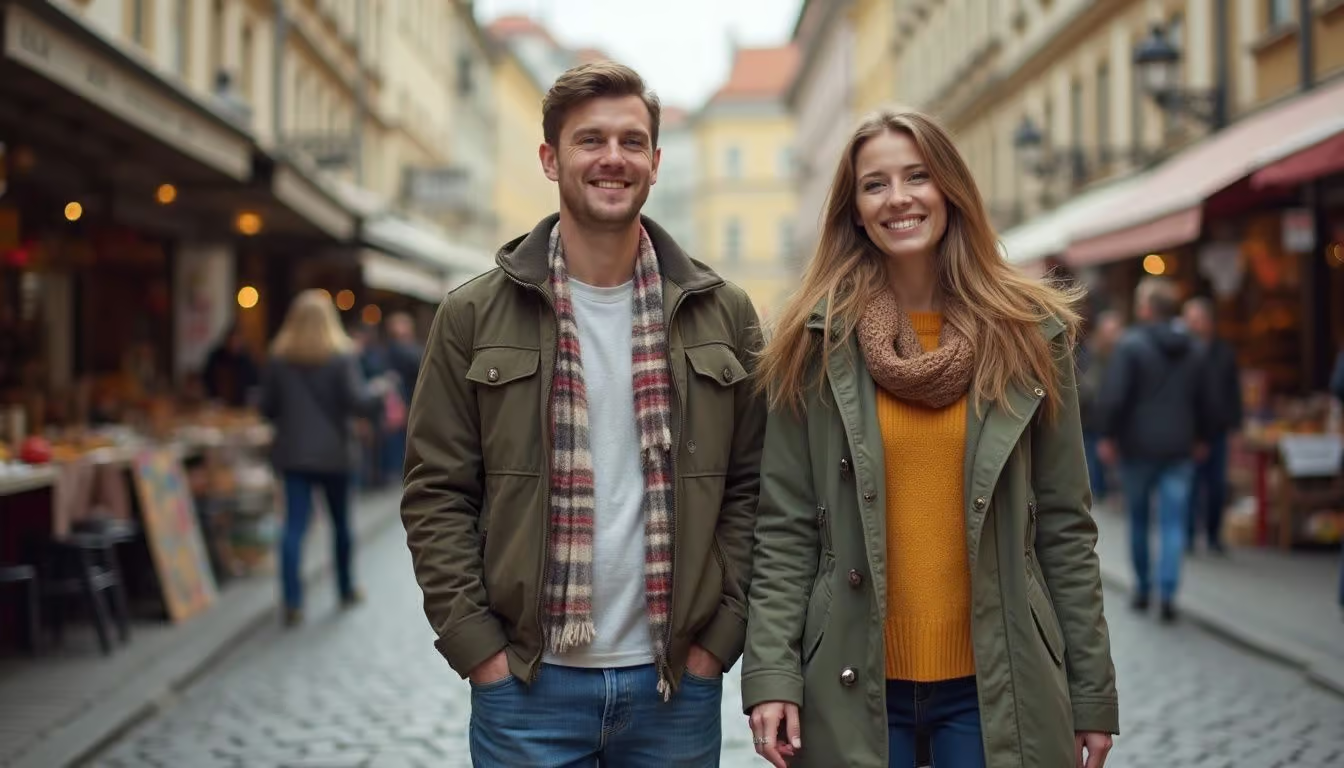
The old towns in Central Europe are where history comes alive. You’ll find medieval towers, colorful market squares, and fantastic food at every turn.
- Prague’s Old Town is iconic for a reason, with its Astronomical Clock, Baroque churches, and lively atmosphere. The cobblestone streets are always buzzing with street musicians, market stalls, and cafes.
- Krakow’s Old Town has been a UNESCO World Heritage site since 1978. Stroll through the massive Market Square, browse the stalls at the Cloth Hall, and be sure to try some pierogi or borscht.
- Dresden’s Altstadt (Old Town) is a testament to resilience. Its most famous landmark, the Frauenkirche, was beautifully restored and reopened in 2005 after being destroyed in WWII.
- Warsaw’s Old Town has a remarkable story. Completely destroyed in 1944, it was meticulously rebuilt stone by stone, earning it a unique spot on the UNESCO list for its faithful reconstruction. The Royal Castle now shines once again.
- Nuremberg’s old town is famous for its charming half-timbered houses and its historic Christmas Market, which dates back to the 17th century. Don’t miss the traditional bratwurst stalls.
- Pozna?, Poland, features a beautiful Stary Rynek (Old Market Square) lined with colorful Renaissance-style buildings. It’s a vibrant hub where locals gather.
- Gdansk, Poland, offers a unique Baltic Sea atmosphere with its historic shipyards, amber shops along the Long Market, and beautiful waterfront.
- Maribor, Slovenia, has a charming old town centered around its 15th-century town hall. It’s a great place to experience Slovenian culture and enjoy the local schnapps.
Where can you find the best national parks in Central Europe?
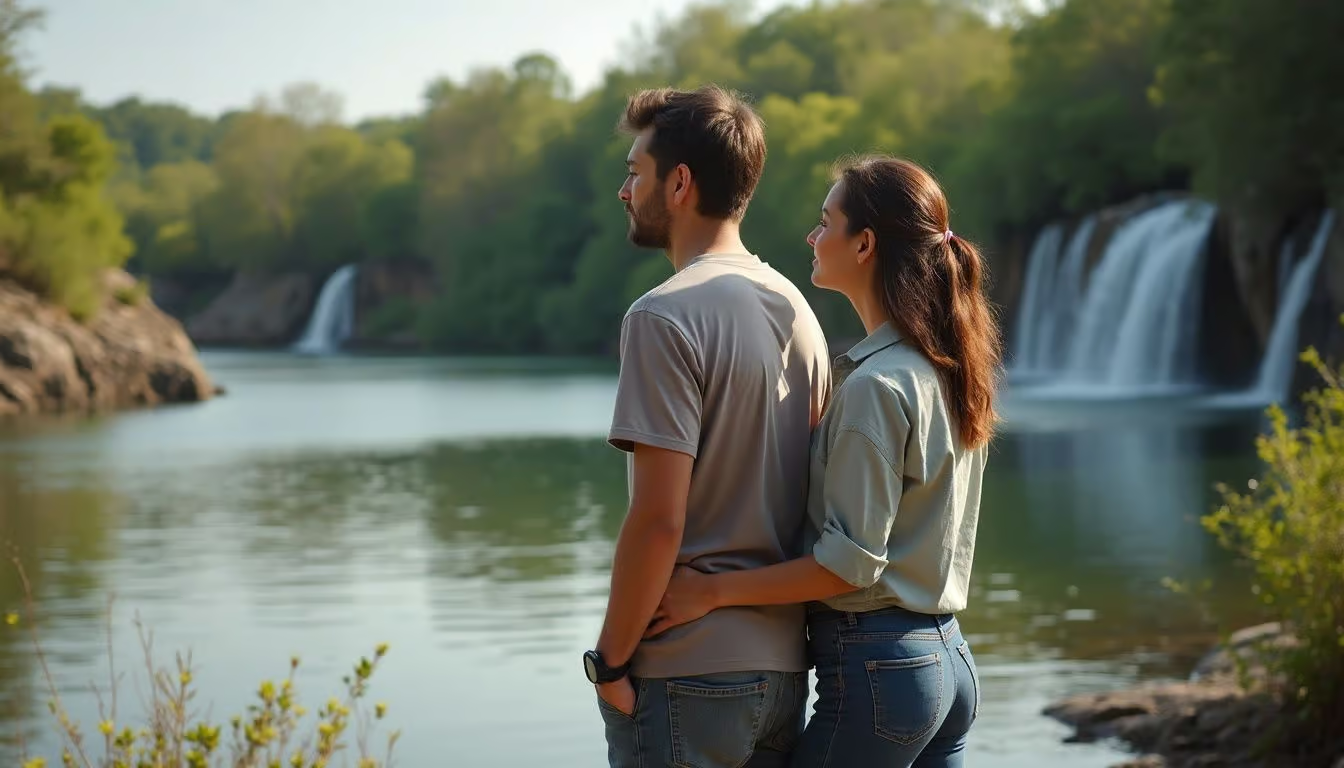
If you need a break from the cities, Central Europe offers some seriously wild landscapes. These national parks are perfect for fresh air, epic hikes, and incredible scenery.
- Plitvice Lakes National Park, Croatia: Famous for its 16 terraced lakes connected by stunning waterfalls. The turquoise water and lush forests make it feel like another world.
- Saxon Switzerland National Park, Germany: Located near the Czech border, this park is known for its dramatic sandstone cliffs and rock formations. The iconic Bastei Bridge offers breathtaking views of the Elbe River valley.
- Triglav National Park, Slovenia: This park covers a huge part of the Julian Alps and is home to Slovenia’s highest peak, Mount Triglav. The Vintgar Gorge is a popular and relatively easy hike with stunning scenery.
- Hohe Tauern National Park, Austria: Austria’s largest national park is a high-alpine wonderland with snow-capped peaks, massive glaciers, and wildlife like golden eagles and ibexes.
- Bia?owie?a National Park, Poland: Straddling the border with Belarus, this is one of Europe’s last primeval forests and a UNESCO World Heritage site. It’s also home to the continent’s last herds of wild European bison.
- Swiss National Park, Switzerland: Located in the canton of Graubünden, this is the oldest national park in the Alps. It’s a rugged, untouched wilderness where nature is left to its own devices.
- Bohemian Paradise, Czech Republic: A protected landscape area known for its unique “rock cities,” which are clusters of towering sandstone formations that create a fantasy-like landscape.
- Aletsch Glacier, Switzerland: The largest glacier in the Alps, this massive river of ice stretches for 23 kilometers and is the centerpiece of a UNESCO World Heritage site.
What should you know about thermal spas in the region?

After days of hiking and exploring, there’s nothing better than soaking your tired muscles in a thermal spa. Budapest is the undisputed “Spa Capital of the World,” with famous baths like Széchenyi and Gellért drawing crowds all year.
Many Hungarian baths have a rich history with Turkish influences, so you’ll often see beautiful domes and mosaic tiles. But Hungary isn’t the only player in the game. Karlovy Vary in the Czech Republic is another famous spa town, known for its healing mineral waters.
These thermal waters are a huge part of the wellness tourism culture across Central Europe. It’s a place where locals go to relax, socialize, and even play chess in the water. Many spas offer a mix of historic charm and modern facilities, giving you the best of both worlds. Don’t be shy if a local strikes up a conversation, it’s all part of the experience.
A good soak after a day of touring castles is one of the best feelings in the world.
Cultural Highlights
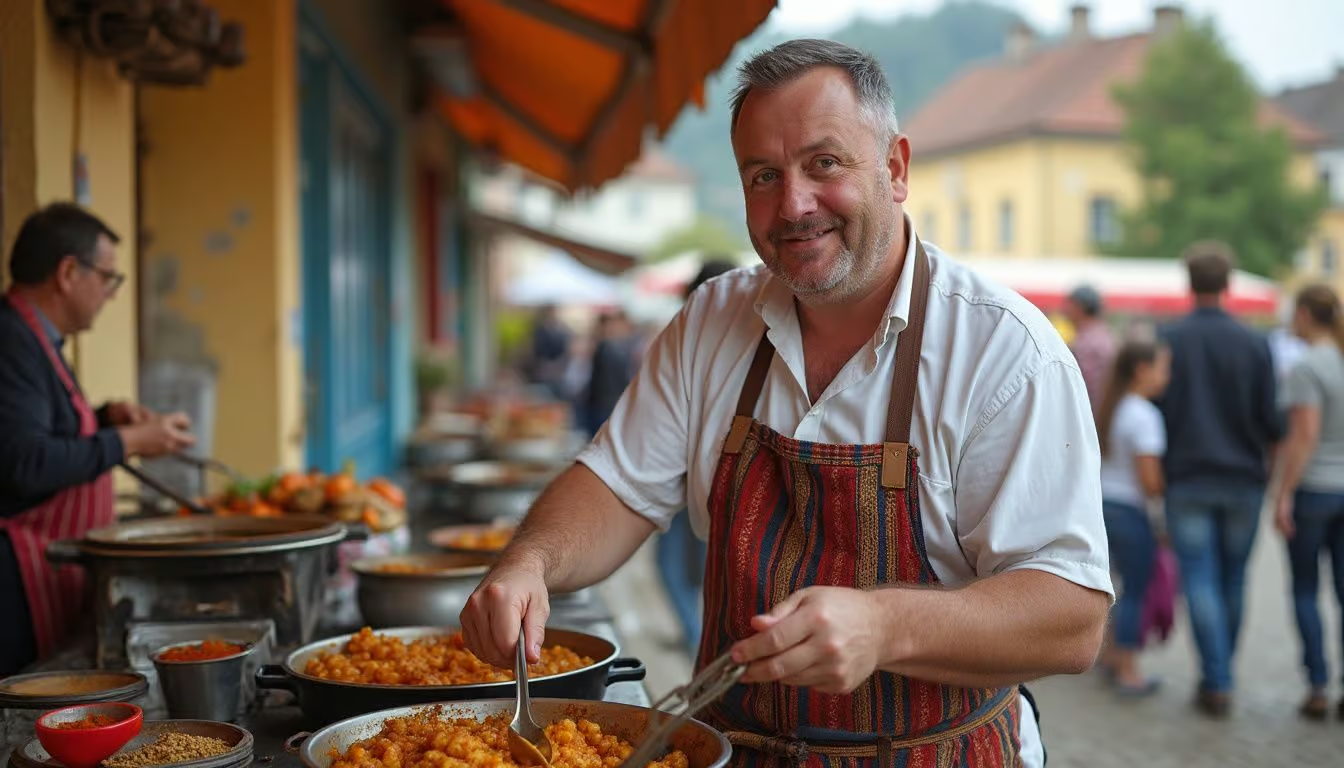
Get ready to dig in, because Central Europe’s culture is all about hearty food, lively festivals, and bold architecture that tells the story of centuries past.
What dishes define Central European cuisine?
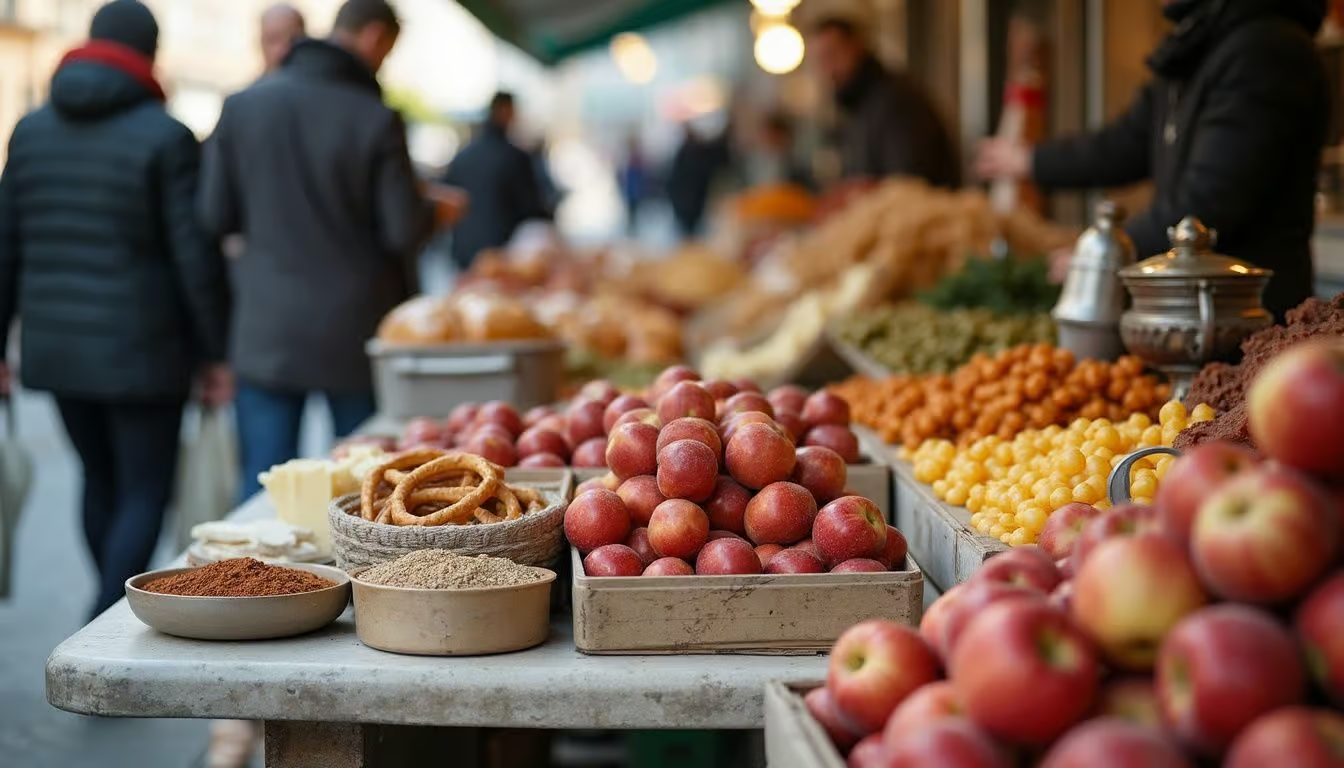
The food here is hearty, flavorful, and guaranteed to stick to your ribs. In Austria, strudel is king, usually packed with apples and spices. Vienna is also home to the Sachertorte, a world-famous chocolate cake. German cuisine is all about bratwurst, schnitzel, and giant pretzels, often washed down with a beer from one of Bavaria’s 600+ breweries.
Switzerland is where you’ll find the ultimate comfort food, fondue, a delicious pot of melted cheese perfect for sharing. In Poland, you have to try pierogi, which are dumplings stuffed with everything from meat and cheese to potatoes and fruit. Look for a *Bar Mleczny* (Milk Bar) for an authentic, budget-friendly meal.
Czech meals often feature knedlíky, or soft bread dumplings, which are perfect for soaking up rich, savory stews. Slovakia is known for its sheep milk cheese dishes, especially *bryndzové halušky*, a dish of potato dumplings with sheep cheese and bacon. And in Hungary, everything gets a kick from paprika. Their goulash is a rich, warming stew that’s perfect after a long day of exploring.
When and where are traditional festivals held?
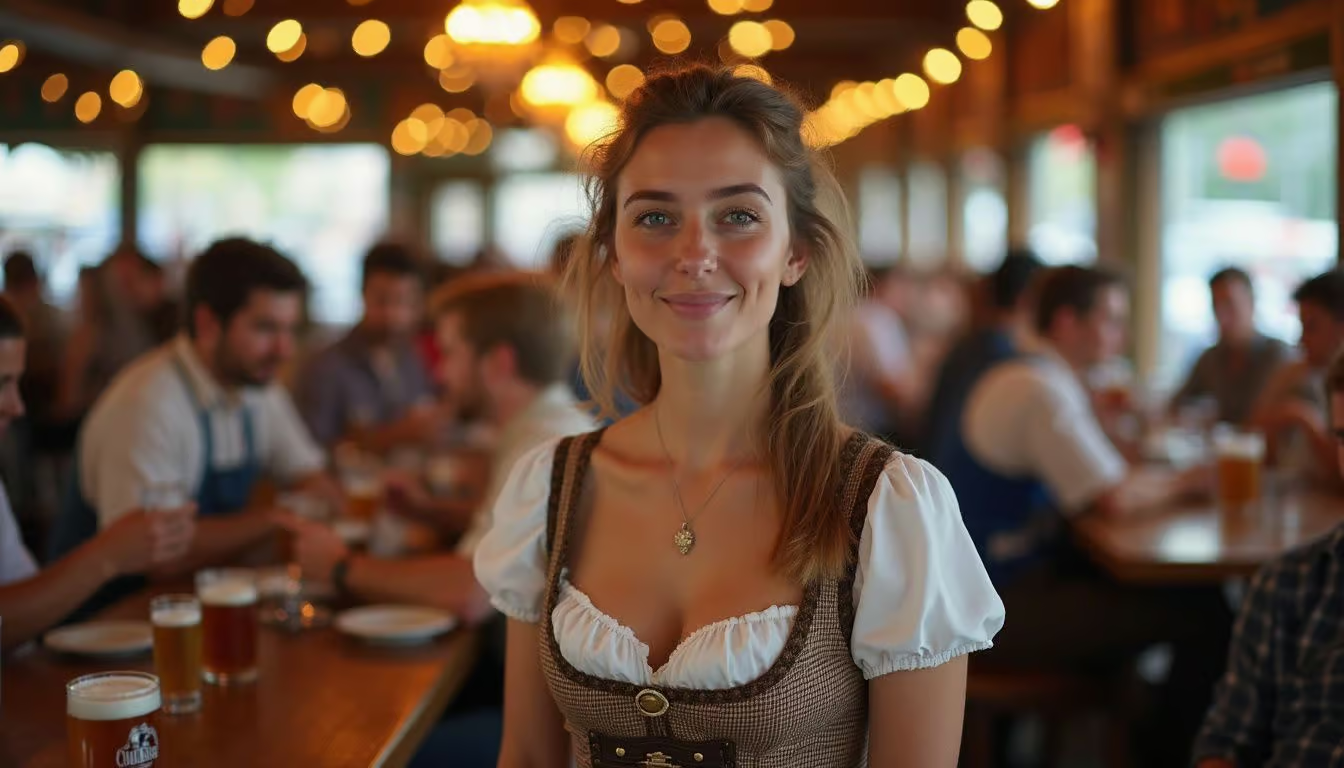
Good food is one thing, but great festivals are where you’ll find the soul of Central Europe. The calendar is packed with everything from massive parties to ancient traditions.
- Oktoberfest in Munich is the world’s largest beer festival, running from September 20 to October 5, 2025. Expect huge beer tents, traditional Bavarian music, and locals dressed in lederhosen and dirndls.
- The Carnival of Venice takes place from February 22 to March 4, 2025. The city comes alive with elaborate masks, elegant costumes, and a magical atmosphere.
- Advent Markets pop up in Vienna throughout November and December 2025. These festive Christmas markets are perfect for sipping mulled wine and shopping for traditional crafts under twinkling lights.
- Sziget Festival in Budapest, from August 6 to 11, 2025, is one of Europe’s biggest music and cultural festivals, taking over an entire island on the Danube for a week of non-stop entertainment.
- Dresden’s Dixieland Festival is Germany’s largest old-time jazz festival, held every May. Marching bands parade through the historic old town, filling the streets with music.
- Nuremberg’s Christmas Markets are legendary, running from late November through December. The medieval setting makes it one of the most atmospheric markets in Europe.
- Krakow’s Wianki Festival in June celebrates the summer solstice. Locals gather on the banks of the Vistula River for concerts, traditional wreath-floating, and a massive fireworks display.
- Salzburg’s Mozart Week in January honors the city’s most famous resident with a series of world-class classical concerts in grand, historic venues.
What are the key art and architectural styles to see?
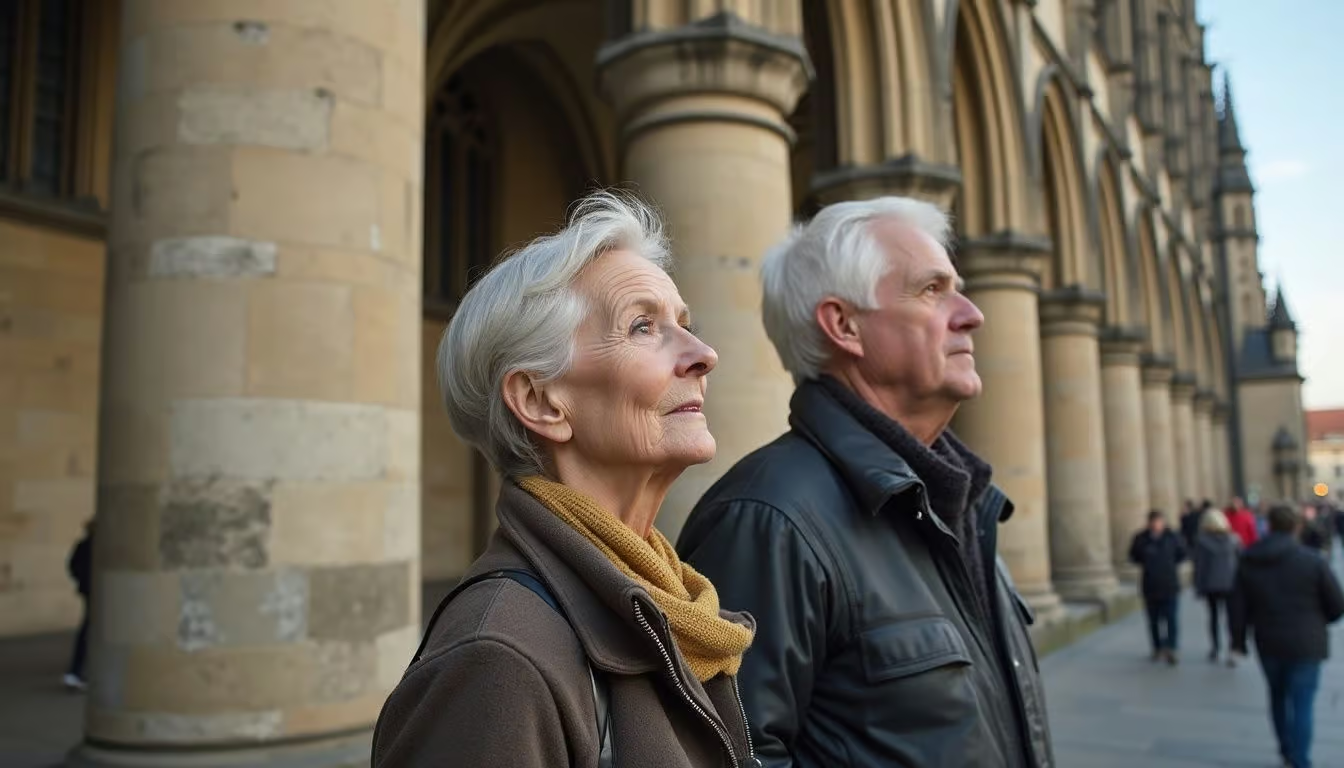
In Prague, St. Vitus Cathedral is a masterpiece of Gothic spires, with its towering stained-glass windows and dramatic arches. Vienna’s historic center, a UNESCO site, is filled with grand Baroque palaces and Romanesque churches that speak of its imperial past.
Krakow’s Main Market Square showcases beautiful Renaissance architecture, particularly in the Cloth Hall. For something different, the city of Chemnitz in Germany has some stunning Art Nouveau buildings, a style you’ll also see in the work of Czech artist Alfons Mucha in Prague.
You’ll also find remnants of a more recent, starker history. Esch-sur-Alzette in Luxembourg shows off its industrial heritage, while Berlin’s Reichstag Building combines history with modern design. Its famous glass dome, designed by architect Norman Foster, is a symbol of Germany’s reunification and offers incredible views of the city. Central Europe’s architecture is a fascinating mix of styles that tells the story of the continent’s complex history.
Planning Your Trip

A little planning goes a long way. Let’s cover the essentials, from the best time to go to what to pack, to make sure your trip goes off without a hitch.
When is the best time to visit Central Europe?
The sweet spots for visiting are the shoulder seasons: April to June and September to October. During these months, you’ll get mild weather and significantly fewer crowds. The streets are quieter, the lines for attractions are shorter, and hotel prices are generally lower than in the summer rush.
July and August are the peak months, bringing warm weather, long sunny days, and tons of festivals. However, this is also when the main tourist spots are most crowded and prices are at their highest.
If you’re on a tight budget, consider visiting between January and March. Prices for flights and accommodation drop, and you’ll get to see the region’s castles and cities covered in a beautiful blanket of snow. December is also a magical time to visit, thanks to the festive Christmas markets, but be prepared for cold weather and short days.
What are essential items to pack for your trip?
Packing for Central Europe is all about smart layers and comfortable essentials. Here’s a quick checklist to get you started.
- Comfortable Walking Shoes: This is non-negotiable. You’ll be walking a lot, often on cobblestone streets, so a good pair of shoes is your most important piece of gear.
- Layers: Pack t-shirts, long-sleeved shirts, and a sweater or fleece. The weather can change quickly, and layering allows you to adapt.
- Rain Jacket: A lightweight, waterproof jacket is a lifesaver. Summer storms can pop up unexpectedly, and it’s always good to be prepared.
- Smart Casual Outfit: Bring one nicer outfit (like a button-down shirt and dark jeans) for an evening at the opera or a nicer dinner.
- Travel Apps: Download helpful apps like Citymapper for navigating public transport, Google Translate (with offline languages), and a currency conversion app like XE Currency.
- Universal Plug Adapter & Power Bank: A must-have for keeping your devices charged across different countries.
- Reusable Water Bottle: Tap water is safe to drink in most cities, so you can save money and reduce plastic waste.
- Paperwork: Don’t forget your passport, a backup ID card, and printed or digital proof of your travel insurance.
How can you travel in Central Europe on a budget?
Traveling in Central Europe can be surprisingly affordable if you’re smart about it. For transportation, stick to trains and buses. You can often find bus tickets for as little as €5 on companies like Flixbus or RegioJet, especially for shorter distances. For longer journeys, book your train tickets in advance to get the best prices. Check out this link for an easy way to book the train from Prague to Budapest.
When it comes to food, eat where the locals do. Avoid the tourist traps on the main squares and look for restaurants on side streets. A great tip is to eat your main meal at lunchtime, as many restaurants offer a *Tagesmenü* (daily menu) for a fraction of the dinner price.
Take advantage of free attractions like walking through historic old towns, relaxing in public parks, and enjoying the atmosphere. Many cities also offer free walking tours (just be sure to tip your guide). Visiting during the shoulder seasons (spring and fall) will also save you a lot on flights and accommodation.
Getting Around Central Europe
Getting from point A to point B in Central Europe is part of the adventure. With excellent train networks and modern highways, you have plenty of options for
hopping between cities and exploring the countryside.
How convenient and reliable is train travel?
Train travel is one of the best ways to see Central Europe. It’s fast, efficient, and drops you off right in the city center, saving you time and money on airport transfers. You can relax, enjoy the scenery, and even have a beer while you travel.
Countries like Germany, Austria, and Switzerland have incredibly dense and reliable rail networks. You can often just show up and buy a ticket, but for high-speed trains like Germany’s ICE or Austria’s Railjet, booking in advance on platforms like Trainline or Omio can save you a lot of money. For overnight journeys, sleeper trains like the NightJet are a great option, as they save you the cost of a hotel room.
Even in countries like Poland, where the rail infrastructure has been catching up, major investments have led to significant improvements, making train travel a comfortable and convenient option across the region.
What are the benefits of traveling by car?
Renting a car gives you the ultimate freedom and flexibility. You can set your own schedule, make spontaneous stops in small towns, and explore off-the-beaten-path destinations that are harder to reach by public transport. I once took a road trip through Austria and discovered some amazing local restaurants and breweries that I never would have found otherwise.
Modern highways connect most major cities, making for smooth and easy driving. Just be aware of the “vignette” system in countries like Austria, the Czech Republic, and Switzerland. This is a mandatory sticker you have to buy and display on your windshield to use the highways. You can usually buy them at border crossings or gas stations.
While driving is great for exploring the countryside, it can be a hassle in big cities with traffic and expensive parking. For a balanced trip, consider using trains to travel between major cities and then renting a car for a few days to explore a specific region. For more inspiration, check out this guide to tag along on road trips.
When is taking the bus the best option?
Buses are often the most budget-friendly way to get around Central Europe. Companies like Flixbus and Student Agency (RegioJet) have extensive networks that connect not only major cities but also smaller towns that aren’t on the rail lines.
Buses are perfect for shorter distances and last-minute trips, as you can often find cheap tickets even on the day of travel. Many modern buses are quite comfortable, with amenities like free Wi-Fi and power outlets, though the connection can be spotty in rural areas.
The main trade-off is time. Buses are generally slower than trains and can be affected by traffic, especially during rush hour. However, if you’re not in a hurry and want to save money, taking the bus is a fantastic option.
Travel Itineraries
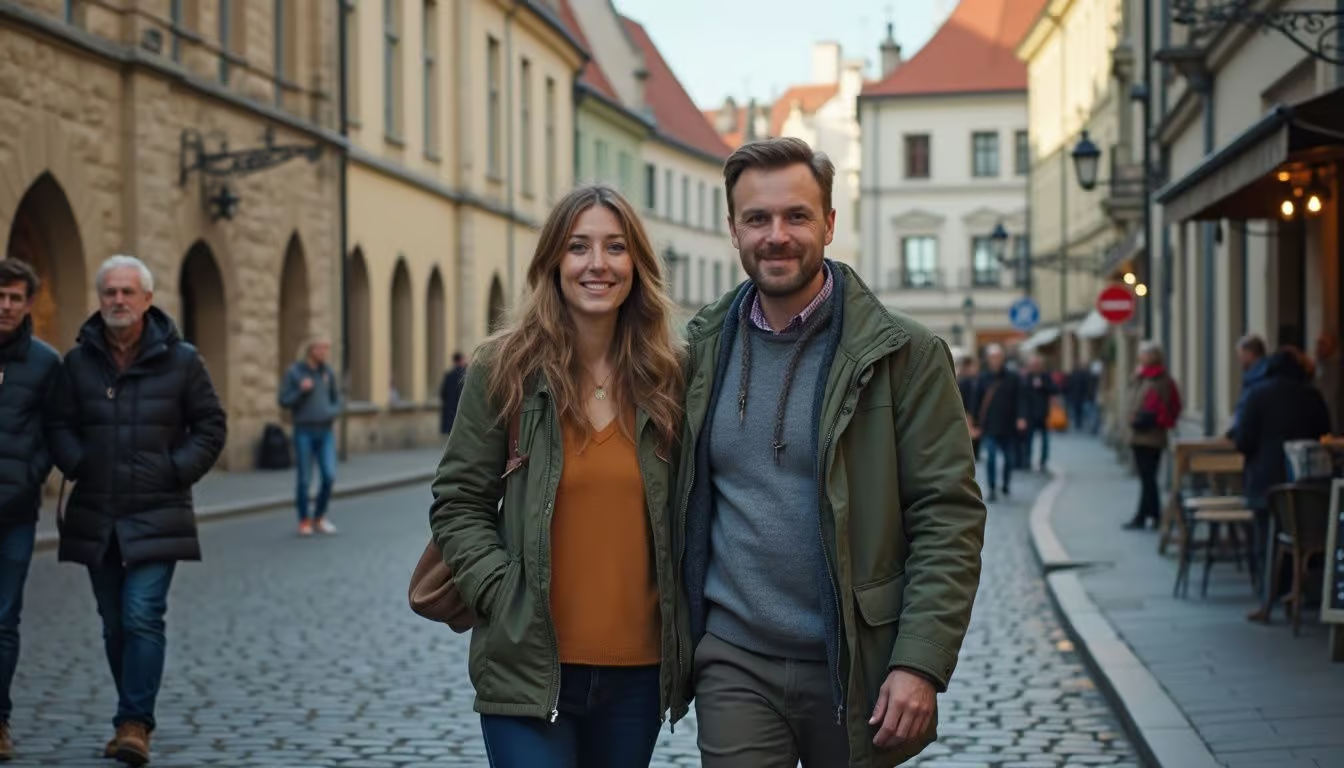
Whether you have a week or a month, a well-planned itinerary can help you make the most of your time. Here are a couple of ideas to get you started, from a whirlwind tour of the highlights to a more immersive cultural journey.
What does a 7-day highlights tour include?
A one-week trip is a great way to get a taste of Central Europe’s biggest cities. This itinerary is fast-paced but hits all the major highlights.
- Days 1-2: Prague. Start in Prague’s Old Town. Walk across the Charles Bridge, see the Astronomical Clock, and explore the Lennon Wall. On your second day, head up to Prague Castle and visit St. Vitus Cathedral for incredible city views.
- Days 3-4: Vienna. Take a morning train to Vienna. Spend the afternoon at St. Stephen’s Cathedral and the Hofburg Palace. The next day, explore the magnificent Schönbrunn Palace and relax in the evening with a classical music concert or a slice of Sachertorte at a traditional coffee house.
- Days 5-6: Budapest. Hop on a train to Budapest. Explore the Buda Castle district, including Fisherman’s Bastion. The next day, relax at one of the city’s famous thermal baths and explore the vibrant Jewish Quarter and its ruin bars at night.
- Day 7: Departure. Enjoy a final Hungarian breakfast before heading to the airport for your flight home.
This tour gives you just enough time to see the main attractions in each city. My legs were exhausted by the end of it, but the memories were absolutely worth it.
How to plan a 2-week cultural journey?
With two weeks, you can slow down and dig a little deeper into the culture of Central Europe. This itinerary mixes iconic cities with fairytale castles and beautiful nature.
- Days 1-3: Prague. Spend three nights really getting to know the city. Walk across the Charles Bridge at sunrise, enjoy a hearty meal in the Old Town Square, and maybe catch a jazz show along the river.
- Days 4-5: Vienna. Take the train to Vienna. Dedicate time to both Schönbrunn Palace and the Hofburg Palace. Enjoy the city’s coffee house culture and take in a classical music concert.
- Days 6-7: Budapest. Travel to Budapest. Spend a day exploring the Buda side (castle, Fisherman’s Bastion) and a day on the Pest side (Parliament, St. Stephen’s Basilica). Don’t forget to soak in the Széchenyi thermal baths.
- Days 8-9: Krakow. Take an overnight train or bus to Krakow. Explore the historic old town and take a day trip to the Auschwitz-Birkenau Memorial for a powerful history lesson.
- Day 10: Tatra Mountains (Slovakia/Poland). Head south into the mountains. Go for a hike in the stunning High Tatras for a dose of nature.
- Days 11-12: Bavaria, Germany. Rent a car or take a bus into rural Bavaria. Visit the iconic Neuschwanstein Castle and enjoy the hearty food and beer at a local beer hall.
- Day 13: Berlin. Travel to Berlin and spend the day exploring its complex history at sites like the Brandenburg Gate, the Reichstag, and the East Side Gallery.
- Day 14: Departure. Fly home from Berlin.
This itinerary gives you more breathing room and allows for some amazing detours. The best memories often come from those unplanned stops, so stay flexible!
Tips for Staying Safe
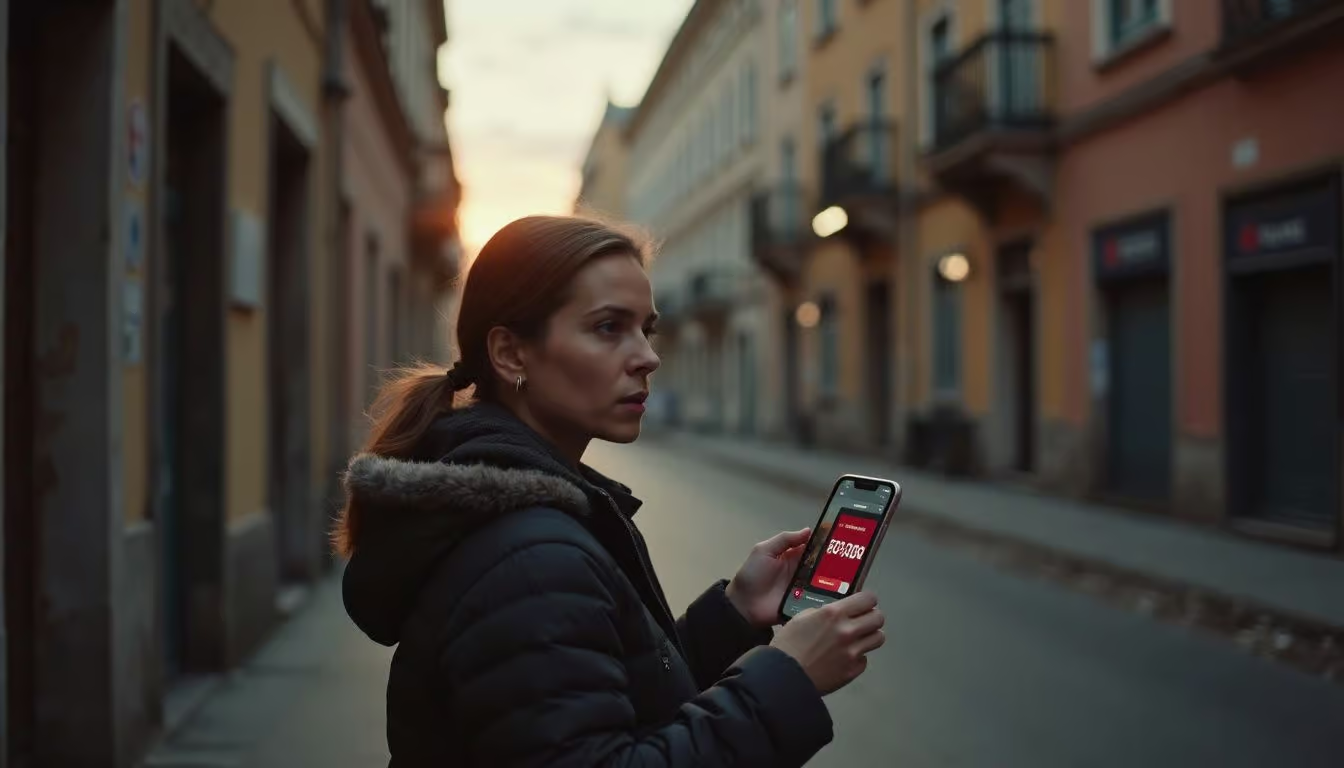
Central Europe is generally very safe, but it’s always smart to be prepared. A little awareness goes a long way in ensuring your trip is trouble-free.
How can you understand and respect local customs?
A little effort to understand local customs can make a huge difference. Learn a few basic phrases like “hello” (“dobrý den” in Czech) and “thank you” (“dziękuję” in Polish). It shows respect and locals will appreciate it.
When visiting places of worship, dress modestly. This means covering your shoulders and knees. Also, be aware of national pride. Austrians speak German, but they are not Germans. And the Slovaks are proud of their independence from the Czech Republic, which happened in 1993.
Hiring a local guide for a day can be a great way to get real insights into the culture. Ask them about local etiquette and traditions. It’s a quick way to learn and will make your interactions much smoother.
What health and safety precautions should you take?
Before you go, make sure all your routine vaccinations are up to date. The CDC recommends travelers be covered for Hepatitis A and B. If you plan on spending a lot of time in rural or forested areas, it’s a good idea to talk to your doctor about a rabies shot as a precaution.
- Pack a First-Aid Kit: Bring essentials like painkillers, anti-diarrhea medicine, and band-aids. It’s always easier to have them on hand than to search for a pharmacy in a new city.
- Use Insect Repellent: In forested areas, especially in the Czech Republic and Austria, ticks can be a concern. Use a repellent with DEET to protect against Lyme disease.
- Stay Hydrated: Always carry a water bottle, especially in the summer. Tap water is generally safe, but bottled water is readily available if you prefer.
- Be Street Smart: In crowded tourist areas and on public transport, be mindful of your belongings to avoid pickpockets. Keep your wallet in your front pocket and be aware of your surroundings.
- Carry Your ID: In some countries, like Hungary, you may be required to show your ID to police if asked, so it’s a good idea to carry your passport or a copy of it with you.
Who should you contact in case of emergencies?
The most important number to know is 112. This is the universal emergency number for police, ambulance, and fire services across the entire European Union. It works everywhere and is the fastest way to get help.
It’s also a good idea to have the contact information for your country’s embassy or consulate saved in your phone. They can help you in situations like a lost passport or a serious legal issue.
Here are the direct local numbers for major cities:
- Prague: Police 158, Ambulance 155, Fire 150
- Budapest: Police 107, Ambulance 104, Fire 105
- Vienna: Police 133, Ambulance 144, Fire 122
How Will Central Europe Travel Change in 2025?
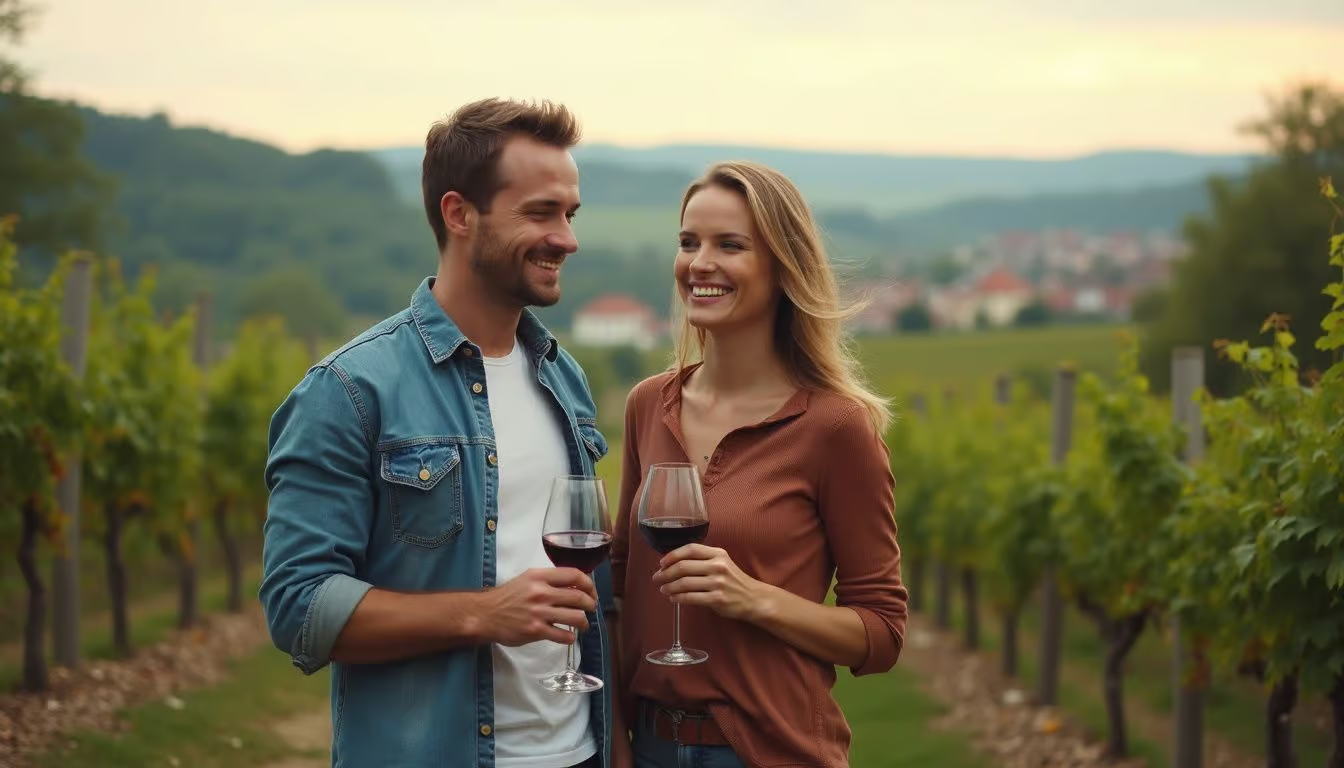
Travel in 2025 and beyond will see a few key changes. The biggest one for many travelers is the introduction of the ETIAS (European Travel Information and Authorisation System). This new electronic travel authorization is expected to become mandatory for visitors from visa-exempt countries (like the U.S. and U.K.) in late 2026 or early 2027. While it’s not a visa, you’ll need to apply online before your trip. The rollout is gradual, so be sure to check the latest official requirements before you travel.
You’ll also see a continued rise in sustainable and eco-friendly tours, with more national parks and regions promoting “slow travel” options that let you connect more deeply with a destination. The comeback of night trains is also making it easier and more sustainable to travel between major cities while you sleep.
Digital tools will become even more essential. AI travel assistants and advanced planning apps can help you create highly personalized itineraries, from finding the best goulash in Budapest to booking last-minute concert tickets in Vienna.
While the way we plan and navigate may evolve, the core appeal of Central Europe remains the same. Whether you’re exploring ancient castles, tasting local wines, or just enjoying a cold beer in a historic square, 2025 is a fantastic time to discover the rich history and vibrant culture of this incredible region.
People Also Ask
Where can I try lamb or mutton dishes in Central Europe?
You’ll find great lamb and mutton in Hungary and Poland. In Hungary, look for a hearty mutton stew called Birkagulyás, while in Poland’s mountain regions, you might find a traditional mutton roast known as Baranina.
Are there any castles known for serving traditional lamb meals?
Yes, the restaurant Kuchyň right at Prague Castle serves classic Czech meals that can include roasted meats. Some other castle restaurants, like u0022The Castleu0022 in Marianske Lazne, even feature specific dishes like lamb chops on their menu.
What’s the difference between lamb and mutton when traveling through these cities?
Lamb is tender meat from a sheep under a year old, so it’s mild. Mutton comes from an adult sheep and has a stronger, gamier flavor that is perfect for the region’s rich, slow-cooked stews.
Can I join food tours focused on local specialties like lamb or mutton?
Absolutely, companies like Secret Food Tours in Prague feature traditional roasted meats on their culinary walks.