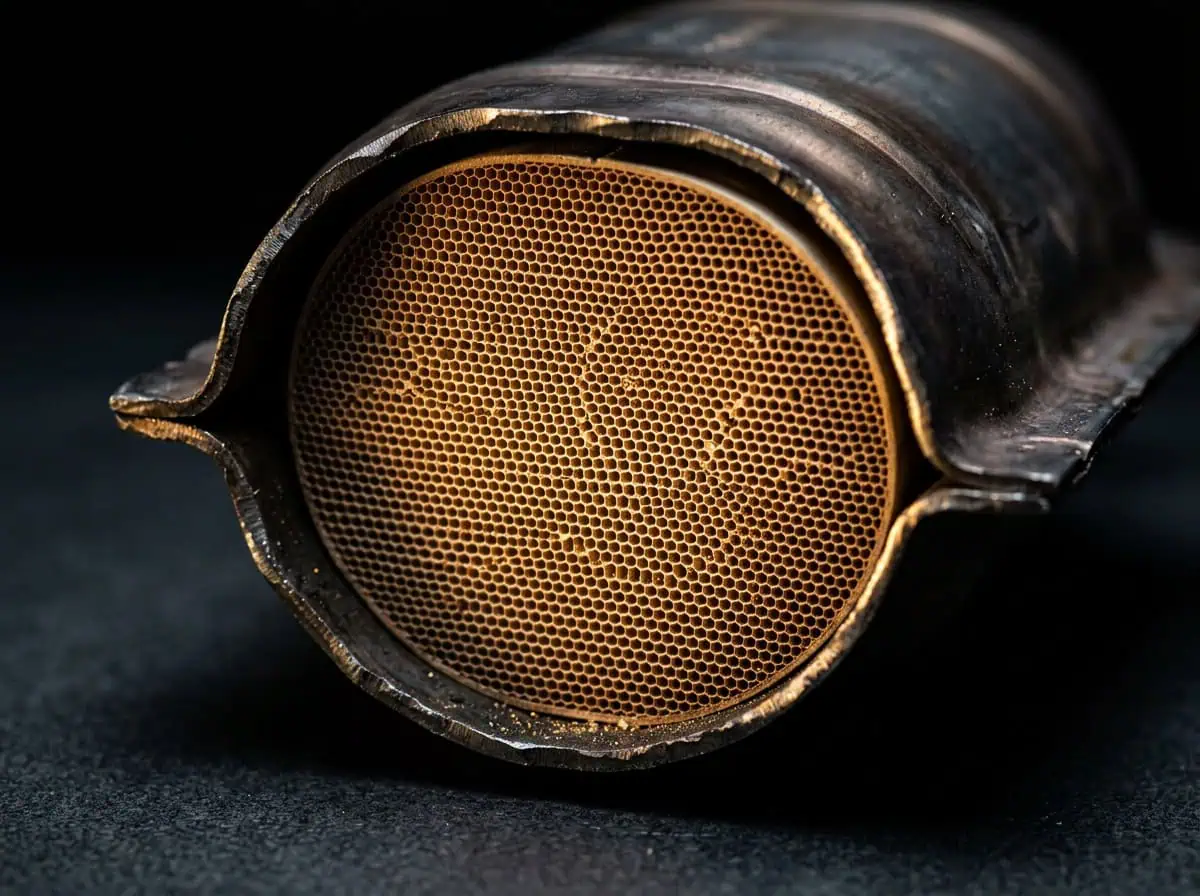
I was having drinks with a buddy of mine recently who works at a scrap yard. It is a fairly unique job, and he always has interesting stories about the automotive parts that roll across the scales. We got talking about exhaust systems, and specifically why identifying the true value of a catalytic converter is so difficult. If you want to accurately calculate a catalytic converter scrap price and avoid getting ripped off, you need to understand the microscopic chemistry operating inside the unit.
Two exhaust components can sit side-by-side on a scrapyard scale and look identical to the naked eye. One will yield an $800 payout, while the yard manager rejects the other for ten bucks. Most guys walking in assume the steel housing dictates the worth of the scrap.
That is a massive misconception. The outer shell is completely irrelevant. The payout depends entirely on a hidden chemical payload, the daily volatility of precious metal markets (which routinely surpass traditional safe-haven assets like gold), and the exact manufacturing origin of the part. To understand why prices swing so violently, you first have to look at the invisible chemical factory operating right now beneath your car.
Table of Contents
Precious metal payloads: The microscopic source of converter value
A catalytic converter’s actual value comes from an astronomically expensive chemical payload hidden inside a ceramic matrix, safely encased in a stainless steel shell built to withstand immense heat and undercarriage corrosion. The unit functions as a miniature processing plant strictly designed to neutralize toxic engine emissions before they exit the tailpipe.
The Platinum Group Metals (PGMs)
Automakers rely on a specific triad of rare elements called Platinum Group Metals (PGMs) to handle vehicle exhaust filtration. These three materials—platinum (Pt), palladium (Pd), and rhodium (Rh)—act as heat-resistant catalysts. Without them, your engine continually pumps highly pollutive nitrogen oxides, carbon monoxide, and raw hydrocarbons straight into the atmosphere.
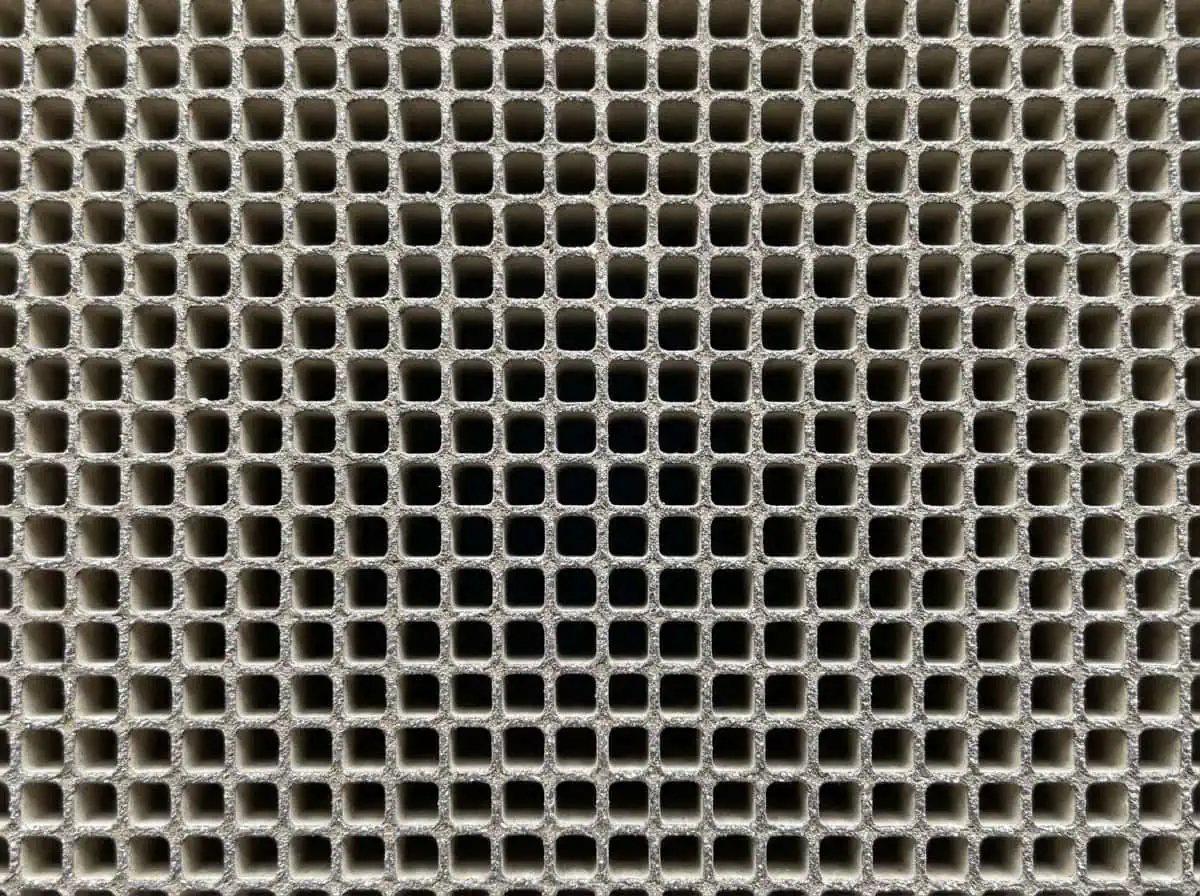
Inside the shell, these valuable elements are applied directly to a grid. The PGM loadings and ceramic honeycomb structure create a massive surface area for vehicle exhaust to hit. As the hot gas passes through, the metals trigger rapid chemical reactions. Platinum and palladium utilize ambient oxygen gas to oxidize the carbon monoxide, effectively neutralizing the deadly carbon compound. Simultaneously, a specific catalytic reaction involving rhodium targets the nitrogen oxides, breaking those toxic oxides down into harmless water vapor, carbon dioxide, and pure nitrogen gas, thereby stripping the exhaust of its worst pollutants.
Why by-product extraction beats virgin mining
Scrapping these exhaust components is incredibly lucrative because finding fresh PGM ore in the ground is notoriously difficult. Rhodium is exceptionally rare. It rarely exists alone and is almost entirely found as a scarce secondary find when mining or extracting other base materials like nickel.
Because virgin mining requires massive amounts of coal-powered energy for very little yield, by-product extraction through scrap recycling is vastly more efficient for the automotive industry. In fact, roughly 60% of total global PGM production goes straight back into building new converters. That massive, sustained industrial demand is precisely what makes your old parts so valuable to a downstream processor.
Spot market volatility and metal price fluctuations
Scrap yards do not guess at replacement values; they base their daily payouts directly on the global spot market pricing and Metal market volatility of the commodities index. If the stock market drops, your exhaust system instantly loses value.
Historically, macroeconomic events trigger massive price swings for these specific rare materials. During the 2020 COVID-19 pandemic outbreak, global supply chain chaos caused the per-ounce price of platinum to surge abruptly from $700 to $1,000. Over the course of a single year, palladium saw an even more aggressive spike, rocketing from $1,000 to $3,000 an ounce.
To put today’s market into perspective, you just have to look at the numbers. According to the PMR platform, platinum currently trades at $1895.0 USD per ounce. Palladium sits at $1402.0 USD. Meanwhile, rhodium dwarfs them both, demanding an astonishing $10050.0 USD. Because numbers fluctuate by the hour, a quote a scrap yard gave you last month is completely meaningless today.
Original Equipment Manufacturer versus aftermarket replacements
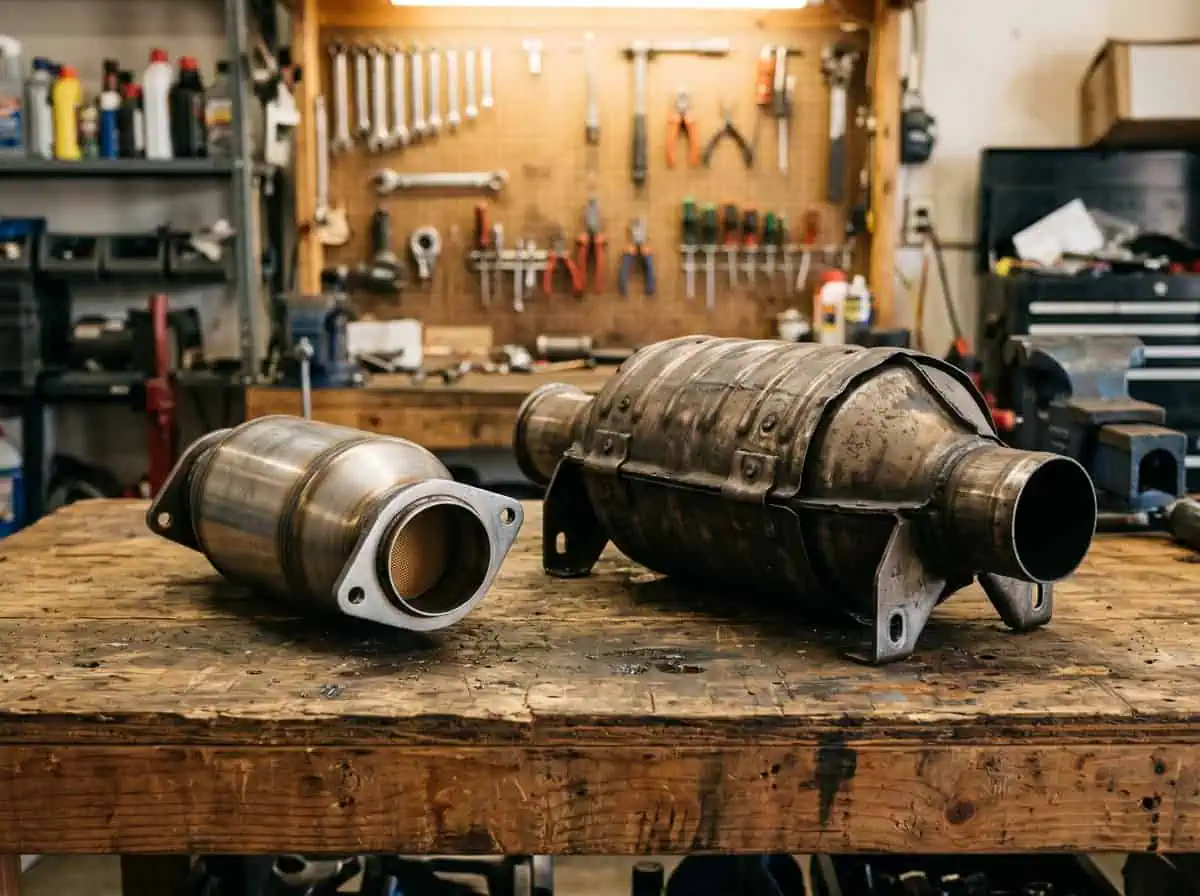
An Original Equipment Manufacturer (OEM) unit routinely commands hundreds of dollars, while third-party aftermarket replacements are virtually worthless because they carry vastly inferior quantities of precious metals. The manufacturing origin sets the ceiling for the payout.
The 10 percent aftermarket rule
When a factory exhaust fails, many drivers opt for cheap, third-party fixes just to stretch the life of the car and pass a basic municipal emissions test. These aftermarket units visually mimic the original parts, but they functionally cheat the chemistry.
These cheap, broad-fit replacements only contain about 10% of the precious metal content found in factory-installed units. Because scrap valuation is tethered entirely to the chemical density rather than the physical functionality, OEM converters and aftermarket replacements exist in two entirely different financial universes. A scrap buyer will instantly downgrade an aftermarket quote to pennies on the dollar.
“Because scrap valuation is tethered entirely to the chemical density rather than the physical functionality, OEM converters and aftermarket replacements exist in two entirely different financial universes.”
Ignoring the physical weight myth
A pervasive mistake among casual garage scrappers is measuring value by how heavy the part feels in their hands. Weight is a total red herring. A heavily shielded, bulky aftermarket unit might feel solid, while a compact OEM unit off a smaller sedan feels incredibly light.
Scrappers look straight past the steel. Base metals and precious metal coating are not the same thing. The heavy unit consists mostly of cheap structural steel, while the lighter factory part contains the densely packed elemental chemistry. If you assume heavy means expensive, you will drastically miscalculate the worth of your garage pile.
Decoding serial numbers and historical assay formulas
Scrap buyers calculate the value of a specific unit by taking its stamped identification code and cross-referencing it against detailed historical refining data. They do not guess at the PGM density inside the shell.
The scrapper’s payout formula
When you hand over an exhaust unit, a professional scrapper runs a very specific math equation. They index your exact unit against thousands of past processing yields. By combining modern toll refining with historical assays, the buyer knows precisely how many grams of platinum or rhodium that specific shell usually generates.
They take that exact historical metal yield, multiply it against today’s spot market price, subtract their own processing fee, and hand you the final quote. This highly scientific approach ensures they never overpay for a part that looks valuable but actually contains a low chemical density.
Checking your own factory numbers
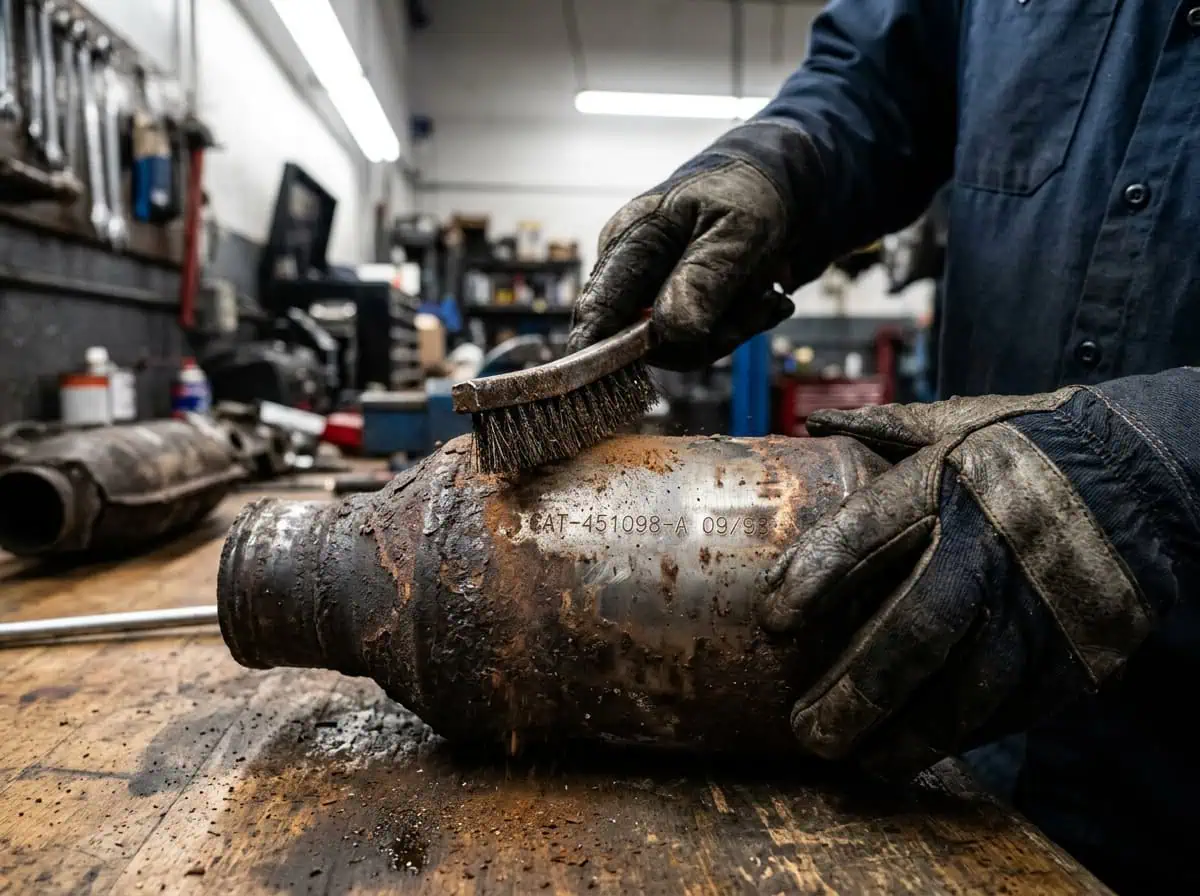
You can actually run this math yourself before heading into town. First, locate the engraved or stamped identification sequences on the outer steel casing. You usually have to wire-brush the rust off the heat shield or downpipe to read them.
Once you have the code, you can use public index apps to verify the going rate for that exact shell. If the unit lacks a code entirely, prepare for a massive price drop. Without data, buyers assume the highest level of risk and therefore offer the absolute lowest payout.
Ghost units and pervasive scrap yard myths
Manufacturing defects routinely produce units that look perfectly normal on the outside but hold absolutely zero financial value at the scrapyard. These flawed parts frequently trick inexperienced mechanics and casual scrappers.
During production runs, you get occasional reject converters with an uncoated ceramic core. The internal brick simply never received its expensive chemical bath. Scrap metal expert Thubprint recently teamed up with PMR to tear down various units on video, revealing exactly what these ghosts look like. They have a distinct, solid white or yellow internal core, proving they possess zero financial value whatsoever.
Another pervasive scrap myth is the old wire-stripping idea that these parts hold massive amounts of copper. They do not. Scrapping an exhaust system for traditional base metals is a total waste of time, as the value is exclusively tied to the microscopic platinum group chemistry.
The shielded scrap yard and long-term EV market resilience
The transition to green energy is not destroying the value of your old car parts; hybrid bridging technologies and strict anti-theft laws have simply transformed how yards operate. Demand remains aggressively high.
Modern anti-theft protocols
Skyrocketing commodity prices predictably triggered a massive, decade-long wave of automotive theft. Thieves figured out that a battery-powered saw and sixty seconds under a truck could net them hundreds of dollars. The industry had to adapt drastically to survive.
Today, strict serial number indexing and scrap yard protocol legally protect the buyers. If you plan to part out a vehicle or sell a damaged car for scrap, you must prove ownership. Yards now demand valid identification, vehicle titles, and matching VINs. If you show up with a sawed-off pipe and no paperwork, you will be shown the door.
Why electric vehicles aren’t killing the market
The general narrative is that pure electric vehicles will quickly kill the internal combustion engine and collapse the associated scrap market. Here at Unfinished Man, we prefer to look at the actual data. In 2023, EV purchases represented just 10% of new car sales in the US. The infrastructure is simply lagging.
More importantly, the massive surge in Hybrid vehicles and hydrogen-powered fuel cells ensures long-term industrial reliance on PGMs. Hybrid vehicles still run traditional gas engines alongside their electrical components and strictly require exhaust filtration. Meanwhile, emerging zero-emission hydrogen-powered technology ironically leans on platinum as a core catalyst within fuel cells. The death of the market has been vastly exaggerated.
Maximizing your final payout at the scrap yard
Securing a fair payout comes down to preparing your materials, understanding the daily commodities index, and possessing the right legal documentation. You have to treat the transaction like a commodity trade, not a junkyard drop-off.
Start by cleaning the outer shell and identifying the factory stamp. Check that number against a public index to confirm whether you are holding a lucrative factory unit or a cheap replacement. Then, check the daily spot pricing for platinum, palladium, and rhodium to ensure the market hasn’t tanked that particular morning.
Finally, bring your ID and the associated vehicle title. By understanding the sophisticated chemistry and strict legal protocols driving the industry, you shift from blindly guessing at metal values to securing the exact street price your part deserves.
Frequently Asked Questions
What’s the difference in scrap value between an OEM and an aftermarket catalytic converter?
Original Equipment Manufacturer (OEM) converters routinely fetch hundreds of dollars, while aftermarket replacements are virtually worthless. Cheap, third-party fixes cheat the chemistry and only contain about 10% of the precious metals found in factory-installed parts. Scrap buyers will instantly downgrade an aftermarket quote to pennies on the dollar.
Why does a heavy catalytic converter sometimes yield a lower scrap payout than a lighter one?
Weight is a total red herring in the scrap game. A bulky, heavy aftermarket unit mostly consists of cheap structural steel, while a compact factory converter houses intensely packed elemental chemistry. Scrap buyers are paying for the intricately coated Platinum Group Metals hidden inside the shell, not the heavy steel casing outside.
How does a scrap yard calculate exactly how much my catalytic converter is worth?
Professional buyers run the unit’s stamped identification code through an index of historical refining data. This tells them exactly how many grams of platinum, palladium, or rhodium that specific shell systematically yields. They multiply that historical metal yield by today’s spot market price, deduct their own processing fee, and hand you the final quote.
What is a ghost unit in the catalytic converter scrap market?
A ghost unit is a factory-reject converter where the internal ceramic honeycomb never received its ridiculously expensive chemical bath of precious metals. To a mechanic or casual scrapper, the steel exterior looks perfectly normal and valuable. However, a tear-down will reveal a solid white or yellow internal core, meaning the part holds absolutely zero financial value at the scales.
Can I legally sell a catalytic converter I cut off a junk car without the paperwork?
If you show up to a yard with a sawed-off pipe and no documentation, legitimate buyers will show you the door. Strict anti-theft protocols now govern the industry to combat rampant parts theft. You must thoroughly prove ownership by providing a valid ID, vehicle titles, and matching VINs to legally complete the sale.
Are scrap catalytic converters still worth money with the rise of electric vehicles?
Yes, the death of the combustion exhaust market has been vastly exaggerated by the EV narrative. Hybrid vehicles are surging in popularity and still require traditional gas engines strictly tethered to PGM-loaded exhaust filtration. Furthermore, emerging zero-emission hydrogen fuel cells rely entirely on platinum as a core catalyst, ensuring aggressive long-term industrial demand.
How much does rhodium actually contribute to my converter’s scrap price?
Rhodium is the undisputed heavyweight of the scrap payout, currently commanding over $10,000 per ounce on the global commodities index. Because this metal is exceptionally rare and almost exclusively extracted as a mining byproduct, automakers rely heavily on recycling old converters to build new ones. Its daily spot market volatility dictates a massive chunk of whether you get a huge payout or a mediocre one.