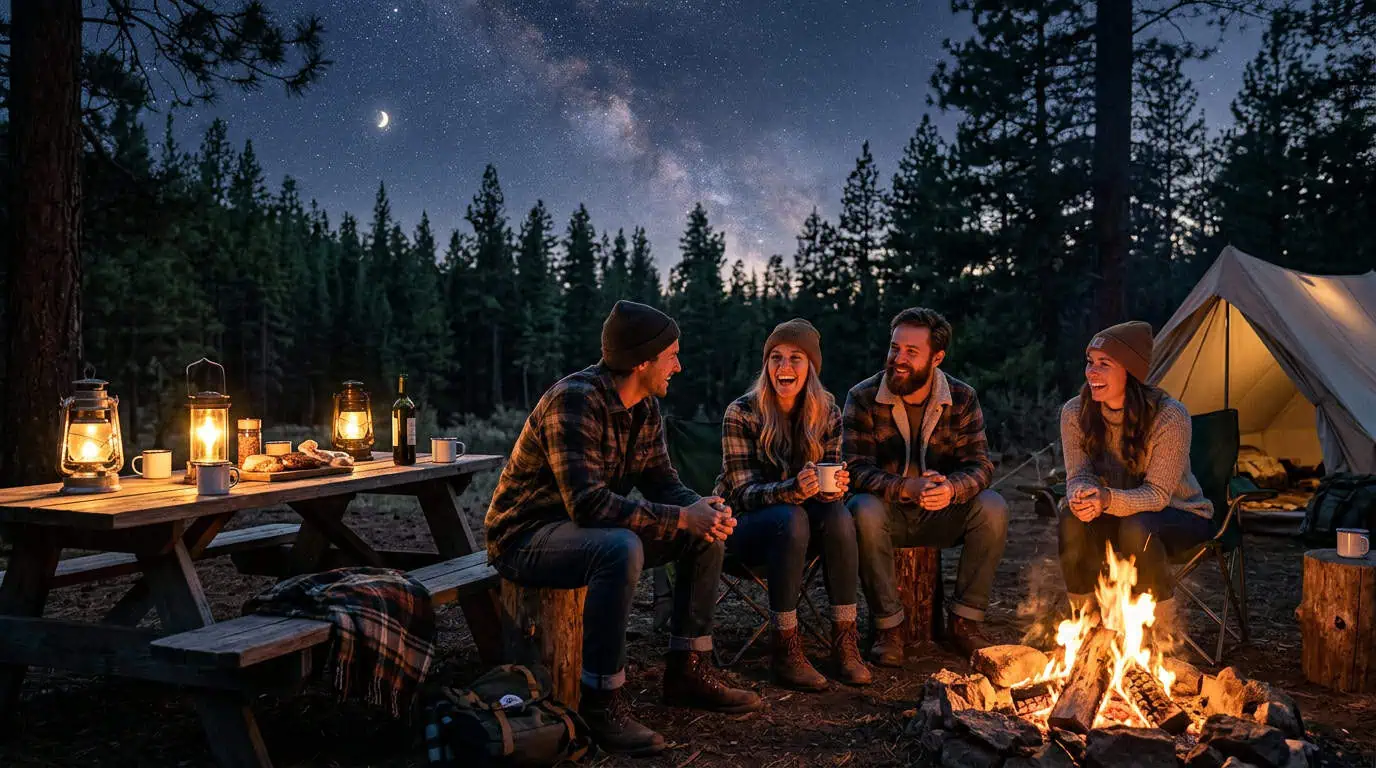
If you are looking for the best lighting for camping, you need a kit that serves the realities of an outdoor campsite rather than a sterile gear-testing lab. The goal of most camping trips is rarely hardcore survival. Your priority is sitting out in the woods at night with a couple of dependable flashlights, pouring a little tequila, and swapping stories under the stars with friends.
Pulling off a comfortable night demands you dodge the primary trap of outdoor gear buying: purchasing a singular, blinding mega-beacon. A massive, high-output light washes out the camp, dies mid-trip, and ruins the storytelling atmosphere. To get that perfect twilight mood while keeping your site safe, you do not need the biggest light on the shelf. You need a curated toolkit.
Most gear guides treat lighting purely as a utilitarian survival necessity. They completely ignore the crucial social aspect of how overly bright, cool-toned beams ruin campsite ambiance. Treating your gear setup like interior design changes the entire experience.
Table of Contents
Top picks: The best lighting for camping and storytelling
Relying on a single light source severely limits your flexibility. The psychological and practical comfort of having redundant lighting systems creates fundamentally better outdoor experiences than relying on one do-it-all piece of hardware. A layered setup combined with 360-degree illumination creates a fully functional campsite.
Compact headlamps for hands-free navigation
Cooking, setting up tents, or organizing gear is vastly easier with hands-free lighting. A lightweight headlamp with moderate lumen output—typically between 200 and 400 lumens—is the foundational piece of every camper’s kit. Moderate-output headlamps provide enough brightness to safely use a camping stove or read a map, but they will not blind your friends across the fire when you turn your head to talk to them. Compact headlamps are especially critical on multi-day backpacking trips where packed weight and efficient mobility matter most.
Rechargeable wide-beam lanterns for the picnic table
To make an outdoor space feel inviting, you need an anchor light. Rechargeable lanterns solve this problem by providing 360-degree ambient light without forcing you to constantly purchase disposable batteries. Specifically, wide-beam lanterns distribute soft, even light across shared spaces such as picnic tables or inside larger group tents. A good lantern anchors the social hub of the camp.
Compact flashlights for midnight treks
Even with a beautifully lit camp, you need a quick-grab option for stepping into the total dark. Small handheld compact flashlights serve as reliable backups and mobility tools. They provide rapid directional control for bathroom trips or short walks away from camp. A dedicated pocket flashlight usually offers a higher peak brightness than your headlamps, cutting through the dark exactly where you point it.
Why high lumens will ruin your campsite night vision
A common instinct is to buy the brightest bulb available, but buying raw power often backfires outdoors. Whether you’re at packed, front-country campgrounds or alone in the deep woods, buying a 1000-lumen light actively destroys group dynamics and stalls human eyes from adjusting to the natural dark. Campers are much better off ignoring high-lumen headlamps for general campsite hanging. The proper outdoor lighting ranges break down simply:
- Stay strictly between 100 to 200 lumens for tent use and close-range tasks to keep your vision intact.
- Push up to 200 to 400 lumens for general campsite duties and short trips to the car.
- Reserve 400+ lumens exclusively for moving through technical terrain, wildlife scanning, or emergency signaling.
Lumens are a simple technical measurement of the total amount of visible light emitted by a specific source. Brightness metrics mean nothing for navigation without understanding the focus and throw of the light, which is why balancing lumens and beam distance is required for practical use.
“Whether you’re at packed, front-country campgrounds or alone in the deep woods, buying a 1000-lumen light actively destroys group dynamics and stalls human eyes from adjusting to the natural dark.”
This balance relies heavily on spot and flood modes. A narrow, focused throw is causally linked to spotting obstacles and trail markers at a distance, making a spot beam ideal for trail navigation. Without a tight focus, a high-lumen light may not actually project far enough for safe movement in the deep woods. Conversely, wide, dispersed light patterns are required for illuminating shared spaces like tents and picnic tables, leveraging a flood beam for ambient lighting near the fire. Working with these distinct patterns allows you to dial in exactly what you need.
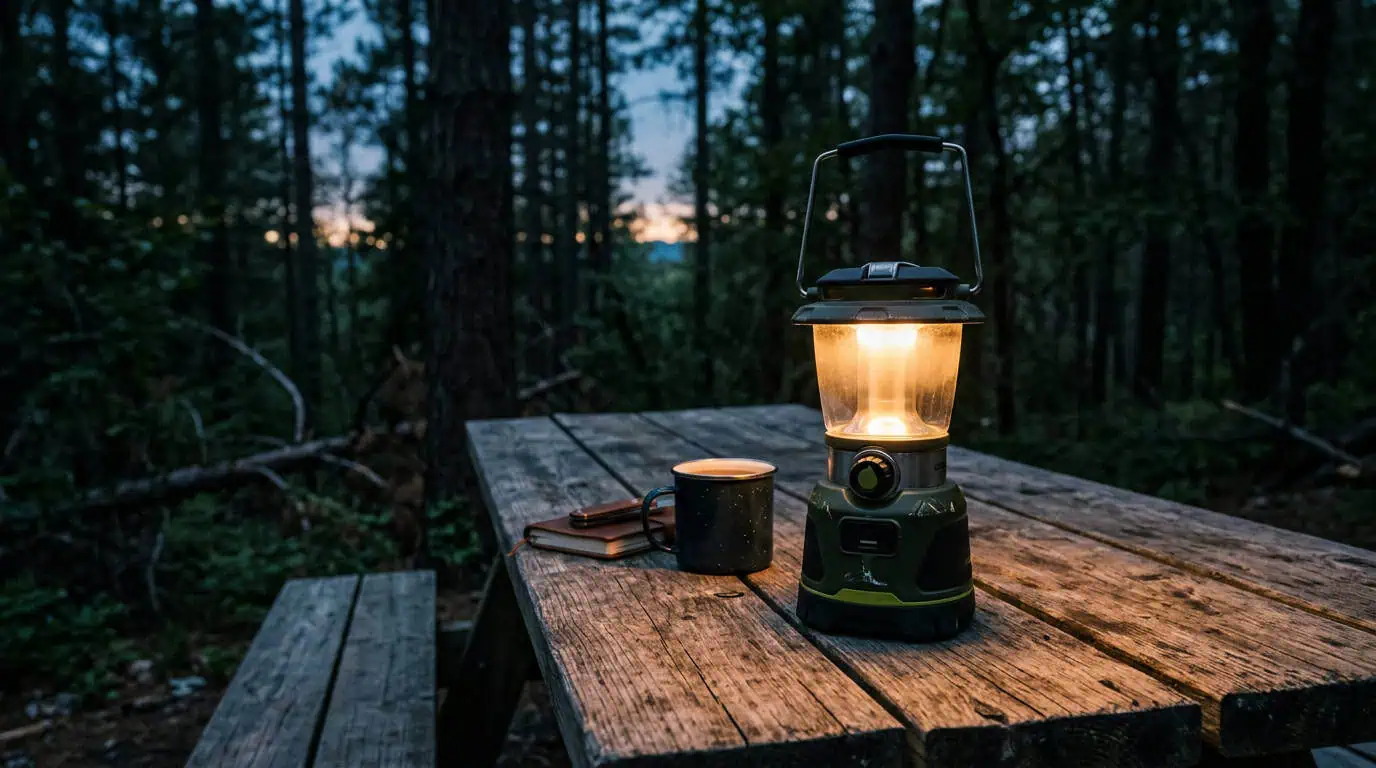
There is an inherent functional trade-off where utilizing maximum brightness dramatically reduces total runtime. High-output modes and battery drain are inextricably linked. Dialing down the lumens preserves the mood of the evening and ensures your gear does not die on night one.
Are alkaline batteries becoming a backcountry liability?
Battery chemistry dictates whether you spend the night comfortable or stumbling in the dark searching for spares. As weather shifts, specific battery chemistry directly correlates to device performance in harsh, freezing camp environments.
For a one- or two-night campsite with vehicle access, you can afford slightly heavier gear and rely on whatever power source you prefer. But if your trip extends beyond three days without access to a wall outlet, standard disposable batteries—specifically traditional alkaline options—become a distinct liability. Alkaline batteries rely on a water-based electrolyte that causes severe voltage sag when freezing, meaning they die aggressively when temperatures drop.
Modern rechargeable batteries handle cold exposure with significantly more resilience. High-capacity lithium-ion models, which lack that vulnerable water-based chemistry, tend to last much longer and perform reliably in colder temperatures. Rechargeable lithium-ion models are the absolute baseline for serious multi-day backpacking trips, though carrying them does mean you must pack supporting power banks or portable solar charging systems.
The smartest contingency plan for the deep backcountry is carrying hybrid models. The ability to switch seamlessly between proprietary lithium-ion packs and standard store-bought batteries provides total flexibility. You can run off rechargeable packs during normal use, knowing you can easily pop in standard alkaline batteries if an unexpected freeze zaps your primary charge.
Weatherproofing and the functional limits that save trips
You do not need military-grade armor to survive a weekend trip to established campgrounds, but you do need intentional hardware design. Gear longevity relies far less on rugged-looking exteriors and far more on functional limits.
If you are camping near lakes, rivers, or heavy morning dew, an IPX4 rating is the absolute baseline industry certification required to ensure gear survives rain or spills. It guarantees reliable splash resistance for waterfront drinks and unexpected drizzle. Buying a light without it guarantees water damage eventually.
Physical trauma destroys just as much gear as water. Impact-resistant construction and tightly sealed battery compartments prevent a total catastrophic blackout from a single clumsy drop onto a rock.
The unsung heroes of outdoor gear survival are the quiet software features hidden in the spec sheet. A system of lockout switches prevents the ultimate gear tragedy: accidental activation. Without it, your headlamp will eventually turn itself on inside your duffel bag, leaving you with dead gear exactly when you need it.
Power management relies heavily on low-output modes to stretch runtimes. Dialing down your gear to 5-10 lumens is specifically useful for reading in a tent or finding a zipper without waking up your tent-mates, effectively stretching battery life from hours into days.
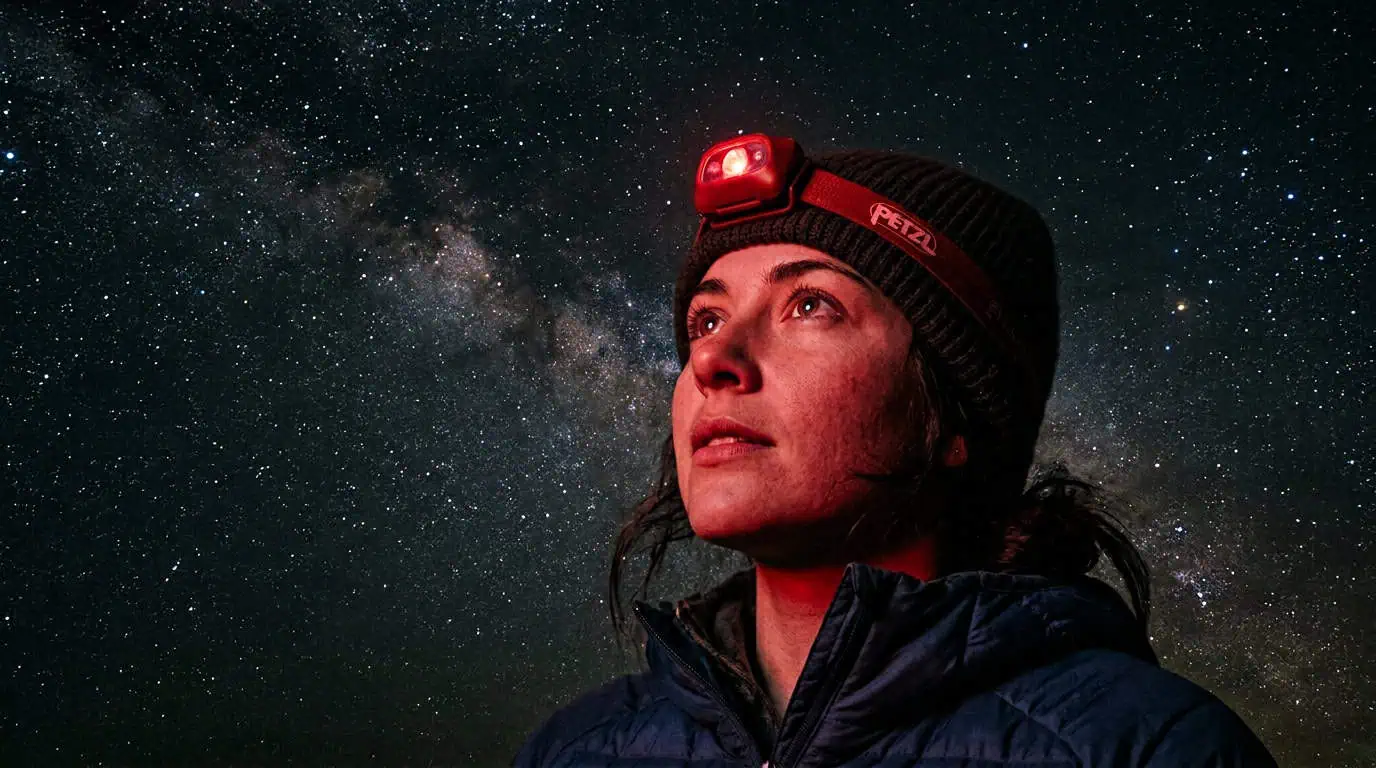
Finally, the most critical feature for a storytelling nightscape: red light settings. Activating red modes allows campers to socialize and navigate without forcing their eyes to constantly readjust to the dark. They preserve your natural night vision. You can easily navigate the camp, manage the fire, and stargaze without ever blinding the person sitting across from you.
Curating your perfect campsite nightscape and logging off
Selecting specific camping lighting is a deliberate, highly pragmatic process. Match your gear explicitly to your trip length, terrain, and weather. Short car-camping trips allow for heavy, wide-beam ambient output. Deep backcountry runs explicitly demand lightweight, energy-efficient choices with long throws.
Smart preparation ensures your site stays functional and comfortable. Spend less time frantically managing drained electronics, and more time fully present in the outdoors.
Before you pack the car, double-check your battery chemistry. Ensure your headlamp has a dedicated red-light mode. Grab your layered setup of rechargeable lanterns and backup flashlights. Good lighting transforms a dark patch of woods into the perfect, stress-free venue to spend time with the people who matter.
Frequently Asked Questions
Why does a high-lumen flashlight ruin a camping trip?
Blasting a 1000-lumen mega-beacon absolutely wrecks your natural night vision and the campsite’s storytelling ambiance. High-output lights are aggressively bright, blinding your friends across the fire and draining the battery much faster than necessary. Unless you’re navigating technical terrain, stick to lower settings to preserve both the mood and your gear’s runtime.
What’s the difference between a spot beam and a flood beam for camping?
A spot beam gives you a narrow, focused throw of light that is essential for seeing obstacles and trail markers in the distance. A flood beam provides wide, dispersed light that evenly illuminates shared camp spaces like picnic tables and group tents. You need both to dial in your sightlines depending on whether you are moving through the woods or hanging by the fire.
How many lumens do I actually need for a camp headlamp?
For general campsite duties and hanging out in the tent, you only need between 100 and 200 lumens. You can push that to 400 lumens for short walks to the car or light trail use. Reserve anything over 400 lumens strictly for deep wilderness navigation, spotting wildlife, or emergency signaling.
Are hybrid camping lights worth buying over standard battery models?
Yes, especially if you venture deep into the backcountry. Hybrid models give you the distinct advantage of running on reliable, cold-resistant rechargeable lithium-ion packs while allowing you to seamlessly swap in standard store-bought batteries as a backup. This redundancy prevents you from being left in the dark if an unexpected freeze kills your primary charge.
Why do alkaline batteries die so fast in cold weather?
Traditional alkaline batteries rely on a water-based electrolyte that causes severe voltage sag when temperatures drop toward freezing. This chemical vulnerability means they drain aggressively in harsh winter camp environments. If you are camping in the cold, rechargeable lithium-ion batteries are vastly superior because they lack this freeze-prone chemistry.
What is a lockout switch and why does my camping light need one?
A lockout switch is a software or physical safety feature that prevents your light from accidentally turning on while compressed inside your backpack. Without it, the pressure of your gear shifting can easily trigger the power button during a hike. That leaves you arriving at a pitch-black campsite with a totally dead battery.
Can I use a regular white flashlight to read or socialize at night without blinding people?
You can, but you really shouldn’t. Activating a red light setting is the smartest way to socialize, stargaze, and manage the fire without forcing everyone’s eyes to constantly readjust to the dark. It actively preserves human night vision, keeping the camp functional without blinding whoever is sitting across from you.