
Ever get that gut-check feeling that your truck or car could get stolen, borrowed without asking, or driven like it was a rental?
That’s exactly why a lot of guys look into gps trackers and, more specifically, the benefits of hidden gps tracking for vehicles.
When you tuck a tracker out of sight, you can get real-time tracking on a smartphone app, plus alerts the second something weird happens.
I’m going to walk you through how the tech works, what features matter, and how to pick a setup that protects your investment without turning your life into a full-time surveillance project.
Key Takeaways
Hidden GPS trackers (Family1st, Spytec, Vyncs, Optimus, Americaloc) help with vehicle tracking, theft recovery, geofence alerts, and tamper notifications. In the U.S., the National Insurance Crime Bureau reported 850,708 vehicles stolen in 2024, so fast alerts matter.
Battery life depends on update speed and signal conditions. For example, Spytec lists about 13 days at 60-second updates, Americaloc lists up to 3 weeks on a portable unit, and LandAirSea lists up to 6 months in low power mode (slower updates).
Subscription fees vary a lot. In early 2026, examples in the U.S. include Bouncie at $9.65/month, LandAirSea plans starting at $19.95/month, Americaloc around $19.98/month, Optimus around $19.95/month, and Vyncs at $99.99/year. Hardware prices range too, with some brands bundling the device into a plan.
Fleet telematics can pay for itself. In a recent Verizon Connect Fleet Technology Trends Report, surveyed fleets reported average fuel savings rising to 16% (2021 to 2025) and many saw ROI from GPS fleet tracking in less than a year.
Follow privacy laws and get written consent when required. For law enforcement, GPS tracking can trigger Fourth Amendment issues and warrants (as highlighted in United States v. Jones), and private misuse can create serious stalking and liability risks.
Table of Contents
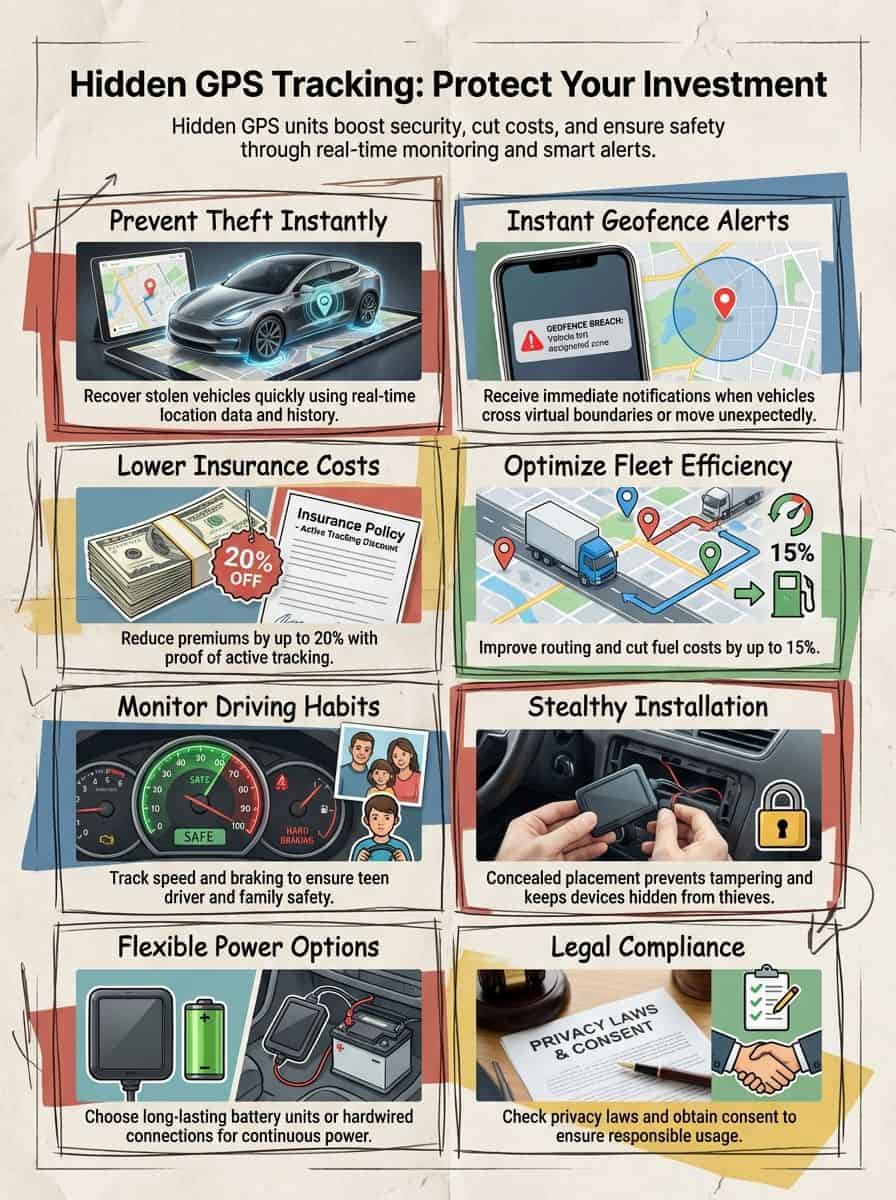
How Hidden GPS Tracking Works
A hidden GPS receiver locks onto satellites in the global navigation satellite system and sends position data over cellular networks (and sometimes Wi-Fi assist) to a mobile app.
You can hide a battery unit in the trunk, mount a magnetic tracker under the vehicle, or plug a tracker into the obd port. Many systems also store trip history, push geofence alerts, and flag tamper alerts when power gets cut or the unit moves unexpectedly.
What is the basic technology behind GPS tracking?
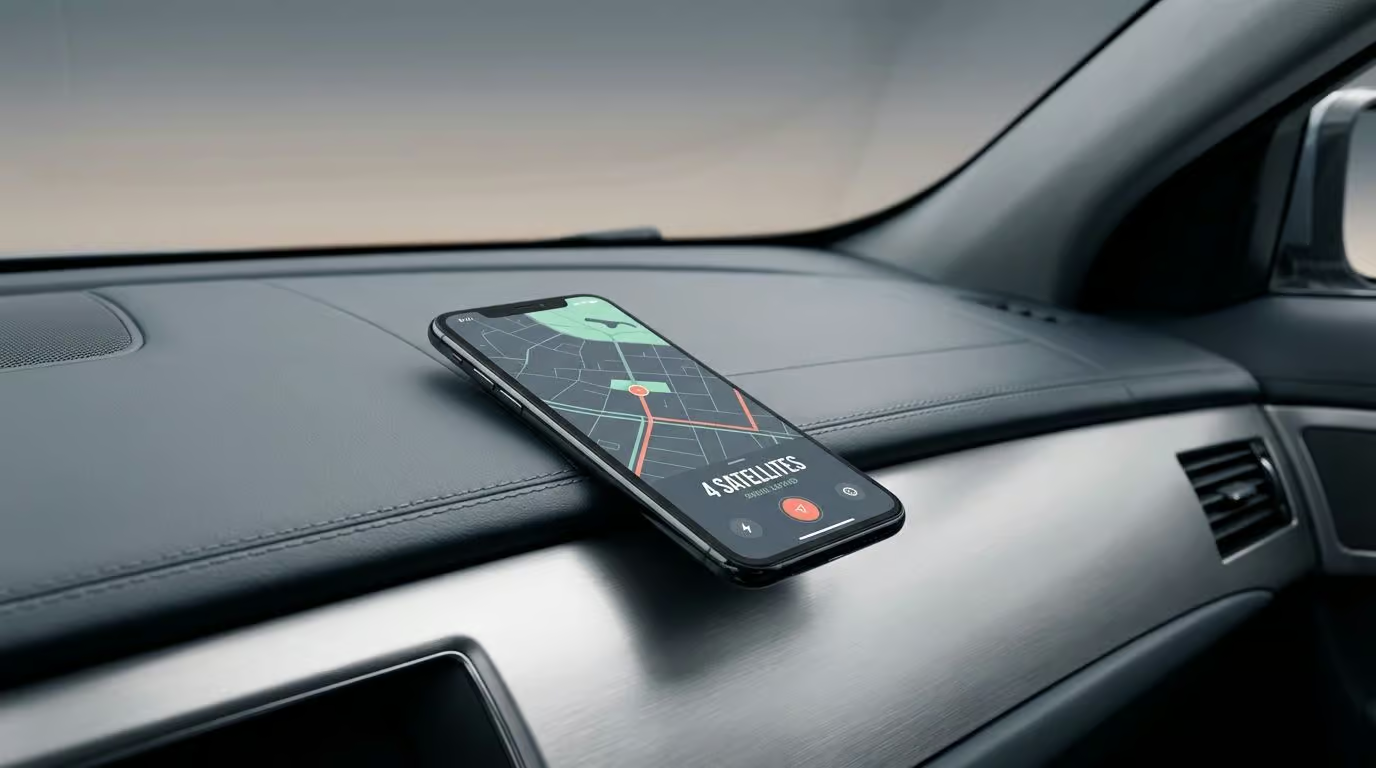
GPS keeps you honest, and thieves guessing.
Here’s the simple version: your tracker listens for signals from gps satellites, then calculates its location using timing data. Most GPS receivers need signals from at least four satellites to calculate latitude, longitude, altitude, and time.
Accuracy changes with conditions. Under open sky, GPS-enabled smartphones are often accurate to within about 4.9 meters, but buildings, bridges, and trees can push the dot around.
- Step 1: Receive signals. The GPS receiver reads satellite timing data (this is the core gps technology piece).
- Step 2: Calculate a fix. The tracker computes position, speed, and direction, then updates as you move.
- Step 3: Transmit location. It sends that location through cellular networks to a server and mobile app.
- Step 4: Store trip history. Many platforms keep a movement timeline that’s helpful for car theft prevention, investigations, and business reporting.
If you want a quick “real life” test, park outside with a clear view of the sky for a few minutes, then compare the app location to your actual spot. If you test inside a garage, you’re more likely to see drift or delayed updates.
What are the different types of hidden GPS trackers available?
I moved from tech talk about satellites to real gear options you can hide in a ride. The trick is picking the right power style and update speed for what you’re protecting.
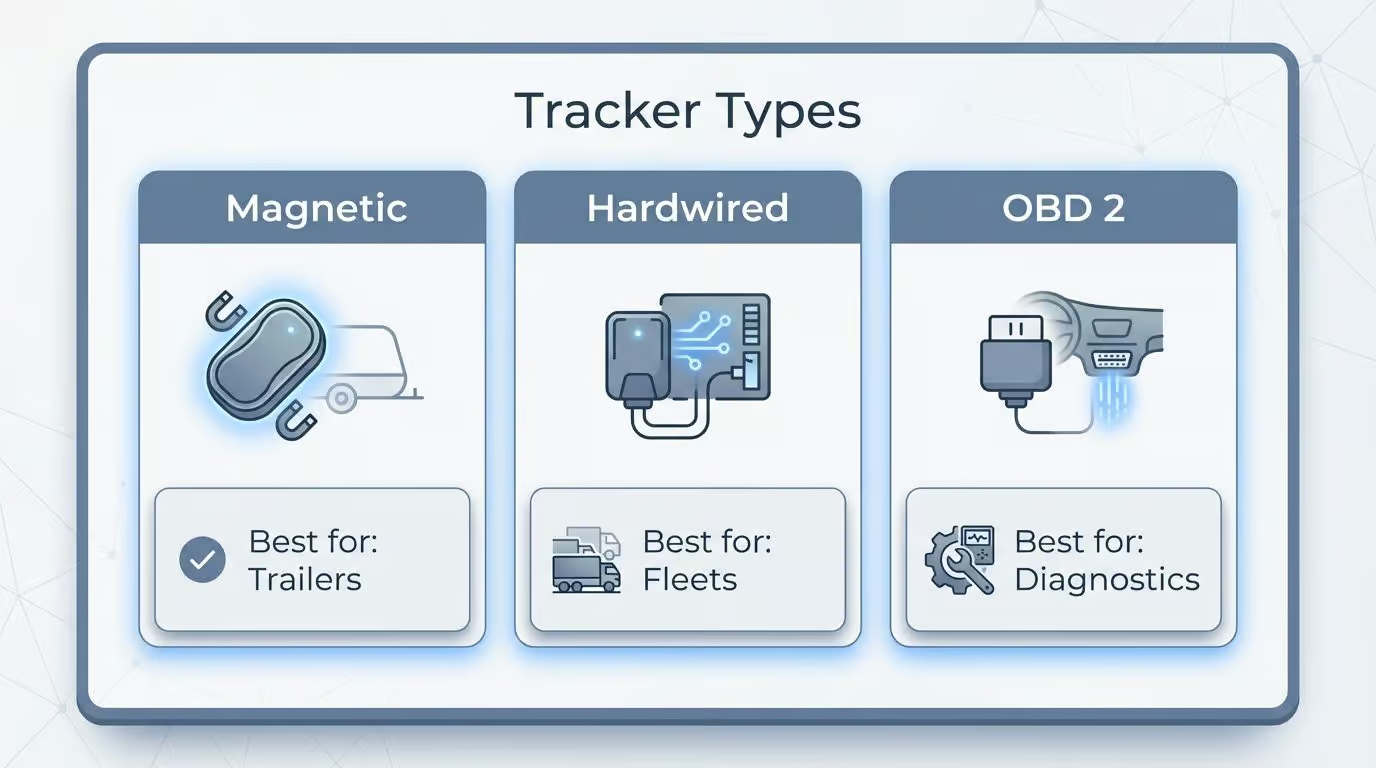
| Type | Best for | Strengths | Watch-outs |
|---|---|---|---|
| Magnetic, battery-powered trackers | Trailers, equipment, personal vehicles, temporary installs | Fast setup, easy to move, great concealment | Battery depends heavily on update rate and signal, magnet mounts need a clean surface |
| Hardwired trackers | Fleet tracking, work trucks, long-term vehicle security | Constant power, consistent real-time tracking, clean install | Install takes time, do it cleanly to avoid electrical issues |
| OBD 2 plug-in trackers | Quick installs, diagnostics, teen drivers, basic fleet management | Constant power, easy setup, engine data on many models | Visible and easy to unplug unless you hide it with an extension cable |
- Covert trackers hide inside panels or cargo, and may blend GNSS, cellular, Wi-Fi, and Bluetooth for better location reporting in different environments.
- Wearable trackers can support caregivers and family safety use cases (just keep consent and privacy rules tight).
- Data logger units save battery by recording waypoints and uploading later, which works when you need an audit trail more than live maps.
- Hybrid models mix battery backup with vehicle power, which helps if a thief disconnects the main battery.
One practical U.S. note: if you’re using the OBD port, most passenger vehicles and light trucks sold in the U.S. since model year 1996 have OBD-II.
If you want to ‘act like a spy’ for a minute, you can check out some fun James Bond gadgetry, but remember: for real results, you need a tracker that fits your specific goal.
For practical solutions, looking into car anti-theft devices is your best bet.
Key Features of Hidden GPS Trackers
Good gps tracking devices do more than show a dot on a map. You want fast alerts, reliable coverage, and a setup that doesn’t get ripped out the first time a thief pops a panel.
How does real-time tracking work?
Real-time tracking is basically two things working together: the GPS receiver gets a fix, then the tracker pushes that fix out over a network at whatever interval you choose.
Update interval is the hidden “dial” that changes everything: faster updates feel great, but they hit battery life hard.
- Fast updates (every 3 to 10 seconds): Great for theft recovery and high-risk assets, but expect shorter battery life and higher plan costs.
- Standard updates (every 30 to 60 seconds): A strong balance for most vehicle tracking needs.
- Slow updates (every few minutes): Best when you want long battery life and basic movement alerts.
- Sleep modes: Many trackers “wake up” when motion starts, then send fewer pings while parked.
Real-time alerts hit your phone the moment a vehicle moves without permission.
If you’re protecting something that gets stolen fast (motorcycles, trailers, work trucks with tools), set your “moving” update interval tighter and keep a larger parked interval to save power.
What is geofencing and how do alerts function?
Geofencing creates virtual boundaries on a map. When your vehicle crosses that boundary, the tracker sends an alert to your phone or computer.
Systems use signals like GNSS signals plus cellular reporting, and trackers like vyncs gps tracker and americaloc gl300w gps tracker can send alerts for entries, exits, speeding, and movement.
- Start bigger than you think. Tight fences can create false alarms if GPS drifts near buildings.
- Fence the places that matter. Home, jobsite, storage yard, and “never go here” areas.
- Pick your alert channel. App push alerts are great, but SMS can be faster when data is spotty.
- Use schedules. If a vehicle should never move after 8 p.m., set a rule that matches real life.
A quick word on the “bug sweeper” idea: a cheap sweep can find some transmitting devices, but it’s not magic. Your best defense is a well-hidden tracker, smart alerts, and good access control on the account.
How long does the battery typically last?
Battery life varies a lot, and it’s not just the device. Your update interval, temperature, and cell coverage are huge factors.
As of early 2026, here are real-world published examples from popular devices, so you can sanity-check marketing claims.
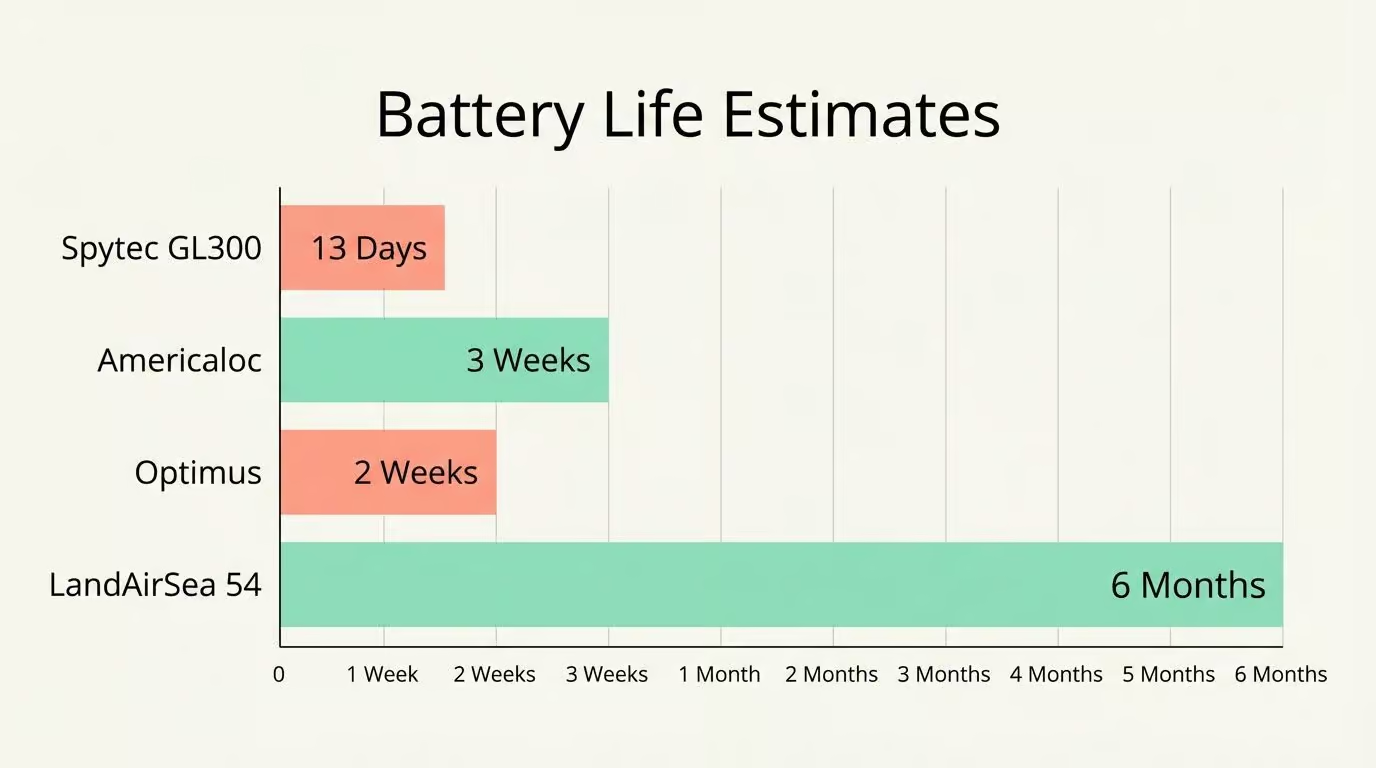
| Tracker (Example) | Published battery notes | What to do with that info |
|---|---|---|
| Spytec GL300 | About 13 days on 60-second updates, about 9 days on 5-second updates | Use it for short, high-visibility missions, or add an extended battery case for longer runs |
| Americaloc GL300MXW | Portable unit listed at up to 3 weeks of battery life | Good middle ground if you want portability without daily charging |
| Optimus 2.0 | Listed up to 2 weeks in standby mode, with 1-minute reporting while moving by default | Solid for stolen vehicle recovery, especially if you can recharge on a schedule |
| LandAirSea 54 | Listed up to 6 months in low power mode | Great for trailers and assets where you can live with slower updates |
A practical trick: if you’re burning through battery, increase the moving update interval from 30 seconds to 2 to 5 minutes and rely on movement alerts. You usually keep the “something’s happening” signal without draining the unit in a week.
Why is discreet design important for hidden trackers?
Concealment isn’t about being dramatic. It’s about forcing a thief to waste time.
If they can’t find the tracker fast, you keep your best advantage: location and trip history while they move.
- Avoid obvious spots. Under-seat and glovebox installs are the first places people check.
- Skip metal boxes. Metal can weaken gps signals, which hurts accuracy and delays alerts.
- Think “serviceable stealth.” You want it hidden, but you also need access for charging or checks.
- Use tamper alerts. Power cut and movement alerts tell you when someone is actively messing with the vehicle.
Concealment is the first line of defense, plain and simple.
Next, let’s talk about what you really get out of hidden GPS tracking, beyond peace of mind.
Benefits of Hidden GPS Tracking for Vehicles
Hidden global navigation satellite systems (gnss) trackers add a quiet layer of protection. You can react faster during theft, tighten up fleet management, and keep better records for claims and compliance.

How does hidden GPS improve vehicle security and theft prevention?
Hidden car GPS trackers reduce the odds a thief spots and removes it. That alone boosts your chances of getting clean location pings while the vehicle is moving.
In the U.S., the NICB reported 850,708 vehicle thefts in 2024. That’s still a lot of stolen cars and trucks, even with theft rates trending down.
- Get movement alerts. If the truck moves at 2 a.m., you want to know now, not tomorrow.
- Use geofence alerts around “home base.” Your driveway, your jobsite, your storage yard.
- Keep trip history. It helps you show routes and timing if you end up filing insurance claims or working with law enforcement agencies.
- Pair with physical security. A steering wheel lock or kill switch can slow the theft, and the tracker helps you recover it.
If your vehicle supports remote immobilization through the manufacturer, that can be another layer. For example, the Associated Press reported Ford introduced a “Start Inhibit” feature on certain newer trucks, which can stop the engine from restarting when you command it through the automaker app.
Just keep it simple: your tracker is there to find the vehicle and provide evidence, not to turn a bad situation into a confrontation.
How can I monitor my vehicle’s location in real time?
Quick heads-up: your car can call for help.
You monitor vehicle tracking through a smartphone app or a web portal. The tracker sends location data through cellular networks, then you view live maps, speed, and trip history.
Popular consumer examples include Spytec GL300, LandAirSea 54, Optimus 2.0, bouncie gps tracker, and vyncs gps tracker. They all get you to the same outcome, but with different tradeoffs.
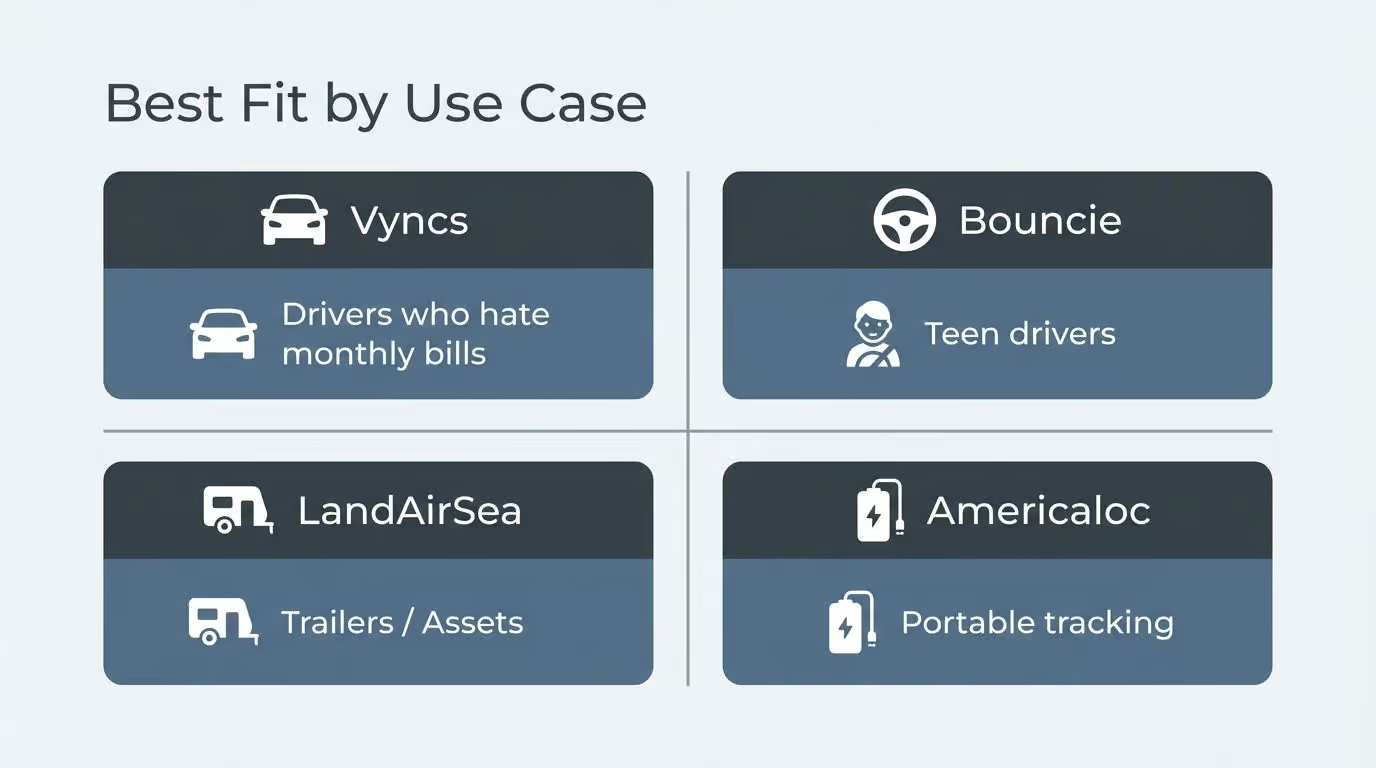
| Example option | Good fit for | Typical plan style |
|---|---|---|
| Vyncs (annual plan) | Drivers who hate monthly bills and want OBD-II power | Yearly service (examples include $99.99 to $119.99 per year) |
| Bouncie (OBD-II) | Teen drivers, diagnostics, daily use cars | Lower monthly subscription (example listed at $9.65/month) |
| LandAirSea 54 (battery) | Trailers and assets that sit, plus weather exposure | Monthly plans starting around $19.95, with faster update tiers available |
| Americaloc GL300 series | Portable tracking with frequent update options | Monthly service often around $19.98 (annual prepay can lower it) |
Pro tip: set your alert rules before you need them. If you wait until you’re stressed out, you’ll miss something obvious like “notify me if it moves more than 200 feet.”
Can hidden GPS tracking reduce my insurance premiums?
It can, but it depends on what kind of discount you’re talking about.
A pure “anti-theft tracking device” discount is often modest. One large auto insurance comparison dataset showed tracking devices reduced average premiums by less than 1% in their sample.
Where you can see bigger wins is usage-based insurance (telematics) that measures driving behavior. State Farm lists savings up to 30% for Drive Safe & Save, and Progressive says drivers who save with Snapshot save an average of $322 a year.
- Ask your agent two separate questions: “Do you offer an anti-theft device discount?” and “Do you offer a usage-based insurance program?”
- Bring proof. Some insurance companies will want device details or an active subscription receipt.
- Know the tradeoff. Some programs can raise rates for risky driving, so read the rules before you enroll.
How does GPS tracking enhance fleet management efficiency?
If you run a crew, you already know the pain: surprise detours, fuel waste, late arrivals, and “I swear I was there” conversations.
Fleet management platforms combine fleet tracking, driver behavior reporting, and maintenance reminders, so you can run the day with fewer blind spots.
- Cut fuel consumption with idling rules. Industry reporting commonly cites that an hour of idling can burn around 0.5 gallons (light-duty) and 0.8 gallons (heavy-duty), so idling reports give you fast wins.
- Prove ROI faster. Verizon Connect reported average fuel savings reaching 16% for fleets using GPS tracking tools in their survey trend.
- Stay compliant. If you use ELDs, keep an eye on FMCSA actions. The agency has removed devices from the registered list before, which forces quick replacement.
My favorite setup for work trucks is a concealed hardwired tracker with a clear install standard across the fleet. You can troubleshoot faster and keep your operational costs under control.
How can I monitor driving habits with GPS tracking?
A hidden GPS unit (especially one connected through OBD-II) can log speed, harsh braking, rapid acceleration, and routes. That’s useful for coaching, safety programs, and protecting your business from “he said, she said” arguments after a wreck.
- Set a speed alert that matches your work. A landscaping crew truck doesn’t need the same threshold as a sales rep on a highway route.
- Use trip history for coaching. Pick one habit per week, like hard braking, and focus there.
- Watch for red flags. Repeated late-night driving, long idle time, or off-route stops can point to theft, misuse, or repairs being skipped.
If you’re tracking your own vehicle, these reports also help you spot patterns like “this route always drains my battery,” which often points to weak coverage or heavy urban GPS reflection.
How does hidden GPS tracking contribute to personal and family safety?
This is the part most guys don’t talk about until it hits home. Trackers are not just for cars.
The Alzheimer’s Association says six in 10 people living with dementia will wander at least once, and it can turn into an emergency fast.
- Use geofences as an early warning system. Set a safe zone around home or a care facility.
- Keep the plan simple. If a loved one goes missing, the Alzheimer’s Association recommends starting search efforts immediately and calling 911 if they aren’t found within 15 minutes.
- Limit access. Only the people who truly need tracking should have logins.
Trackers can support independence while still giving caregivers a real safety net during emergencies.
Applications of Hidden GPS Trackers
Hidden GPS trackers show up everywhere: fleet management, personal vehicle security, asset tracking, bikes, and even trailers with high-value cargo.
You can follow live maps, set geofence alerts, and pull data from vehicle diagnostic ports to connect location to engine health and driving behavior.
How are hidden GPS trackers used in fleet management and logistics?
In logistics, location is money. A missed stop costs fuel, time, and customer trust, and cargo theft is a real threat.
Verisk CargoNet reported 3,625 cargo theft incidents in 2024, with an estimated average value per theft of $202,364, which is exactly why geofencing yards and monitoring trailers matters.
- Geofence yards and customer sites. Get alerted when a trailer leaves outside of schedule.
- Watch dwell time. Long, unplanned stops often reveal process problems or theft risk.
- Standardize installs. Same placement, same wiring approach, same alert rules across the fleet.
- Use maintenance triggers. Pair mileage and engine fault alerts to schedule service before breakdowns.
Why use hidden GPS for personal vehicle tracking?
For your own ride, the best use case is fast awareness. You want to know when it moves, where it went, and where it’s parked now.
Set up three core alerts and you’ll cover most real-world situations.
- Movement alert: You get notified if the vehicle starts moving.
- Geofence alert: You get pinged if it leaves a home or work zone.
- Low battery alert: You recharge before the tracker goes dark.
Keep the hardware hidden, and keep your app login locked down. A great tracker doesn’t help if the wrong person can access it.
How do hidden GPS trackers improve rental car security?
Rental fleets use hidden tracking to reduce theft risk and spot misuse, like vehicles driven out of state or taken off agreed routes.
Geofences around state lines or service areas create clean, automatic “tripwire” alerts, and OBD-based units can also log diagnostics to catch maintenance issues early.
If you manage rentals, make sure your contract language clearly discloses tracking and get the right consent. That protects your business and reduces privacy concerns blowback.
What are the benefits of GPS tracking for motorcycles and bikes?
Bikes and motorcycles get stolen fast because they’re easy to move, even without starting them.
For smaller frames, compact devices like Invoxia GPS Tracker get attention because battery life changes based on how often it reports location (for example, Invoxia support materials list battery ranges that can stretch from days to weeks depending on update frequency).
- Hide it where thieves don’t immediately check. Under-seat spots are common targets, so think deeper in the frame or behind panels.
- Use motion alerts. If the bike gets rolled into a truck, you still get the notification.
- Plan for weather. Look for a strong water rating if the unit sits exposed.
For motorcycle safety, the win is early notice. You can act before the bike disappears into a storage unit across town.
How can hidden GPS trackers monitor trailers and cargo?
Trailers are the perfect “steal me later” target because they often sit unattended. A hidden tracker gives you a way to catch the moment it moves.
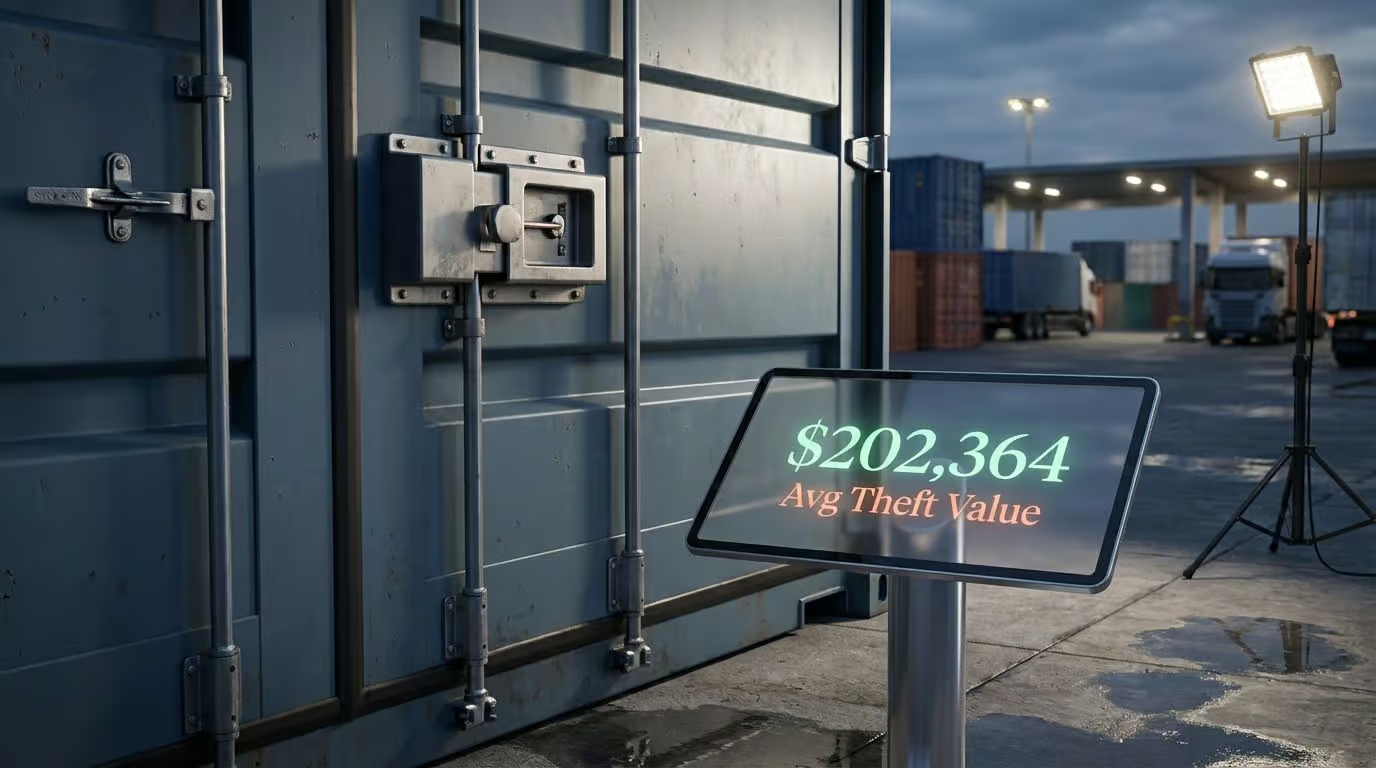
Verisk CargoNet reported 3,625 cargo theft incidents in 2024, with an estimated average value per theft of $202,364, which is exactly why geofencing yards and monitoring trailers matters.
- Use long-battery or hardwired power. A slow-update battery mode is often enough for parked trailers.
- Geofence the yard. Your phone should light up the second it leaves the lot.
- Track by exception. You care about unexpected movement, unexpected stops, and route deviations.
- Document for claims. Trip history and time stamps support insurance claims and recovery efforts.
With CargoNet reporting higher cargo theft levels, trailer tracking is one of the cleanest “protect the investment” moves you can make.
Choosing the Right Hidden GPS Tracker
Match your tracker to what you’re protecting, then to how you’ll power it, then to how often you want updates.
If you start with price, you usually end up buying twice.
How do I evaluate use cases and features for GPS trackers?
Pick your mission first, then pick the tracker that fits it. Think practical, not flashy.
- Match the tracking mode to your need: choose real-time for theft recovery or data logging for periodic audits.
- Pick power style: go hardwired for constant feeds in company cars, pick battery units for stealth on bikes or trailers.
- Check sensor needs: add speed monitoring, geofencing, and tamper alerts. Cargo work may need shock or temperature sensors.
- Compare connectivity and subscription fees: faster updates usually cost more and drain batteries faster.
- Test durability: look for IP ratings (IP67 commonly means dust-tight and protected against short water immersion) if the unit will live outside.
- Vet privacy and access controls: limit who can see location, and log access when possible.
- Match maintenance to your workflow: schedule battery checks, and run a location test after every vehicle service visit.
What should I know about battery life and maintenance?
Battery-powered trackers can run from a few days to several months per charge, depending on settings and conditions.
Temperature matters too. For example, Spytec lists an operating temperature range starting around -4°F, which is a good reminder that winter can change performance.
- Check battery on a schedule. Weekly checks prevent surprise outages.
- Watch for weak coverage areas. Poor signal can cause higher power draw as the tracker keeps trying to connect.
- Clean and inspect mounts. Magnets and cases can shift after rough roads or car washes.
- Update the app and firmware. Updates often include stability and alert improvements.
If you’re using a rechargeable tracker, keep a simple “charge day” routine. It’s a lot easier than trying to remember after a long week.
What subscription costs and fees are involved?
Expect two costs: the device and the service plan. Some companies sell the tracker cheap and make money on service, others bundle hardware into a longer plan.
Here are real, published examples from popular brands in the U.S. (so you can compare apples to apples), as of early 2026.
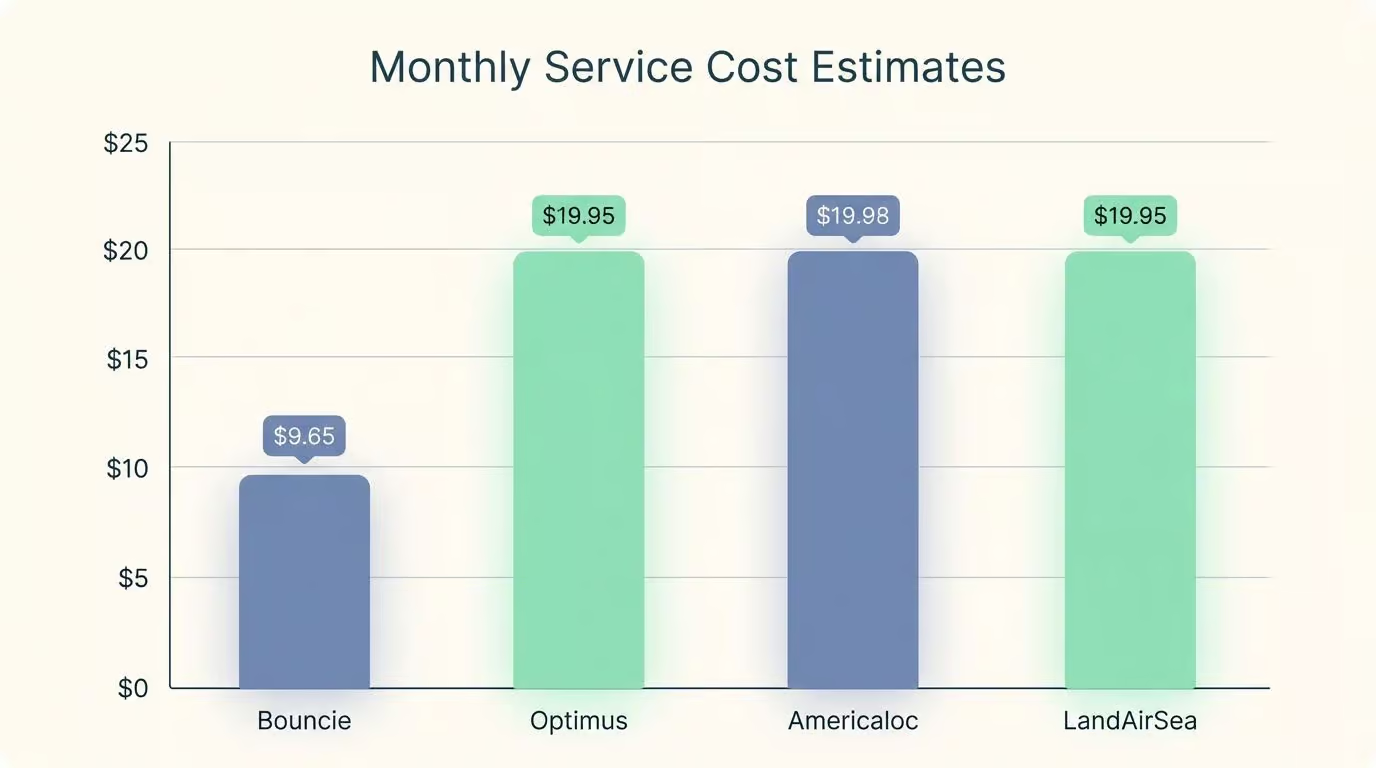
| Brand (Example) | Example device price | Example service cost |
|---|---|---|
| LandAirSea 54 | $29.95 | $19.95 to $49.95 per month (based on update speed tiers) |
| Vyncs | Plan-based (OBD device style) | $99.99 to $119.99 per year (based on plan tier) |
| Americaloc GL300 series | Varies by bundle | $19.98 per month (or lower with annual billing) |
| Optimus 2.0 | Varies by bundle | $19.95 per month (cancel anytime) |
| Bouncie | Device purchase required | $9.65 per month (price breaks with multiple devices) |
If you’re shopping for an affordable gps tracker, don’t ignore the update speed you actually need. A slower plan can be plenty for a parked trailer, and it saves real money over a year.
How can I assess the reputation of GPS tracker manufacturers?
Don’t guess. Look for concrete signals that a company is built for long-term support and responsible data handling.
- Check certifications. Some tracker makers list FCC and PTCRB certifications, which is a good sign the cellular side is being taken seriously.
- Read the data policy. You want clear language about who can access data and whether it’s shared.
- Test support before you need it. Ask a basic question and see how fast they respond.
- Watch the app experience. Alerts, trip history, and account controls matter more than marketing claims.
If a brand can’t explain how it protects location data, that’s a reason to keep shopping.
Installation and Placement Tips
Placement is where most people mess it up. You can buy the best tracker on earth, but if you stick it in the first obvious spot, a thief will find it.
Use these placement ideas as a starting point, then test your signal and alert timing before you trust the setup.
Where is the best place to install GPS trackers in cars?
Good hiding spots are usually inside trim, behind interior panels, or under carpeted areas, where the unit stays out of sight but still has a decent path for GPS and cellular signals.
- Under interior panels: Harder to spot, usually better protected from weather.
- High in the cabin: Often gets a cleaner satellite view than deep undercarriage installs.
- Near the OBD-II port (but not obvious): If you use an OBD tracker, consider an extension cable to tuck it deeper.
- Avoid high-heat areas: Engine bay heat can crush battery life fast.
For OBD-based trackers, keep this in mind: OBD-II systems are required on U.S. passenger vehicles and light trucks sold since 1996, so compatibility is usually strong, but visibility is the drawback.
What are effective concealment techniques for motorcycles?
Motorcycles have less space, and thieves know the common hiding spots.
Skip the “under seat and hope” plan and aim for a location that’s hard to access without tools.
- Go higher in the frame. Higher placement can help with satellite reception.
- Weather-proof it. Use a sealed case if the unit might see rain or spray.
- Lock down the mount. Vibration-damping mounts reduce wear and disconnections.
- Test on a short ride. Confirm alerts, not just the map dot.
What placement considerations are important for fleet vehicles?
Fleet installs need consistency. Standardize placement across the fleet so your team can service units fast and verify they’re still working.
- Pick one install standard per vehicle class. Same spot in every pickup, same spot in every van.
- Protect the wiring. Secure it, label it, and avoid interfering with control modules.
- Balance access and stealth. Your tech needs access, but drivers should not be able to casually unplug it.
- Prioritize a clean signal path. Poor reception hurts reliability and makes your data less useful.
If you operate under compliance rules, treat tracker checks like any other preventative maintenance item.
Legal and Ethical Considerations
Before you install a hidden tracker, get clear on consent and purpose. This is where people create problems for themselves, especially with employee vehicles, shared family cars, and relationship situations.
What privacy laws and compliance issues apply to GPS tracking?
U.S. privacy law is a mix of federal rules and state-specific restrictions. The Electronic Communications Privacy Act is one federal law that covers electronic communications, and location data can also raise serious legal issues depending on how it’s collected and used.
For law enforcement, courts have treated GPS tracking as a search under the Fourth Amendment in certain situations, including the Supreme Court’s United States v. Jones decision about installing and monitoring a GPS device on a vehicle.
For businesses, written consent and a clear policy reduce risk. For individuals, tracking someone else’s vehicle without permission can cross into stalking, harassment, or other criminal and civil trouble fast.
What guidelines should I follow for responsible GPS tracking use?
- Get explicit consent when required. Keep it in writing for employees and company vehicles.
- Limit access. Only people with a real need should see live locations and trip history.
- Secure the account. Use strong passwords, and turn on extra security features if the platform offers them.
- Track for a legitimate reason. Theft prevention, asset protection, safety, dispatch, and compliance are common business use cases.
- Know the boundaries. If you’re unsure, talk to a qualified attorney in your state before you install.
Conclusion: Protect Your Investment with Hidden GPS Tracking
If you want real vehicle security, hidden gps tracking is one of the few upgrades that pays you back in speed and proof when something goes wrong.
Pick one of the reputable gps trackers that fits your use case, set your geofences and alerts, and test it like you mean it.
Do that, and you’re not guessing anymore. You’re in control.
People Also Ask
What is hidden GPS tracking for vehicles?
Hidden GPS tracking uses a small GPS tracker, placed out of sight, to monitor vehicle location in real time, and record location history for later review.
How does hidden GPS tracking help protect my investment?
It helps protect your investment by speeding up theft recovery, and cutting misuse and needless repairs. It records routes, fuel use, and driver habits, so you gives facts, not guesses. Like a watchdog in your pocket, it can save money and worry.
Is covert tracking legal, and how do I use it right?
Laws vary by state and country, so check local rules, and get consent when drivers expect privacy. Use covert tracking for vehicle security, theft recovery, and to monitor fleet management, not to spy on private life.
Will a hidden GPS tracker hurt my vehicle, and can I track many vehicles at once?
A quality GPS tracker draws little power, mounts out of the way, and does not harm vehicle systems. You can monitor many vehicles from one app, see real-time location, set alerts, and pull reports to manage your fleet.
References
- https://pmc.ncbi.nlm.nih.gov/articles/PMC8271682/
- https://www.sciencedirect.com/topics/computer-science/tracking-device
- https://beepings.com/the-battery-of-a-gps-tracker-how-long-does-it-really-last/?srsltid=AfmBOoq76d5Sqo-QLyafsJ-tsYnnfFycOPe2Xb7eR2ck6xi1ilgXrjzk
- https://www.researchgate.net/publication/391704077_You_Can_Drive_But_You_Cannot_Hide_Detection_of_Hidden_Cellular_GPS_Vehicle_Trackers (2025-05-13)
- https://www.liveviewgps.com/blog/hidden-gps-tracking-devices/?srsltid=AfmBOorUhCL2IlZdcnLIje14ShQux7WTnHOV1L0mpo_4R4o_uVpo0K4O (2025-04-14)
- https://meitrackusa.com/the-top-5-advantages-of-utilizing-gps-trackers-for-motorcycles/ (2024-10-31)
- https://www.liveviewgps.com/blog/hidden-gps-tracking-devices/?srsltid=AfmBOorMNwVGbZ7lNBj7bJ9h5R4MKcctY7w8aXt2wOMCI3fURDlLJiBY (2025-04-14)
- https://logistimatics.com/blogs/guides/best-hidden-gps-trackers-for-car (2025-12-21)
- https://www.gpsinsight.com/blog/cost-of-gps-tracking/
- https://www.motowatchdog.com/blog/hidden-gps-the-advantages-of-using-a-covert-tracking-device (2024-02-25)
- https://spycentre.com/blogs/news/where-to-install-a-gps-tracker-on-a-car?srsltid=AfmBOoouIw7v1UB6pWr32zvzPAbFO58mrKbW0kryczqNHj1DJLgf117n (2024-09-10)
- https://beepings.com/the-importance-of-a-well-hidden-gps-tracker-to-prevent-motorcycle-theft/?srsltid=AfmBOooOx5UR4MQI0AjlI3QtHbxd_Q7KWRJ8Z0a5xd2OBoZEAqkz6BVL
- https://www.researchgate.net/publication/274174371_Smart_Vehicle_Tracking_System (2025-08-10)
- https://www.utrack.ai/legal-and-ethical-considerations-of-gps-tracking/