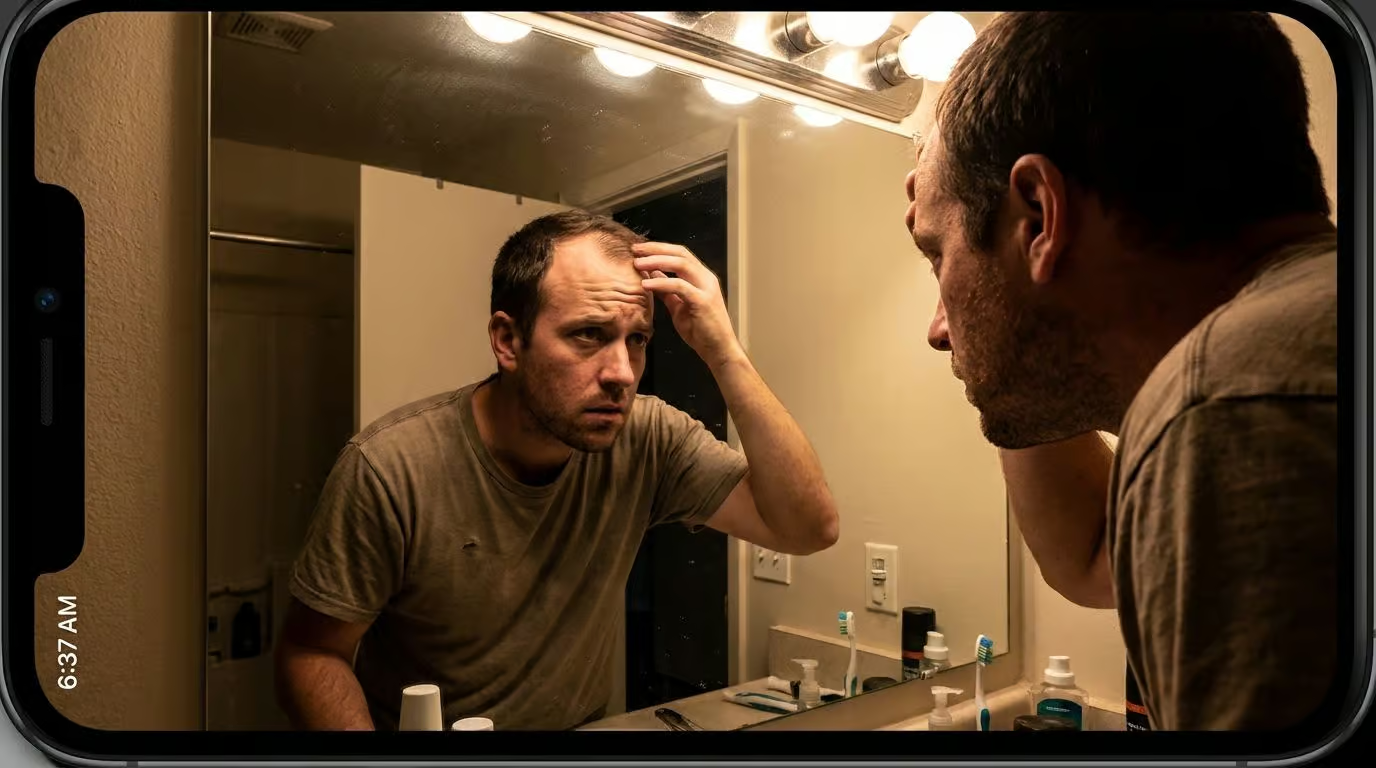
Ever catch yourself staring at your hairline or skin in the mirror, wondering if time is speeding up? You’re not alone. I’ve been there, noticing those small changes and asking if there’s a simple fix.
Did you know copper peptides are natural proteins found in our bodies that may boost collagen production? In this 2025 guide, I’ll explain if copper peptides are really worth it for your skin and hair, using real facts and simple words—no confusing terms.
Stick with me. What you find out today might change the way you think about your skincare routine.
Key Takeaways
Copper peptides like GHK-Cu boost collagen and elastin, helping reduce wrinkles, fine lines, and age spots. Clinical data suggests they can outperform Vitamin C in collagen synthesis.
Regular use of products from brands like PLU Laboratories improves wound healing, fades acne scars, increases skin resilience to sun damage, and calms redness without the harshness of retinoids.
For hair care, copper peptides stimulate dermal papilla cells for better follicle growth cycles; users often report reduced shedding within 6-8 weeks and thicker strands after three months.
Warning: Avoid mixing copper peptides with strong Vitamin C, retinol creams, glycolic acid, or niacinamide at the same time. This can cause “copper uglies” (skin sagging from overuse) or irritation.
New ionic liquid microemulsion delivery methods arriving in 2025 can triple absorption rates for both skin-firming and hair-regrowth formulas, making your routine significantly more efficient.
Table of Contents
What are copper peptides?
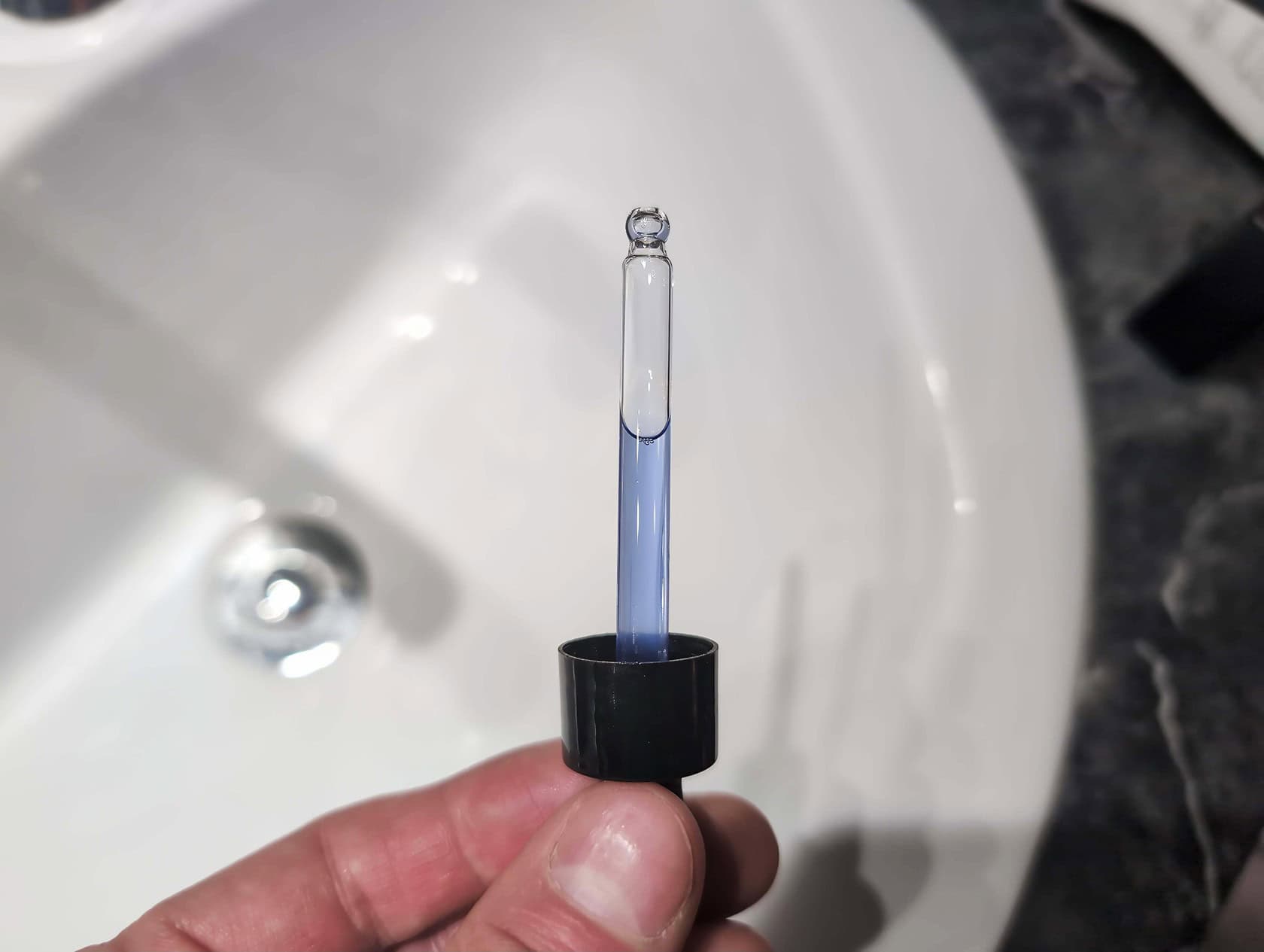
Copper peptides are short chains of amino acids that grab hold of copper ions. The most famous type is GHK-Cu, also known as Copper Tripeptide-1. This powerful little molecule appears naturally in human plasma, saliva, and urine.
Here is the catch: as men age, our natural levels of these peptides drop. Dr. Loren Pickart, the biochemist who discovered GHK-Cu in 1973, found that this drop-off slows down regeneration. That explains why cuts heal slower and wrinkles deepen as we get older.
![Are Copper Peptides Worth It For Skin And Hair? [2025 Guide]](https://www.unfinishedman.com/wp-content/uploads/2025/12/infographic-Are-Copper-Peptides-Worth-It-For-Skin-And-Hair-2025-Guide-413740-_0947.jpg "Are Copper Peptides Worth It For Skin And Hair? [2025 Guide]")
Scientists now use copper peptides to signal your body to switch into “repair mode.” These tiny powerhouses carry copper into cells where they help with critical tasks like collagen production and fixing damaged tissue. Unlike harsh acids that strip the skin, these work by feeding it.
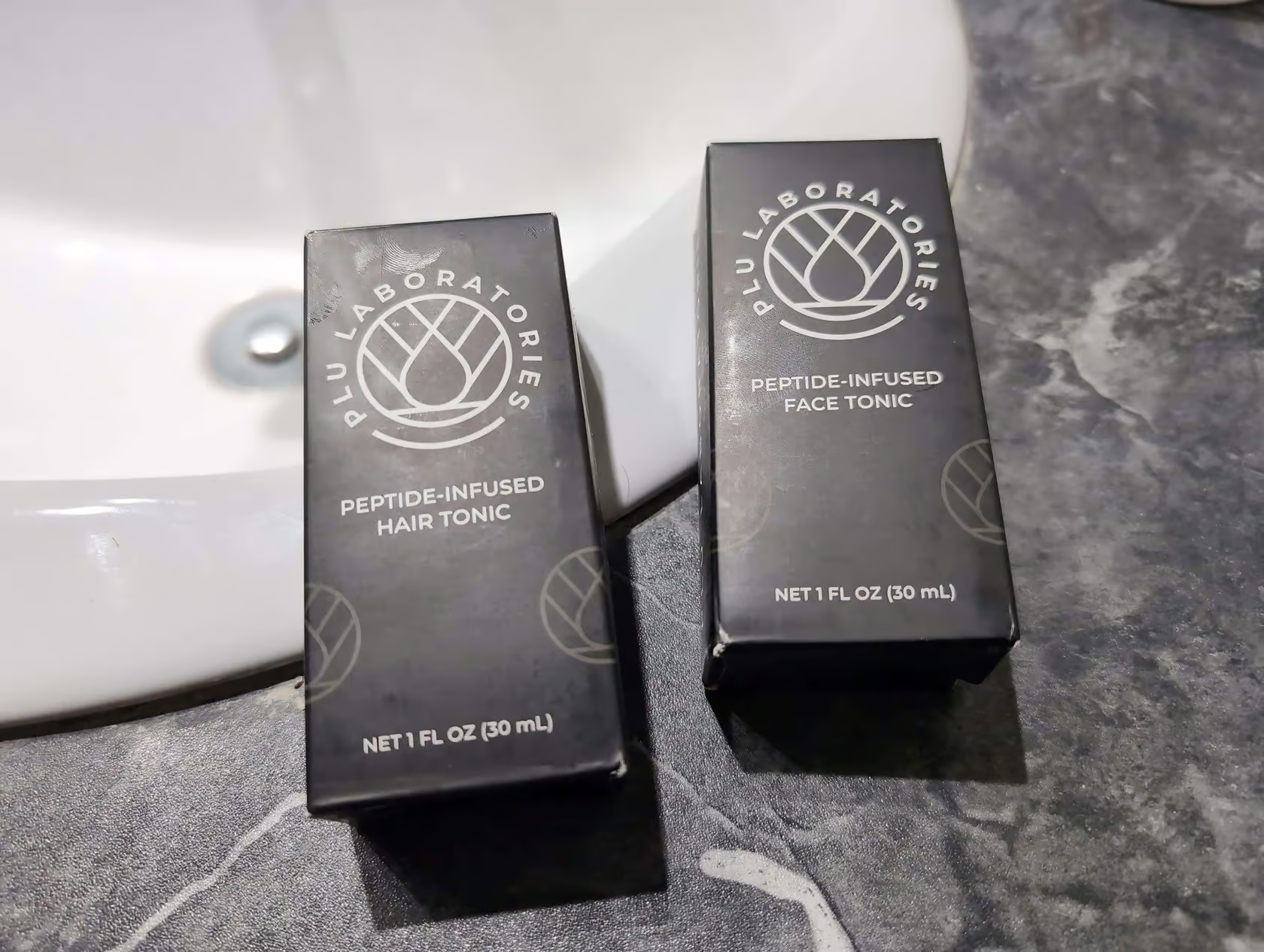
You will find them in serums and creams. Brands like PLU Laboratories use water-based formulas to ensure the peptides penetrate deep into the skin and scalp. It is becoming a staple for men who want better-looking skin and stronger hair without a complicated routine.
Benefits of copper peptides for skin
Guys, copper peptides work hard on your skin’s surface. These small protein fragments help your face bounce back fast after rough days—PLU Laboratories has some solid options if you want to give them a shot.
How do copper peptides promote collagen and elastin production?
Think of copper peptides as a foreman at a construction site. They tell your skin cells to get back to work. Specifically, they stimulate fibroblasts, the cells responsible for building the structural framework of your skin.
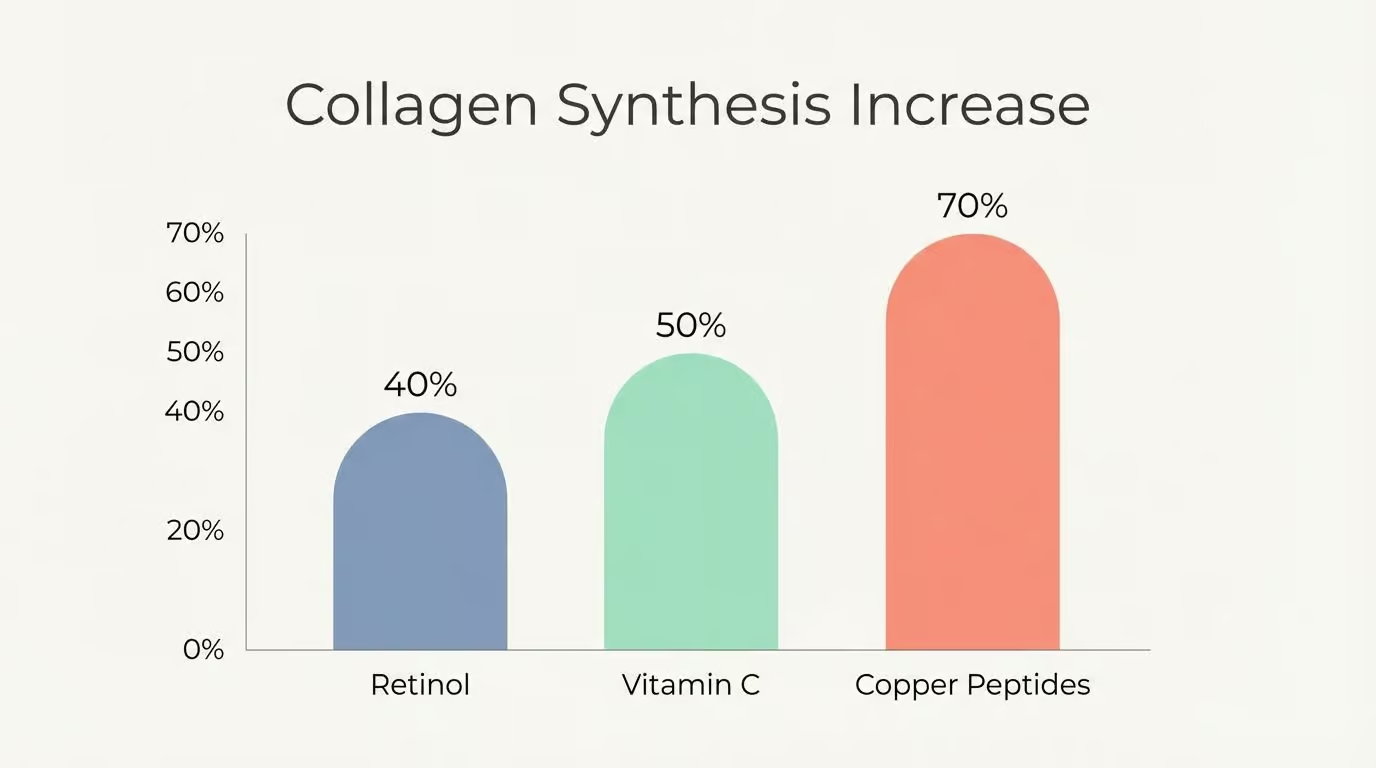
A study comparing anti-aging ingredients found that copper peptides could increase collagen synthesis by up to 70%, compared to just 50% for Vitamin C and 40% for Retinol. That is a massive difference if your goal is firmness.
They also kickstart elastin production. This is the protein that allows your skin to snap back after you pinch it. My own experience backs this up; I’ve been testing the GHK-Cu based skin tonic from PLU Laboratories and noticed the rough patches on my nose smoothing out significantly.
Copper acts as a cofactor for lysyl oxidase—this enzyme helps cross-link collagen and elastin fibers so they hold together longer. This creates a stronger defense against daily wear, UV rays, and city pollution.
Can copper peptides reduce signs of aging?
Yes, and they do it differently than other products. GHK-Cu boosts collagen and elastin production to fill in fine lines, wrinkles, and those deep grooves that appear on your forehead.
I noticed my skin looked firmer around week eight of using a PLU Laboratories serum. While many guys rush to strong acids, copper peptides are often better for sensitive skin because they repair the barrier rather than exfoliating it away.

Men who spend time outdoors benefit from the antioxidant effects. These peptides act as armor against free radicals—the unstable atoms from sun and pollution that age you faster. It also helps fade acne scars and sun spots by speeding up cell turnover without the redness you get from prescription creams.
“My skin never looked this clear after years of stress,” one barber told me after swapping his harsh retinol for a copper peptide routine.
How do copper peptides improve skin texture and tone?
Copper peptides do more than fight wrinkles; they fix the rough, uneven terrain on your face. After seeing how these little molecules reduced my fine lines, I looked closer at my skin texture and tone.
These compounds support the removal of damaged collagen and replace it with new, healthy tissue. This process, called “remodeling,” makes pores look smaller and skin feel smoother. It takes about 8 to 12 weeks to see the full “glass skin” effect, but the wait is worth it.
What impressed me most is the anti-inflammatory power. If you get razor burn or redness from shaving, copper peptides settle it down quickly. They soothe the skin, reducing the angry red flush that many of us deal with.
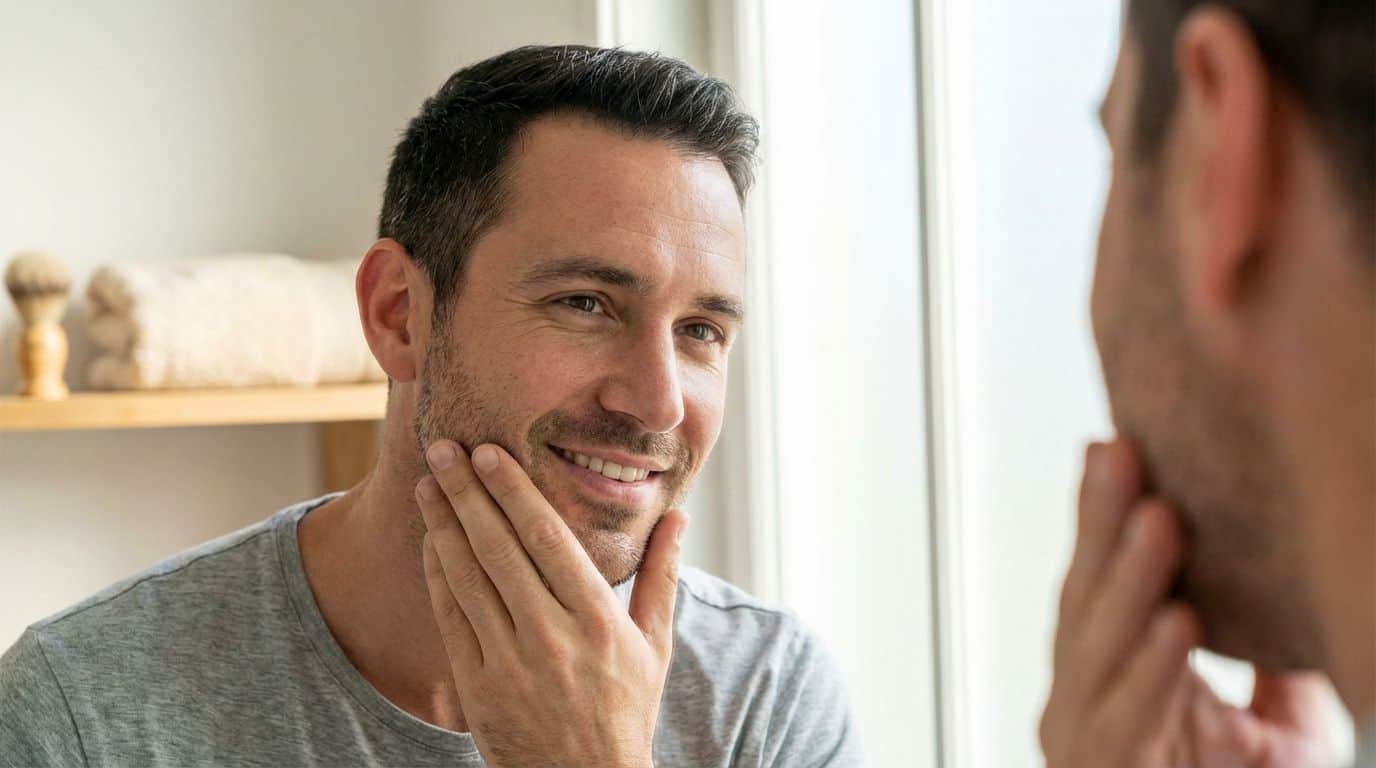
Studies like those from Pickart & Margolina (2018) highlight that regular use improves skin clarity better than basic moisturizers alone. My cheeks look less dull since I added PLU Laboratories products to my kit. For men trying to figure out how to improve your skin, consistency is the secret sauce here.
Do copper peptides support wound healing?
I keep copper peptides in my cabinet because they are incredible at fixing injuries. Research shows they speed up wound closure by activating growth factors and enzymes that rebuild tissue.
They boost blood vessel formation—a process called angiogenesis. This brings more oxygen and nutrients to the damaged area, helping cuts, scrapes, or even popped pimples heal faster without scarring. In fact, hospitals have used copper peptide complexes for years to treat burn victims.
Topical application also lowers swelling thanks to that anti-inflammatory effect. Whether it is a nick from a razor or recovery after a chemical peel, I’ve found that applying a copper serum helps my skin barrier recover in half the time.
What antioxidant properties do copper peptides have?
Copper peptides protect my skin from oxidative stress. They neutralize free radicals before they can break down your collagen. Think of it as a shield that stops city smog and UV rays from damaging your cells.
I’ve seen firsthand how GHK-Cu helps calm inflammation. If my face feels hot or irritated after a long day in the sun, a peptide serum cools it down. This is why dermatologists often recommend it for guys with rosacea—it fights the fire under the surface.
PLU Laboratories uses these antioxidant benefits in their formulas to keep bacteria in check, which helps prevent breakouts. Unlike harsh scrubs that can spread bacteria, this approach builds up your skin’s natural defenses.
Benefits of copper peptides for hair
Copper peptides work deep in the dermal papilla, waking up sleepy hair follicles. Talk about a nudge—these little compounds from PLU Laboratories pack a punch for hair care routines.
How do copper peptides stimulate hair growth?
My hair started thinning in college, so I know the panic. I’ve tried almost every product on the shelf. Recently, I started testing a GHK-Cu based tonic from PLU Laboratories to stimulate my scalp.
These copper peptides signal dermal papilla cells to divide and thrive. This keeps your hair follicles in the growth phase (anagen) longer. Instead of shutting down and shedding, the hair keeps growing.
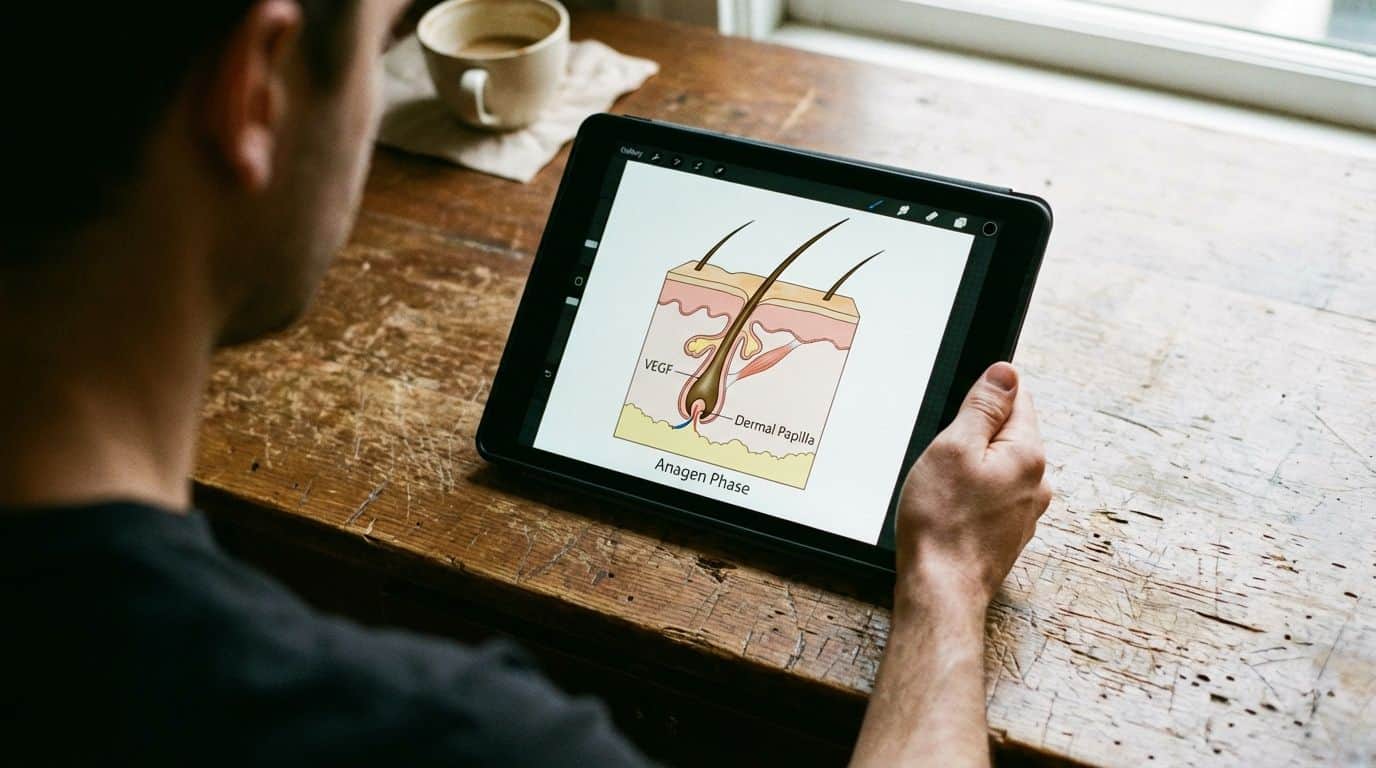
Studies show that GHK-Cu boosts vascular endothelial growth factor (VEGF). This protein creates new blood capillaries around the follicle, feeding it the nutrients it needs to produce a hair shaft. It effectively increases the size of the follicle itself.
It also blocks transforming growth factor beta, a chemical that tells hair to stop growing. In mouse tests, copper peptides produced thicker regrowth than minoxidil alone. Plus, newer ionic microemulsion versions promote absorption up to three times better than older formulas.
Can copper peptides strengthen hair strands?
Copper peptides surprise me with how much strength they bring to hair strands. GHK-Cu gets deep into the scalp where it helps kick up collagen and elastin production around the follicle base.
I saw fuller, denser hair starting around week five after using a shampoo recommended by a friend from PLU Laboratories. The strands felt thicker and didn’t snap as easily when I combed them.
While results vary, clinical data suggests users report stronger hair within four to eight weeks. By increasing the follicle size, the hair shaft that grows out is naturally wider and more robust. This is huge if you are worried about breakage or thinning.
How do copper peptides improve scalp health?
A healthy scalp is the soil for healthy hair. My scalp feels less itchy and tight since switching to products with copper peptides from PLU Laboratories.
The extra blood flow does more than just feed hair; it flushes out toxins. Copper peptides team up with your skin’s natural repair systems to build a thicker, healthier barrier on your head. This cuts down on the flaking and irritation that often comes with dandruff shampoos.
Inflammatory markers like pro-inflammatory cytokines are often the hidden cause of hair loss. The antioxidant power of copper peptides calms this inflammation down. I’ve also noticed fewer grey hairs popping up—science suggests copper helps melanin production, keeping your natural color vibrant for longer.
Do copper peptides enhance hair resilience?
I apply copper peptide serums from PLU Laboratories to improve my hair resilience. Research shows these peptides extend the hair’s growth cycle and delay shedding by anchoring the follicle more securely in the dermis.
I noticed my strands felt thicker after three months. This matches user reports of thicker, less breakable hair with regular use. The hair just feels “anchored” better.
Topical copper peptides work well alongside treatments like minoxidil. Reports say people see changes in texture within 3-6 months of steady application. Side effects have been mild for me, but I always recommend a patch test first. Skin sensitivity varies, and you want to be safe.
How to use copper peptides
Using copper peptides the right way can make or break your results. Trust me, I learned this firsthand after mixing mine with a strong retinol cream—bad idea. PLU Laboratories has clear steps; stick to them to avoid common mistakes.
Why is consistency important when applying copper peptides?
Sticking to a daily copper peptide routine is non-negotiable. You are training your skin to behave younger, and that takes daily reinforcement. If I skip days, I notice my skin looking duller almost immediately.
Skin improvements often take 8 to 12 weeks of steady application. Hair regrowth is a slower game, often needing 3 to 6 months before you see new sprouts.
Falling off the wagon means losing momentum. Consistency supports stronger hair strands and scalp health over time. PLU Laboratories emphasizes that this is a marathon, not a sprint.
How should copper peptides be applied according to product instructions?
Here is my exact routine. I wash my face first, ensuring it is totally clean. Then, I apply the PLU Laboratories copper peptide blend while my skin is still slightly damp.
For my face, I use just 3-4 drops. For my scalp, I use a full dropper and massage it in vigorously to stimulate blood flow. I follow those Food and Drug Administration tips about safe application—never apply to broken or bleeding skin.
Crucial Step: I wait about 60 seconds for it to absorb before applying moisturizer. This ensures the biologically active ingredients sink deep into the outer layer of skin.
If you use minoxidil for hair loss, let it dry fully before adding your copper peptide formula. Dermatology experts agree this spacing is key for maximum impact.
Which harsh ingredients should be avoided when using copper peptides?
This is where most guys mess up. You cannot mix copper peptides with just anything. High-strength Vitamin C (L-Ascorbic Acid), retinoids, and strong acids like glycolic or salicylic acid are enemies of copper peptides.
Why? The low pH of these acids can break the bond between the copper ion and the peptide. This renders the product useless and can cause potential irritation. I once used a strong niacinamide serum right after my copper peptides and my face flushed red for hours.
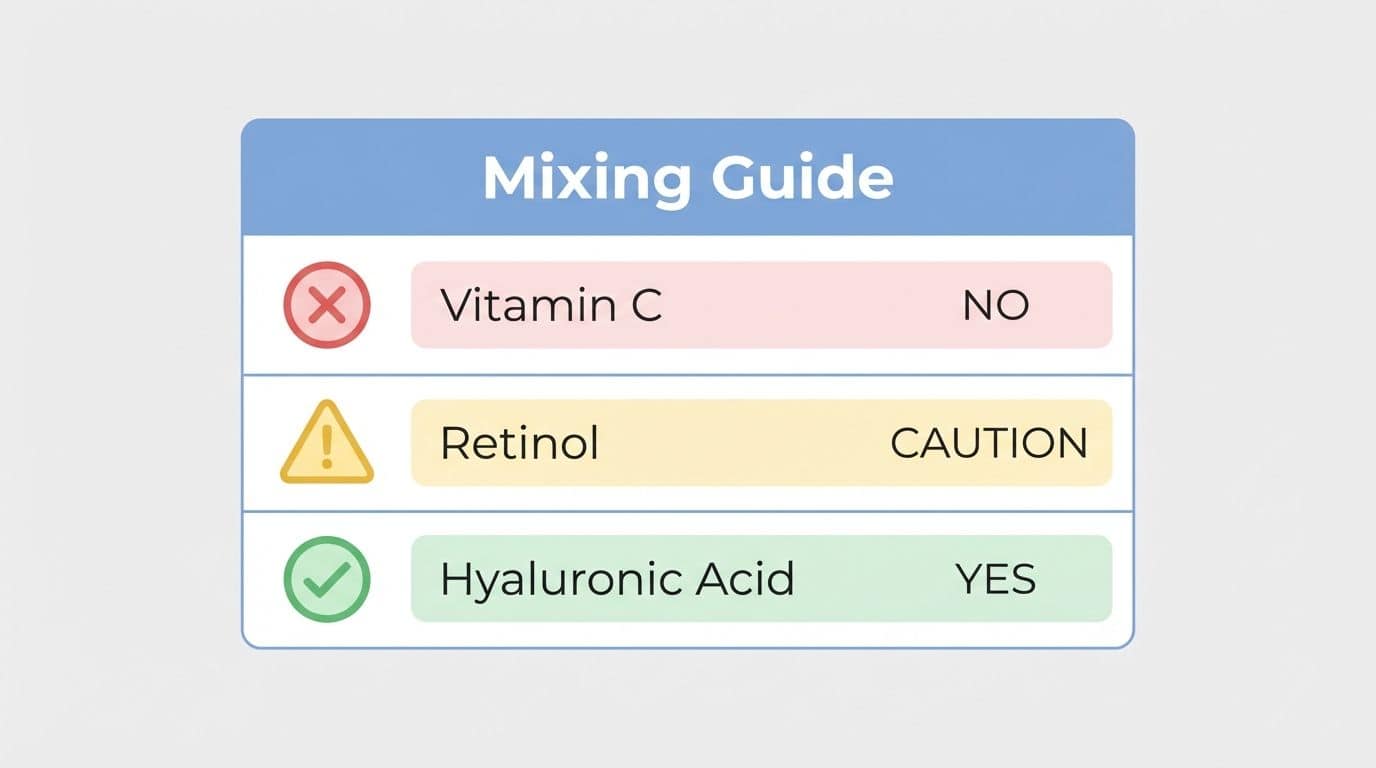
| Ingredient | Can You Mix with Copper Peptides? | Why / Pro-Tip |
|---|---|---|
| Vitamin C (L-Ascorbic Acid) | ❌ NO | Acids destabilize the copper. Use Vitamin C in the morning and Copper Peptides at night. |
| Retinol / Retinoids | ⚠️ CAUTION | Using both at once can cause irritation. Alternate nights: Retinol on Monday, Copper on Tuesday. |
| Hyaluronic Acid | ✅ YES | Great combo! Hyaluronic acid helps hydrate while peptides repair. |
Always test new combos on your inner arm first. You would rather have a patch of irritated skin you can hide than a full-face breakout.
Are copper peptides worth it?
I see plenty of hype, but the science checks out. Clinical trials since 2023 back up claims that copper peptide creams actually improve skin texture and tone, especially for men with mature or sun-damaged skin.
GHK-Cu stands out because it is one of the few ingredients that rebuilds skin rather than just peeling it off. It kicks collagen and elastin production into high gear in only 8 to 12 weeks. If you deal with post-shave irritation, it is a game-changer for calming that fire.
However, be warned about the “Copper Uglies.” This is a slang term for what happens when you use too much product—your skin can actually look looser because of enzyme over-activity. Stick to the recommended dose (usually 1-2% concentration) to stay in the safe zone.
A doctorate in pharmacy might say patch testing is wise. Even powerful formulas like those from PLU Laboratories can cause mild redness if you jump in too fast. But if you are consistent, the payoff—firmer cheeks, smoother forehead, and a healthier scalp—is absolutely worth it.
How Will Copper Peptides Evolve in 2025?
The future is already here. New delivery systems, specifically ionic liquid microemulsions, are taking copper peptide creams to a new level. Clinical research shows these systems boost local delivery by three times compared to old creams.
This means you get more active ingredients exactly where they need to go—deep into the dermis or follicle base. PLU Laboratories is pushing the limits with these advanced serums that better support collagen repair.
As we move through 2025, expect to see copper peptides appearing in more wound care products and advanced hair regrowth treatments. It is not just snake oil; it is real science pointing the way forward for men’s grooming.
People Also Ask
What do copper peptides actually do for aging skin and hair?
I found that GHK-Cu peptides specifically signal your body to ramp up Type I collagen production, which acts like structural scaffolding for firmer skin. For hair, they improve blood circulation to the follicles, which can wake up dormant roots and lead to thicker strands over time.
Are copper peptide products safe for long-term use on aging skin?
They are generally safe for daily use, but I always warn friends about the “copper uglies,” a rare reaction where overuse causes skin to sag instead of tighten. To be safe, I suggest sticking to a 1% concentration and patch-testing a small area first.
How soon can I expect results from using copper peptides on my hair or face?
My skin started looking smoother and more elastic after about four weeks, but hair growth is a much slower process. Since hair cycles are long, I didn’t see a noticeable difference in density until I had been using them consistently for six months.
Can copper peptides replace other anti-aging treatments for skin and hair?
I wouldn’t drop your other products, but I definitely avoid mixing these directly with Vitamin C since the acidity can cancel out the benefits.
References
https://www.youbeautylounge.com/articles/are-copper-peptides-worth-a-try
https://pmc.ncbi.nlm.nih.gov/articles/PMC4556990/
https://www.healthline.com/health/copper-peptides (2020-10-26)
https://www.sarasotarx.com/copper-peptides-in-dermatology-the-science-behind-skin-renewal (2025-08-16)
https://pmc.ncbi.nlm.nih.gov/articles/PMC10643103/
https://www.masterclass.com/articles/copper-peptides-guide
https://www.harpersbazaar.in/beauty/story/the-blue-reset-1308951-2025-11-29