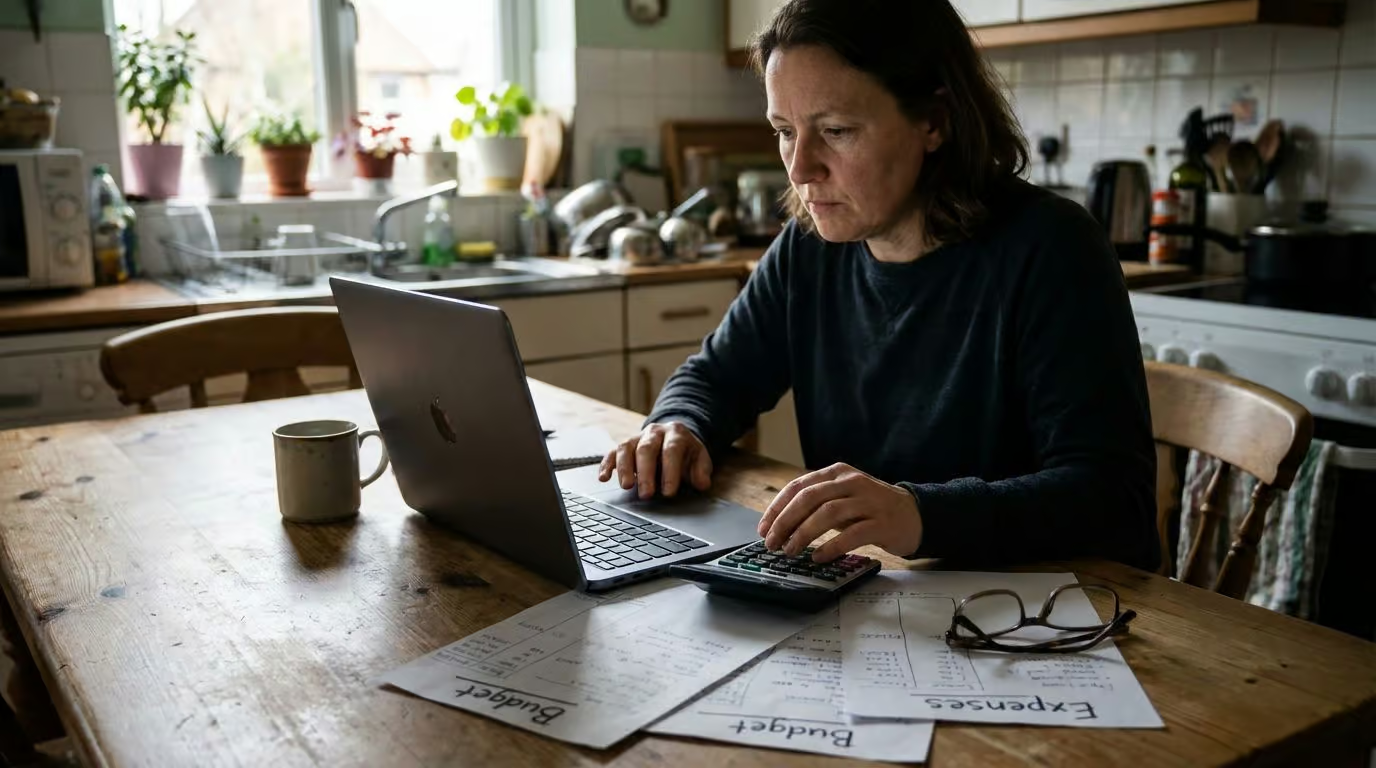
Ever look at Airbnb hosting and think, “I’ll just pick a nightly rate and see what happens”?
That guesswork is where new hosts lose money, or get burned by local rules, fees, and taxes. This Airbnb Hosting 101 guide breaks it down with facts, tools, and plain talk, so you can run your numbers like a grown-up business.
I ran short-term rentals for five years. I leaned on market data, worked with insurance companies and mortgage lenders, and tested smart locks, smart thermostats, and check-in systems so guests actually came back.
Read on.
Key Takeaways
Check local laws, insurance, and leases before you host. In some U.S. cities, rules can cap nights, require registration, or ban certain setups, and that directly changes revenue.
Budget startup costs ($2,000 to $10,000 is a common range for a one-bedroom setup), plus ongoing cleaning ($150 to $300) and pro photos ($250 to $500) so your cash flow math is honest.
Use tools like AirDNA, PriceLabs, and dynamic pricing. Also consider a property management system if you want automation, but factor in Airbnb’s fee structure changes for software-connected hosts.
Model revenue with real fees: 20 nights at $112 equals $2,240 gross. Then subtract Airbnb service fees, cleaning, supplies, utilities, and rent. Keep adjusting for seasonal demand and fees.
Table of Contents
Assessing Your Fit for Airbnb Hosting
Before you buy a single duvet or smart lock, check whether hosting is even allowed where you live.
Start with your lease, HOA rules (if you have one), and your insurance company. If you rent, get written permission from the property owner or landlord, because “subletting” language in a legal contract can get specific fast.
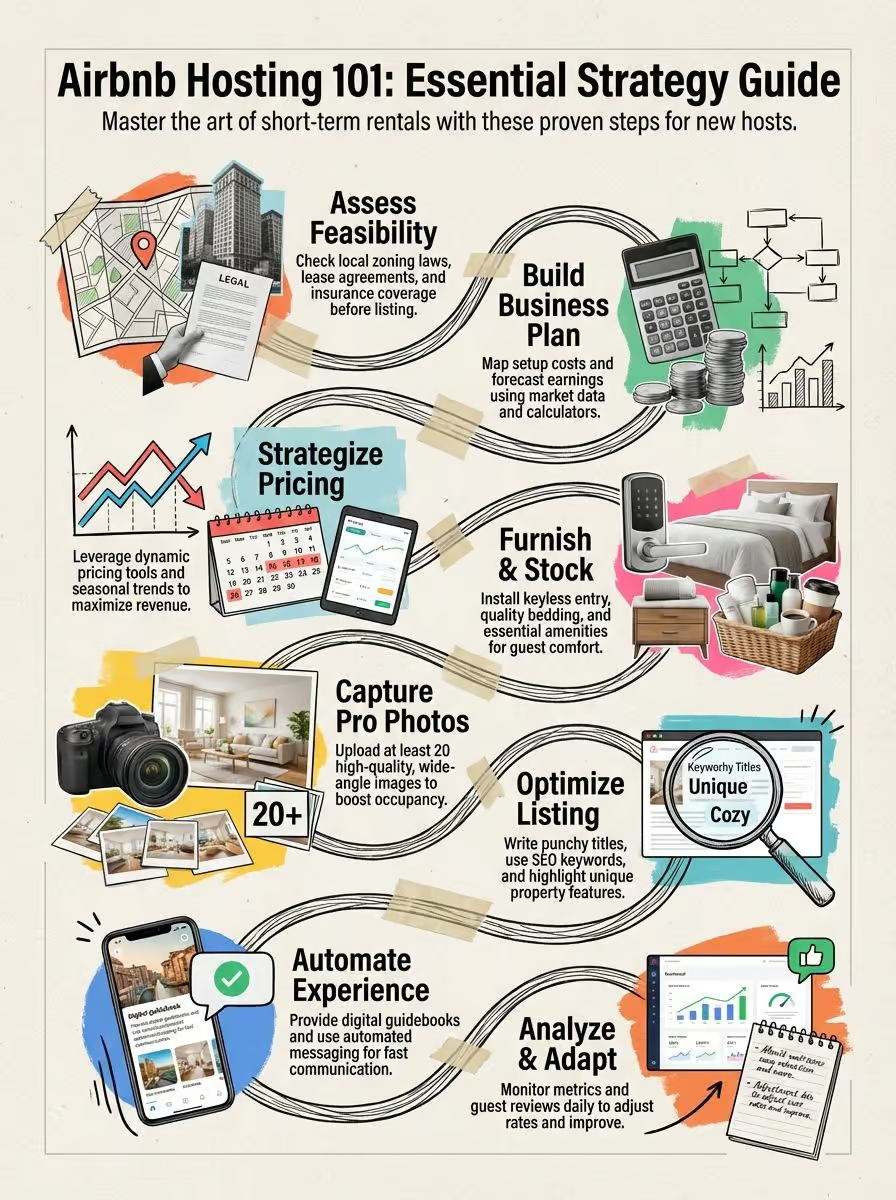
Then run the budget math for your pricing strategy and occupancy rates. Don’t forget the platform service fee, plus costs like cleaning, Wi-Fi, utilities, and the stuff you’ll replace constantly (towels, cookware, toiletries, and the random things guests break).
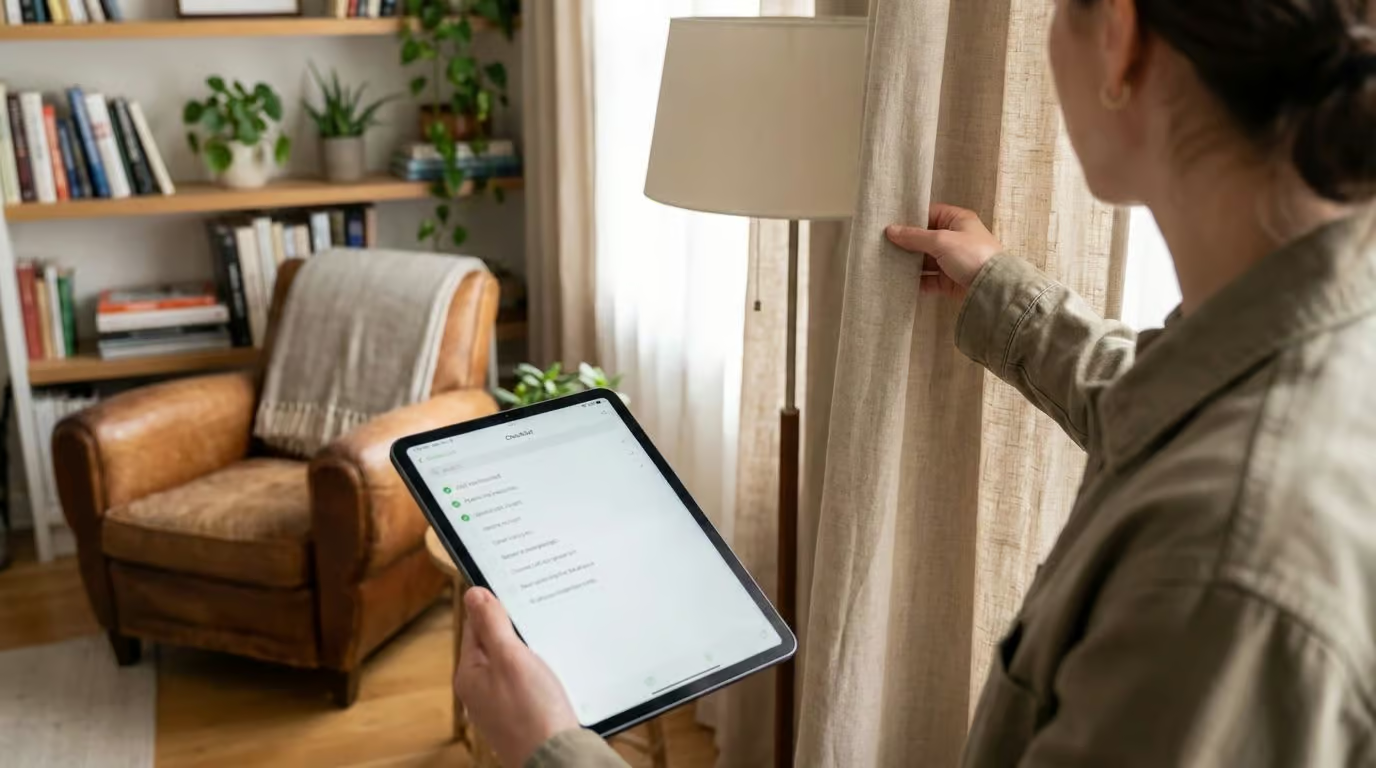
Fast “yes or no” checklist
- Legality: Can you legally host short-term rentals at your address, and do you need a permit or registration number?
- Lease and building rules: Does your lease allow hosting, and does your building ban short stays?
- Insurance: Will your homeowners insurance (or renter’s policy) cover you while you host, or do you need an endorsement?
- Cash flow: Can your expected profit cover your monthly rent or mortgage, even in slow season?
- Time: Can you handle guest communication, troubleshooting, and turnover, or do you need help?
How do I evaluate my space’s potential for Airbnb?
Start by scanning your place with a guest mindset. Walk through it like you’re arriving at 10:30 p.m. after a long drive, tired, hungry, and ready to judge everything.
Pay attention to location, layout, natural light, noise, parking, and work-friendly details like a desk setup for a digital nomad. Then look at the listing types that match your property, similar studios, apartments, or homes that compete for the same guests.
Use AirDNA and an Airbnb calculator to pull ADR and occupancy estimates. Build a small “comp set” of 5 to 10 similar listings (same neighborhood vibe, sleeps a similar number, similar finishes) and compare amenities and reviews to shape your pricing strategy.
What to upgrade first (the stuff guests feel immediately)
- Sleep quality: A decent mattress, protectors, good bedding, and a comfortable duvet can make “good value” feel like “great stay.”
- Work setup: If you want weekday bookings, set up a real workspace, not a wobbly bar stool.
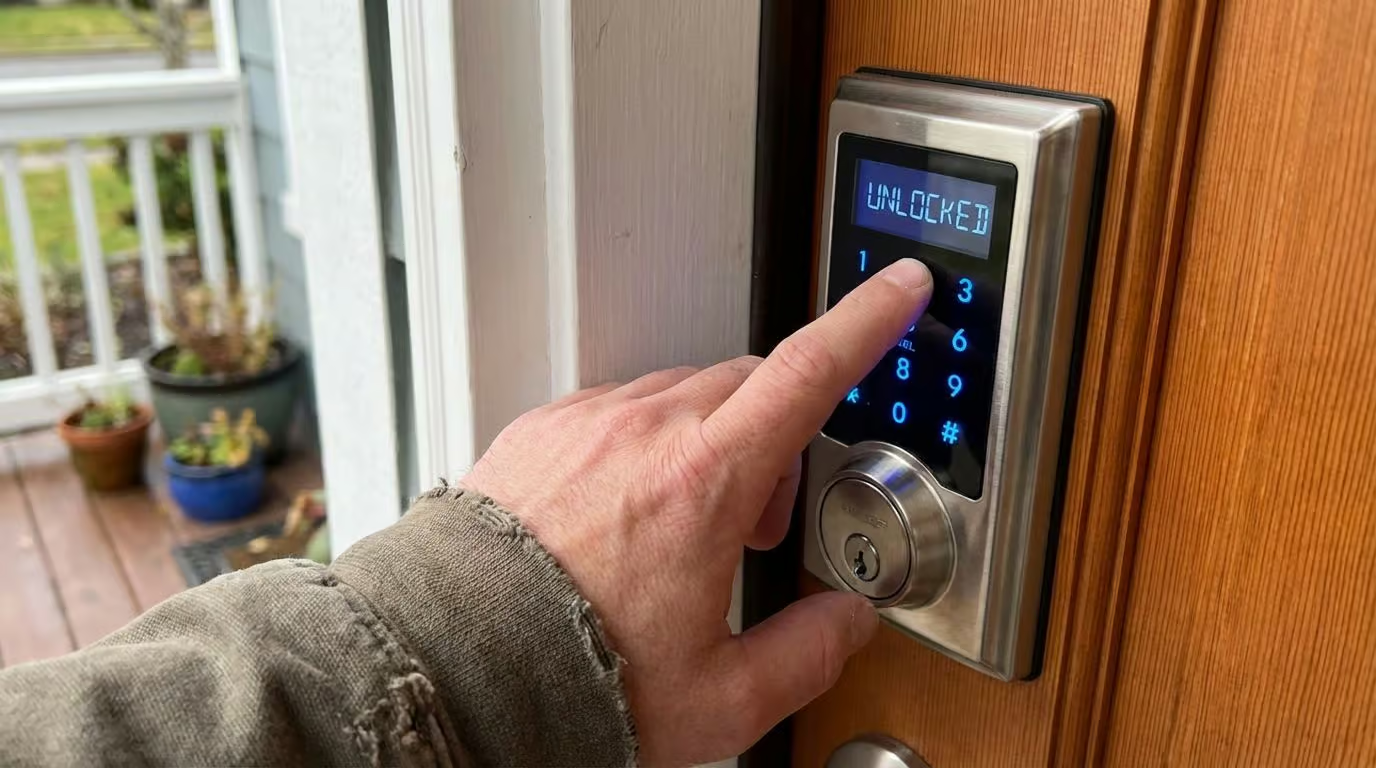
- Entry: Keyless access reduces late-night calls and lost keys, and it makes check-in smoother.
- Kitchen basics: Silverware, pans, salt, pepper, coffee, and a few pantry staples reduce complaints fast.
Once the space has real potential, the next make-or-break step is understanding local laws and regulations before you list.
What local laws and regulations should I know before hosting?
Check your local rules, file the right forms, and you’ll save yourself a lot of stress later.
Cities and counties can set rules that change your whole business model. You may need a permit, a registration number, zoning approval, or an occupancy tax setup, and some places limit stays or ban certain short term bookings.
New York City is a good example of how strict it can get. The city’s Office of Special Enforcement says Local Law 18 requires hosts to register, and platforms can’t process bookings for unregistered short-term rentals. Their guidance also limits many short stays to situations where the host is present and caps the number of paying guests.
A practical way to stay compliant without getting lost
- Search your city and county rules for “short-term rental ordinance,” “registration,” and “occupancy tax.”
- Confirm your setup: whole home vs. room share, owner-occupied vs. not, apartment vs. single-family home. Many rules hinge on this.
- Get it in writing if you’re renting: landlord permission matters more than a casual text.
- Document safety basics: smoke alarms, carbon monoxide alarms (when applicable), and fire prevention gear.
- Keep proof: permits, registrations, inspections, and receipts in one folder.
Airbnb also expects hosts to follow listing accuracy rules, honor reservations, and handle refunds within policy. Enforcement varies by jurisdiction, so make it a habit to check for updates a few times per year.
To save taxes on your short-term rentals, be sure to track credit card receipts, home loan paperwork, and toiletry or decor receipts for deductions.
One more tax tip that can matter in the U.S.: the IRS explains that if you rent a place you also use as a home for fewer than 15 days in a year, you generally don’t report that rental income, and you also don’t deduct rental expenses tied to it. That can be useful if you’re only hosting during a big local event.
Next, plan your earnings and pricing in the Create a Solid Airbnb Business Plan section.
Create a Solid Airbnb Business Plan
Think of your plan like a simple dashboard: costs, pricing, target audience, and what “good” looks like each month.
You can do this in Excel, but the key is using real assumptions, not hope. Your nightly rate, occupancy rates, and platform fees all change the outcome more than most new hosts expect.
The fee reality you need in your forecast
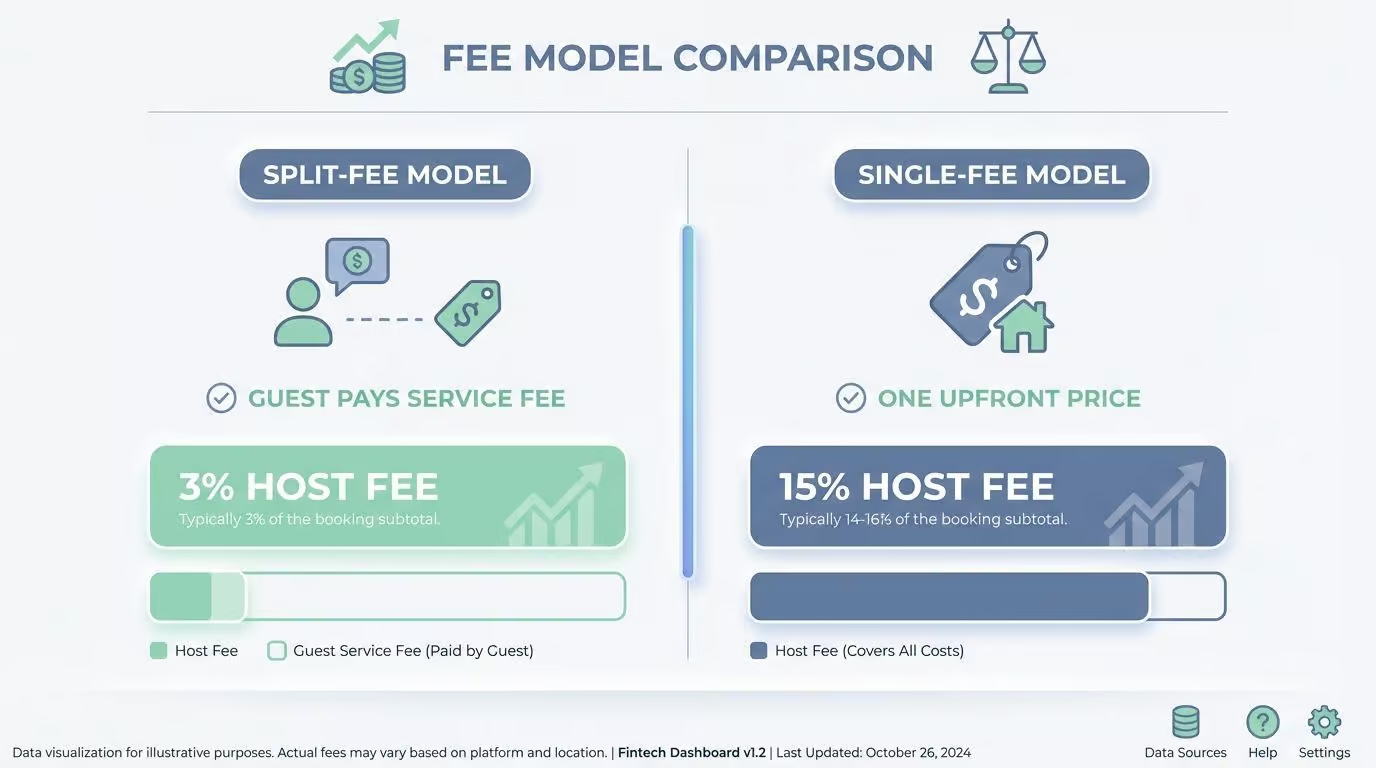
Airbnb explains two fee structures for stays. In the split-fee model, most hosts pay 3%, and guests pay a service fee that ranges from 14.1% to 16.5% of the booking subtotal. Airbnb also says the single-fee model typically runs 14% to 16%, and a 15.5% single-fee rate rolled out in late 2025 for many hosts on that structure, especially software-connected listings.
| Fee setup | What the guest sees | What changes for your pricing strategy |
|---|---|---|
| Split-fee (common for hosts not using a property management system) | Your nightly price plus a guest service fee at checkout | Your payout is usually close to your set rate minus about 3%, but guests may feel “fee shock.” |
| Single-fee (common for hosts using a property management system) | One upfront price (no separate guest service fee line) | You often need to raise your nightly rate to keep the same payout, because the fee comes out of your side. |
How can I calculate my potential Airbnb earnings?
I ran the numbers on my place, and the math clicked fast once I stopped treating it like a side hustle and started treating it like a spreadsheet.
Use real tools, plug in real data, and you’ll see your profit lanes much sooner.
- Start with market data, for example AirDNA’s revenue tools, to estimate ADR and occupancy rates for your area and property type.
- Add start-up costs to your forecast. The $2,000 to $10,000 range can be realistic depending on furniture, bedding, kitchenware, decor, smart locks, and a smart thermostat.
- Factor recurring and add-on costs: cleaning ($150 to $300 per turn), pro photos ($250 to $500), utilities, consumables, and maintenance.
- Plan your digital guidebook. Hostfully offers a free single guidebook, and paid plans can start around $5 per month, so you can pick a level that matches your setup.
- Run an Airbnb calculator using your calendar assumptions. Model peak season and slow months, not just an average month.
- Test pricing with example math: 20 nights at $112 equals $2,240 gross. Then subtract your Airbnb service fee, cleaning, supplies, and rent. If your rent is $1,500 and your costs run $300 to $600, you’ll see fast whether this is worth it.
- Adjust weekly based on bookings. Track what happens when you change price, minimum stays, and discounts.
- Use guest feedback and troubleshooting notes to refine your assumptions. Then move into pricing tactics and listing upgrades in the next section.
What is an effective pricing strategy for Airbnb listings?
Price smart, test fast, and let the numbers tell you when to raise the rate.
Pick a pricing model, run it for two to four weeks, then tweak. The most common setups are fixed pricing, seasonal pricing, dynamic pricing, and tiered pricing (weekend vs. weekday).
If you want dynamic pricing, PriceLabs lists its Dynamic Pricing plan starting at $19.99 per listing per month in the U.S. That can pay for itself quickly if it helps you avoid empty weekends or underpriced peak dates.
Three numbers to watch every week
- ADR (average daily rate): what you actually earned per booked night.
- Occupancy: booked nights divided by available nights.
- RevPAR: total revenue divided by available nights (or ADR multiplied by occupancy). This helps you see the tradeoff between raising rates and filling the calendar.
Set higher weekend and holiday rates, add cleaning fees that cover your true costs, and use minimum stays for busy blocks so you don’t break your schedule with one-night gaps.
Offer weekly and monthly discounts when they make sense for your target market, like traveling nurses, project-based business travelers, and digital nomads who stay 28 nights or longer.
Next, get the property guest-ready and stage photos for the listing.
Prepare Your Property for Guests
You don’t need fancy. You need clean, consistent, and easy to use.
Focus on sleep, bathrooms, lighting, and a check-in flow that works even when you’re not available. Then add the tech that reduces guest questions, like a smart lock and smart thermostat.
Safety first (it protects guests and protects you)
Airbnb says active hosts who qualify can request a free combination smoke and carbon monoxide alarm, and it urges hosts to follow local laws for how many alarms are required. This is one of those moves that costs little and prevents big problems.
How should I design and furnish my Airbnb space?
Pick a clear design lane that fits your price tier. Guests don’t need your personal style, they need a place that feels intentional, clean, and easy to live in.
For bedrooms, keep it simple and repeatable: a quality mattress and protector, solid bedding, bedside lighting, a mirror, and enough storage that guests don’t live out of a suitcase on the floor.
- Closet win: keep 8+ hangers per room, plus two luggage racks if you can.
- Bedding system: two sheet sets per bed, extra pillows, and at least one spare duvet cover so turnovers stay fast.
- Temperature control: a smart thermostat helps keep guests comfortable and protects your utility costs, especially in extreme heat or cold.
- Entry: go keyless if you can. It reduces lockouts and makes late arrivals smoother.
Set living areas for the max guest count with real seating, not just a decorative chair that no one wants to use. If you host weekend travelers, a comfortable couch and a good TV setup matter more than fancy decor.
What essential amenities should I provide for guests?
After you design and furnish the space, stock it like you’re trying to eliminate guest texts. The goal is fewer surprises for both you and your guests.
- Bathrooms: stock two towels per guest, plus hand towels, bath mat, soap, two toilet paper rolls per bathroom, and a basic cleaning kit for quick touchups.
- Toiletries: shampoo, conditioner, body wash, a hairdryer, a plunger, toilet brush, and extra storage for guests’ stuff.
- Kitchen basics: two full dish sets for max guests, glassware, cookware, bakeware, silverware, dish soap, sponge, paper towels, and a few pantry staples like coffee and tea.
- Tech: fast Wi-Fi, a smart TV with streaming, and clear login instructions so guests don’t burn your time at 11 p.m.
- Sleep and laundry: clean bedding, extra pillows, stain remover, and enough hangers so closets don’t turn into chaos.
- Match your guests: a workspace for business travelers, family gear for parents, and pet supplies if you accept animals.
How do I take professional photos for my Airbnb listing?
You just did the hard work. Photos are how you get paid for it.
- Use a mirrorless camera or a high-end smartphone, and shoot from a neutral eye level so rooms look natural, not distorted.
- Hire a pro if you can. $250 to $500 can be money well spent because clean, bright photos build trust fast.
- Airbnb’s own guidance for hosted photo sessions typically delivers 2 to 3 photos per room plus exterior shots. Use that as a baseline so you cover every space without repeating angles.
- If you use Guesty to sync your listing, their Airbnb photo requirements note a max file size of 4 MB per image and a cap of 100 photo updates per week. That matters if you’re uploading a lot of new photos at once.
- Stage for scale and cleanliness: remove clutter, open curtains, make beds, and keep horizons straight.
- Edit lightly. Boost exposure and color, but don’t overdo filters, because surprise and mismatch lead to bad reviews.
Improve Your Airbnb Listing
Your listing is your salesperson. It needs to be clear, fast to scan, and accurate.
Use a strong cover photo, put your best features in the first lines, and make your title work on a small phone screen.
How do I write catchy titles and descriptions for Airbnb?
Keep titles tight and specific. Airbnb’s hosting guidance suggests keeping key info within about 32 characters so it displays cleanly on mobile, even if longer titles get cut down in search results.
Use hooks that signal value fast: parking, view, walkability, workspace, or pet-friendly. Avoid vague fluff that every listing uses.
- Front-load the win: “Walk to stadium, parking, 2BR” beats “Beautiful apartment.”
- Match the target market: weekend travelers want convenience, digital nomads want Wi-Fi and a desk.
- Be clear on rules: put house rules, quiet hours, and any stairs or quirks in plain language.
Write descriptions that sell, but stay honest. Clear expectations reduce refunds, complaints, and bad reviews.
What unique features should I highlight in my listing?
Show features that save guests time or stress, because that’s what people pay for.
- Work-ready setup: list Wi-Fi speed (Mbps), desk, chair, and power outlets.
- Easy arrival: smart lock check-in, clear parking instructions, and good exterior lighting.
- Comfort proof: quality bedding, blackout curtains, good AC or heat, and quiet sleeping space.
- Long-stay help: washer and dryer, a real kitchen, and storage space for bags and groceries.
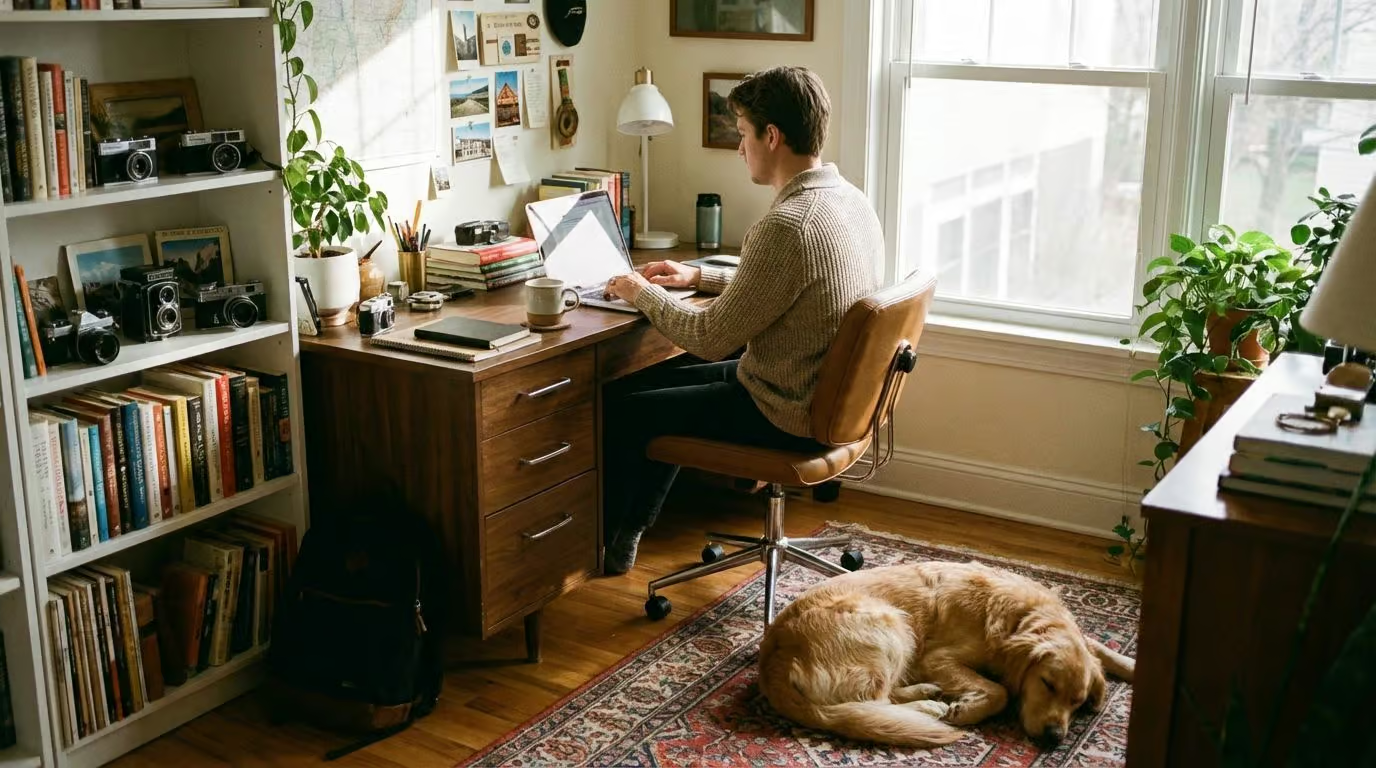
“I doubled my weekend bookings after labeling my place as pet-friendly and adding a workspace.”
If you want to add local flavor, keep it simple and true. Mention a nearby park, a coffee shop, or a popular tour, but don’t oversell what’s “walking distance” unless it really is.
How Can I Enhance the Guest Experience?
If you want better reviews, make the stay feel easy.
That means clear check-in, fast communication, and fewer “Where is the…” questions.
What are digital guidebooks and how do I use them?
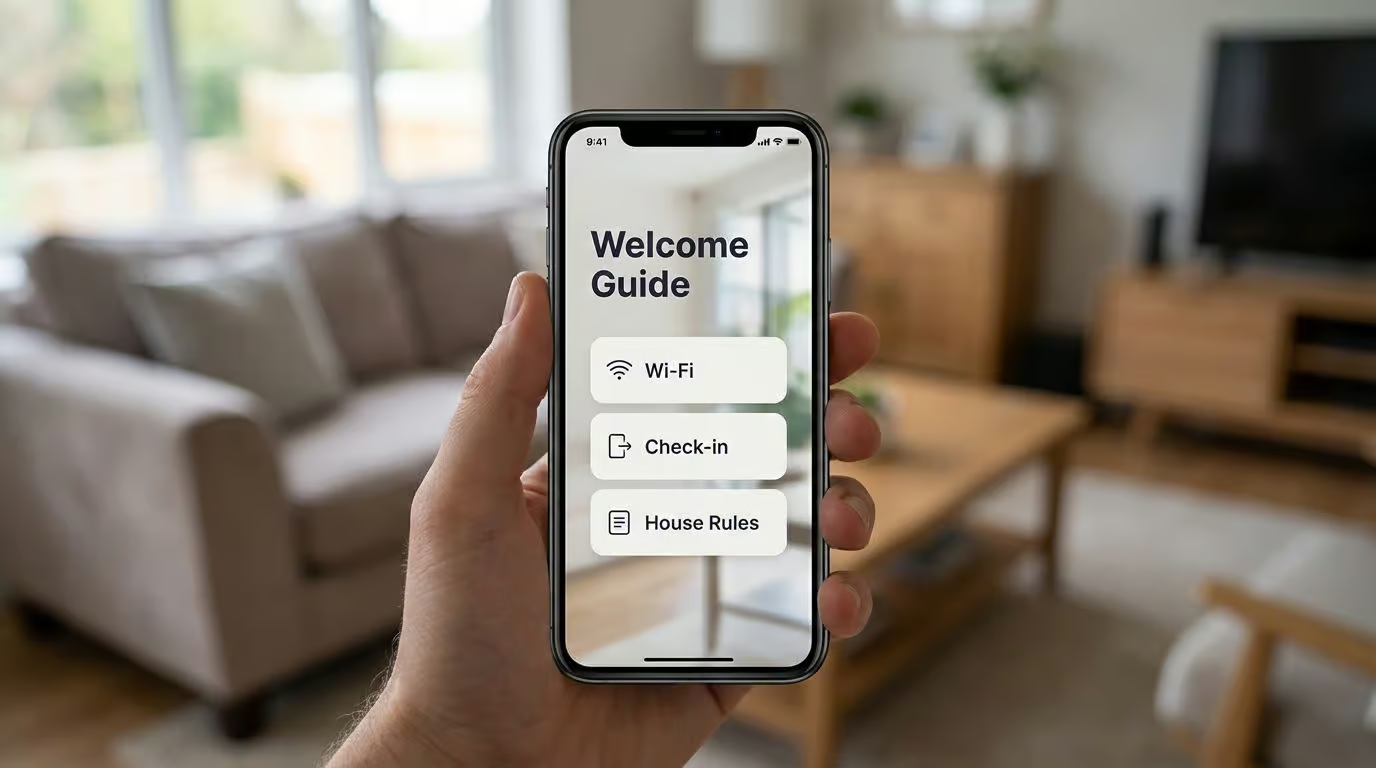
Digital guidebooks live on phones and tablets. They replace paper manuals and cut repeat guest questions.
- Put welcome and check-in steps first, then Wi-Fi, house rules, parking, and emergency contacts.
- Use the Guesty Guest App if you’re already in that ecosystem. It supports localization and personalization, which helps if you host international guests.
- Hostfully offers a free single guidebook, and paid plans can start around $5 per month if you want more features like translations and upsells.
- Update local info regularly. Old restaurant lists make you look checked out.
- Add quick how-to steps for the thermostat, TV, and any “house quirks,” because that’s where late-night troubleshooting comes from.
How can I communicate effectively with Airbnb guests?
Use fewer words, faster. Guests want clarity, not a novel.
- Send a quick confirmation message right after booking, even if it’s automated.
- Send a check-in message the day before, then a short check-in reminder a couple hours before arrival.
- Ask one simple question after the first night: “Everything working well, or do you need anything?”
- Keep all communication on-platform when you can. It helps with records if something goes sideways.
How to Analyze Performance and Encourage Reviews
Reviews are a growth lever, but only if you treat them like feedback, not a personality test.
Track patterns, fix the recurring issues, then ask for reviews in a way that feels normal.
How do I track and use guest feedback and reviews?
I check reviews often, and I act fast when I see the same issue twice.
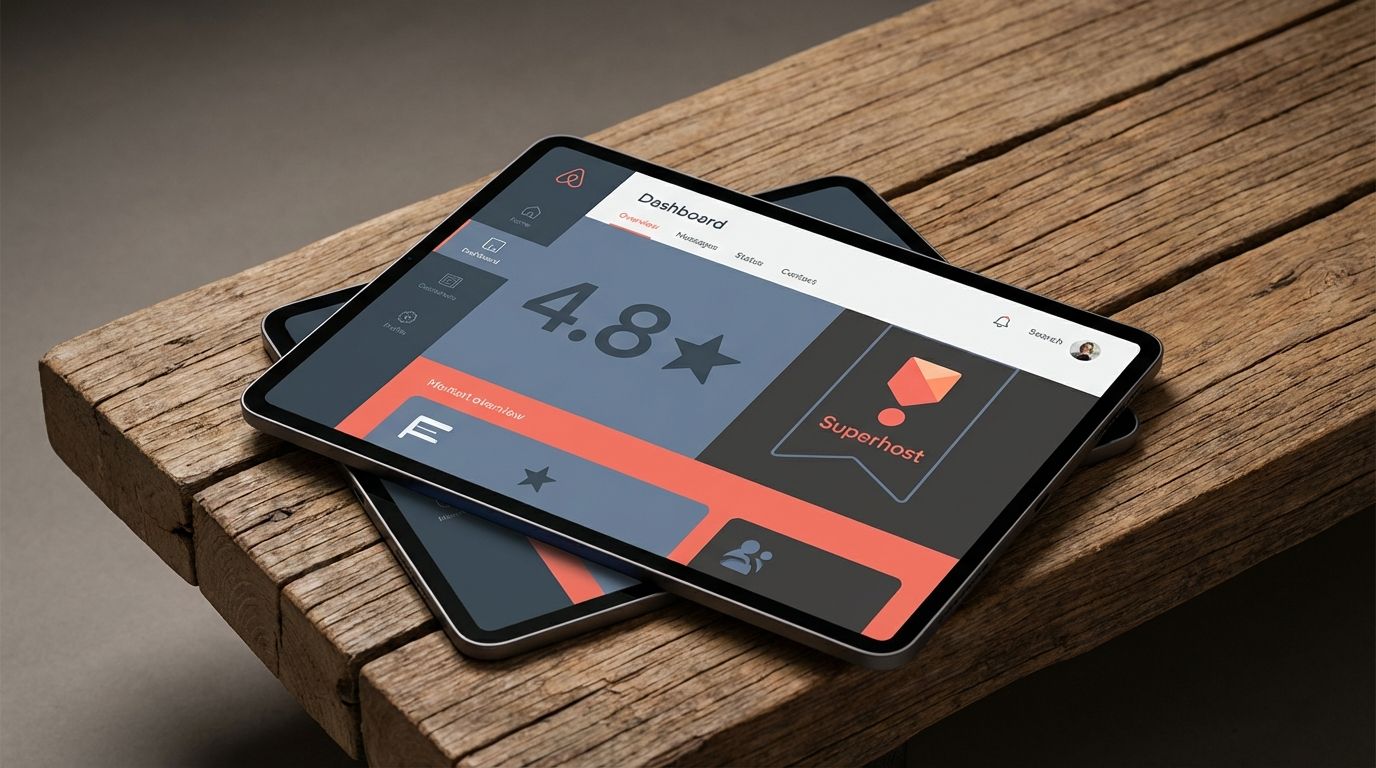
- Open your Airbnb dashboard, go to Performance, then Reviews, and scan ratings by category so you spot drops in cleanliness or communication early.
- Log recurring complaints in a simple spreadsheet and tag the problem (late check-in, noise, missing towels, confusing parking).
- Fix the root cause, then update your guidebook or house rules so the issue doesn’t repeat.
- Reply to every review with a calm, helpful tone. Future guests read your response more than you think.
- If you want a clear benchmark, Airbnb’s Superhost criteria includes a 4.8+ overall rating, 90%+ response rate, and less than a 1% cancellation rate, evaluated quarterly. Use that as your north star even if you’re not chasing the badge yet.
Next, we will cover how to adjust your hosting strategy based on performance insights.
How can I adjust my hosting strategy based on performance insights?
Use numbers to steer changes, not gut feelings.
- Pull historical, future, and real-time performance data. Spot booking gaps and rate dips on your income dashboard.
- Compare your listing to similar nearby places. If you lag on occupancy or nightly rate, choose one lever to change first (photos, pricing, amenities, or minimum stays).
- Track weekly and monthly earnings so you see seasonality coming instead of reacting late.
- Double down on what earns 5-star reviews, like cleanliness and easy check-in.
- Use multi-calendar management if you list on more than one platform so you avoid double bookings and calendar mistakes.
- Run short tests on weekend rates or midweek discounts, then keep the moves that raise revenue without hurting guest satisfaction.
- Update your house rules or welcome notes based on real feedback, and re-check your metrics two weeks later.
Airbnb Hosting Next Steps
If you want Airbnb hosting to pay off, treat it like a system: rules, numbers, and repeatable operations.
Start small, tighten the basics, and build from there.
- Confirm local rules, lease terms, and insurance coverage.
- Build a simple budget, then stress-test it with slow-season occupancy rates.
- Use dynamic pricing and a clean listing to win bookings without racing to the bottom.
People Also Ask
What should new hosts do first?
As an Airbnb host, hit the ground running with clear images, a short headline, and a fair price. Add a simple description, set short house rules, and plan the arrival process.
How do I set price and rules?
Use local pricing strategies, start low to win early bookings, and write brief rules that protect your space.
How do I keep the place clean and safe?
Make a short tidying checklist and follow it after each stay. Point out safety items, like smoke detectors and strong locks, and leave clear arrival notes.
How do I attract bookings and get good reviews?
Reply fast, answer questions clearly, and use great images with honest details. Keep the place tidy, add a small welcome item, and ask for feedback, good visitors often return.
References
https://www.airdna.co/guides/beginners-guide-to-airbnb-hosting
https://www.sciencedirect.com/science/article/pii/S2405844021023252
https://www.airbnb.com/help/article/376
https://www.airbnb.com/help/article/2895
https://news.airbnb.com/interactive-tool-estimates-potential-monthly-host-earnings-on-airbnb/ (2021-03-10)
https://touchstay.com/blog/airbnb-pricing-strategies
https://www.airbnb.com/resources/hosting-homes/a/setting-your-pricing-strategy-15
https://www.airdna.co/blog/airbnb-photography (2024-04-30)
https://www.airdna.co/blog/airbnb-title-examples (2024-06-18)
https://www.airbnb.com/help/article/3135
https://www.guesty.com/blog/creating-a-digital-guidebook-for-your-short-term-rental/ (2025-12-11)
https://www.airbnb.com/resources/hosting-homes/a/communicate-effectively-659 (2024-01-10)
https://turno.com/blog/airbnb-communication-tips/
https://www.uplisting.io/blog/how-to-use-airbnb-guest-feedback