
I saw a guy in his late 60s kissing an 18-year-old at Sam’s Club the other day. I’m not judging, but it made me question the modern age gap dating rules. To evaluate if an extreme generational divide is an exceptionally mature match or a toxic trap, you must look closely at the hidden power dynamics. Based on massive search volume, many of you are wondering the same thing.
I decided to do some research into the daily realities of people actually living out these drastic age disparities. To map out exactly what breaks or sustains these relationships, I used extraction tools like BeautifulSoup and Jina Reader to parse massive archives of raw dating data. I read through a lengthy Reddit thread sparked by user Confident_Gazelle438, waded through sociological compilations published by Kayla Yandoli for BuzzFeed and the broader BuzzFeed Community, and cross-referenced cultural coverage from NBC. I even analyzed how the media frames these gaps using pervasive stock imagery from Wavebreakmedia, Seb_ra, Westend61, Oliver Rossi, Sam Bassett, and Yellow Dog Productions (all sourced via Getty Images and iStockphoto).
What I found completely shatters traditional dating advice.
Table of Contents
The “half your age plus seven” calculation
The most famous equation in romance is notoriously useless for predicting long-term relationship stability. The traditional math gives outsiders a formula to judge the social optics, but outsiders aren’t the ones living the reality.
Relying on “half your age plus seven” gives couples a fundamentally false sense of security. Math cannot protect you from the physical and emotional friction of a wide generational gap. Real compatibility requires navigating the vast difference between harmless mismatches in cultural touchstones and fatal differences in core values.

User marieavl27 is 33 while her partner is 50. When he references the 1990s—a time when he was an adult and she was still in preschool—it prompts a good-natured laugh. They share similar life experiences (both are registered nurses) and have achieved a highly peaceful baseline. Similarly, u/cherrycoke00 proofread her 30-year-old boyfriend’s resume and had the jarring realization that he graduated high school the exact same year she was in third grade.
These are benign frictions. It becomes a systemic problem when couples begin ignoring massive gaps in shared values just because the math checks out on paper.
Financial dependency and life stage alignment protocols
The stereotypical image of an age gap involves a wealthy older man showering a much younger woman with luxury. The day-to-day truth is often exactly the reverse. Wide gaps force a violent collision of vastly mismatched personal timelines.
You must prioritize life stage alignment to avoid crippling financial dependency or outright financial exploitation. Younger partners repeatedly report bleeding their own early-stage stability to prop up chronically irresponsible older partners.

Even when the financial flow follows traditional expectations, it can create immense psychological strain. Student-aged partners frequently report feeling deep inadequacy and severe financial guilt when an older, established partner effortlessly absorbs all financial responsibilities while they are still struggling to finish college. This extreme disparity strips the younger partner of their crucial independence phase, breeding an uneasy dynamic where gratitude quietly morphs into a stark reminder of their unequal footing.
Consider the experience of u/ISaidBitchhhh. She dated a man 12 years her senior who functioned as a consistently broke 30-something. She financially supported him, loaned him unpaid money, and heavily assisted him in landing a lucrative job at a successful tech company—only for him to cheat on her with his best friend’s girlfriend.
This financial parasitism happens constantly. User u/[deleted] was 28 when she dated a 59-year-old man, quickly discovering that older individuals who are chronically single are often single for a reason. For some of these older men, pursuing a significantly younger partner is just a perceived shortcut for how to get a hot girlfriend if you’re average—they want the aesthetic upgrade without putting in the reciprocal effort of actually building stability. Instead of finding a mentor, the young partner finds a dependent.
The manager dynamic and emotional maturity
Never assume chronological age guarantees emotional maturity. A staggering number of younger individuals forfeit their critical, identity-building twenties to act as uncompensated life coaches for fundamentally unhealed partners. This toxic loop is frequently catalyzed by the older partner’s active refusal to seek professional therapy, which forces the younger partner to absorb the massive burden of their psychological repair.

When you date someone older who lacks self-awareness, you fall into an exhausting manager dynamic. You are forced to routinely perform the massive emotional labor your partner refuses to do. User u/patheticgrill43 spent her twenties with a man 12 years older, functioning entirely as his manager and mother. She had to meticulously teach him basic communication, empathy, and how to take accountability, wasting her best years trying to force growth onto a manchild.
User biljanam, at 50, gave a 37-year-old man a chance, only to find him intensely selfish, immature, and prone to canceling dates at the last second or ghosting her entirely. You might think you’re getting an experienced intellectual, but in reality, you are really just figuring out how to date a brat trapped in an adult’s body.
Conversely, biological youth does not guarantee a lack of wisdom. When 37-year-old messylight38 finally stopped rejecting a 23-year-old man she met in the military, she discovered he possessed significantly more emotional stability than the men her own age. They bought a house and had a beautiful daughter.
“The years on a driver’s license are completely decoupled from conflict resolution.”
Weaponized experience and coercive control
The most venomous threat in an extreme age disparity is not infidelity. It is systemic isolation, an intentional tactic designed to cut off safety nets and cultivate total codependence. In toxic gaps, the inherent authority of age is frequently used to enforce a severe power imbalance, pushing the relationship straight into coercive control.
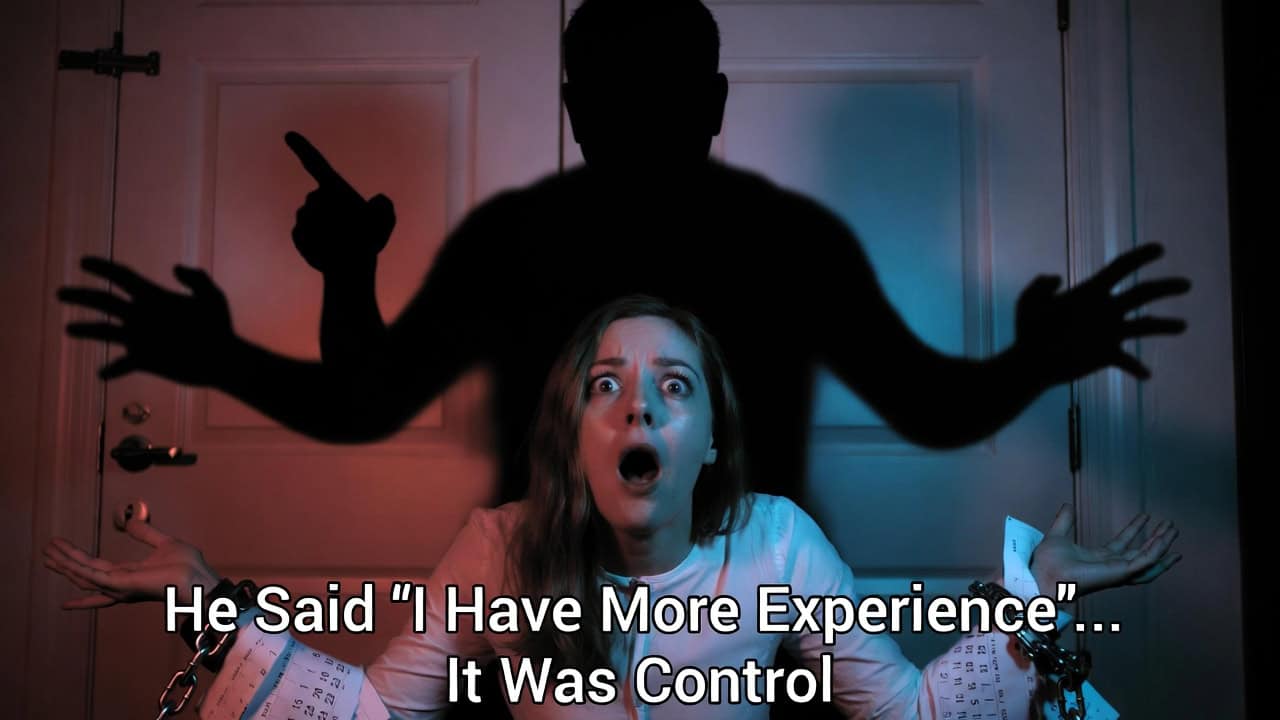
Abusive partners use their age as a shield. They manipulate the narrative, reframing jealousy, isolation, and possessiveness as “protection” and superior wisdom. User cnmiller0011 endured a horrible marriage to a man 19 years older who systematically isolated her from her family, constantly weaponizing his age over her to enforce total dominance. When leking94cats broke off her relationship with her 42-year-old boyfriend (whom she met when she was 19), he stalked her for six months, slashed a male friend’s tires, and regularly screamed outside her apartment.
The psychological fallout from these traps is devastating. The damage goes far beyond a standard bad breakup, often leaving profound neurological scars. User u/betteroffsleeping spent years physically removed from an older abusive partner but still battles CPTSD (Complex Post-Traumatic Stress Disorder), a severe condition born directly from the prolonged, inescapable nature of that psychological control. Her abuser routinely deployed phrases like “I’ve got over a decade more experience, so listen to me” as a psychological weapon, grinding down her defenses and demanding total identity forfeiture.
User u/FlyingPaganSis realized that in her marriages to men 15 years older, she entirely forfeited who she was just to placate partners who actively suppressed her individuality. In another highly unstable dynamic, u/SweetPeaRiaing tried to cleanly end things with an emotionally immature 40-year-old woman, only to wake up to 40 unread text paragraphs and active physical stalking.
The late-stage caregiver reality
Father Time eventually collects. The physical weight of a 15-to-25-year age gap hits its maximum friction point later in life when one partner is in their peak active years and the other enters steep cognitive or physical decline.

This inevitable biological collision causes severe caregiver fatigue based entirely on the couple’s mobility disparity. User andream47735d829 experienced a brutal reality check while visiting a retirement community. Seeing much younger wives physically pushing their elderly, disabled husbands in wheelchairs abruptly clarified the stark long-term medical reality of her relationship with a man 25 years her senior.
It permanently alters your daily lifestyle. User khandcock noted that her aunt and uncle met with an exciting 15-year age gap. They shared a great relationship, but now her 80-something uncle suffers from mild strokes while her aunt remains a highly athletic woman in her late 60s. He can’t drive, and she is burdened with deep guilt whenever she leaves him alone to pursue her active life.
Anyone entering an extreme age gap must have a brutally honest conversation about who is going to push the wheelchair. It isn’t always grim. User sfsfsfsfsfsfsfsfsfsfsfsfsf dumped an obsessed, shallow 53-year-old man who viewed her as property, but u/A***-Buns (34) found that his 23-year-old girlfriend effortlessly stepped up to support him and calm him down when he suddenly developed a severe chronic illness. Ultimately, you’re observing GGG dating in action—finding someone who is good, giving, and genuinely game to support you through biological decline.
Blended peer-parenting boundaries
Traditional matchmaking advice entirely ignores the bizarre socio-emotional reality of blending a family where you are functionally a peer to your new stepchildren.
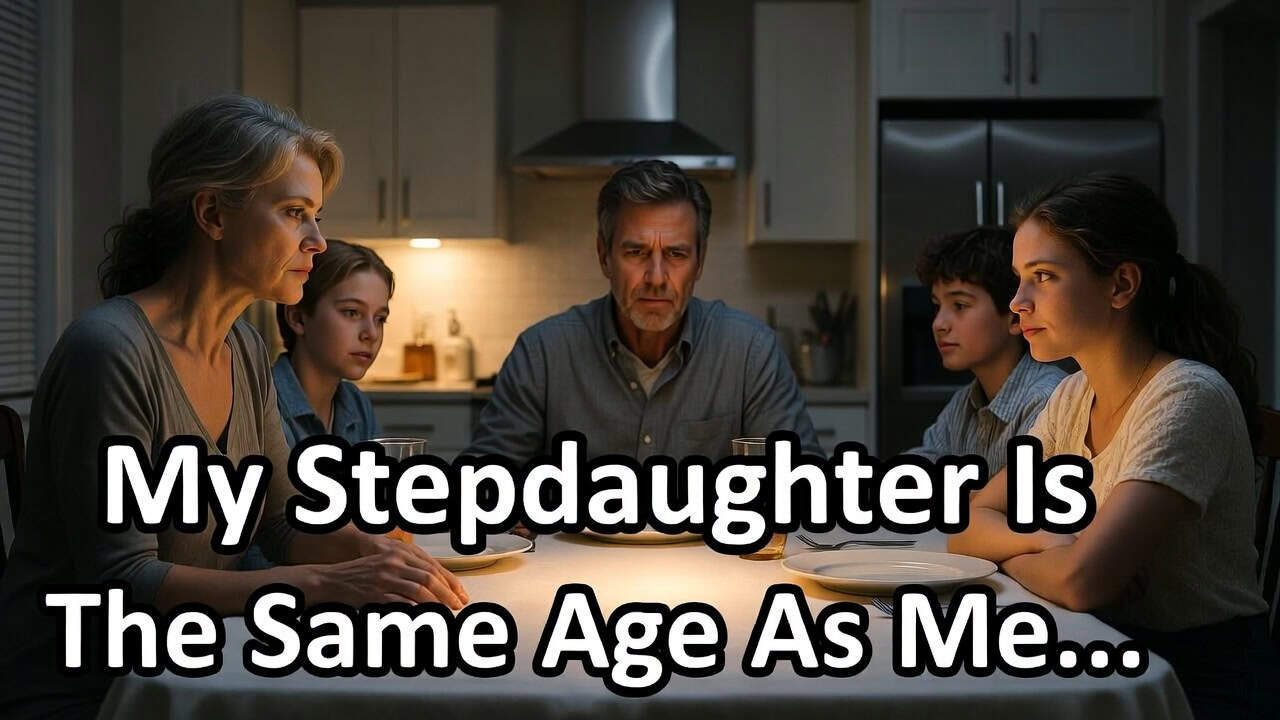
This uncomfortable dynamic requires iron-clad boundaries regarding peer parenting. The long-term viability of a wide gap frequently hinges entirely on the acceptance of—and friction with—the older partner’s adult children in a newly blended family structure. When a younger stepparent attempts to enforce boundaries or administer discipline on stepchildren who belong to their exact generation, the collision of disciplinary authority is incredibly jarring. You cannot effectively command respect from someone who legally and culturally evaluates you as a peer.
It can certainly work seamlessly. User d_satanica, 38, successfully blended families with her 51-year-old partner, smoothly integrating her 10-year-old son with his older children, who remain incredibly loving and accepting despite being a mere 9 to 13 years younger than her.
When boundaries fail, the structural weirdness is suffocating. In cnmiller0011’s relationship, her stepdaughter was exactly two months younger than she was. While they managed to get along, stepping into a family structure where you are chronologically identical to the children compounded an already abusive marriage to a man who refused to date anyone his own age.
Assessing equity versus exploitation
Navigating an age gap successfully requires abandoning the comfortable arithmetic. The societal formulas simply do not work. Math cannot measure respect.
You have to step back and take a ruthless inventory of the relationship’s emotional bandwidth. Is the older partner demanding uncritical obedience in exchange for financial security? Is the younger partner treating the older one like a perfectly constructed bank? Healthy, exceptionally mature matches exist vividly in the real world, but only when mutual respect actively outweighs chronological influence.
The numerical gap itself is rarely the toxic element. The unexamined reliance on traditional age-based assumptions and the stubborn refusal to establish structural equity is what destroys the bond. Keep your eyes open, evaluate the structural equity of your connection, and let the math sort itself out.
Frequently Asked Questions
Why doesn’t the ‘half your age plus seven’ rule work for predicting relationship success?
The famous math equation is fundamentally useless for predicting long-term stability. It gives outsiders a convenient formula to judge the social optics, but completely ignores the lived reality of the couple. Real compatibility requires navigating vast differences in core values, not just checking a box on a superficial cultural metric.
Is it common for the younger partner to financially support an older partner?
Surprisingly, yes. While the stereotype features a wealthy older man showering a younger woman with luxury, the daily reality often involves severe financial parasitism. Younger partners frequently bleed their own early-stage stability to prop up chronically broke, irresponsible older men who want an aesthetic upgrade without putting in the reciprocal work.
What is the ‘manager dynamic’ in age gap dating?
This happens when a younger partner is forced to act as an uncompensated life coach or mother to a fundamentally unhealed older partner. Many younger individuals forfeit their identity-building twenties to meticulously teach older partners basic communication, empathy, and accountability. Chronological age rarely guarantees emotional maturity, often leaving the younger partner doing massive emotional labor.
How can an older partner use ‘weaponized experience’ to manipulate you?
Toxic partners intentionally use their advanced age and perceived superior wisdom as a shield to disguise abusive, coercive control. They aggressively reframe isolation, jealousy, and possessiveness as a form of protection to systematically cut off their younger partner’s safety nets. This severe power imbalance grinds down defenses and frequently results in profound trauma like CPTSD.
What’s the difference between a harmless generational gap and a toxic mismatch?
Harmless friction involves benign lifestyle mismatches, like laughing at 1990s cultural touchstones because one partner was in preschool while the other was adulting. Frictions become fatal when couples begin intentionally ignoring massive voids in shared core values out of convenience. A healthy match requires mutual respect and life stage alignment to actively outweigh any chronological influence.
How does a large age disparity impact couples later in life?
Father Time eventually forces a brutal collision when one partner remains in their peak active years and the other enters steep cognitive or physical decline. This harsh mobility disparity naturally triggers severe caregiver fatigue and permanently alters the younger partner’s daily lifestyle. Anyone entering an extreme age gap has to have a ruthlessly honest conversation early on about who will eventually be pushing the wheelchair.
Can I successfully blend a family if my stepchildren are the exact same age as me?
It is structurally possible, but it creates a deeply uncomfortable socio-emotional reality that requires iron-clad boundaries. You must navigate the bizarre reality of peer-parenting individuals who are functionally your contemporaries. The long-term viability of the relationship often hinges entirely on the acceptance and friction between you and the older partner’s adult children.