Have you been looking at the same big luxury SUVs everyone else drives?
The 2026 Infiniti QX80 Sport deserves a closer look. I spent time testing this full-size luxury SUV, and it brings a distinct personality to a market dominated by the Cadillac Escalade and Lincoln Navigator.
It starts at $118,995, which undercuts many rivals by several thousand dollars.
What caught my attention first was that Dusk Blue leather interior. Those massaging front seats made my long highway runs noticeably less taxing. Under the hood sits a 450-horsepower twin-turbo V6 that moves this big vehicle with surprising quickness.
Tech isn’t an afterthought here. Dual 14.3-inch screens handle navigation and entertainment with Google integration built right in. The 24-speaker Klipsch audio system delivers sound quality I’d expect from a home theater, not a vehicle.
I’ve tested nearly every big luxury SUV on the market, from the BMW X7 to the Jeep Grand Wagoneer. The QX80 Sport has clear strengths. It also has some compromises, particularly if cargo space or fuel economy top your priority list.
Key Takeaways
According to Car and Driver testing, the QX80 Sport accelerates from 0 to 60 mph in 6.1 seconds, making it respectably quick for a full-size luxury SUV
The Sport trim starts at $118,995 Canadian and includes massaging front seats, semi-aniline leather, and a 24-speaker Klipsch Reference Premiere audio system with 1,200 watts of power
The new twin-turbo V6 delivers 450 horsepower and 516 lb-ft of torque, paired with a smooth nine-speed automatic transmission
Cargo space measures just 22 cubic feet behind the third row but expands to 101 cubic feet with rear seats folded
Fuel economy reaches 13.8 mpg combined with all-wheel drive, based on Natural Resources Canada estimates
Table of Contents
Pricing and Trims
The Sport trim sits right in the mix with rivals like the Cadillac Escalade and Mercedes-Benz GLS-Class. Starting at $118,995, it positions itself competitively in the full-size luxury SUV market.
Sport trim pricing compared to competitors
The Infiniti QX80 Sport starts at $118,995 not including destination. That’s $12,000 higher than the Luxe 4WD ($106,995) but undercuts the Autograph‘s $128,995 starting price by a significant margin. The additional charges of Freight & PDI $2,495, and there is the dreaded luxury tax and other provincial and federal taxes on top.
The Cadillac Escalade and Lincoln Navigator cost more for comparable trims. Both rivals add even steeper prices for extended wheelbase options, which aren’t offered on the QX80.
The Jeep Grand Wagoneer also creeps close to $120,000 fast with similar equipment. Even loaded with massaging front seats and ProPilot Assist tech features, the QX80 Sport manages to slip in as a relative bargain against these heavy hitters in the luxury SUV segment.
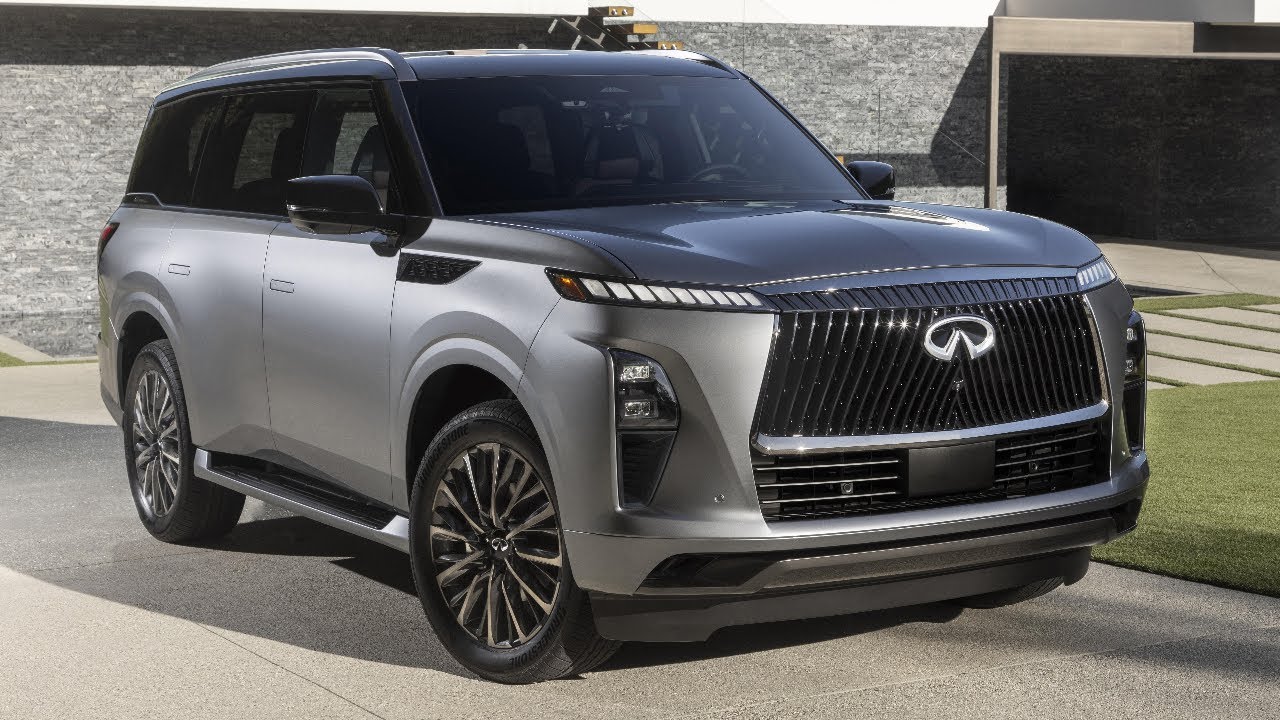
Value and features of the Sport trim
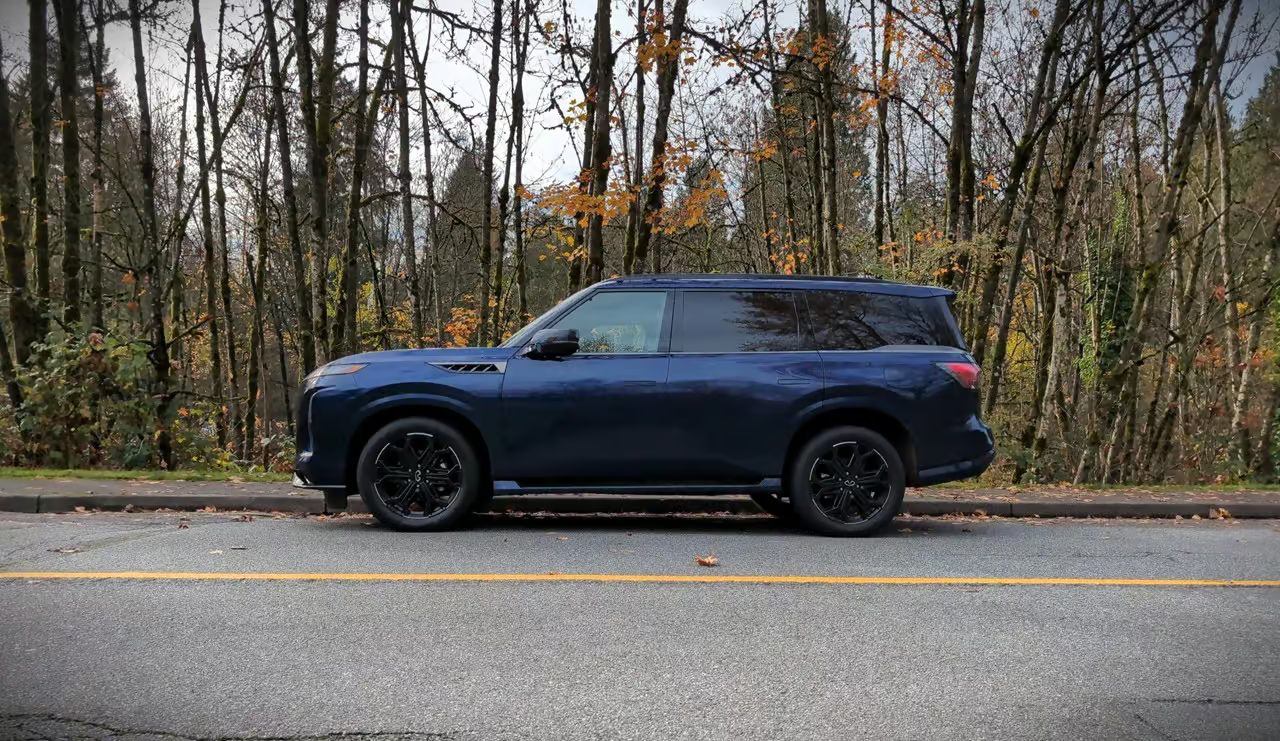
The Sport-tuned suspension handles corners with more grip than expected from a full-size luxury SUV this size. Dark chrome accents and 22-inch blacked-out wheels create attitude that stands out when parked next to a Cadillac Escalade or Mercedes-Benz GLS-Class.
High-grade semi-aniline leather seats come standard. Massaging front seats provide relief on long highway stretches, though the Sport trim doesn’t include massaging action in the second row like the Autograph does. According to MotorTrend’s interior review, the lack of the bulky second-row console actually improves cargo loading flexibility.
The tech feels dialed-in with dual 14.3-inch Monolith screens loaded with Google integration and wireless Apple CarPlay support. The 24-speaker Klipsch Reference audio system delivers 1,200 watts of power. According to Klipsch’s official specifications, this system features individual audio headrest speakers for the driver and front passenger.
Active noise cancellation, biometric cabin cooling technology, and all-around curtain airbags check nearly every modern feature box. Lane departure prevention systems and standard all-wheel drive complete the package. You miss a few luxuries found in the Autograph trim, such as the touchscreen control panel and cooled center console bin, but the Sport delivers strong value at its price point.

Engine, Transmission, and Performance
The nine-speed automatic transmission shifts smoothly and responds quickly. I pressed the accelerator, and the QX80 Sport delivered immediate power. All-wheel drive comes standard on this trim, keeping traction solid even when I pushed hard through corners.
3.5L twin-turbocharged V6 engine
This engine replaced the old V8 that powered previous QX80 models. Under the hood sits a 3.5-liter twin-turbocharged V6 pumping out 450 horsepower and a substantial 516 lb-ft of torque. That’s 50 more horses and 103 extra pound-feet compared to the outgoing V8.
Power delivery feels strong and immediate. I rarely noticed turbo lag during my testing. The engine pulls hard from low RPMs, which makes merging onto highways and passing slower traffic effortless.
According to Car and Driver’s testing, the QX80 sprints from 0 to 60 mph in 6.1 seconds. That’s impressive for a vehicle weighing over 6,100 pounds. The sound is more refined than the old V8, though it lacks some of that traditional big-engine character.
2026 Infiniti QX80 Fuel Consumption
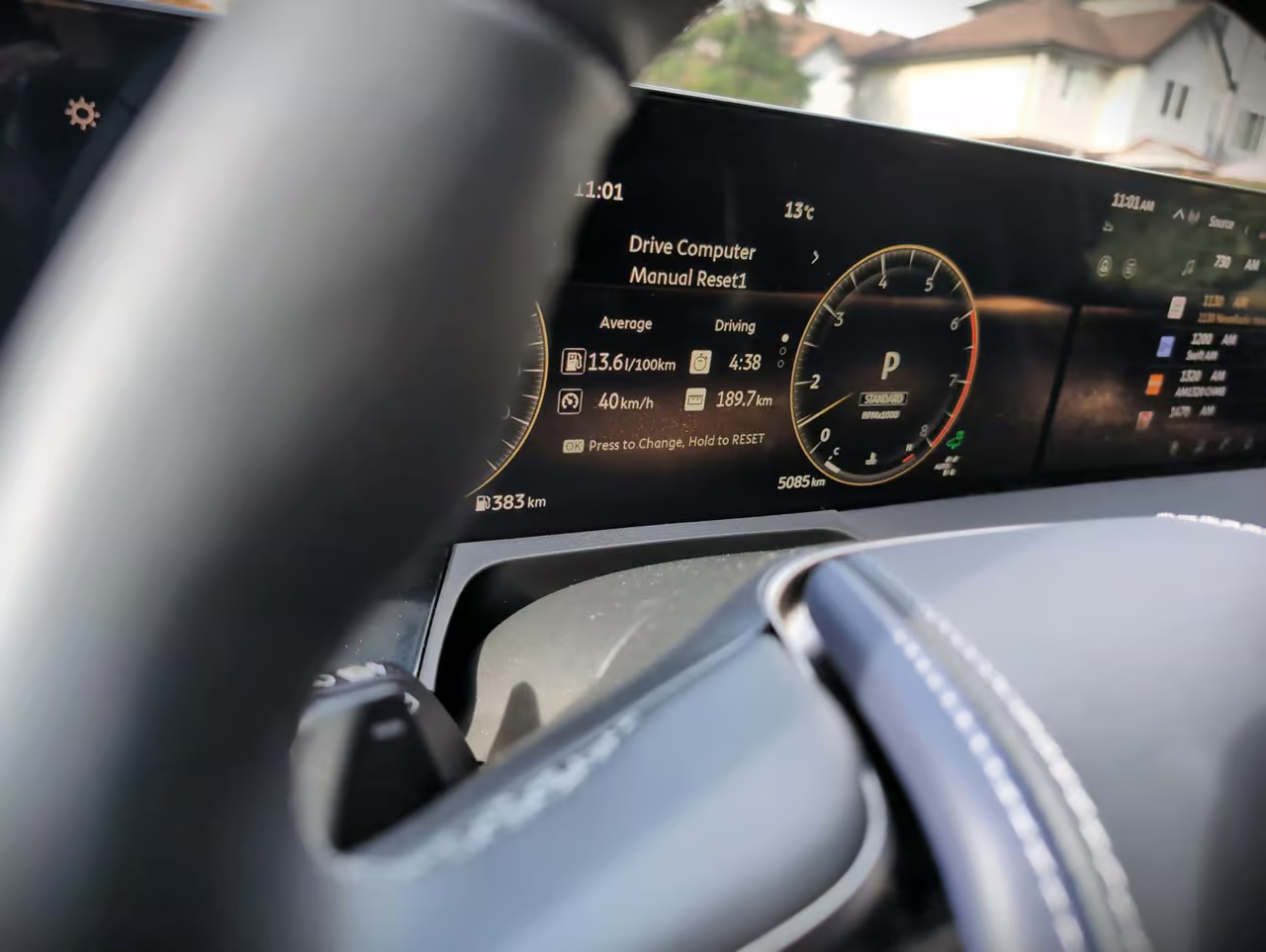
According to Natural Resources Canada (NRCan), the 2026 Infiniti QX80 AWD should consume 15.0 L/100 km in the city, 12.3 L/100 km on the highway, and 13.8 L/100 km combined. After driving it for a week, the onboard computer showed an average of 13.6 L/100 km in about 60/40 highway/city driving. I didn’t tow anything and most of the trips only included me or a couple of small children with me, I didn’t haul anything heavy in the trunk. If you do intend to tow/haul, expect these numbers to fall significantly.
450 horsepower and 516 lb-ft of torque
Those numbers translate to real-world performance. When I stomped on the gas, the QX80 Sport moved with authority. The surge pins you back in your seat, whether pulling onto the highway or cruising past slower vehicles.
The nine-speed automatic transmission manages all that power effectively. Shifts happen smoothly without jerks or delays. I never felt like I needed more power, even when the vehicle was fully loaded with passengers and gear.
This powertrain makes towing serious loads feel manageable. The QX80 can pull up to 8,500 pounds when properly equipped. That’s more than the Cadillac Escalade’s 8,200-pound maximum and slightly edges out the Lincoln Navigator’s rating, making it a solid choice for boat or trailer duty.
Smooth ride and confident power delivery
The adaptive air suspension does impressive work smoothing out bumps. Even potholes that would jar other SUVs felt like minor speed bumps in the QX80 Sport. Reviewers consistently rate the ride quality at 8 out of 10, and I’d agree with that assessment.
Sport mode tightens things up with adaptive dampers. I felt more control and less body roll when I pushed the vehicle harder through curves. It’s not a sports car, but for a full-size luxury SUV, the handling inspires confidence.
The twin-turbocharged V6 lays down power smoothly. I didn’t need to mash the pedal to get moving. Torque arrives early and stays strong throughout the rev range. The nine-speed automatic anticipates my needs well, downshifting when I need power and upshifting to keep things quiet on the highway.
City driving feels manageable despite the QX80’s size. The steering weighs just right, and the power delivery stays predictable. This isn’t a vehicle that feels clumsy or stressful in traffic.
Towing and Payload Capacity
Pulling a trailer with the Infiniti QX80 Sport feels solid and controlled. The SUV’s towing capability rivals full-size pickups, but you get luxury car comfort instead of truck-grade interior materials.
Impressive towing capabilities
The QX80 Sport can tow up to 8,500 pounds. That capacity beats the Cadillac Escalade’s 8,200-pound max and edges out many competitors in the full-size luxury SUV segment. According to Infiniti, it can handle trailers up to 33 feet in length, thanks to a frame that’s 57% stiffer laterally than the previous generation.
Every trim comes with an integrated Class IV tow hitch and seven-pin wiring harness. I didn’t need to add aftermarket equipment to start hauling. ALL-MODE 4WD with TOW MODE adds extra traction when conditions get challenging. Trailer sway control keeps things steady on rough roads, and hill start assist helps on steep boat ramps or driveways.
Features like Trailer Blind Spot Warning and Rear Zoom View provide visibility all the way to the end of your payload. The enhanced camera system gives a close-up view when hitching up, making what used to be a frustrating process much simpler.
Exterior Design
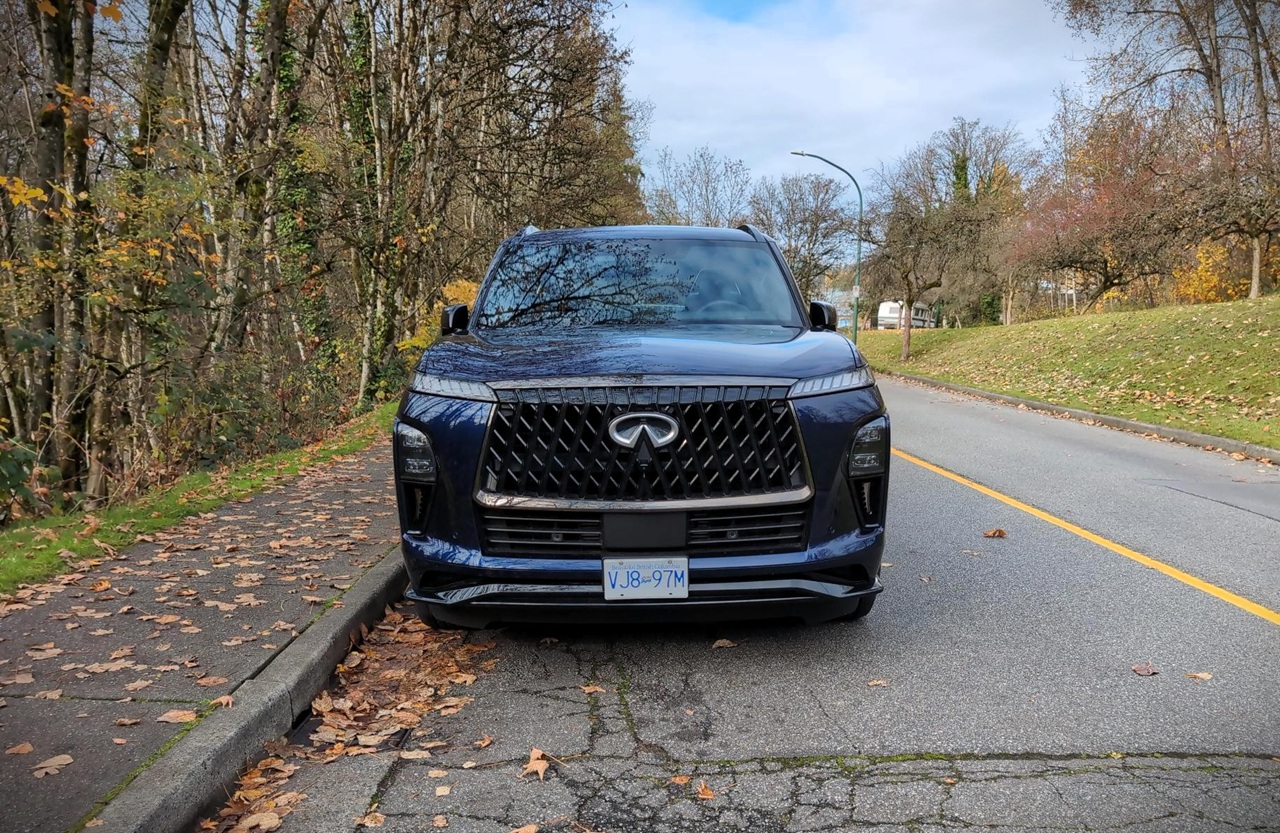
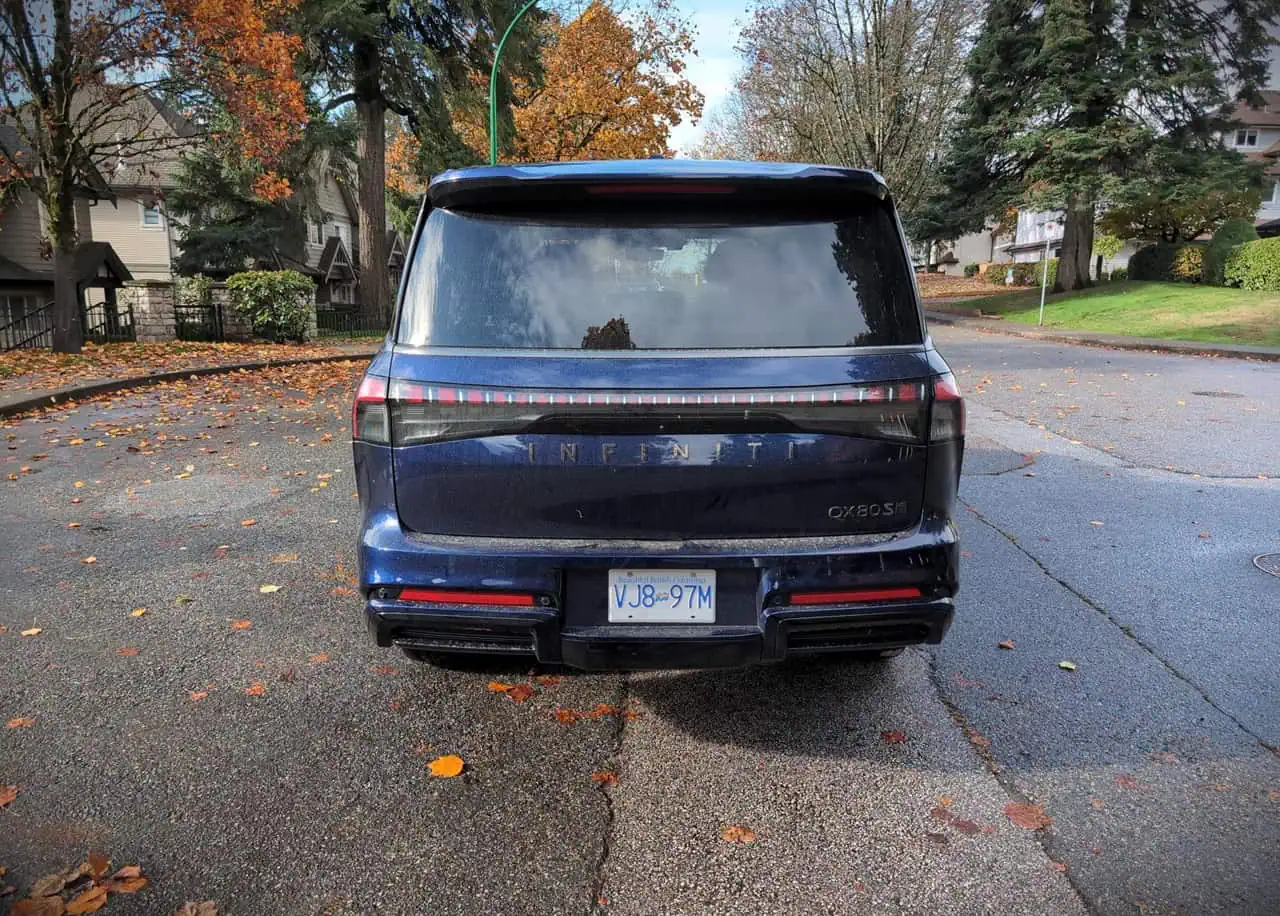
The QX80 Sport wears its attitude on the outside. Sharp body lines and dark chrome accents give this SUV a presence that turns heads at stoplights. I noticed people looking twice when I pulled into parking lots.
Updated styling and sharp lines
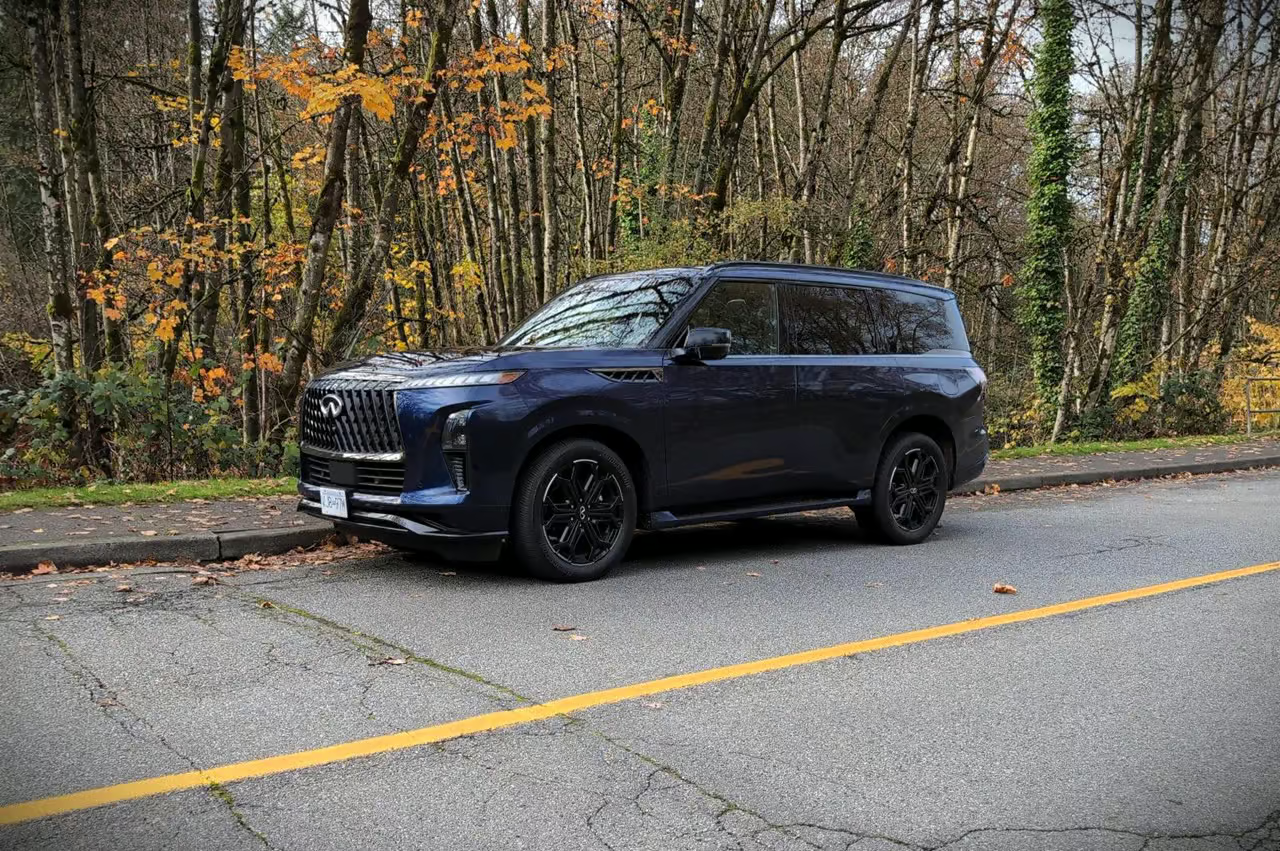
The 2026 model year brings a refreshed front end to the Sport trim. The crosshatched grille makes a bold statement. It’s flanked by LED headlights that illuminate the road effectively while keeping the look sleek.
Aggressive bumpers and darkened exterior elements create a cohesive appearance. The Sport gets unique 22-inch wheels finished in dark chrome. These aren’t just for show. They fill the wheel wells properly and complement the overall design.
At 211.2 inches long and over 6,100 pounds, this is a substantial vehicle. You feel the size when parking. The wide stance looks muscular, like this SUV is planted firmly on the road. Every line and curve contributes to a design that says “luxury SUV” without being flashy.
The Sport trim’s design hits that sweet spot between bold and tasteful.
Dusk Blue color scheme option
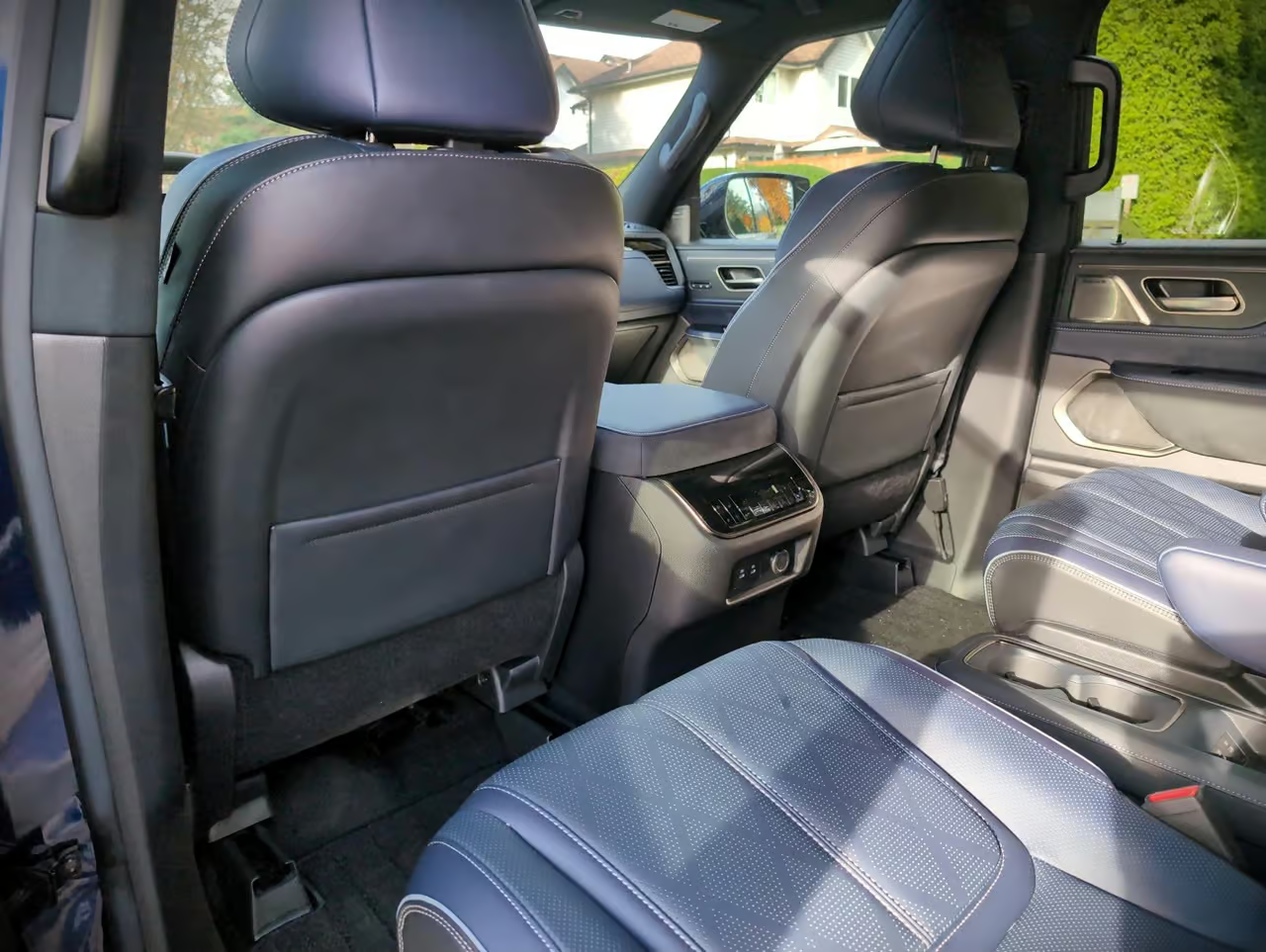
The Dusk Blue interior is exclusive to the Sport trim. You won’t find this color combination in the Autograph or Luxe models. The deep blue leather seats contrast beautifully with black accents and a graphite headliner overhead.
I ran my hands across these surfaces during my test. The semi-aniline leather feels premium to the touch. Dark chrome detailing shows up throughout the cabin, from door handles to air vents. It creates visual interest without feeling overdone.
Second-row captain’s chairs come finished in matching Dusk Blue leather. The open-pore wood trim adds warmth to the dark palette. Brown wood tones across the dashboard and doors balance the cooler blue shades nicely.
This color scheme gives the Sport trim a personality distinct from what you’ll find in a Lincoln Navigator or Mercedes-Benz GLS-Class. It’s a deliberate design choice that makes every ride feel special. The lack of that bulky second-row console found in the Autograph trim actually improves cargo loading.
Interior, Comfort, and Cargo
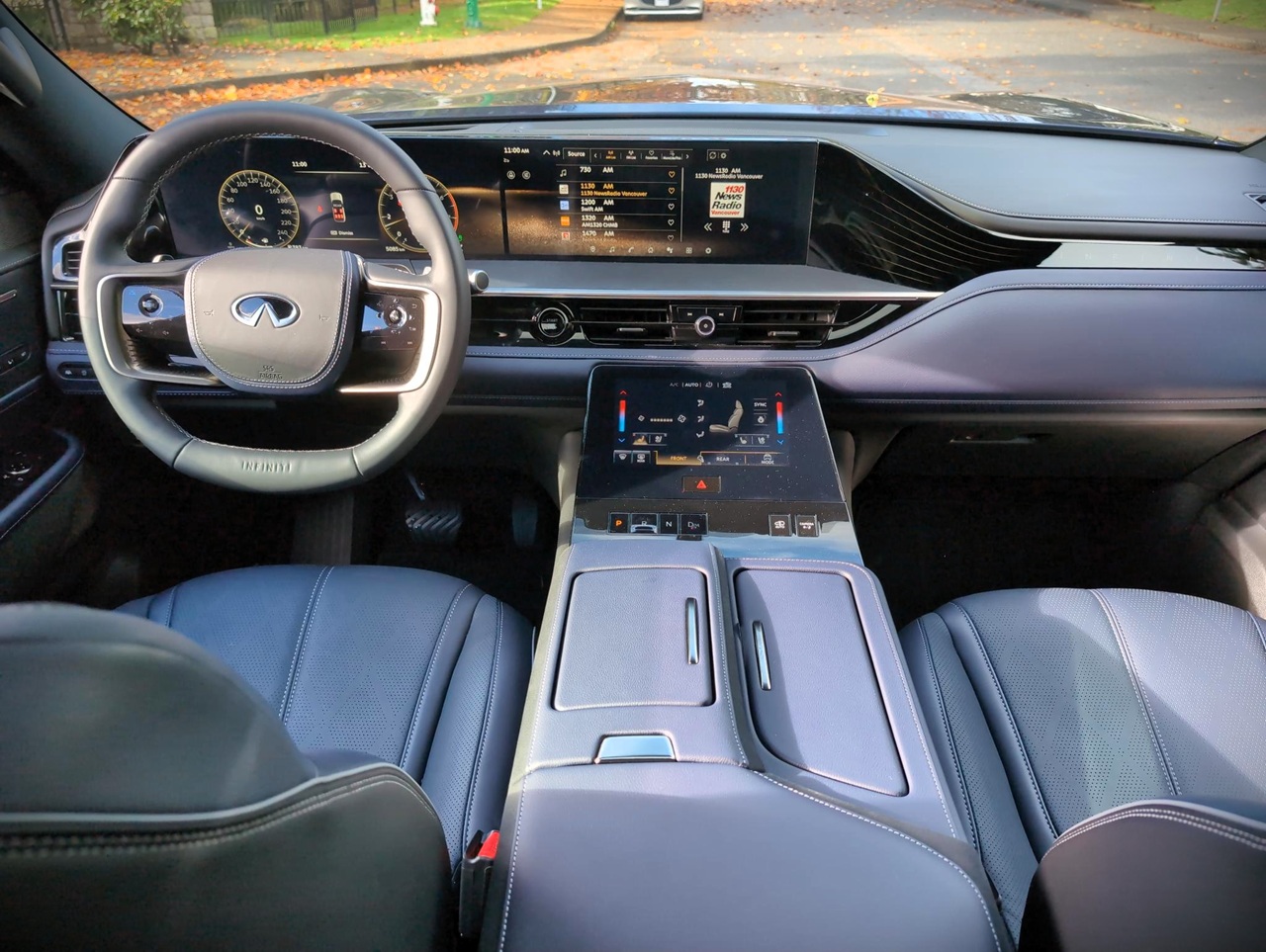
I sank into those massaging front seats and immediately noticed how quiet the cabin felt. The 24-speaker Klipsch system hummed softly in the background. Second-row captain’s chairs offer serious comfort, though cargo space behind the third row won’t win awards.
Luxurious materials and quiet cabin
Semi-aniline leather wraps the first and second rows. These seats feel high-class, with a suppleness that justifies the luxury SUV label. The Klipsch Reference Premiere audio system features 24 speakers and delivers 1,200 watts of power. I played a variety of music genres, and the system handled everything from classical to rock with crisp highs and deep bass.
Massaging front seats work out tension on long drives. I tested this feature on a 300-mile round trip, and it genuinely helped reduce back fatigue. The biometric cooling system monitors body temperature and adjusts airflow automatically. It’s a step beyond old-school climate control knobs.
Thick acoustic glass and extra padding keep outside noise where it belongs. I could hold normal conversations even on rough roads or in heavy traffic. The 64-color ambient lighting system lets me set the right mood for night driving or showing off to passengers.
Second-row and third-row seating comfort
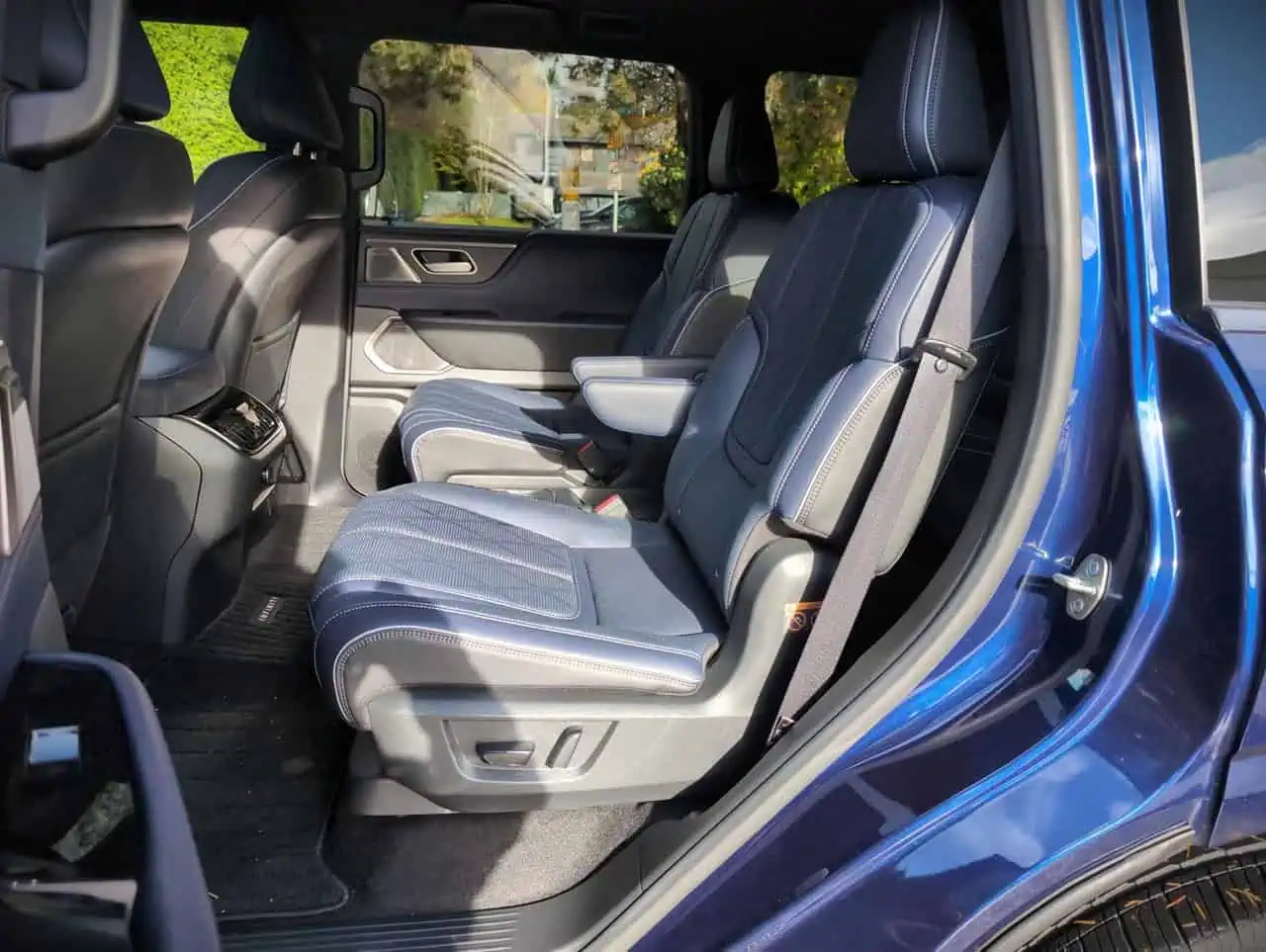
The second-row captain’s chairs turn this luxury SUV into something special. Choose the bench if you need eight seats. Pick the captain’s chairs for seven-seat comfort. Heated seating comes standard in both the first and second rows, which makes cold mornings much more bearable.
The Autograph trim adds massaging seats in row two. The Sport trim skips that feature, but the seats still provide excellent comfort. Tri-zone climate control keeps everyone happy regardless of where they sit.
Third-row seating actually accommodates adults comfortably. Most full-size SUVs cram people back there as an afterthought. The QX80 Sport offers real legroom and headroom thanks to smart space usage and good ride height. Power air suspension lowers for easy entry and exit, which helps when elderly parents or kids climb aboard after soccer practice.
According to multiple reviews, even full-size adults can sit in the third row without squishing knees or bumping heads. That’s rare in this segment.
Limited cargo space behind the third row
Fitting golf clubs or groceries behind the third row requires strategic packing. The cargo space measures just 22 cubic feet with all seats in place. That’s modest for such a big luxury SUV, though it beats the Ford Expedition/Lincoln Navigator‘s 19.3 cubic feet and Mercedes GLS’s 17.4 cubic feet. It falls short of the Chevy Tahoe/Cadillac Escalade’s 25.5 cubic feet.
Fold down both the second and third rows, and storage expands to a massive 101 cubic feet. That’s not an everyday configuration if you regularly haul friends or family. The Sport trim drops the bulky second-row console found in some models, making it easier to slide bigger items inside once those seats fold flat.
According to Autoblog’s luggage testing, the space behind the third row can hold seven carry-on bags. With the third row down, that number jumps significantly. Anyone who loves road trips with family or hauls lots of stuff should check cargo room carefully before falling for those massaging seats or flashy dual screens.
Infotainment and Connectivity
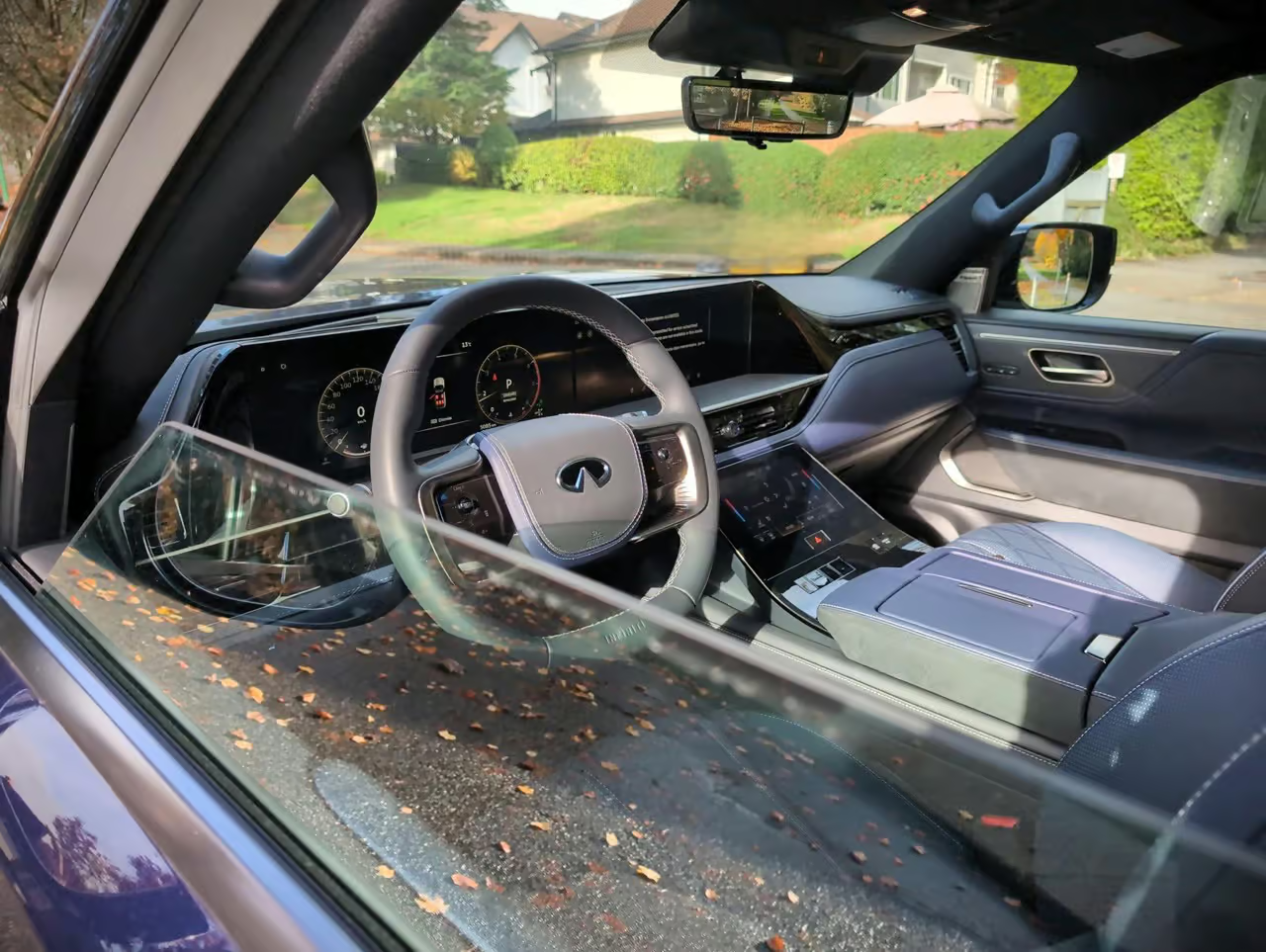
Two massive 14.3-inch Monolith screens dominate the dashboard. One serves as my digital gauge cluster, displaying speed, navigation, and vehicle info clearly. The other handles infotainment duties with Google already built in.
Dual 14.3″ Monolith screens with Google integration
Google Assistant responds to voice commands without fuss. I pulled up Google Play Store apps directly from the screen. The system runs fast and smooth, without the lag I’ve experienced in some other vehicles.
Wireless Apple CarPlay and Android Auto work seamlessly. I dropped my phone onto the wireless charging pad under the climate controls and connected without fumbling for cables. Eight USB-C ports scattered throughout the cabin keep everyone’s devices charged. No arguments over charging spots on long trips.
The integration with Google means real-time traffic updates and navigation that actually knows where I’m going. The maps update over-the-air, so I’m not stuck with outdated information. A third 9-inch touchscreen handles climate controls and drive mode settings, keeping those functions separate from the main infotainment screen.
ProPilot Assisting Tech features
The Sport trim includes ProPilot Assist 1.1 as standard. This pairs adaptive cruise control with lane-keeping features. It’s solid for long highway drives, though not perfect. According to Carscoops testing, the system sometimes drifts a bit or slips out of its lane if road markings get messy. On congested commutes, it reduces driving stress noticeably.
For more capability, ProPilot Assist 2.1 is available as an option on the Sport trim and comes standard on the Autograph. According to MotorTrend, the 2.1 system enables hands-free driving on over 115,000 miles of mapped highways across the lower 48 states when conditions allow. It uses 3D high-definition mapping to keep the vehicle centered in its lane and maintains a safe following distance.
The hands-free system operates on controlled-access divided highways. A blue interior light and dashboard icon signal when hands-off driving is possible. ProPilot Assist 2.1 even suggests lane changes to pass slower vehicles, though unlike GM’s Super Cruise, it doesn’t execute automatic lane changes.
Top-view cameras provide visibility everywhere with a sweeping 170-degree front camera and Invisible Hood View. Parking lots feel less stressful with these angles. The Journey Diary feature records video from both forward-facing and cabin cameras when needed, which is uncommon among competitors like the Cadillac Escalade or Mercedes-Benz GLS-Class.
Safety and Driver-Assistance Features
Forward collision warning, blind spot alerts, automatic emergency braking, and available ProPilot Assist 2.1 provide multiple layers of protection. I tested these features extensively, and they work as advertised.
Advanced safety technologies
Forward Collision Warning and Automatic Emergency Braking help me avoid fender benders. Lane Departure Warning keeps the QX80 Sport from drifting out of its lane, which I find particularly helpful on long trips when fatigue sets in.
Sensors, radar, and cameras work together constantly. The Around View Monitor gives me a 360-degree look at my surroundings, making parking stress-free even in tight spots. Adaptive Cruise Control handles stop-and-go traffic without jerky moves or surprise stops.
Airbags cover the driver and passengers comprehensively. Front airbags deploy in frontal crashes, while curtain airbags protect everyone in back. The system tracks blind spots so quick lane changes don’t catch me off guard. The 2026 QX80 earned a Top Safety Pick+ rating from the Insurance Institute for Highway Safety (IIHS), the highest distinction available.
Highlights of driver-assistance systems
ProPilot Assist 1.1 comes standard on the Sport trim. It helps with steering and maintains a safe distance from vehicles ahead. Automated emergency braking applies the brakes before situations get dangerous. Lane-keeping assist nudges me back if I drift close to the line.
Night drives feel safer with features like lane-departure warning and all-around monitoring. A vehicle security system with recording comes standard on the Sport trim, watching over the vehicle even when parked.
Roadside assistance runs 24/7 throughout the year. Trip interruption benefits help if things go wrong during travel across state lines or through rough weather. According to Infiniti, complimentary maintenance coverage lasts three years or 45,000 miles, whichever comes first. That includes oil changes and tire rotations without charging me extra.
Verdict
The Infiniti QX80 Sport delivers luxury, power, and distinctive style. Let me break down how it stacks up against the Cadillac Escalade and Lincoln Navigator based on real-world performance.
Final thoughts on performance, luxury, and competition
The new 3.5L twin-turbocharged V6 delivers strong performance with 450 hp and 516 lb-ft of torque. The nine-speed automatic keeps shifts smooth, making driving relaxed even with the vehicle’s size.
Towing heavy loads feels steady and controlled. The 8,500-pound capacity holds up well against rivals like the Cadillac Escalade or Jeep Grand Wagoneer when muscle matters.
Luxury shows up in every detail. Massaging front seats and second-row captain’s chairs create a premium environment. It stands tall as a full-size luxury SUV but trades some cargo space (22 cubic feet behind the third row) for cushy third-row seating and overall comfort.
In tech features, the Mercedes-Benz GLS and BMW X7 outshine it somewhat, especially around infotainment responsiveness and features like the invisible hood view found in competing brands. According to RepairPal data, the QX80 has a reliability rating of 3.5 out of 5.0, ranking it first among luxury full-size SUVs for dependability. The average annual repair cost is $718, which is reasonable for this segment.
The QX80 Sport cuts a bold figure on any road. It projects confidence without needing to shout for attention. Starting at $118,995, it undercuts many competitors while delivering solid equipment, making it worth serious consideration for anyone shopping in this segment.
2026 Infiniti QX80 Sport Review Photo Gallery
People Also Ask
What makes the Infiniti QX80 Sport different from other trim levels?
I really like that the Sport trim (which replaces the previous Sensory model) adds a moody, aggressive look with dark chrome accents and 22-inch dark alloy wheels. It also steps up the interior luxury significantly by including the 24-speaker Klipsch Reference Premiere audio system and massaging front seats as standard equipment.
How does the QX80 compare to rivals like the Cadillac Escalade and Lincoln Navigator?
While the Escalade and Navigator are strong competitors, I prefer the QX80 because it includes the Infiniti Premium Care plan, which covers oil changes and tire rotations for 3 years or 45,000 miles. That is significantly more generous than the complimentary maintenance you get from Cadillac or Jeep, which saves me money and hassle during the first few years of ownership.
What’s the fuel economy like on the 2026 QX80 Sport?
The new 3.5-liter twin-turbo V6 is more efficient than the old V8, delivering an EPA-estimated 16 MPG in the city and 19 MPG on the highway. That might sound modest, but it actually beats the Cadillac Escalade V8, which often struggles to hit 14 MPG in city driving.
Does the Sport trim come with wireless Apple CarPlay?
Yes, wireless Apple CarPlay and Android Auto are standard and look fantastic on the dual 14.3-inch Monolith screens. I also rely on the Invisible Hood View, which stitches together camera feeds to let you see “through” the engine bay, saving your rims from curbs in tight parking lots.
How’s the braking performance and safety equipment?
The braking is confident for a vehicle of this size, but the standout feature for me is the available ProPilot Assist 2.1. This system allows for hands-free driving on compatible freeways, which is a massive upgrade over the standard hands-on ProPilot Assist 1.1 found in lower trims.
What’s the towing capacity compared to the Wagoneer and Grand Wagoneer?
The QX80 Sport can tow up to 8,500 pounds, which is plenty for hauling a standard boat or travel trailer. While the Jeep Grand Wagoneer does boast a higher max rating of nearly 10,000 pounds, I find the Infiniti’s standard air suspension provides a much smoother ride when you are pulling a heavy load.
Reviews by Our Friends
- https://www.infinitiusa.com/vehicles/suvs/qx80/features/exterior.html
- https://theicct.org/sites/default/files/publications/PV_Tech_Trend_Engine_20180917.pdf
- https://www.motorwerksinfiniti.com/new-infiniti-qx80-model-research/
- https://www.motortrend.com/reviews/2026-infiniti-qx80-sport-interior-review (2025-12-31)
- https://www.infinitiusa.com/vehicles/suvs/qx80/features/interior.html
- https://www.infinitiusa.com/vehicles/suvs/qx80/features/connected-services.html
- https://www.infinitiusa.com/vehicles/suvs/qx80/features/driver-assistance.html
- https://www.infinitiofkearnymesa.com/blog/infiniti-qx80-sport-vs-autograph-trim-comparison/ (2025-12-16)
- https://www.infinitiofoceanside.com/blog/infiniti-qx80-luxe-vs-sport-trim-comparison/