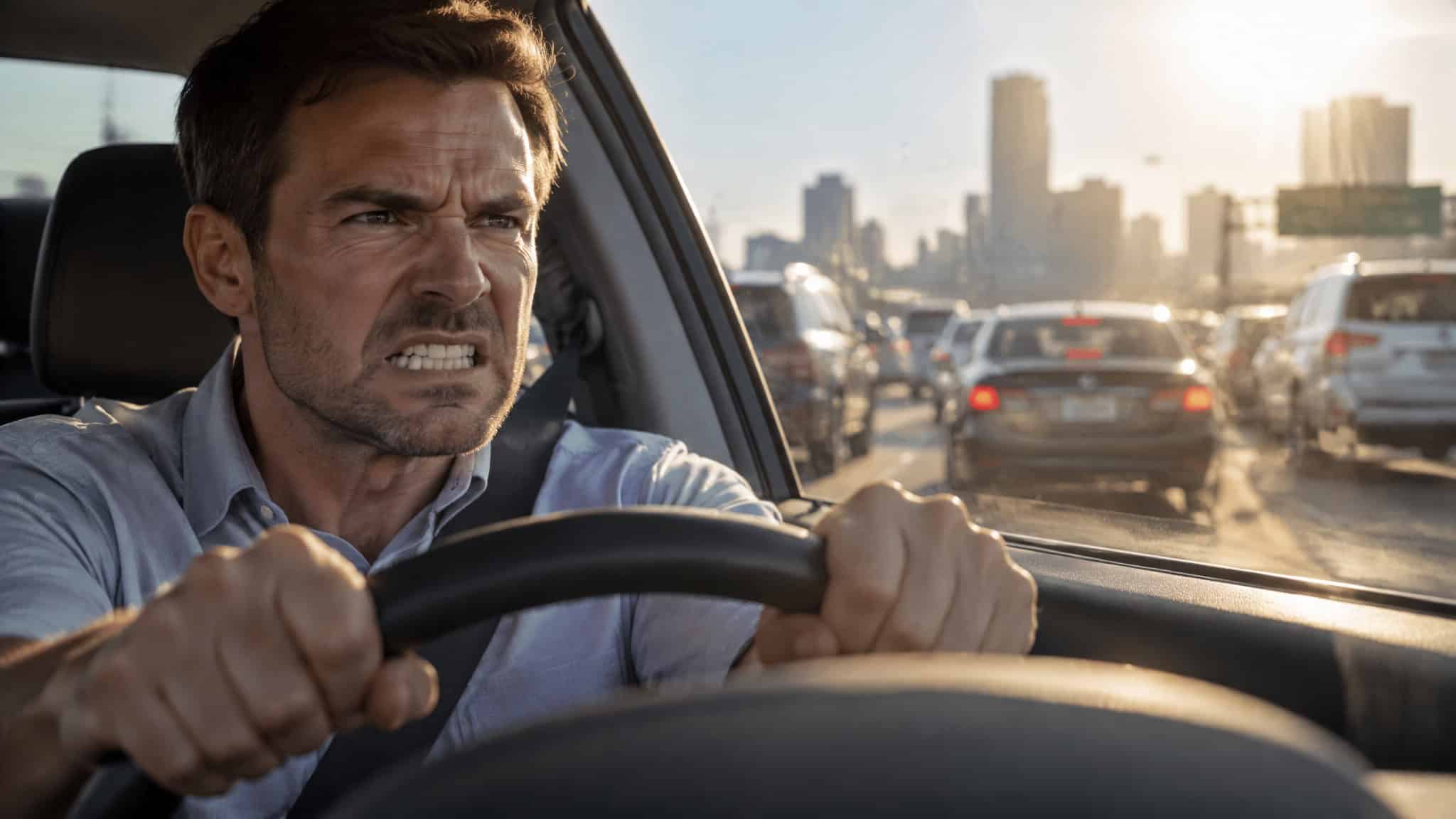
Road rage is caused by traceable, everyday triggers: situational pressure on the road, psychological insulation inside the car, and a driving culture that rewards aggression. Watch a normal guy lay on the horn and scream through a windshield at a slow merger, doing something he’d never try in a grocery line. In a November 20, 2024 Pew Research Center report by Drew DeSilver, 49% of Americans said people in their area drove more dangerously than before the coronavirus pandemic, while 9% said more safely. Looking past the deeper Bokito-effect territorial instincts, mapping these street-level triggers lets you spot your own habits.
Key Takeaways
Speeding and weaving through traffic saves the average commuter no more than one minute of driving time, according to LSU traffic engineering professor Dr. Brian Wolshon, while raising crash risk for everyone on the road.
Gun Violence Archive tracking shows reported gun-involved road rage incidents peaked in 2019 at 692, whereas casualty severity surged after 2020 and peaked in 2022 with 148 people killed and 421 injured.
Federal Motor Carrier Safety Administration guidance and medical experts trace road aggression to two practical layers: situational pressures like congestion and running late, and personal factors like cabin anonymity, ingrained driving habits, and carried-in stress.
Table of contents
Table of Contents
What road rage is, and where the law draws the line
Road rage is retaliatory, assaultive behavior by a motorist that crosses the legal line from bad driving into an intentional attack. It is triggered by daily stress, environmental pressures, and psychological factors, and the National Highway Traffic Safety Administration (NHTSA) defines it as an intentional assault by a driver or passenger with a motor vehicle or a weapon that occurs on the roadway or is precipitated by an incident on the roadway, though only a few U.S. states, most recently Utah, have passed a specific road rage law.
Everything short of that intentional attack falls under the broader category of aggressive or reckless driving. That bucket covers the dangerous habits that usually precede a confrontation: tailgating, improper lane changing, speeding, brake checking, and leaving the scene of an accident before law enforcement or medical personnel arrive.
Road rage is prosecuted as a criminal offense, though Pew analysis by Drew DeSilver notes that only a few US states, most recently Utah, have passed laws specifically defining and punishing it. Instead, prosecutors typically charge violent traffic incidents under broader assault or homicide statutes, which also makes clean incident data notoriously hard to track. Depending on the severity of the altercation and whether anyone gets hurt, LSU Police Department Chief Marshall Walters (as reported by the LSU Reveille) notes that legal penalties run from fines and court costs all the way to arrest and jail time.
Traffic congestion and running late: the triggers that feel justified
Aggressive driving is triggered primarily by traffic congestion, schedule pressure, and the stress of running late. Yes, running late and traffic congestion cause road rage when schedule pressure convinces a boxed-in driver to treat other motorists as obstacles and take risks behind the wheel. Sitting in heavy gridlock is the most universally cited catalyst for driver frustration, and the Federal Motor Carrier Safety Administration (FMCSA) specifically flags schedule pressure, traffic congestion, and stress as core factors that increase risk-taking behind the wheel, even though LSU traffic engineering professor Dr. Brian Wolshon found that aggressive driving saves the average commuter no more than one minute.
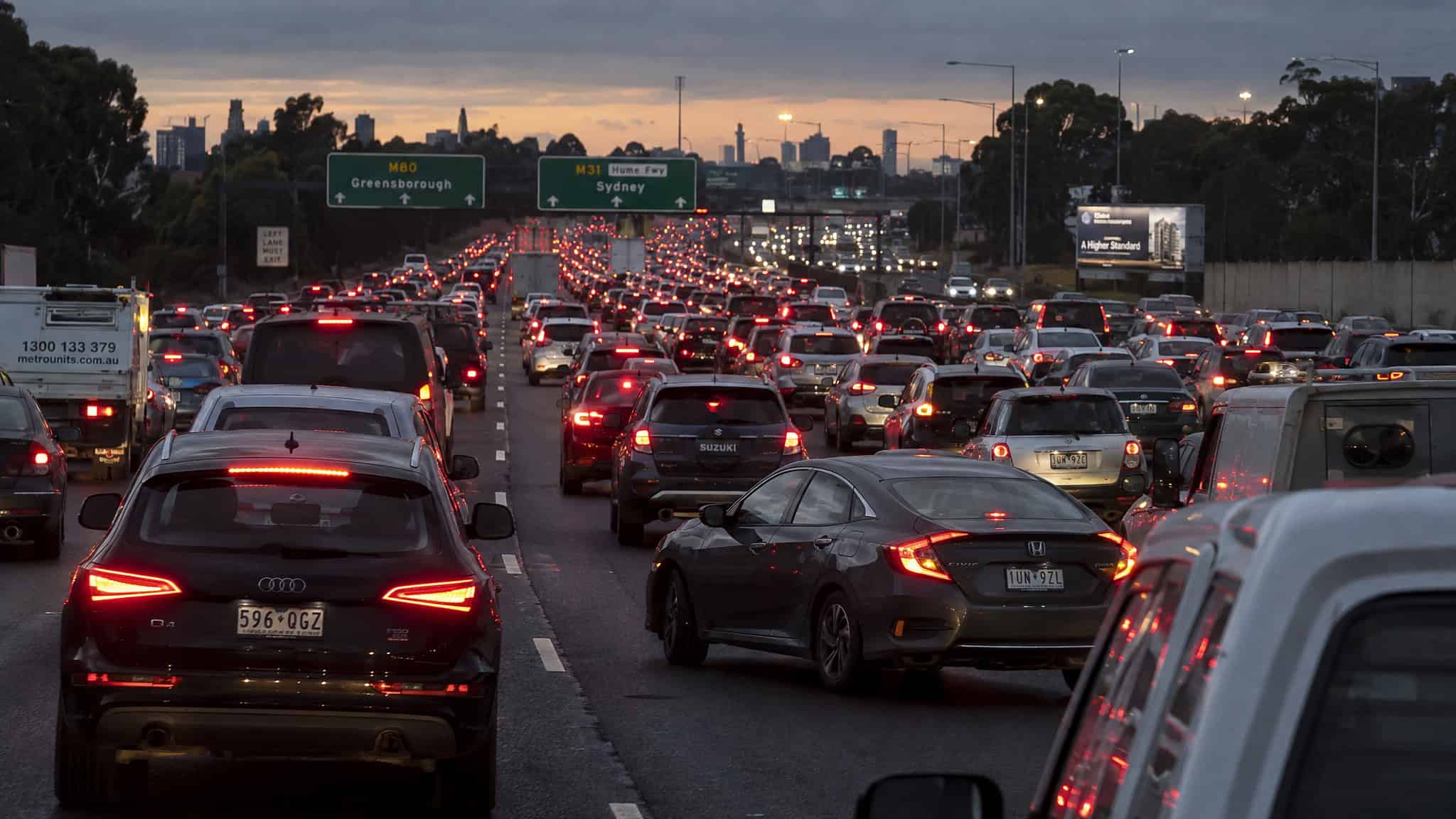
The everyday situational triggers that turn a normal commute sour are remarkably mundane:
- Heavy traffic congestion that boxes cars in and drains patience, as highlighted in TimesLIVE coverage and federal safety materials.
- Schedule pressure from running late, or simply feeling harried and overstretched before turning the key.
- Micro-delays, including waiting for a long traffic light to cycle or circling a crowded lot for a parking space.
- The sudden feeling of powerlessness when traffic stops moving and you can’t control your arrival time.
Watch how a guy drives when he’s ten minutes behind schedule. Every yellow light, slow merger, or delivery truck registers as a deliberate personal obstruction. The sense of powerlessness builds inside the cab, and traffic congestion quickly turns into tailgating, constant lane switching, and anger directed at anyone occupying the lane ahead. To claw back lost time, the harried driver starts speeding and cutting corners. Each small gamble feels rational in the moment because the clock is ticking.
The math kills that justification. When you pair aggressive driving with one minute saved at most on an average commute, the trade-off looks ridiculous. You’re trading elevated crash risk, spiked blood pressure, and potential criminal liability for sixty seconds you’ll probably lose at the next stoplight anyway.
The anonymity bubble and the power of the driver’s seat
Being in a car makes people angrier because the enclosed cabin creates an insulating psychological bubble of anonymity and mechanical power that strips away normal social consequences. In a coffee shop or an office hallway, bumping shoulders with a stranger ends with a quick apology because you’re standing face-to-face with another human being. Inside a vehicle, glass and steel separate you from everyone else.
Nobody in the next lane knows your name, so other motorists stop registering as people and start looking like anonymous obstacles in your path. That anonymity makes drivers far more likely to break traffic rules and act inconsiderately. At the same time, commanding a multi-ton machine gives some drivers a distinct sense of power behind the wheel, making them feel like they can do whatever they want. Put that anonymity and sense of power together in the same metal box, and a guy who’s polite in a checkout line will ride someone’s bumper at seventy miles an hour and wonder afterward why he acted completely out of character.
Temperament, habit, and the stress you carry into the car
The psychology of road rage is an interplay of primitive emotional wiring, ingrained driving habits, and lowered frustration tolerance from outside stress. Drivers frequently carry unresolved personal stress into the car that lowers their frustration tolerance, and a physician interviewed by WFAA describes road rage not as a technical driving failure or a clinical mental disorder, but as a primitive emotion that requires personal accountability and staying calm to tame.
The personal factors that turn road friction into aggression break down into four distinct patterns:
- A baseline temperament that is easily frustrated or quick to anger.
- A lower regard for traffic laws or for the safety of other people on the road.
- Automatic, ingrained driving habits that look hostile even when the driver isn’t actively angry.
- Unresolved personal stress and frustration carried in from life outside the vehicle.
Temperament and regard for others
Some drivers simply run hotter than others. According to the WFAA medical interview, people who are easily frustrated or quick to anger in daily life are naturally more prone to aggression once they get behind the wheel. The same goes for motorists who have a low baseline regard for rules or other people. When your default setting is impatience, a minor merge error from a stranger is enough to set off that primitive emotional wiring.
The habitual offenders
Aggressive behavior on the highway reveals a driver’s learned culprit typology and baseline temperament rather than a clinical diagnosis, separating hot-tempered motorists from habitual offenders who speed, tailgate, and weave on autopilot. As the WFAA physician points out, some of the worst offenders on the road aren’t driving out of active rage at all. It’s pure, ingrained habit. Using law-enforcement shorthand, the interview sorts this habitual aggressive driving and culprit typology by “MOS” (method of operation): the “lead foots,” the “tailgators,” and the guys who weave across lanes without ever touching a turn signal.
Because these drivers operate on autopilot, they don’t experience themselves as the aggressor. When another motorist honks back at them, they feel genuinely wronged rather than responsible.
Stress spillover
Yes, stress from work and home spills over into aggressive driving when pre-existing frustration lowers a driver’s frustration tolerance and turns the car into a release valve. While safety data tracks personal stress broadly rather than isolating specific workplace or domestic metrics, the mechanism is familiar to anyone with a rough job. When your frustration tolerance is already thinned out by stress spillover before you even pull out of the driveway, a slow driver in the left lane isn’t the real cause of the blowup. It’s just the last straw that makes an otherwise reasonable guy act completely out of character.
The expectation gap, and a culture that applauds aggression
Getting cut off or slowed down triggers road rage because drivers interpret ordinary traffic friction as a direct personal insult, a reaction fueled by what Dr. Brian Wolshon identifies as an expectation gap and reinforced by a culture that rewards getting an edge. We expect a smooth, convenient trip with zero trouble, whereas real traffic means sharing asphalt with people who have different plans, make mistakes, and aren’t always courteous. That perceived disrespect and expectation gap gets worse when driving culture treats bullying slower traffic or “making great time” as something to admire and laugh about.
How common is road rage, and why every statistic is filtered
Reported road rage incidents in the United States show a sharp divergence since the pandemic: total gun-involved incident counts peaked in 2019, but casualty severity surged starting in 2020. Because most driving metrics rely on police stops or firearm tracking, the Gun Violence Archive (GVA) recorded a peak of 692 gun-involved road rage incidents in 2019, whereas actual casualties climbed afterward and peaked in 2022 at 148 people killed and 421 injured.
What the data can and cannot see
As Pew Research Center’s November 20, 2024 analysis notes, there’s no single definitive data source for dangerous driving. Pew combined its survey with Centers for Disease Control and Prevention (CDC) death certificates, NHTSA’s Fatality and Injury Reporting System Tool, and GVA records, noting that law-enforcement-derived data carries built-in selection bias because arrests, citations, and accident reports only count the drivers who got caught.
NHTSA logs every fatal crash across all 50 states and the District of Columbia, while its injury-only and property-damage-only figures come from a nationally representative probability sample of police-reported crashes. Meanwhile, GVA (a nonprofit tracking gun violence since 2014 across more than 7,500 sources and coding over 100 variables per incident) only logs road rage cases since 2015 where a gun was brandished or fired, leaving the non-gun majority invisible.
Incidents peaked in 2019, casualties peaked in 2022
Tracking gun-involved road rage and casualty severity shows that while reported GVA incidents peaked in 2019, the human toll jumped in 2020, peaked in 2022, and ebbed slightly in 2023. Through the first 10 months of 2024 (as of October 2024), GVA logged 116 deaths and 302 injuries, compared with 109 deaths and 320 injuries during the same January-to-October window in 2023. At the state level, ConsumerAffairs ranked Louisiana first in the nation for road rage-involved incidents, with nearly 60% of its fatal motor vehicle wrecks tied to aggressive or careless driving.
How a minor trigger escalates: the Emmarentia sequence
Yes, the consequences of road rage reach criminal prosecution or death when drivers exit their vehicles or introduce weapons instead of disengaging after minor traffic contact. A fatal case in Emmarentia, South Africa, reported by TimesLIVE and Gauteng police spokesperson Col. Dimakatso Nevhuhulwi, shows how fast the ladder climbs.
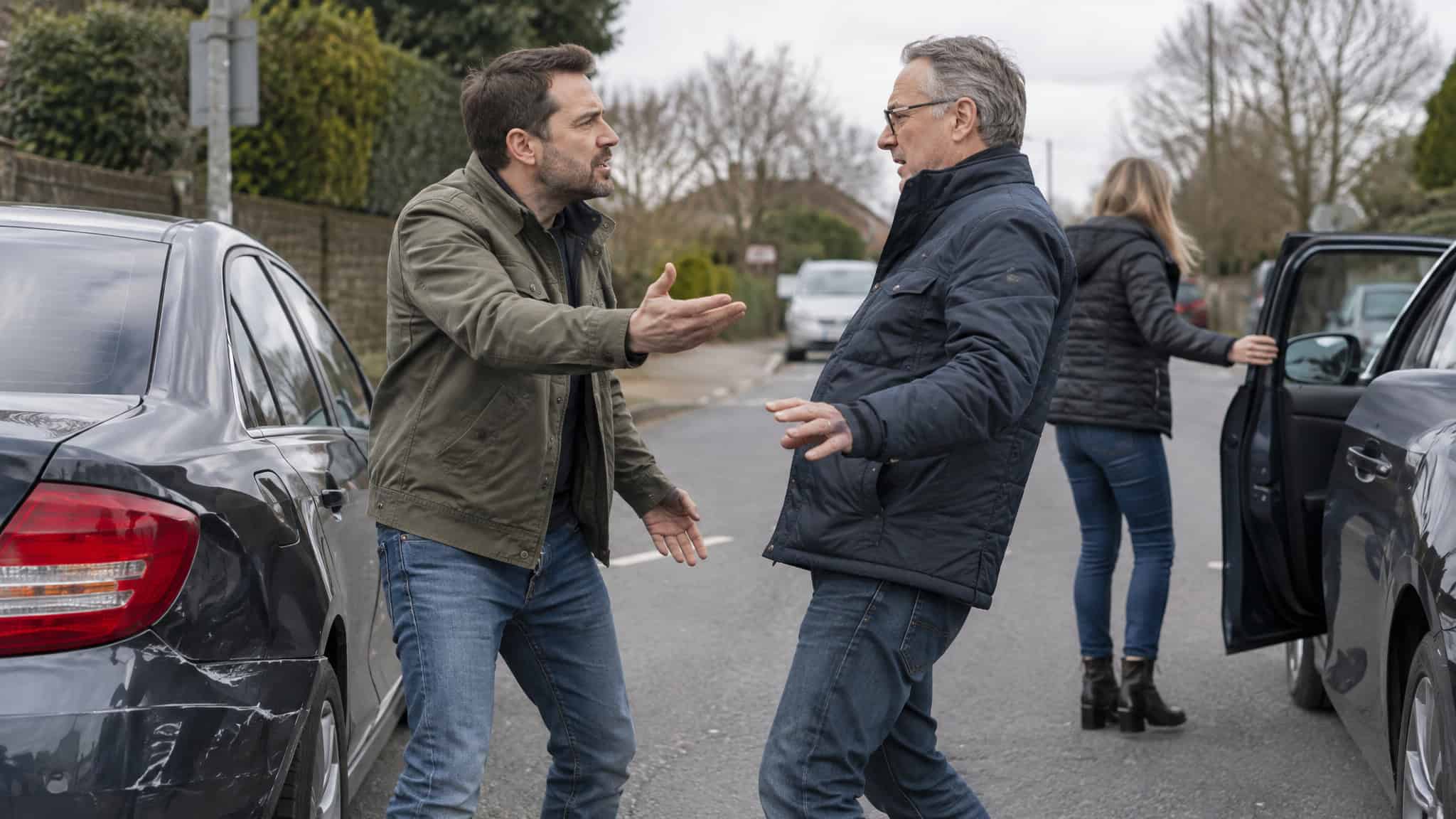
It started with a minor “bumper-bashing” collision. Instead of swapping insurance details, the two motorists got into a verbal argument. The argument turned into a fistfight, and the fistfight escalated into a fatal gun confrontation right in front of two young children. According to police allegations, both drivers drew firearms after a woman believed to be one driver’s wife allegedly grabbed a gun from one of the vehicles. One man died at the scene, and police arrested a 58-year-old man scheduled to appear in the Johannesburg magistrate’s court.
Every step in that chain had an exit ramp. To de-escalate when an aggressive driver targets you, LSU Police Chief Marshall Walters advises a strict de-escalation protocol: stay inside your vehicle, avoid eye contact, create physical distance if you can, and call police immediately with your location and a description of the situation. Col. Nevhuhulwi’s baseline rule is even simpler: obey traffic laws and exercise patience on public roads.
The stakes: what the crash data says, and where perception points the wrong way
Yes, driving in the United States became more deadly after the pandemic began, when fatal crashes involving alcohol impairment, speeding, and hit-and-run drivers climbed over pre-pandemic baselines. While over 70% of all U.S. crashes in 2022 were property-damage-only and under 1% were fatal, CDC death certificate data analyzed by Pew shows that just over 46,000 people died in U.S. motor vehicle crashes in 2022, pushing the age-adjusted death rate to 13.3 per 100,000 people.
Motor vehicle fatalities and state divergence
That 13.3 per 100,000 death rate in 2022 was up from 11.5 in 2019, down slightly from 13.8 in 2021, and still below the 2002 peak of 15.7. Between 2019 and 2022, Arizona (reaching 17.8 per 100,000, up 4.8 points) and New Mexico (reaching 23.4 per 100,000, up 4.0 points) recorded the largest state-level jumps.
The distraction paradox
In the November 2024 Pew survey, 78% of Americans called cellphone distraction a major problem in their community. Yet NHTSA data shows driver distraction was a factor in 11.0% of all crashes in 2022, down from 14.6% in 2019 (7.8% of fatal, 11.9% of injury-only, and 10.7% of property-damage-only crashes in 2022, with distraction injury crashes falling 31% and property-damage crashes falling 35% from 2019 to 2022, while annual distraction fatalities stayed between 2,600 and 3,300 since at least 2010). Cellphone use accounted for 12.1% of fatal distraction crashes in 2022 (down from 13.8% in 2019 and 14.2% in 2016), though it rose in non-fatal distraction wrecks to 9.5% of injury crashes (up from 7.2% in 2019) and 9.6% of property-damage crashes (up from 5.8%).
Impairment, speeding, and hit-and-run trends
The real post-2019 spikes hit elsewhere. Alcohol-impaired driving (blood alcohol content of 0.08% or higher) reversed a decade-long decline to reach 31.3% of fatal crashes in 2022 (up from 27.7% in 2019), killing 13,524 people (up 32.6% over 2019) and making up 31.8% of all crash deaths, the highest share since at least 2008; 1,563 surviving drivers in 2022 fatal wrecks were charged with DUI (up 18.7% over 2019), while many impaired drivers died in their own crashes without facing court.
Speeding factored into 27.8% of fatal crashes in 2022 (up 2 points from 2019, down from 2020’s post-2013 peak of 28.6%), 12.0% of injury-only crashes (versus 11.5% in 2019 and 21.4% in 2009), and about 8% of property-damage crashes (under half the 2009 share). Meanwhile, hit-and-run drivers were in 14.5% of all 2022 crashes (up from 12.1% in 2019), with the hit-and-run share and crash severity moving in opposite directions: fatal shares rose (7.3% versus 5.9% in 2019) and property-damage shares rose (15.8% versus 11.9%), while injury-only shares fell (11.4% versus 12.6%). Across all 2022 fatal crashes, only 4.9% of drivers were charged with NHTSA-defined “reckless/careless/hit-and-run” offenses, a figure barely changed since 2010.
Which of these causes shows up in your driving
Drivers can avoid road rage before it starts by practicing patience, building extra travel time into their commute to loosen tensions on the road, obeying traffic laws, and treating the road as a shared space with pedestrians, cyclists, buses, and other motorists. Because traffic delays, congestion, and running late are the primary triggers for tailgating and speeding, leaving early cuts off the schedule pressure that fuels aggressive driving. When you accept Dr. Wolshon’s finding that speeding and lane-weaving save the average commuter no more than a single minute, the urge to punish a slow merger loses its logic.
A practical way to check your own driving is to group the causes cited by physicians, traffic engineers, and safety agencies into two layers. First, check your situational pressures: are you constantly running five minutes late, letting schedule stress build, or treating heavy congestion like a personal trap? Second, look at the personal factors you bring into the cab: a quick temper, automatic lead-foot or tailgating habits, the false invincibility of cabin anonymity, or the expectation that a public road owes you a friction-free trip.
You share the street with buses, cyclists, pedestrians, and people having a worse day than you. After another motorist attacked her car during her Baton Rouge commute, LSU freshman Ellie Hardie summed up the only daily habit that keeps you out of trouble: follow the traffic laws and refuse to give in to road rage, because you’re the only person on the road you can rely on to drive responsibly.
Frequently Asked Questions
What does road rage say about a person?
Highway aggression exposes a driver’s baseline temperament, stress load, and learned driving habits rather than a clinical diagnosis. Some drivers simply have a low tolerance for frustration or little regard for rules, while habitual offenders—the classic lead foots, tailgaters, and lane weavers—operate on autopilot without even feeling angry. Often, a blowup just means someone carried unresolved stress from work or home into the car and let a minor traffic delay become the final straw.
Why does being in a car make people angrier?
An enclosed car cabin wraps you in glass and steel, creating a psychological bubble of anonymity and mechanical power that strips away normal face-to-face accountability. Because nobody in the next lane knows who you are, other motorists stop registering as human beings and start looking like nameless obstacles blocking your path. Commanding a multi-ton machine also inflates your sense of control, making it easy to ride someone’s bumper in a way you would never act in a grocery checkout line.
Does running late or traffic congestion cause road rage?
Yes, heavy gridlock and schedule pressure are the most common everyday catalysts for aggressive driving. When you are boxed in and ten minutes behind schedule, a sense of powerlessness builds up and makes every yellow light or slow merger feel like a personal obstruction. Drivers start speeding and weaving to claw back lost time, even though LSU traffic engineering professor Dr. Brian Wolshon found those gambles save no more than one minute on an average commute.
What’s the difference between aggressive driving and road rage?
The legal line comes down to intent to harm. Aggressive or reckless driving covers dangerous traffic offenses that often precede a fight, such as speeding, tailgating, brake checking, and weaving without a signal. Road rage happens when that frustration crosses into a retaliatory assault, which the National Highway Traffic Safety Administration defines as an intentional attack by a motorist or passenger using a vehicle or a weapon.