Road rage statistics confirm that bad behavior on the commute is nearly universal and getting more dangerous: 96% of drivers admitted to aggressive actions behind the wheel in the September 2025 update from the AAA Foundation for Traffic Safety, aggressive driving factored into roughly two-thirds of crash deaths according to the National Highway Traffic Safety Administration (NHTSA), and people shot in recorded road rage incidents rose over 400% between 2014 and 2023 in an analysis of Gun Violence Archive (GVA) data, with dataset records also published through The Trace‘s gun violence data hub. Because each figure comes from a different collection method with its own definitions and reporting limits, you have to separate everyday traffic violations from criminal assaults to read your actual risk.
Key Takeaways
The AAA Foundation for Traffic Safety’s September 2025 update found 96% of surveyed drivers admitted to risky aggressive driving in the previous year, up from nearly 8 in 10 in its July 2016 study, while 11% admitted to violent acts like confronting a driver or intentionally bumping a car.
NHTSA estimates that aggressive driving contributes to roughly two-thirds of all crash deaths, a fatality share driven by traffic offenses like speeding and tailgating rather than criminal road rage assaults.
Gun Violence Archive records from 2014 through 2023 show people shot in road rage incidents jumped over 400%, from 92 to 481 per year, totaling 3,095 people shot and 777 killed over the decade.
Table of contents
Table of Contents
Aggressive driving vs. road rage: the line that matters
NHTSA separates aggressive driving from road rage by drawing a legal and behavioral line between risky traffic violations and intentional criminal assault. Under NHTSA’s framework, cited via Crime Stats Daily, aggressive driving covers dangerous moving offenses that put people at risk: speeding, tailgating, unsafe lane changes, and running red lights, along with cutting motorists off, improper honking, flashing headlights, obscene gestures, and swerving. Road rage, by contrast, is a deliberate physical attack carried out by a motorist or passenger with a vehicle or a weapon, either unfolding directly on the road or sparked by a traffic dispute.
A guy riding your bumper is driving aggressively. A guy trying to run you off the shoulder or pulling a gun over a bad merge has crossed into road rage, which can end in physical altercations, property damage, serious injuries, or death. That boundary controls how you read the numbers: NHTSA’s two-thirds crash-fatality figure belongs to the broader aggressive-driving category, not criminal road rage.
How common is road rage? The numbers, 2016 to 2025
The AAA Foundation for Traffic Safety is the primary source showing that 96% of drivers engaged in aggressive driving over the past year, a figure that reflects a steep decline in road courtesy, respect, and safety across a nine-year research span from 2016 to 2025 where respondents admitted to risky acts like speeding or cutting off other vehicles. AAA’s research on aggressive driving and road rage spans nine years: the major study the AAA Foundation published in September 2025 is an update to a study AAA released in July 2016 (period: 2016 to 2025). Across those two waves, self-reported aggression climbed from roughly 80% of drivers to nearly everyone on the road.
In the July 2016 study, which was fielded in 2014 among 2,699 licensed U.S. drivers ages 16 and older who had driven in the past 30 days and reported by CBS New York and The Associated Press on July 14, 2016, nearly 8 out of 10 drivers admitted showing anger, hostility, or outright road rage on at least one occasion over the prior 12 months. Those behaviors included following too closely, yelling, cutting people off, and making angry gestures.
When the foundation returned with its September 2025 Traffic Safety Culture Index, surveying a representative sample of about 3,020 licensed drivers ages 16 and older who had driven in the previous 30 days (cited by WBAL-TV 11 Baltimore), 96% reported aggressive actions that put others at risk. Within that same 2025 sample, 11% of drivers admitted to outright violent actions, including intentionally bumping another car or exiting their vehicle to confront another driver.
Every percentage in both waves relies on drivers telling on themselves. As AAA spokesperson Tamra Johnson pointed out to CBS New York, she was surprised by how often these behaviors occur, and because drivers tend to under-report their own bad habits behind the wheel, those survey numbers are a floor rather than a ceiling.
What drivers admit to: the behavior breakdown
AAA’s survey waves show that half of drivers admit to routine hostility like tailgating and yelling, while a smaller violent tail crosses into ramming and street confrontations.
| Behavior | 2016 AAA Survey | 2025 AAA Update |
|---|---|---|
| Purposely tailgating | 51% | 51% (39% to force speed-up/move over) |
| Yelling at another driver | 47% | 47% (39% in narrower self-report) |
| Blocking lane changes | 25% | 28% |
| Deliberately cutting off a vehicle | Nearly 12% | 20% (1 in 5 drivers) |
| Honking at other drivers | 45% (any honking) | 66% (out of anger/annoyance) |
Note: Honking question wording changed between waves and is not a direct jump.
The everyday majority: tailgating, yelling, honking
In 2025, 37% also made an angry gesture, and commuter Stacy Bertolino described watching a driver cut across three lanes that morning just to make an exit, a move that routinely sparks retaliatory counter-moves.
The violent tail: confrontation, bumping, ramming
Among the 11% admitting violence in 2025, 6% exited their vehicle to confront a driver and 3% deliberately bumped or rammed a car, a tier extrapolated in 2016 to roughly 8 million U.S. drivers and illustrated by a driver with a car full of kids pulling in front, screaming obscenities out the window, and ramming the victim’s car.
How many accidents are caused by road rage?
No, NHTSA does not attribute a specific total accident count to criminal road rage, except to estimate that broader aggressive driving is involved in roughly two-thirds (66%) of all crash deaths. That two-thirds figure, reported via CBS2‘s Ali Bauman, measures fatal crashes tied to moving traffic aggression rather than total non-fatal fender-benders or intentional criminal assaults.
Routine traffic aggression is the primary killer on the highway because habits like speeding, tailgating, and weaving through lanes strip away the margin for error at 70 miles per hour. You don’t need a guy with a tire iron to end up in a fatal wreck when one in five drivers is deliberately cutting off traffic. Drivers feel that exposure every time they merge: in AAA’s 2016 survey, 90% of respondents viewed aggressive driving as a serious threat to their personal safety.
Road rage shootings: the 400% rise, with caveats
The jump from angry horn-blowing to gunfire is the sharpest trend in modern traffic data, though tracking it requires looking closely at how the numbers are gathered.
People shot in road rage, 2014 to 2023
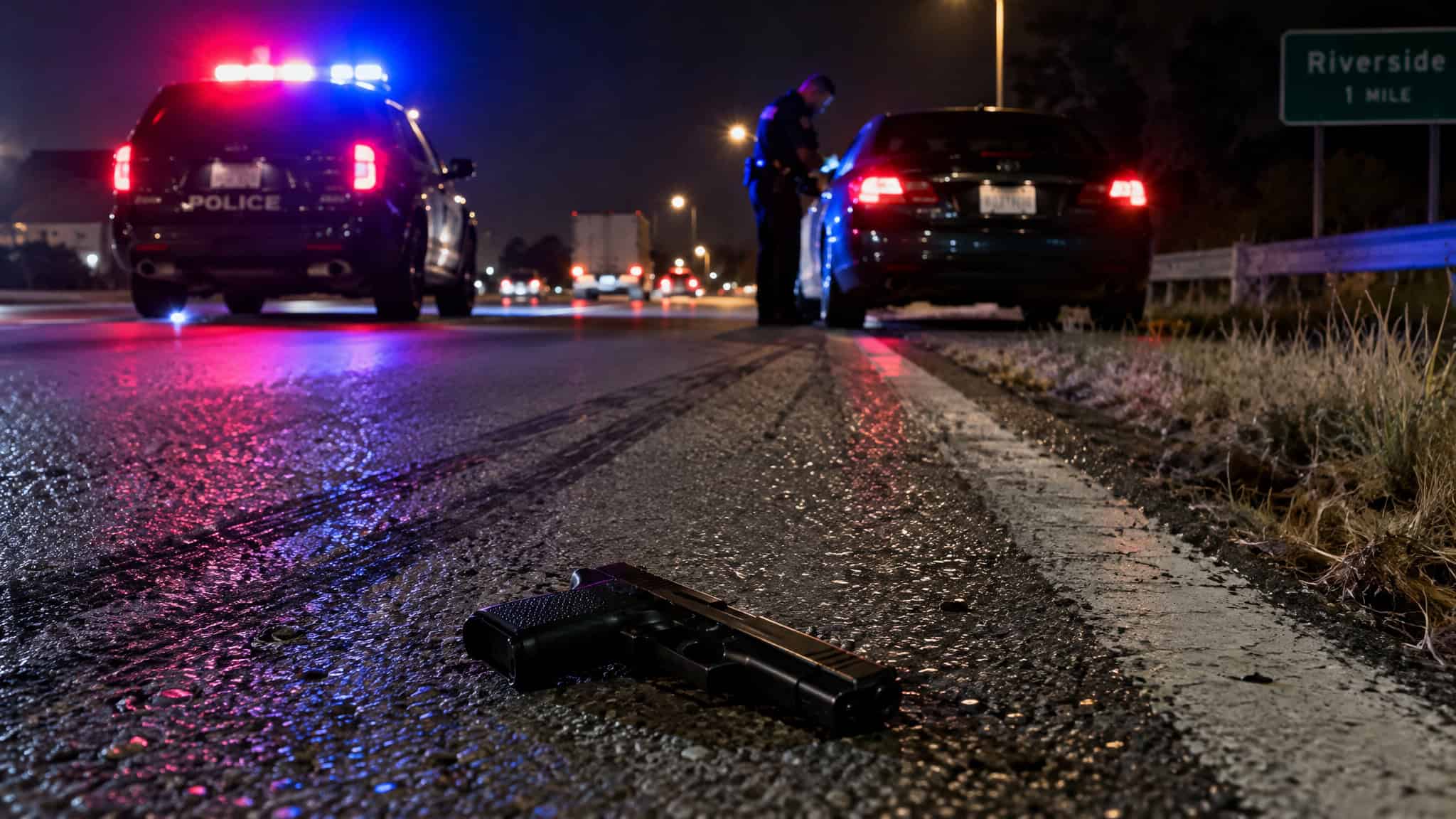
The Gun Violence Archive is the source showing that people shot in recorded road rage incidents increased by over 400% over a 10-year window from 2014 through 2023, rising from 92 people shot in 2014 to 481 in 2023 and totaling 3,095 people shot and 777 killed across the decade. That analysis, cited by CBS News, tracks alongside AAA’s 2025 finding that drivers are increasingly fearful of gun violence on the road as traffic arguments escalate into drivers brandishing and firing weapons.
Reporting from CBS correspondent Jamie Yuccas and local affiliates, including Sinclair stations, shows what those escalations look like on the pavement:
- A Colorado motorcyclist opened fire on a couple’s car after getting cut off in traffic.
- In Florida, a driver ran over a motorcyclist after an argument, breaking the rider’s leg.
- In Ramona, California, photographer Alex Stone caught a road rage blowup on his phone camera as the driver of a giant SUV lost his temper, leaving Stone afraid of being hit.
- In Houston, a viral May video captured an argument that turned into a street fight before one driver rammed the other’s car and drove off.
What the death counts can and can’t tell you
No, the Gun Violence Archive and federal agencies do not publish a single official annual road rage death count, except through separate multi-year tallies that cover different timeframes and definitions: 777 people were shot and killed in GVA records from 2014 to 2023, while a CBS Sunday Morning report by Chris Van Cleave documented more than 1,700 total fatal road rage deaths between 2010 and 2024. CBS noted that fatal incidents are trending upward, but those two windows cannot be merged into a single rate.
There is no single comprehensive federal database for road rage shootings, and these figures are not FBI statistics. The Gun Violence Archive is a non-governmental nonprofit that pulls its records from law enforcement, government sources, and media reports. Because local reporting practices vary by jurisdiction and over time, the dataset likely undercounts how often guns actually come out in traffic.
Who rages, where: demographics, regions, enforcement
Young men ages 19 to 39 are the demographic most likely to engage in aggressive driving and road rage according to AAA survey data, a finding sociologists called unsurprising, and male drivers overall are three times more likely than women to get out of a vehicle to confront someone or deliberately ram another car. If you’re reading Unfinished Man, there’s a strong chance that’s your exact bracket. The data isn’t a lecture about some unhinged stranger across town: statistically, we are the demographic most likely to start the fight and the one most likely to be sitting in the other seat when it escalates.
No state-by-state ranking of road rage shootings exists because there is no comprehensive federal database tracking highway gun crime across jurisdictions. Regionally, AAA found that Northeast drivers are significantly more likely than drivers elsewhere to yell, honk, or gesture angrily, which researchers tie to crowding and older road infrastructure.
At the state level, enforcement shows how heavy the gun problem has become: in 2024, after highway shootings and murders, the Maryland State Police launched the Highway Gun Violence Initiative, investigating 225 firearms-related cases, seizing 90 firearms, and making 70 arrests, per WBAL-TV 11 News Investigates. Knowing when to call 911 and how to report a road rage incident is the smarter play than stepping out of the door.
Why drivers snap: time pressure, retaliation, and self-perception
Aggressive driving and road rage triggers are rooted in time pressure, the anonymity of the vehicle cabin, and an impulse to retaliate when running late, as demonstrated by Temple University psychology professor Mike McClusky’s aggression research on CBS Sunday Morning and AAA’s self-reported driver motives: getting somewhere faster, feeling threatened, retaliating, trying to control another driver’s behavior, and punishing or teaching someone a lesson. McClusky points out that driving stress starts when people don’t leave enough time to get from point A to point B, while the car wraps them in a bubble of safety and anonymity they wouldn’t feel face to face.
As a commuter named Javier told 1010 WINS reporter John Montone, people drive crazy because they’re in a rush, adding that a car is like having a weapon. Aggression also spreads on contact: one driver described getting cut off and immediately returning the favor on the left, throwing a hand out the window, and driving on.
Self-reported road rage statistics are reliable as conservative baselines rather than exact totals because drivers minimize their own faults even as nearly everyone admits to some aggression. AAA’s Traffic Safety Culture Index exposed that blind spot: 78% of drivers believe they drive more safely than others, and 66% think other drivers are more aggressive than they are. Everybody is the hero in his own windshield.
Road rage is not a classified mental disorder in traffic safety research; instead, AAA self-reports trace the anger to situational frustration like rushing to get somewhere faster, feeling threatened, and retaliating. Still, if your temper flares even when you aren’t late, it’s worth looking into whether road rage is linked to ADHD emotional dysregulation, even though road rage itself is not a classified mental disorder.
Teen drivers and distraction: 14% becomes 58%
Alongside its aggression surveys, the AAA Foundation’s separate crash-causation research shows how badly traditional estimates missed what happens inside a young driver’s cabin right before a wreck.
How the video analysis revised the estimate
Distracted driving is a factor in 58%, six out of 10, of moderate-to-severe teen crashes, more than four times NHTSA’s prior estimate of 14%, because AAA Foundation researchers watched in-vehicle video of the six seconds prior to impact across nearly 1,700 teen crashes rather than relying on post-crash reports. In that video analysis, reported by WRTV / RTV6 Indianapolis, interacting with one or more passengers ranked as the number one distraction in teen crashes, beating out cell phone use in second place at 12%. Teens who know the phone rules still get caught up in social conversations seconds before impact.
What parents and policy can do
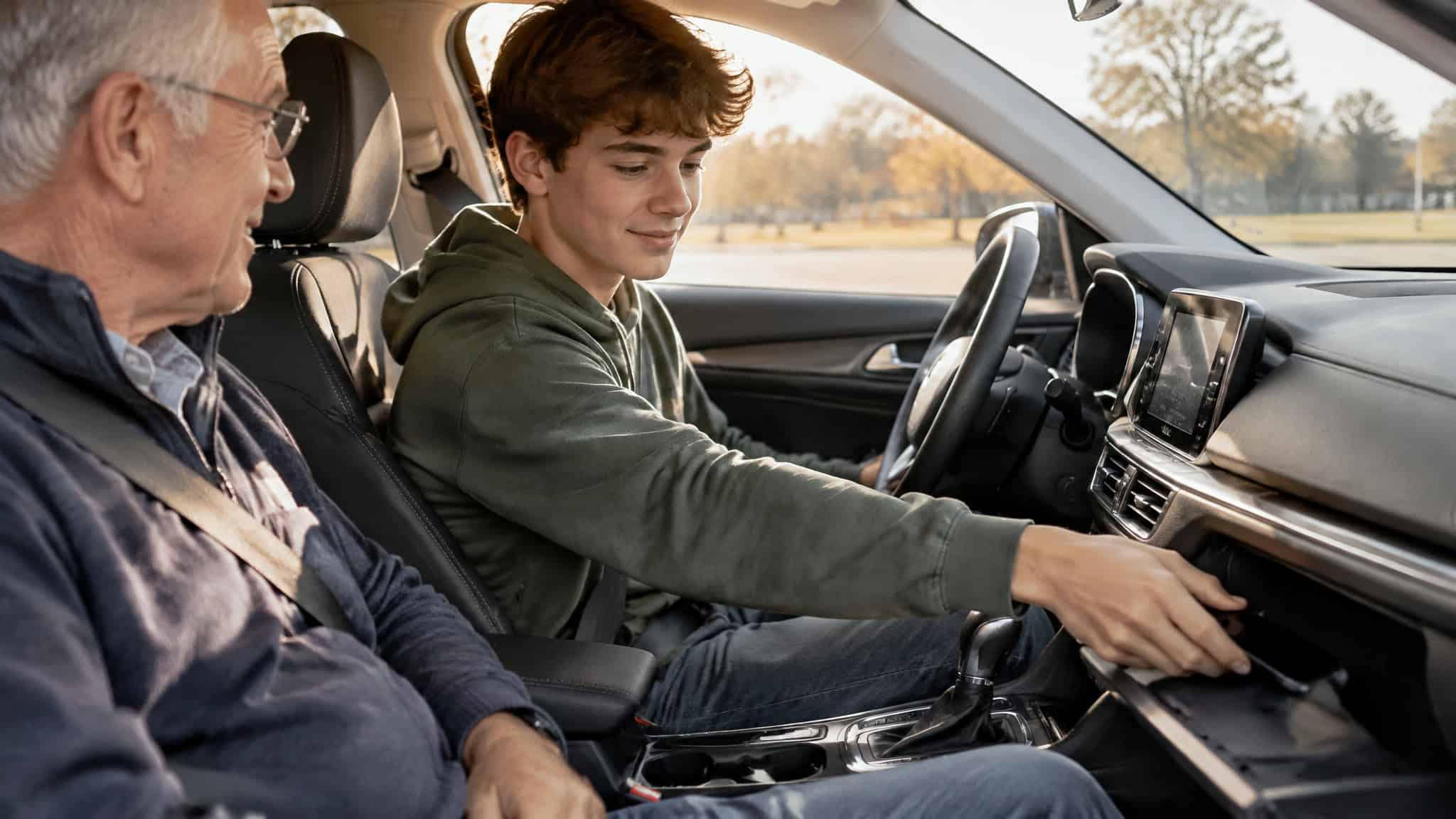
Parents and the AAA Foundation can prevent teen distracted driving by coaching new drivers to lock their phones out of reach and managing passenger distractions alongside state cell phone bans and graduated driver’s licensing laws, a critical intervention since in-cabin peers outrank phones as a crash trigger, as seen in Indiana’s cell phone restrictions through age 18 and 15-year-old driver’s ed student Daniel Rash’s routine of stowing his phone in the cupholder or glove box until parked. Rash, who was set to get his license in December and practiced with his grandfather coaching him from the passenger seat, kept the phone put away for a simple reason: he wanted to keep people safe.
What the numbers say to do behind the wheel
AAA and driving instructors advise that you respond to road rage by refusing to engage, leaving a physical spacing cushion in traffic, and never forcing another driver to change speed or direction, a response that breaks the retaliation cycle before an argument escalates, as Central Park Driving School instructor Susan Gutierrez teaches her students daily. Quoted by KSAT 12, Gutierrez tells drivers to keep their emotions in check and leave enough room in front of the bumper so an aggressive driver can just move ahead and disappear.
Practicing defensive habits that stop road rage before it starts comes down to leaving on time and cutting other drivers some slack, because you don’t know what kind of day the guy in the next lane is having or whether he’s carrying a gun. As both WBAL-TV anchors and Crime Stats Daily host Kim noted, driving is a privilege with responsibilities, not a right. And if you do wave to another driver in traffic, take the official advice printed in Connecticut’s driver’s manual: use all fingers.
Frequently Asked Questions
How many accidents are caused by road rage?
NHTSA does not track a separate total of crashes caused specifically by criminal road rage. Instead, the agency estimates that broader aggressive driving—routine traffic offenses like speeding, tailgating, and unsafe lane changes—plays a role in roughly two-thirds (66%) of all fatal crashes. You don’t need an intentional assault to cause a deadly wreck when everyday moving violations strip away your margin for error at highway speeds.
What is the difference between aggressive driving and road rage?
Under NHTSA’s framework, the dividing line separates risky traffic violations from intentional criminal assault. Aggressive driving covers dangerous moving offenses like speeding, tailgating, running red lights, cutting people off, or making angry gestures. Road rage happens when a driver or passenger escalates a traffic dispute into a deliberate physical attack using a weapon or the vehicle itself.
What percentage of drivers admit to aggressive driving or road rage?
In the AAA Foundation for Traffic Safety’s September 2025 update, 96% of surveyed drivers admitted to engaging in risky aggressive driving over the prior year, up from nearly 8 in 10 in its July 2016 study. Within that 2025 sample, 11% confessed to outright violent acts—including 6% who got out of their vehicle to confront someone and 3% who intentionally bumped or rammed another car. Because people tend to downplay their own bad habits on surveys, those numbers are really just a conservative baseline.
How much has road rage gun violence increased over the last decade?
Gun Violence Archive records show the number of people shot in road rage incidents jumped more than 400% between 2014 and 2023, climbing from 92 victims a year to 481. Across that entire 10-year window, road rage gunfire left 3,095 people shot and 777 dead. Because the nonprofit compiles its database from local police and media reports rather than a single federal tracking system, actual highway gun incidents are likely even higher.
How many road rage deaths occur per year?
Neither federal agencies nor independent trackers publish a single official annual death toll for road rage, relying instead on multi-year tallies with different criteria. Gun Violence Archive records documented 777 people shot and killed in road rage incidents from 2014 through 2023, while a CBS Sunday Morning report counted more than 1,700 total fatal road rage deaths between 2010 and 2024. Because those two windows measure different timeframes and causes of death, they can’t be merged into one yearly rate.
Which state has the most road rage shootings?
There is no official state-by-state ranking for road rage shootings because the federal government does not maintain a comprehensive national database for highway gun crimes. On a regional level, however, AAA survey data shows that drivers in the Northeast are significantly more likely than motorists elsewhere to honk, yell, or throw angry gestures—a pattern researchers link to heavy congestion and older road infrastructure.
Which drivers are most likely to engage in road rage by age and gender?
AAA survey data pinpoints young men between the ages of 19 and 39 as the group most likely to engage in aggressive driving and road rage. Across all age brackets, male drivers are three times more likely than women to step out of their vehicles for a street confrontation or deliberately ram another car. For guys in that age bracket, we are statistically the most likely to start a roadside fight and the most likely to be sitting in the other seat when it escalates.
Why do drivers get road rage and what triggers aggressive driving?
As Temple University psychology professor Mike McClusky notes, triggers typically boil down to running late and sitting inside a vehicle cabin that wraps drivers in an artificial bubble of safety and anonymity. AAA’s survey data backs that up, showing that motorists lash out to get somewhere faster, retaliate when they feel threatened, or force another driver to learn a lesson. That mix is fueled by a massive self-awareness blind spot: 78% of drivers believe they are safer than everyone else on the road, and 66% think other motorists are more aggressive than they are.
How common is distracted driving in teen crashes compared to earlier estimates?
Distracted driving plays a role in 58% of moderate-to-severe teen crashes, more than four times NHTSA’s earlier 14% estimate. The AAA Foundation uncovered that gap by reviewing in-cabin video from the six seconds before impact across nearly 1,700 teen wrecks rather than relying on post-crash police reports. That footage also revealed that chatting or interacting with passengers is the number one teen crash distraction, beating out cell phone use in second place at 12%.