Sitting in a parking lot with a spike of adrenaline, a vague memory of a silver pickup, and half a license plate is a lousy time to figure out how to report road rage, which comes down to a simple cutoff between 911 and a non-emergency channel, three intake details police forms actually ask for, and a clear expectation of what your report triggers. Working programs like the Arlington, Texas Police Department’s reporting system (announced in an April 19, 2023 city news release authored by Tim Ciesco) and the Colorado State Patrol’s STAR 277 line (documented by Denver7) show the real mechanics of how police handle those calls.
Key Takeaways
Call 911 immediately if an incident involves a firearm, another weapon, or vehicle damage; use non-emergency hotlines or web portals once the danger has passed.
Police non-emergency forms like the Arlington Police Department’s require three core details: the location witnessed, the vehicle description and license plate, and the specific behavior seen.
Citizen reports don’t directly trigger a traffic ticket or license action; instead, departments like Arlington PD and the Colorado State Patrol mail warning letters to the vehicle’s registered owner or escalate after repeat reports.
Table of contents
Table of Contents
| # | Step | Key detail |
|---|---|---|
| 1 | Step 1: Decide if it’s 911 or non-emergency | Call 911 for emergencies involving weapons or vehicle damage; use the hotline or online tool for non-emergencies only. |
| 2 | Step 2: Get safe before you report anything | Stay in your vehicle, leave space, and drive to a safe public place, never go home or pull over in an isolated spot. |
| 3 | Step 3: Gather the details the report needs | Note the location, the vehicle and license plate, and a clear description of the specific behavior you observed. |
| 4 | Step 4: Report through the right channel | Submit via ArlingtonPD.org > Self-Service under the Reporting tab, or call the non-emergency hotline for plate reports. |
| 5 | Step 5: Know what happens after you file | APD uses your report to identify the registered owner and mails a letter encouraging safer driving. |
Step 1: Decide if it’s 911 or non-emergency
Yes, law enforcement takes road rage reports, using 911 for active emergencies and non-emergency lines once nobody is in immediate danger; 911 is for immediate danger, weapons, physical assaults, or crashes, whereas state patrol hotlines and local non-emergency lines are for aggressive driving after the threat has passed. The Arlington Police Department draws a hard boundary: any incident involving a firearm, another weapon, or damage to a vehicle requires an immediate 911 call, while everything else goes to a non-emergency hotline or online form.
- Firearm, other weapon, or vehicle damage: dial 911 immediately.
- Ongoing physical threat or being followed: dial 911 and drive to a populated public place.
- Incident is over and nobody is in immediate danger: use a non-emergency hotline or online portal.
The cost of calling the wrong line
Dialing 911 over shouting, tailgating, or brake-checking usually gets you transferred to a non-emergency desk or told to file online. That handoff burns time while your memory of the vehicle and plate number fades.
Aggressive driving versus road rage
Aggressive driving is a traffic offense consisting of unsafe speeding, following too closely, weaving through traffic, improper passing, or rude gestures, whereas road rage is a criminal matter involving deliberate threats or outright violence. Treating a reckless driver as a moving road hazard rather than an intentional attack is what tells dispatch whether to log a report or send an officer.
Step 2: Get safe before you report anything
Back off from the other driver, get to a safe spot, and only then document and report the incident; any detail that requires chasing the other car to read a license plate is a detail to skip, because pursuing an aggressive driver just turns you into a second road hazard.
De-escalate behind the wheel
Ease off the accelerator, open up your following distance, lock the doors, and skip the eye contact, gestures, and retaliation, never blocking the other car.
Relocate if followed
Stay inside your vehicle, skip the road shoulder or isolated lots, and don’t drive home; reroute to a busy, well-populated public place and call police hands-free or after stopping safely.
Check your own escalation
If you catch yourself riding a bumper, braking harshly, or fixating on one car to get even, back off, breathe, restore your following space, and pull over for a break.
Step 3: Gather the details the report needs
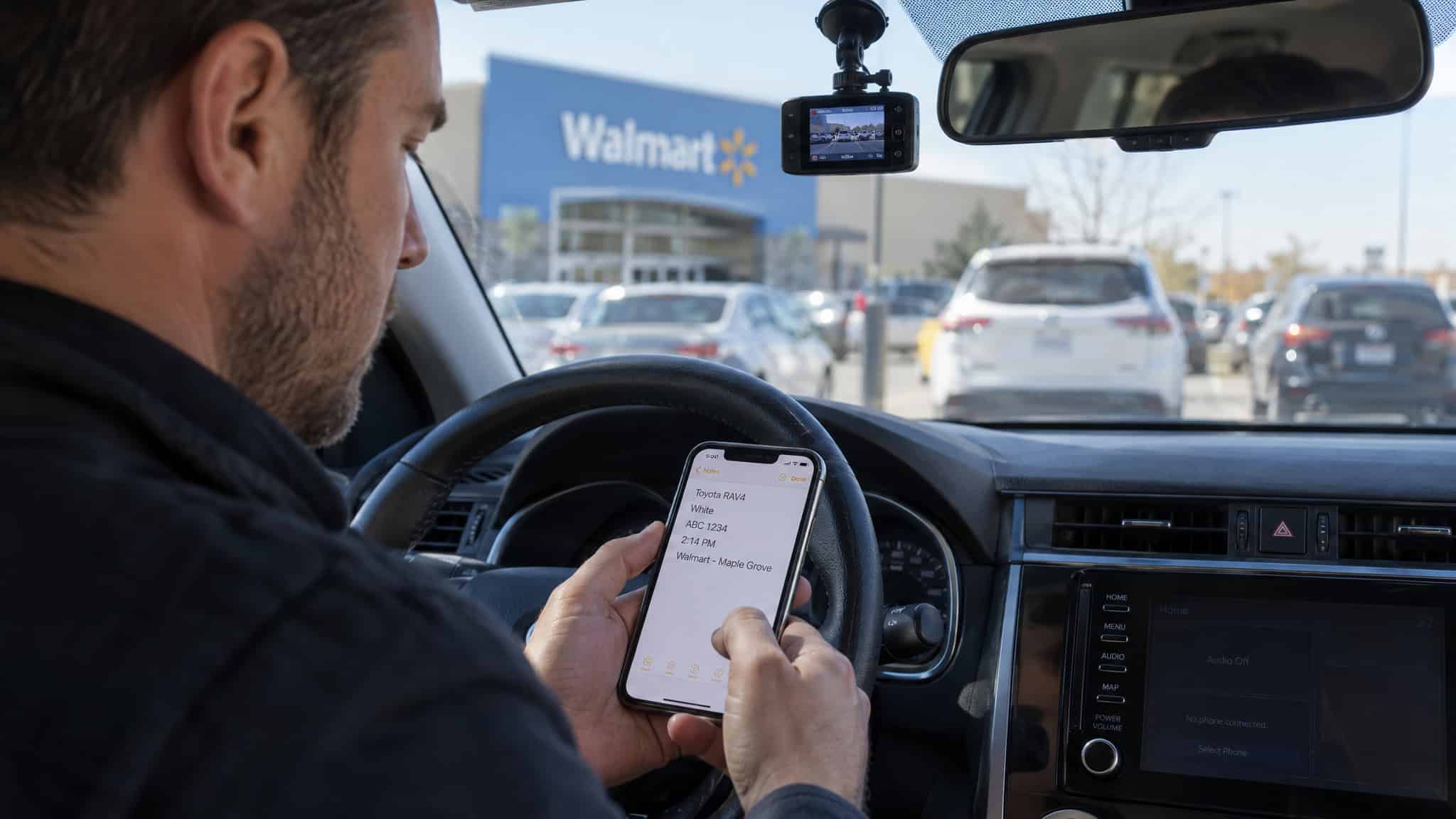
Reporting a reckless driver comes down to four moves: get somewhere safe, pick the right channel, note the vehicle and location, and send it in through your local non-emergency portal or dispatch line. Standard police intake forms ask where the incident happened, what the car looked like, and what the driver did, which matches the three exact inputs required on the Arlington Police Department form: the location where the aggressive driving was witnessed, a description of the driver’s vehicle and license plate number, and a description of the specific behavior you saw.
| Detail category | Non-emergency form or hotline (Arlington PD model) | Live 911 dispatch (active emergency) |
|---|---|---|
| Location | Street or highway stretch where behavior was witnessed | Current location with street name, exit, or mile marker |
| Travel vector | Not required on standard post-incident intake | Active direction of travel |
| Vehicle & plate | Vehicle description and license plate number | Clear vehicle description and plate (if safely visible) |
| Driver conduct | Specific aggressive behaviors witnessed | Ongoing dangerous behavior, weapons, or vehicle damage |
What live 911 dispatch asks for
When you’re on the phone with 911 during an active threat, the dispatcher is trying to intercept a moving target. You’ll need to give your current location (down to the street name, highway exit, or mile marker), your direction of travel, a clear description of the vehicle, and the specific dangerous behavior underway.
When you only have a partial plate
Police can still work with a partial plate when it’s paired with the vehicle’s color, type, and location. Trying to memorize seven characters in heavy traffic while keeping your eyes on the road rarely goes cleanly, so most drivers walk away with three or four characters, a color, a body style, and a stretch of highway without an exit number. File the report anyway.
Making dashcam footage count
If you run a dashcam, don’t pull over on the shoulder to scrub through video on your phone. Once you’re parked somewhere safe, save the clip and check that the camera’s timestamp and location data are accurate so the video anchors cleanly to your written report.
Step 4: Report through the right channel
Some city police departments let you report reckless driving online for non-emergencies, while other places handle reports through phone hotlines or state highway patrol dispatch. Because there’s no single national system, your options depend on whether your city or state runs an intake portal; in Arlington, Texas, for instance, the police department launched an online tool in April 2023 at ArlingtonPD.org, accessed by going to the Reporting tab, selecting Self-Service, and clicking Submit a Road Rage / Aggressive Driving Report Online.
How the Texas municipal model works
Reporting a reckless driver in Texas depends on city-level channels like the Arlington Police Department’s dual system or your local police non-emergency line, once the immediate danger is over. In Arlington, the department’s Traffic Division has staffed a non-emergency Road Rage Hotline at (817) 459-5389 for several years because officers can’t be everywhere at once. Drivers who prefer not to call use the self-service portal at ArlingtonPD.org to log the location, vehicle description, plate number, and behavior directly with the Traffic Division. If you’re driving in another Texas city, check that municipality’s police website for a traffic complaint portal or dial its non-emergency dispatch number.
How Colorado’s STAR 277 state patrol model works
Reporting road rage or aggressive driving in Colorado goes straight to the Colorado State Patrol by dialing CSP (277) to log the offending vehicle’s license plate. The STAR 277 program is built for volume and repeat offenders, logging roughly 65,000 aggressive-driver reports in the prior year. Instead of treating every call as a one-off, the state patrol tracks plate numbers against a graduated threshold:
- 3 reports on the same plate: The state patrol mails a warning letter to the vehicle’s registered owner.
- 5 reports: A state trooper visits the owner’s address to hand-deliver the warning letter and recommend behavior changes in person.
- More than 5 reports: The pattern can trigger a targeted enforcement operation.
Finding the right number in other states
Because there’s no universal national non-emergency number, drivers in states like New Jersey or anywhere else outside those specific service areas need to look up two local channels: the city police department’s non-emergency page for surface streets, or the state highway patrol’s aggressive-driving portal for interstates. Keep those numbers saved in your phone’s contacts so you aren’t searching for them at a red light. Specific rules for text-based impaired-driver tip lines aren’t published in the Arlington or Colorado program materials.
Step 5: Know what happens after you file
Filing a non-emergency road rage report typically triggers a warning letter mailed to the vehicle’s registered owner rather than a traffic ticket, a license suspension, or a follow-up call to you, and drivers should still file because programs like Colorado’s STAR 277 (~65,000 reports in the prior year) and Arlington’s portal rely on citizen reports to flag problem vehicles. In both jurisdictions, police match the license plate to the registered owner and send a letter noting the vehicle was reported; Arlington PD Traffic Division Commander Lt. Brian Garcia explained that the goal is making drivers aware of their habits so they correct bad behaviors that put everyone on the road at risk.
Why you never hear back
Hearing nothing after you hit submit means the system is working as designed. All follow-up happens in the background between the police department and the registered owner. In threshold systems like STAR 277, your report acts as a compounding data point toward the third or fifth strike that puts a warning letter in their mailbox, a state trooper on their porch, or enough repeat reports past five to trigger targeted enforcement.
Anonymity and looking up plates yourself
Your identity stays shielded on the receiving end because law enforcement identifies the registered owner and mails the warning letter without ever putting your name in front of the other driver. Private citizens generally can’t look up a registered owner’s name or address by license plate online anyway, which is why reports go through police. Whether you have to leave your own name and phone number on the intake form varies between phone hotlines and web portals, neither Arlington PD nor STAR 277 publishes its contact-info requirements, though Arlington PD states that callers and online filers are asked for the location, vehicle description, license plate, and observed behavior.
DMV competence reviews and insurance claims
If you’re dealing with a driver who seems medically or physically unfit to hold a license rather than angry, skip the road-rage line and file a driver re-examination request through your state DMV. And if the other driver actually hit your car, your first call after 911 goes to your auto insurer with the police report number and your timestamped dashcam footage.
Frequently Asked Questions
Can you call the police on road rage?
Yes, police departments take road rage reports, though the number you dial depends on whether the threat is still active. If someone flashes a firearm, uses another weapon, damages your car, or actively pursues you, call 911 right away. Once the encounter is over and nobody is in immediate danger, route your report through a local police non-emergency line, online portal, or state patrol hotline instead.
What’s the best way to report a reckless driver?
Start by backing off and getting yourself to a safe, populated spot rather than chasing the other car to read its bumper. Once you are parked safely, write down the location, the vehicle’s description and license plate number, and the specific behavior you witnessed. Submit those three details through your city police department’s non-emergency line, an online self-service portal, or your state highway patrol’s reporting line.
How can I report road rage in Colorado?
On Colorado roads, you can report aggressive driving directly to the Colorado State Patrol by dialing *CSP (*277) to log the offending vehicle’s license plate. The STAR 277 program tracks repeat offenders across roughly 65,000 annual reports rather than treating each call as an isolated event. Three reports on the same plate trigger a mailed warning letter to the registered owner, five reports bring a state trooper to their door to hand-deliver the warning, and more than five can prompt targeted enforcement.
What happens if I only get a partial license plate?
You should still file the report even if you only caught three or four characters of the plate. Never speed up or chase an aggressive driver just to read the rest of the tag, as that only creates a second hazard on the road. Police can still work with a partial plate number when you pair it with the vehicle’s color, body style, and the stretch of road where the incident happened.