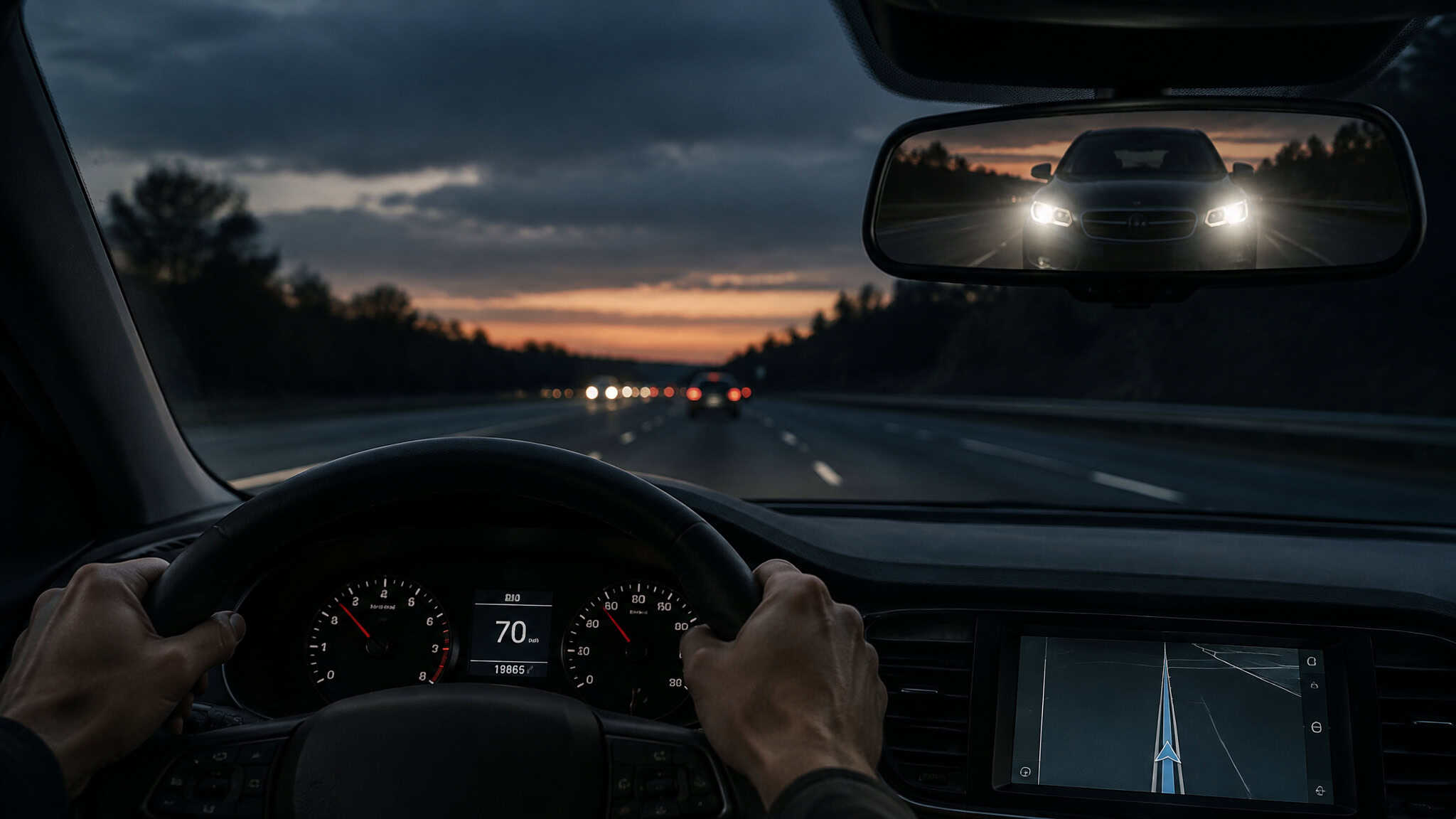
A bumper fills your rearview mirror, high beams flash, a middle finger goes up through the windshield, and a sedan cuts across your nose to slam on its brakes. Your chest gets hot, your grip tightens on the wheel, and every natural instinct says to close the gap and push back. That impulse is a sucker’s bet. The driver who stays calm and controls the encounter is the stronger one, because the real goal on the asphalt is separation, not winning.
Amateurs let their ego take the wheel; professionals care about getting the machine and the people inside it home intact. Backing off can feel like cowardice in the moment, when your pride is screaming for payback, yet restraint is the confident, self-mastery move that actually keeps you alive. Commercial-driver training and frontline de-escalation tactics give us a rehearsed sequence for what to do with our body, our car, and our ego before those first adrenaline-flooded seconds turn into a wreck.
Key Takeaways
Commercial-driver disengagement relies on four non-negotiable moves: open up following space, lock your doors, let the aggressive vehicle pass, and give zero eye contact or gestures.
An enraged driver enters the blowfish zone, a cortisol- and adrenaline-fueled threat state where the brain can’t process logic and being told to calm down only accelerates the conflict.
If another driver follows you, stay locked inside your car, drive past your house to a busy public place, and call police hands-free with your location, direction, and a description of the vehicle.
Table of contents
Table of Contents
Aggressive driving vs. road rage: know what you’re facing
Aggressive driving is careless, dangerous vehicle operation like tailgating, weaving through traffic, and brake checking, whereas road rage is an intentional attack involving deliberate threats or outright violence. Treating an erratic driver as a moving hazard lets you spot escalation early instead of wasting time trying to diagnose the stranger in the next lane.
From honking to tire irons: the escalation spectrum
Careless operation covers excessive speeding, running red lights or stop signs, improper passing, hostile gestures, and using a vehicle to intimidate. Minor road rage starts with horn honking, flashing headlights, yelling, hand gestures, and idle threats. Major road rage jumps to high-speed brake checking, following a target, impersonating police, using the car as a weapon, or pulling out tire irons and guns.
What aggressive driving does to the human body
These confrontations end in rear-end collisions, sideswipes, run-off-road crashes, and pedestrian strikes. The physical toll includes traumatic brain injuries, spinal cord damage, broken bones, internal organ trauma, severe soft tissue injuries, and long-term emotional distress or PTSD. Because an aggressive driver who causes injury can be held legally liable for the damage, trying to settle the score on the pavement buys you nothing.
Step 1: Read the driver before you react
Sizing up a threat before you react tells you what you’re actually dealing with. Reem Lazaro is a safety contractor to the New Mexico Department of Transportation Transit and Rail Division with over 40 years of transit safety and security experience. She defines conflict as a disagreement where people perceive a threat to their needs, interests, or concerns. The escalation phase begins the instant that interaction turns into a confrontation.
The escalation signs checklist
Watch for the “rooster stance,” where a person puffs their chest out and holds their arms away from their body. Other physical tells include sudden changes in tone or volume, clenched fists, a tightened jaw, heavy breathing, pacing, fidgeting, crossed arms, hunched posture, refused eye contact, yelling, rule noncompliance, hands thrown up in frustration, or hands hidden in pockets or behind the back.
Why humiliation lights the fuse
Understanding the real triggers behind road rage comes down to two categories: fear-inducing threats to pride, self-esteem, or status, and frustrating events tied to unmet needs. Humiliation is a primary reason people act out violently, while basic respect lowers the temperature. Good situational awareness means scanning your surroundings, reading those indicators in others, and catching your own stress response early.
Step 2: Disengage, separation, not winning
Dealing with an aggressive driver in the moment is a disciplined four-part disengagement sequence designed to create physical separation rather than win an ego contest. Keeping your cool and refusing to take the bait protects your safety when you execute the commercial-driver protocol:
- Leave generous space around your vehicle and lock your doors immediately.
- Allow the aggressive vehicle to pass without speeding up to block them.
- Maintain zero eye contact, keep your hands on the wheel, and offer no retaliatory gestures.
- Never pull over in an isolated spot to settle things on the shoulder.
The disengagement sequence
Commercial driver training breaks road-rage survival into five steps: spotting the danger, disengaging, handling the brake-check scenario, reporting an immediate threat, and managing your own mindset. De-escalation has a hard boundary: engaging with an aggressive driver is easy to start, and reversing it is very difficult. Once you trade glares or crowd a lane, you’re in a fight you didn’t need.
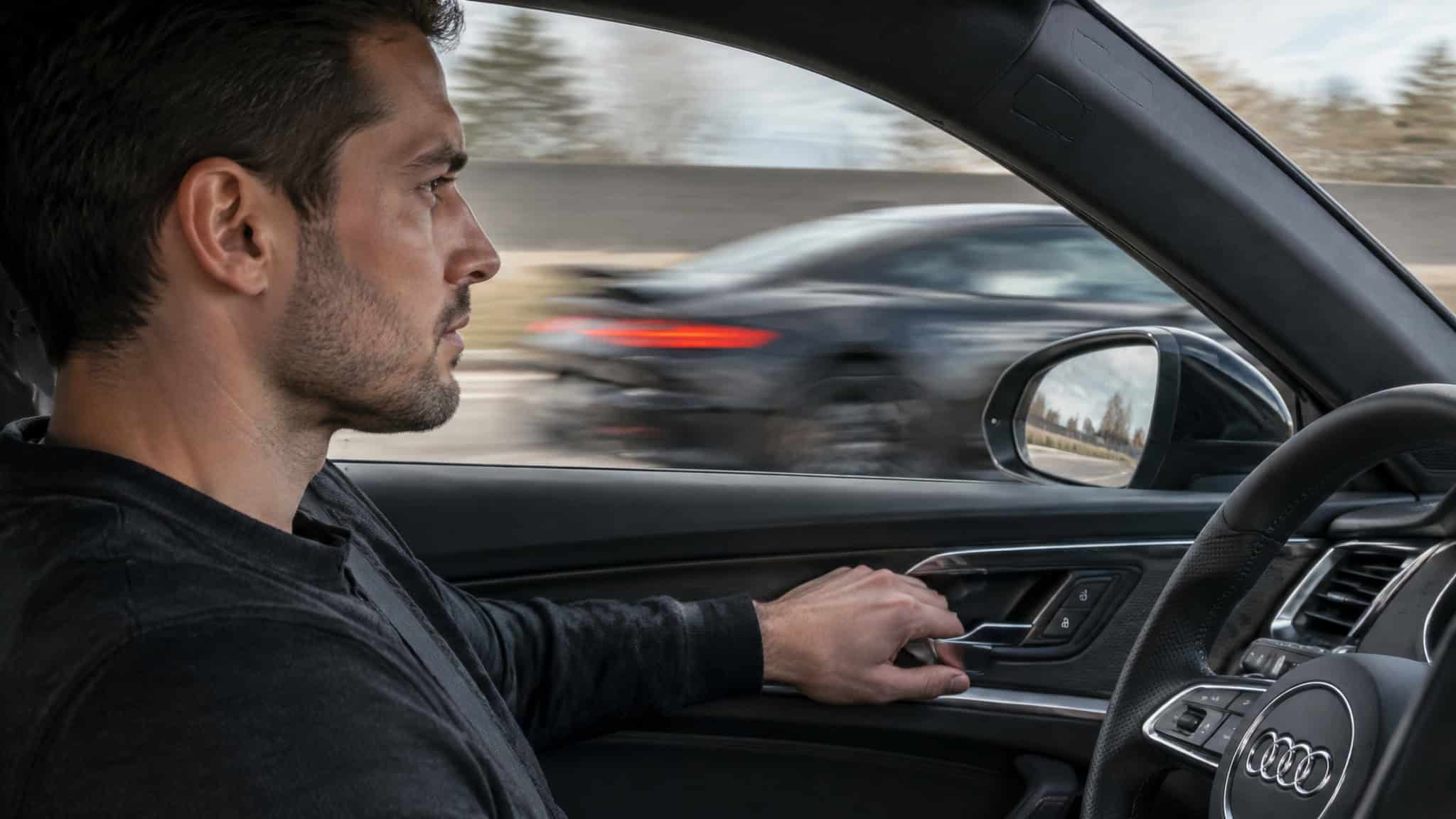
The amateur reaction lets ego fight back, lock eyes, and defend a patch of asphalt. The professional reaction chooses separation over winning and handles the problem from the driver’s seat. Staying put behind the wheel projects a calmer, neutral posture and avoids invading the other person’s space, whereas acting aggressively toward someone who’s already upset only pours fuel on the encounter.
Rick August is a former full-time over-the-road truck and bus driver, a licensed commercial driving instructor since 1997, and holds a 2006 doctorate in legal history from the University of Melbourne. He has taught these mechanics since 2015 on his Smart Drive Test YouTube channel, which has drawn 250,000 subscribers and 41 million views. August emphasizes that staying calm during an altercation de-escalates the encounter far better than responding in kind, largely because you never know who’s sitting in the other car.
If the road rager is ahead of you
When the aggressive driver is in front of you rather than behind you, letting them pass isn’t an option. Take the next intersection or turn into a busy parking lot to get off the roadway entirely, and let them carry their bad afternoon down the highway without you.
Step 3: When they tailgate or brake-check you
Tailgating countermeasures and brake-check responses are spacing maneuvers that prioritize keeping control of your vehicle over defending your lane. Creating physical distance and letting the problem pass prevents a high-speed loss of control when you follow four rules:
- Ease off the accelerator: Open up following distance in front of your bumper so you have room to react without slamming the brakes.
- Let them pass: Move to the right lane or pull over to let the tailgater move away; letting them win the lane wins the larger battle of staying safe.
- Avoid all eye contact: Lock your doors and completely avoid engagement instead of turning a spacing issue into an ego-driven retaliation.
- Never brake-check: Avoid aggressive braking, which can cause the following driver to lose control and lead to serious injury or death; if you need to communicate with a driver riding your bumper, lightly tap the pedal just to flash your brake lights.
The brake-check response: slow down when everything says speed up
When a driver cuts in close, slams the brakes, and starts throwing gestures in the mirror, the typical driver instinct is to ride their bumper or whip around them to return the favor. In commercial-driver training, even when hauling a heavy load, the rule is to ease off the gas, open the gap, keep your eyes off the driver, and let the car pull away.
Tailgating countermeasures
Let the other guy win the lane so you win the larger battle of getting home alive. Retaliatory brake checking is no harmless warning; it regularly causes the following driver to lose control of their vehicle, turning a bruised ego into serious injury or death.
Why you can’t win: the blowfish zone
Telling an enraged driver to calm down is the fastest route to disaster for anyone caught in a roadside confrontation, because directive or corrective language proves you don’t understand their perceived threat and only escalates the fight.
What adrenaline does to a brain
Katelyn Carey is an acute care nurse with 25 years of experience handling life-or-death conversations. Nursing carries a verbal and physical assault risk four times higher than that of an average prison guard, and Carey synthesizes hundreds of medical and cognitive science studies on that threat response into what she calls the “blowfish zone.” Adrenaline and cortisol flood the brain and shift it toward raw sensory input, instinct, and emotion, locking out critical thinking. Stress hormones hijack memory so thoroughly that one patient receiving a life-threatening diagnosis remembered only the wall art and hallway smell from that entire hour.
On the Smart Drive Test channel, discussions of an anger-management course compare road rage to temporary psychosis: when an adult gets angry, their functional intelligence drops to the equivalent of a four-year-old and 27 lizards. Because a car is a person’s second most intimate space after their house, territorial flare-ups hit hard and fast.
Why ‘calm down’ is the fastest route to disaster
Lines like “Sir, I need you to calm down” fail because you can’t command someone out of a threat state. If someone yells “What’s wrong with you?” and you get defensive, you now have two people in the blowfish zone, which never leads to a good outcome and invites security involvement. Real de-escalation makes the other person feel seen, safe, and understood without agreeing with them or fixing the problem, simply by addressing their threat, much like an ER nurse acknowledging an angry man’s frustration, asking what worries him most, and offering a triage recheck.
You don’t know who’s behind the wheel
Assuming the other driver is rational is a bad bet when impairment is nearly impossible to spot from the next lane. Marijuana is legal across Canada and in several US states, and plenty of drivers are unknowingly impaired by over-the-counter or prescription medications before they ever turn the key.
Treat every erratic driver on the road as potentially drunk or medicated. Your only job is getting away from an unpredictable hazard. According to August, the peak window for running into drunk drivers is Thursday, Friday, and Saturday nights around midnight.
You also have no idea what’s happening inside that cabin. During a Smart Drive Test livestream, a viewer named Denver thought he was watching an inebriated driver weaving down the road, only to realize it was a couple having a heated argument, right alongside another viewer reporting a road-rage altercation on Interstate 90 in Schaumburg, Illinois. Escalating against a closed car is always a gamble with blind odds.
Step 4: If you’re followed or cornered
- Never exit your vehicle: If an aggressive driver follows you, stay locked inside your car and treat the cabin as your armor rather than stepping out to confront them.
- Skip your house and isolated stops: Bypass your home or home terminal, and never pull over on the shoulder or stop in an isolated area where a roadside confrontation can turn into an ambush.
- Head to a busy public spot: Reroute to a safe, well-populated public location such as a gas station, rest area, or small community.
- Call the police hands-free: Contact law enforcement using a hands-free method or after stopping safely, and give dispatch your current location, direction of travel, vehicle description, and the driver’s observed behavior without chasing them for a license plate number.
- Stay inside the vehicle with the doors locked and never step out to confront the driver.
- Bypass your house or home terminal and never pull onto the shoulder or stop in an isolated area.
- Reroute to a busy, well-populated public spot and call law enforcement hands-free or after stopping safely.
- Give dispatch your current location, direction of travel, vehicle description, and the driver’s observed behavior.
Never drive home, drive to a populated public place
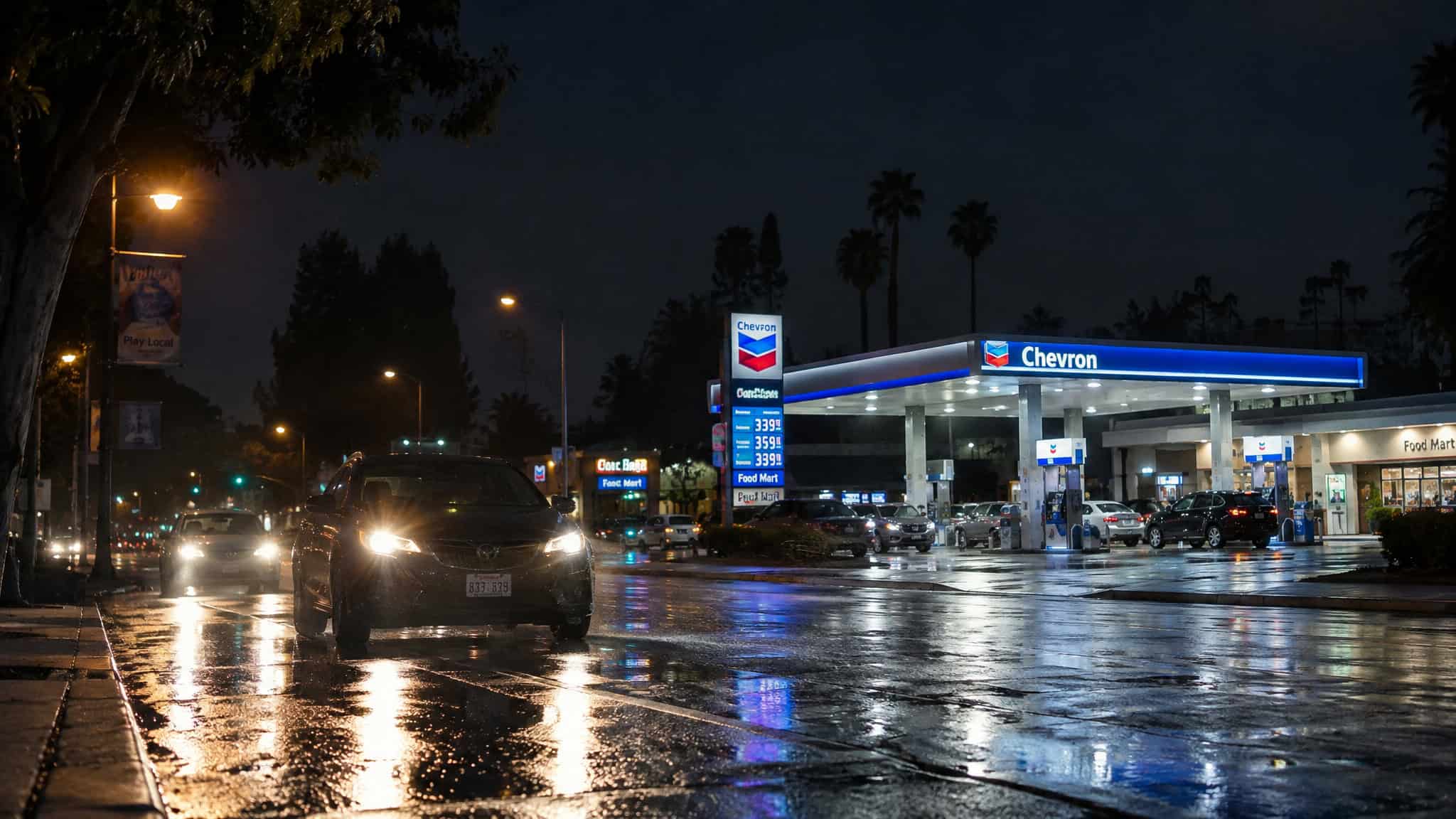
When someone shadows your bumper, it’s tempting to pull over and see what their problem is or head straight for your own driveway. Instead, use transit safety positioning if de-escalation fails: if you’re already stationary, don’t move the vehicle and keep the doors open; in populated areas, pull off at a safe spot and open the doors for escape routes; in rural stretches, head for a gas station, small town, or rest area.
The emergency report checklist
Transit operators rely on silent alarms, panic buttons, or verbal codes because calling dispatch aloud without GPS tracking can agitate an attacker inside the vehicle. In your own car, stick to the four reporting facts for police and never chase an aggressive driver to get a license plate number; note what you can safely see and let them go.
If words are exchanged: scripts that de-escalate
Verbal de-escalation relies on a tactical apology that acknowledges the other person’s anger without accepting legal fault, backed by strict phrase discipline.
The tactical apology, and the sincerity challenge
In a Police1 article dated May 07, 2026 07:10 PM, Leith Harrell, who retired from the Orlando Police Department in 2020 as a Master Sergeant after 28 years of service, recommends saying, “I’m sorry you feel that way” or “I’m sorry this happened.” If the person challenges your sincerity, reply: You’re right, I’m not speaking to the facts of what happened. I am acknowledging that you are upset.
The banned-phrase list and why each one backfires
Never express that you don’t care, which acts like a swear word in de-escalation and can increase civil liability in civil rights claims, and skip name-calling like frauditor or tyrant. Drop phrases like calm down (an order), I understand (angers people who feel misunderstood), why questions (accusatory), and you should (causes shame), along with sarcasm, blame, or moral debates. Politely say you beg to differ or don’t see it that way instead of telling someone they’re wrong or that something isn’t true, and meet verbal abuse by telling them they can’t talk to you like that and you’ll talk to them once they calm down.
The CAIRO method: five tools in any order
Because body language, tone, and words land together within seconds, transit training uses the five CAIRO tools in any order: Calm (neutral tone that defuses and helps survey for threats or escape routes), Assertive (confident middle road between aggressive and passive), Informing behavior (stating what is happening without you must or you should messages, such as noting that the group is moving on, the fare is one dollar, or the vehicle can’t move until a passenger is seated), Reflect/redirect (listening, letting the passenger vent, and acknowledging feelings, like frustration about possibly being late to work, while promising to get the rider there safely and on time), and Opening behavior (open questions that let the passenger express themselves and interrupt violent thought patterns, such as asking for someone’s name, framing questions to get a yes, or shifting talk to the future).
Step 5: Check your own mirror
Controlling your own anger while driving requires catching your personal escalation tells, like fixating on a vehicle, braking harshly, following too closely, or feeling the urge to retaliate, and immediately backing off, taking a deep breath, restoring your following space, or pulling over to use a pre-planned sub-five-minute calming action. Most guys only notice they’ve lost their temper in hindsight, after they’re already riding a bumper, so having three quick sensory resets ready in advance, like sipping ice water, deep breathing, or screaming in a parked car, helps signal to your brain that you aren’t actually in danger.
Warning signs that you’ve already escalated
Watch for four red flags in your own driving: following too closely, harsh braking instead of smooth deceleration, fixating on a specific vehicle, and feeling the urge to retaliate. When those show up, back off the gas, take a deep breath, consciously rebuild your following gap, or pull over for a break. Schedule pressure, heavy congestion, and life stress push even trained drivers into emotional decisions, yet no delivery, errand, or argument justifies using a vehicle to vent anger.
Three stabilizing actions prepared before you need them
Learn your off-road stress tells, like talking louder, slamming things on the counter, or letting your shoulders creep up to your ears, and practice habits that stop road rage before it starts. Pick three stabilizing moves that take under five minutes, such as deep breathing, drinking hot tea or ice water, touching grass, or screaming in the car; because you wouldn’t sip tea in real danger, those sensory inputs signal safety to your brain.
After reviewing hundreds of hours of conflict footage, Harrell points to two roots of trouble: ignorance, which training fixes, and ego, which you have to filter yourself. His advice is to “be the adult in the room” and burn off raw anger through martial arts, Jiu Jitsu, sparring, or rock climbing.
Prevent it before it starts: road communication hygiene
Road rage prevention is a combination of predictable signaling, right-lane discipline, schedule padding, sparing horn use, and catching your own escalation cues before they turn into friction other drivers interpret as personal disrespect. Keeping yourself out of roadside feuds starts when you build a five-minute time buffer into your trip, stay in the right lane unless actively overtaking, and flash your turn signal at least three times before moving. Once you’re in traffic, use the horn sparingly since other drivers read it as aggression, and notice early warning signs in your own driving, like suddenly following the car ahead a little too tightly.
The road communication hierarchy
On the Smart Drive Test channel, an audience poll taken about a year before the broadcast found that 51% of respondents named tailgaters as the most upsetting drivers on the road. Right behind tailgating, drivers pointed to a lack of communication and failure to signal as major anger triggers.
To keep other drivers calm, use the four-level road communication hierarchy in strict order of priority:
- Vehicle position: Put your car where your intentions are obvious, and stay in the right lane unless you’re passing. Drivers who camp in the left lane at the speed limit without passing (“left-lane squatters”) spark intense aggression, ranking second only to driving below the posted speed limit, which belongs in the far right lane.
- Lights and signals: Give a minimum of three signal flashes before changing direction so nobody has to guess your next move.
- Eye contact and hand gestures: Use clear, non-hostile visual cues when navigating tight spaces.
- The horn: Use it last and sparingly. In modern driving culture, a horn honk reads as an act of aggression rather than a friendly heads-up.
Buffer time and the pressure you put on yourself
Planning to arrive five minutes earlier than your navigation app estimates (turning a 10-minute drive into 15) is one of the simplest daily habits for avoiding road rage. Because everyday culture punishes lateness while quietly excusing speeding to make a meeting, running late turns you into the aggressive driver.
That same composure pays off at busy intersections. If a driver behind you is leaning on the horn while you wait for a safe gap, remember they only have three options: wait, crash into you (unlikely), or go home. You can trim your time in the intersection and calm the line behind you by starting your turn just as the oncoming car hits the stop line, rolling smoothly into the gap behind it.
After a crash: documentation and Ohio deadlines
The post-crash protocol after an aggressive driving accident in Ohio is an evidence-preservation and legal-reporting sequence governed by a strict two-year statutory clock. Protecting your physical recovery and your legal claim requires securing the scene without getting drawn into a roadside argument:
- Call 911 immediately, request police, and specifically report the other driver’s aggressive behavior to the responding officers.
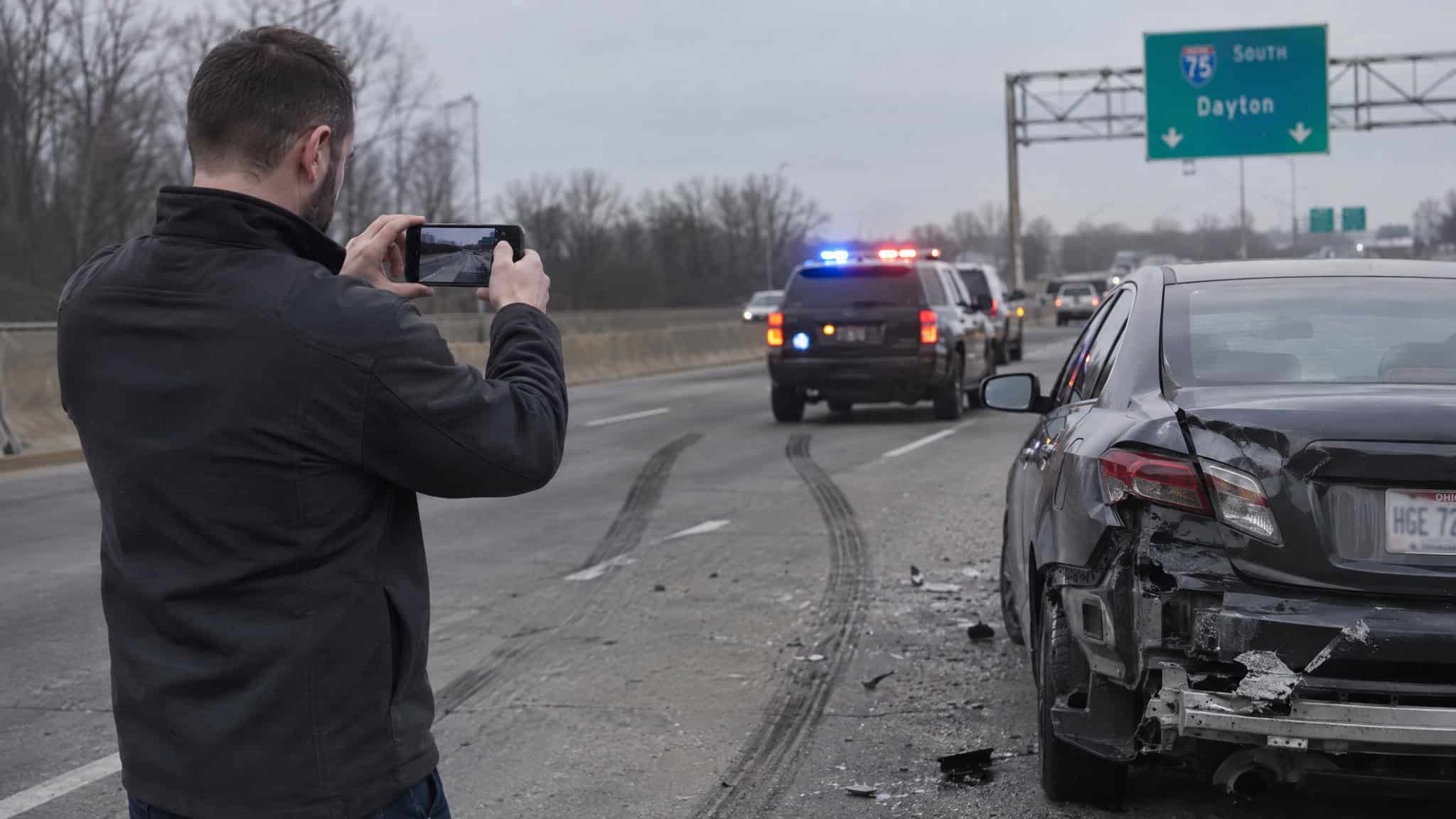
- Photograph the scene, vehicle positions, damage patterns, skid marks, and your injuries, and collect witness statements.
- Seek medical care even if symptoms feel minor, never argue with the other driver, and decline recorded insurance statements until you speak with an attorney.
- File any personal injury claim within Ohio’s two-year window under O.R.C. § 2305.10, keeping in mind that under Ohio’s modified comparative negligence rule you can recover damages if the other driver is more than 50% responsible, though partial fault can reduce your payout.
The post-crash checklist
This sequence comes from Ohio personal injury firm Paulozzi, Alkire & Condeni Personal Injury Lawyers (serving Cleveland, Columbus, Cincinnati, Toledo, Akron, and Lorain on a contingency basis with free consultations at 800-LAW-OHIO / 800-529-6446). Building a claim against an aggressive driver relies on dash and traffic camera footage, vehicle black box data, police reports and citations, witness accounts, crash reconstruction experts, and medical records.
Ohio’s fault threshold and two-year clock
While specific deadlines and fault rules vary by state, Ohio applies a modified comparative negligence rule: you can recover damages as long as the aggressive driver is more than 50 percent at fault, with your payout reduced by your percentage of fault. Under Ohio’s O.R.C. § 2305.10 two-year deadline, recoverable damages include medical bills, ongoing treatment, lost wages, lost earning capacity, vehicle and property damage, pain and suffering, emotional trauma, permanent disability or disfigurement, and wrongful death.
Calm is the boss move
Walking away from a roadside provocation is the ultimate self-mastery move because escalation takes zero discipline, de-escalation takes real skill, and you’re always free to disengage when there’s no legitimate reason to stay. Harrell passes along a rule from law-enforcement training: If you have to say ‘I’m in charge!’ you probably aren’t. Skip the roadside interview. Treat every street encounter like it’s being recorded on a dash cam or phone for a courtroom, or someone you actually respect, to watch later.
Frequently Asked Questions
What is the difference between aggressive driving and road rage?
Aggressive driving comes down to careless, high-risk maneuvers behind the wheel—think riding someone’s bumper, weaving across lanes, blowing through red lights, or excessive speeding. Road rage crosses the line into a targeted assault, escalating from horn leaning and hostile hand gestures to chasing another car, ramming with a vehicle, or brandishing weapons like guns and tire irons.
How do you deal with an aggressive driver in the moment?
Execute a four-step commercial-driver disengagement routine: immediately open up the gap around your car and hit the door locks, let the hostile driver get past you without speeding up to block them, keep your eyes straight ahead with both hands on the wheel, and never pull onto an isolated shoulder to hash things out. If the troublemaker is in front of you instead of behind, duck off at the next intersection or pull into a busy parking lot so they can take their tantrum down the road without you.
What should you do if an aggressive driver follows you?
Treat your cabin like armor—keep the doors locked, stay in your seat, and skip your own driveway or any quiet side streets. Steer toward a lively, populated public spot (or a gas station, rest area, or small town on rural stretches) and dial police hands-free to relay where you are, which way you’re headed, what the car looks like, and how the driver is acting.
What causes road rage?
Violent flare-ups in traffic usually trace back to two core sparks: frustrating delays tied to unmet needs (like running late or sitting behind someone camping in the passing lane) and perceived blows to a driver’s status, self-esteem, or pride. Because people treat their cars as an extension of their personal territory, feeling disrespected or humiliated on the asphalt dumps cortisol and adrenaline straight into the bloodstream, shoving the brain into an emotional threat state known as the blowfish zone.